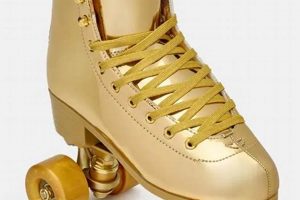
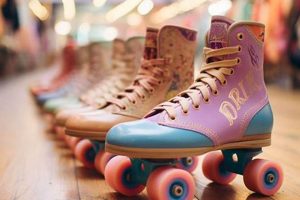
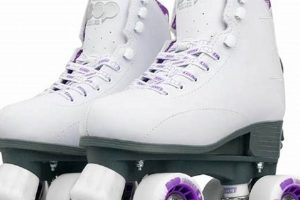
A comparison of quad skates, characterized by two wheels in the front and two in the back, and inline skates, which feature wheels arranged in a single line, reveals distinct performance characteristics. The former offers increased stability and is often favored by beginners, while the latter provides greater speed and maneuverability.
The choice between these types of skates hinges on the skater’s preference and intended use. Quad skates, with their inherent stability, are frequently used in roller derby and artistic skating. Inline skates, on the other hand, are common in speed skating, aggressive skating, and recreational fitness activities. Historically, quad skates predate inline skates, but both have evolved significantly in design and technology.
The following sections will delve deeper into the specific attributes of each type, considering factors such as wheel configuration, boot design, braking systems, and their respective advantages and disadvantages for various skating disciplines.
Comparative Analysis
Selecting the appropriate skate type requires careful evaluation of individual needs and skating goals. The following tips offer guidance in navigating the decision-making process.
Tip 1: Assess Stability Requirements: Individuals prioritizing stability, particularly novice skaters, may find quad skates more suitable. The wider base inherent in their design offers increased balance and control.
Tip 2: Evaluate Maneuverability Needs: For activities demanding agile movements and quick turns, inline skates provide a distinct advantage. Their streamlined design facilitates greater responsiveness.
Tip 3: Consider Intended Skating Surface: Outdoor surfaces may be better suited to larger-wheeled inline skates, which provide smoother navigation over varied terrain. Indoor surfaces often accommodate either type effectively.
Tip 4: Analyze Braking Mechanisms: Quad skates typically feature a toe stop brake, offering immediate stopping power. Inline skates generally employ a heel brake, requiring a different braking technique.
Tip 5: Evaluate Boot Support and Comfort: Proper ankle support is crucial for injury prevention. Assess the rigidity and padding of the boot to ensure a secure and comfortable fit.
Tip 6: Prioritize Wheel Hardness Based on Surface: Softer wheels offer better grip on smooth surfaces, while harder wheels are more durable for outdoor use. Consider the durometer rating of the wheels when making a selection.
Tip 7: Research Bearing Quality: Higher ABEC-rated bearings provide smoother and faster rolling capabilities. Invest in quality bearings to enhance overall skating performance.
By carefully considering these factors, individuals can make an informed decision that aligns with their skating objectives and skill level, optimizing their experience and minimizing the risk of injury.
The subsequent section will address maintenance practices and safety precautions applicable to both types of skates.
1. Stability

Stability represents a critical factor in the distinction between quad skates and inline skates, significantly influencing user experience and suitability for various skating activities. The inherent design differences between the two skate types directly affect the skater’s balance and control.
- Wheel Base Configuration and Equilibrium
Quad skates feature a wider wheel base due to the two wheels positioned at the front and two at the rear. This configuration inherently lowers the center of gravity and expands the support area, resulting in enhanced lateral stability. This is particularly beneficial for beginners who are developing their balance and coordination skills. In contrast, inline skates, with their single line of wheels, provide a narrower base, requiring greater core strength and balance proficiency to maintain equilibrium.
- Turning Dynamics and Control
The stability afforded by quad skates impacts turning dynamics. Skaters can execute turns with greater ease and predictability, especially at lower speeds. The broader wheel base facilitates controlled shifts in weight and reduces the likelihood of abrupt directional changes. Inline skates, while capable of tighter turns, demand more precise weight distribution and a greater level of skill to prevent instability and potential falls.
- Surface Irregularities and Balance Maintenance
The impact of uneven surfaces is more pronounced with inline skates due to their narrower wheel base. Small bumps and cracks can more readily disrupt balance, requiring the skater to exert additional effort to maintain stability. Quad skates, with their wider footprint, offer a greater degree of tolerance to minor surface irregularities, making them a more forgiving option for outdoor skating on imperfect terrain.
- Learning Curve and Confidence Building
The inherent stability of quad skates contributes to a gentler learning curve for novice skaters. The increased balance and control instill confidence, enabling beginners to progress more quickly and develop fundamental skating skills without the constant fear of falling. This initial advantage can be crucial in fostering long-term engagement and enjoyment of skating.
In conclusion, stability serves as a primary differentiator between quad skates and inline skates. The wider wheel base of quad skates offers enhanced balance and control, making them a preferable option for beginners and activities requiring greater stability. Inline skates, while demanding more skill to maintain balance, provide superior maneuverability and speed. The optimal choice depends on individual skill level, intended use, and personal preference regarding stability versus agility.
2. Maneuverability
Maneuverability represents a critical performance aspect distinguishing inline skates from quad skates. This encompasses the ease and precision with which a skater can execute turns, navigate obstacles, and alter direction, directly influencing the suitability of each skate type for various disciplines.
- Wheelbase and Turning Radius
The shorter wheelbase of inline skates compared to quad skates enables a tighter turning radius. This agility is crucial in activities requiring quick directional changes, such as slalom skating and hockey. Quad skates, with their wider stance, necessitate a larger turning radius, making sharp, rapid turns more challenging.
- Edge Control and Responsiveness
Inline skates facilitate superior edge control due to the single line of wheels, allowing skaters to engage the edges more effectively for precise maneuvers. This is particularly beneficial in aggressive skating and figure skating, where nuanced control is paramount. Quad skates offer a different feel, with less direct edge engagement, demanding adjustments in technique for similar outcomes.
- Agility in Confined Spaces
In environments characterized by limited space or numerous obstacles, the streamlined profile of inline skates provides a distinct advantage. Skaters can navigate tight corners and weave through obstructions with greater ease. Quad skates, due to their bulkier design, are less nimble in confined areas, potentially hindering performance in certain scenarios.
- Applications Across Skating Disciplines
The differing maneuverability characteristics influence the applications of each skate type. Inline skates dominate disciplines requiring high agility and responsiveness, while quad skates find favor in activities prioritizing stability and a classic aesthetic. Each skate type caters to specific needs and preferences within the diverse skating landscape.
Ultimately, the maneuverability differences between inline and quad skates arise from fundamental design variations. The shorter wheelbase and enhanced edge control of inline skates afford greater agility, while quad skates prioritize stability and a different turning dynamic. Understanding these nuances enables informed selection based on intended skating activities and individual preferences.
3. Wheel Configuration
Wheel configuration is a primary differentiating factor when comparing quad skates and inline skates, significantly affecting performance characteristics, intended use, and overall skating experience. The arrangement of wheels fundamentally dictates stability, maneuverability, and speed capabilities, influencing suitability for various skating disciplines.
- Quad Skate (2×2) Configuration
Quad skates employ a 2×2 wheel arrangement, with two wheels positioned at the front and two at the rear of the boot. This configuration provides a wider base of support, resulting in enhanced lateral stability and a lower center of gravity. This is advantageous for beginners and disciplines requiring stability, such as roller derby and artistic skating. However, the wider wheel base can limit maneuverability and turning radius compared to inline skates.
- Inline Skate (Linear) Configuration
Inline skates feature wheels arranged in a single line along the center of the boot. This linear configuration offers a narrower profile, reducing rolling resistance and enabling greater speed potential. The streamlined design also enhances maneuverability and allows for tighter turns. However, the reduced lateral stability necessitates greater balance and control, making inline skates more challenging for beginners.
- Wheel Size and Arrangement Variation
Both quad and inline skates exhibit variations in wheel size and arrangement to cater to specific skating styles. Inline skates may feature different wheel diameters along the frame to optimize speed, agility, or shock absorption. Quad skates can have adjustable wheel spacing to fine-tune stability and maneuverability characteristics. These variations demonstrate the adaptability of wheel configuration to specific performance requirements.
- Impact on Skating Technique
The contrasting wheel configurations necessitate distinct skating techniques. Quad skating emphasizes lateral movement and weight distribution across the wider base, while inline skating relies on precise edge control and balance along the linear wheel arrangement. Mastering the appropriate technique is crucial for maximizing performance and safety on each type of skate.
The fundamental difference in wheel configuration between quad skates and inline skates dictates their respective strengths and weaknesses. The 2×2 arrangement of quad skates prioritizes stability and control, while the linear arrangement of inline skates emphasizes speed and maneuverability. Understanding these characteristics is essential for selecting the appropriate skate type based on individual needs and intended skating activities, directly influencing the user’s experience and potential for skill development.
4. Braking Systems
Braking systems represent a critical safety component differentiating quad skates from inline skates. The design and implementation of these systems directly impact the skater’s ability to control speed and avoid collisions, therefore influencing the selection of one skate type over another based on intended use and skill level. Quad skates typically feature a toe stop brake, a rubber or composite pad mounted at the front of the skate. Activation involves lifting the toe, causing the pad to make contact with the ground, generating friction and decelerating the skater. This system is intuitive for many beginners and offers immediate stopping power, particularly beneficial in crowded environments or emergency situations. For example, in roller derby, quick stops and directional changes are paramount, often favoring the responsiveness of toe stop brakes.
Inline skates predominantly employ a heel brake, a pad located at the rear of one or both skates. Braking is achieved by extending the leg with the brake forward and applying pressure, transferring weight onto the heel. This method requires more practice and a higher degree of balance, as the skater must maintain stability while shifting their center of gravity. The heel brake design allows for gradual deceleration and is often preferred for recreational skating and longer distances where controlled speed management is crucial. Consider a scenario involving downhill skating; the heel brake enables modulated speed reduction, preventing uncontrolled acceleration.
The selection of a braking system inherently influences the user’s control and safety. While toe stops provide immediate stopping power favored in agile environments, heel brakes facilitate controlled deceleration suited for sustained use. These differences are significant when evaluating the suitability of quad skates versus inline skates based on specific skating activities and skill levels. The interplay between braking systems, skill, and environmental context underscores the importance of understanding these distinctions to promote safe skating practices.
5. Boot Support
Boot support represents a critical element in differentiating quad skates and inline skates, significantly impacting stability, control, and injury prevention. The design and construction of the boot directly influence the skater’s ability to maintain proper alignment, transfer power efficiently, and react to unexpected movements. A well-supported boot minimizes ankle pronation or supination, reducing the risk of sprains and strains. For example, aggressive inline skating, involving jumps and grinds, necessitates a rigid boot to withstand high-impact forces and provide sufficient ankle stabilization.
Quad skate boots often feature a lower cut and a more flexible construction compared to inline skate boots. This design allows for greater range of motion, which is advantageous for artistic skating and roller derby where agility and footwork are paramount. However, this flexibility can also provide less ankle support, making proper technique and conditioning essential. Conversely, inline skate boots typically extend higher up the ankle and incorporate stiffer materials, offering enhanced support and stability. This is particularly crucial for speed skating and recreational skating where maintaining a straight line and efficient stride are key. A practical example would be long-distance inline skating; the boots structure prevents ankle fatigue and maintains consistent energy transfer.
Ultimately, boot support plays a vital role in the performance and safety associated with both quad skates and inline skates. Choosing the appropriate level of support depends on the skater’s skill level, skating style, and physical conditioning. Insufficient support can lead to injuries, while excessive rigidity can restrict movement and reduce comfort. Therefore, careful consideration of boot design and construction is essential for maximizing the benefits and minimizing the risks associated with each type of skate. This understanding ensures a safer and more enjoyable skating experience.
6. Intended Use
The selection between quad skates and inline skates is fundamentally guided by the intended application. The diverse range of skating activities, from recreational fitness to competitive sports, necessitates a careful evaluation of the performance characteristics inherent in each skate type. Understanding the specific demands of each activity is paramount in making an informed decision.
- Recreational Skating
For casual, recreational skating, both quad and inline skates present viable options. Quad skates offer increased stability, making them suitable for beginners and those prioritizing leisurely enjoyment. Inline skates provide greater speed and maneuverability, appealing to individuals seeking a more dynamic experience. The choice depends largely on personal preference and the desired intensity of the activity. Example: Skating along a paved trail versus learning basic maneuvers in a park.
- Roller Derby
Roller derby, a contact sport characterized by rapid directional changes and close-quarters maneuvering, predominantly utilizes quad skates. The wider base of support and enhanced agility provided by quad skates are crucial for maintaining stability and executing quick turns within the confined space of the track. The traditional design and toe stop brake are also favored among roller derby participants. Example: Executing a “whip” or blocking maneuver during a roller derby bout.
- Speed Skating
Speed skating, whether on indoor or outdoor tracks, invariably employs inline skates. The streamlined design and larger wheel diameters of inline skates minimize rolling resistance and maximize speed potential. The aerodynamic profile and efficient power transfer afforded by inline skates are essential for achieving competitive times. Example: Participating in a timed race on an oval track.
- Aggressive Skating
Aggressive skating, encompassing stunts, grinds, and jumps performed in skate parks or urban environments, primarily utilizes specialized inline skates. These skates feature reinforced frames, durable wheels, and grind plates designed to withstand high-impact forces. The maneuverability and control offered by inline skates are critical for executing complex tricks and navigating obstacles. Example: Performing a “50-50 grind” on a handrail.
The relationship between intended use and skate selection underscores the importance of aligning equipment characteristics with activity requirements. Recreational pursuits may accommodate either skate type based on personal preference, while competitive disciplines often dictate a specific choice based on performance optimization. These distinctions provide a framework for selecting the most appropriate skating equipment for a given activity.
Frequently Asked Questions
The following questions address common inquiries regarding the distinctions between quad skates and inline skates, providing clarity on their respective strengths and weaknesses.
Question 1: Is one inherently safer than the other?
Neither type is inherently safer. Safety depends on skater skill, protective gear, and skating environment. Quad skates offer initial stability, potentially easing the learning curve for beginners. Inline skates, with proper training, provide comparable safety levels.
Question 2: Which is easier to learn for a beginner?
Quad skates are generally considered easier for beginners due to their wider base and increased stability. This configuration simplifies balance and control during initial learning stages.
Question 3: Can inline skates be used for roller derby?
While possible, it is highly unconventional. Roller derby rules and strategies are optimized for quad skates. The maneuverability and stability characteristics of quad skates are essential for effective gameplay.
Question 4: Are replacement parts interchangeable between quad and inline skates?
No, replacement parts are generally not interchangeable. Wheel sizes, bearings, and brake systems differ significantly between quad and inline skates, necessitating specific components for each type.
Question 5: Do inline skates offer better ankle support than quad skates?
Generally, yes. Inline skates typically feature higher cuffs and more rigid boot construction, providing enhanced ankle support. Quad skates often prioritize flexibility, offering less structured ankle support.
Question 6: Which type of skate is faster?
Inline skates are typically faster due to their streamlined design, larger wheel diameters, and reduced rolling resistance. The linear wheel configuration maximizes speed potential.
In summary, the choice depends on factors such as skill level, intended activity, and personal preference. There is no definitively “better” option; each type offers unique advantages and disadvantages.
The subsequent section will discuss maintenance and care procedures for both quad and inline skates.
Roller Skate vs Blade
The examination of roller skate vs blade reveals fundamental distinctions impacting performance and suitability across various skating disciplines. Wheel configuration, boot support, braking systems, and intended use are critical factors influencing the selection process. While quad skates offer stability, inline skates provide speed and maneuverability. The appropriate choice necessitates careful consideration of individual skill level and activity-specific demands.
Continued advancements in skate technology will likely blur some current distinctions, enhancing performance and safety. Ultimately, informed decision-making, coupled with proper training and safety precautions, remains paramount in ensuring a positive skating experience. Further research into materials science and biomechanics will undoubtedly contribute to future innovations in both roller skate and blade design.