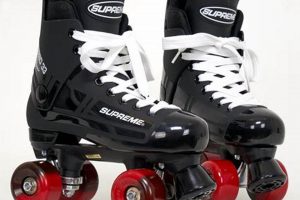
Equipment designed to mitigate injuries during roller skating activities comprises items such as helmets, wrist guards, elbow pads, and knee pads. These items provide a physical barrier against impact and abrasion, significantly reducing the risk of fractures, sprains, and lacerations. For example, a helmet protects the head from traumatic brain injury in the event of a fall, while wrist guards prevent hyperextension and fractures of the wrist during forward falls.
The utilization of such safety measures is paramount for all roller skaters, regardless of skill level. Implementing safety protocols lowers the incidence of injuries, fostering a more positive and sustainable engagement with the sport. Historically, the adoption of these safeguards has demonstrated a direct correlation with decreased emergency room visits attributed to skating-related accidents, thereby lessening the burden on healthcare systems and improving overall public health outcomes. This trend highlights a growing awareness of proactive safety practices within the skating community.
The following sections will elaborate on the specific features and functionalities of each piece of equipment, offering guidance on selecting the appropriate size and type for optimal protection, as well as best practices for maintenance and longevity.
Selecting and Maintaining Protective Equipment for Roller Skating
This section provides essential guidelines for choosing and caring for equipment designed to minimize injury during roller skating activities. Proper selection and maintenance are critical to ensuring optimal safety.
Tip 1: Prioritize certified equipment. Helmets, wrist guards, elbow pads, and knee pads should meet established safety standards (e.g., ASTM, CPSC). Certification indicates the product has undergone rigorous testing and meets minimum performance requirements.
Tip 2: Ensure a snug and secure fit. Ill-fitting equipment provides inadequate protection. Measure the circumference of the head and joints to select the correct size based on manufacturer guidelines. Straps should be tightened to prevent slippage during activity.
Tip 3: Replace equipment following any significant impact. Even if no visible damage is apparent, the internal structure of the protective gear may be compromised, rendering it less effective in future impacts.
Tip 4: Regularly inspect for wear and tear. Examine straps, buckles, padding, and hard shells for signs of damage. Replace worn or damaged components promptly.
Tip 5: Clean equipment according to manufacturer instructions. Sweat and dirt can degrade materials over time. Use mild soap and water to clean surfaces and allow to air dry completely before storing.
Tip 6: Store equipment in a cool, dry place. Exposure to extreme temperatures and humidity can accelerate the deterioration of materials.
Tip 7: Consider the type of skating activity. Aggressive skating, such as tricks and ramps, requires heavier-duty equipment than recreational skating on smooth surfaces.
Tip 8: Wrist guards should include both palm and back-of-hand protection. This design minimizes the risk of wrist fractures and sprains during forward falls.
Adherence to these guidelines promotes safety and extends the lifespan of the equipment, maximizing the protective benefits for the user. Consistent evaluation of the equipment is crucial for safe activity.
The subsequent sections of this document will delve into specific types of injuries commonly associated with roller skating and explore strategies for prevention, in addition to the utilization of properly fitted protective equipment.
1. Impact Absorption
Impact absorption is a foundational principle in the design and efficacy of equipment intended to minimize injuries during roller skating. The capacity of the equipment to dissipate kinetic energy generated during falls is paramount to mitigating the severity of potential harm. This absorption is not a singular attribute, but a result of several interrelated design and material properties.
- Material Density and Composition
The materials used in the construction directly influence the absorption capacity. High-density foams, such as expanded polystyrene (EPS) in helmets or ethylene-vinyl acetate (EVA) in pads, possess the ability to deform upon impact, converting kinetic energy into heat and reducing the force transmitted to the body. The specific composition and layering of these materials are critical to optimizing this energy conversion. For example, a dual-density helmet with a softer inner layer and a harder outer shell provides both comfort and progressive impact absorption.
- Structural Design and Geometry
The overall shape and structural elements contribute significantly to force distribution. A rounded helmet, for instance, is more effective at deflecting impact forces than one with sharp edges. Similarly, the segmented design of knee and elbow pads allows for flexibility while maintaining a consistent level of protection across the joint. The strategic placement of reinforced areas further enhances impact resistance at vulnerable points.
- Energy Dissipation Mechanisms
Beyond material properties, the equipment often incorporates specific mechanisms to further dissipate energy. Examples include crumple zones within helmets, designed to collapse upon impact and absorb a significant portion of the force. Some advanced designs utilize non-Newtonian fluids that stiffen upon impact, providing variable resistance based on the intensity of the collision.
- Coverage Area and Fit
The extent of coverage provided directly relates to the area over which impact forces are distributed. Larger pads and helmets that fully encompass the targeted body regions are more effective at minimizing concentrated stress. Furthermore, a secure and snug fit is essential to ensure that the equipment remains in place during a fall, preventing it from shifting and exposing vulnerable areas.
In conclusion, optimizing impact absorption within the context of equipment used while roller skating necessitates a multifaceted approach encompassing material selection, structural design, energy dissipation mechanisms, and appropriate coverage. The effectiveness of any given piece of gear is contingent upon the successful integration of these elements to provide a robust and reliable protective barrier.
2. Proper Sizing

Proper sizing constitutes a critical, often overlooked, element in the effective application of equipment designed for protection during roller skating. A direct correlation exists between the accuracy of size and the capacity of the safety measure to perform its intended function. Ill-fitting equipment, regardless of its material quality or certification, offers compromised protection, thereby increasing the risk of injury. For instance, a helmet that is too large may shift during a fall, leaving portions of the head vulnerable. Conversely, a helmet that is too small may not provide adequate coverage or impact absorption, potentially leading to localized trauma. Similar scenarios apply to wrist guards, elbow pads, and knee pads; improperly sized gear can slide, chafe, or fail to adequately cushion the impact zone.
The significance of correct dimensions extends beyond immediate impact protection. Equipment that is excessively tight can restrict circulation, causing discomfort and potentially leading to numbness or tingling in the extremities. Overly loose gear can impede movement, affecting balance and coordination, and paradoxically increasing the likelihood of falls. Furthermore, poorly fitted wrist guards, in particular, may exacerbate existing wrist conditions or contribute to the development of new ones due to improper support or pressure points. The selection process must therefore involve careful measurement and consideration of the manufacturer’s sizing charts, taking into account individual anatomical variations and the specific design characteristics of the protective equipment.
In conclusion, proper sizing is not merely a matter of comfort but a fundamental prerequisite for ensuring the efficacy of safety equipment utilized during roller skating. Inadequate consideration of this aspect undermines the protective capabilities of the gear, potentially nullifying its benefits and exposing the user to preventable risks. Therefore, meticulous attention to size during selection and regular verification of fit over time are essential practices for prioritizing safety and mitigating injuries associated with roller skating activities.
3. Certified Standards
Certified standards play a critical role in ensuring the safety and reliability of equipment used while roller skating. These standards establish minimum performance requirements and testing protocols, providing assurance that the gear can withstand specified impact forces and offer a reasonable degree of protection against injuries. The presence of certification marks indicates independent verification of compliance with established safety criteria.
- Impact Performance Requirements
Certified standards dictate specific impact tests that equipment must pass. For instance, helmets are subjected to controlled impact scenarios to assess their ability to absorb and distribute force, thereby reducing the risk of head injuries. Wrist guards, elbow pads, and knee pads undergo similar tests to evaluate their capacity to protect joints and extremities from fractures and abrasions. These requirements are often based on biomechanical research and injury data, ensuring that the standards reflect real-world scenarios.
- Material Durability and Construction
Standards also address the materials used in manufacturing the equipment. Requirements may specify minimum tensile strength, abrasion resistance, and chemical compatibility. This ensures that the gear can withstand repeated use and exposure to environmental factors without compromising its structural integrity or protective properties. For example, certain standards may prohibit the use of materials that are known to degrade rapidly or release harmful substances.
- Fit and Coverage Considerations
While not always explicitly quantified, certified standards often imply certain fit and coverage requirements. Equipment must be designed to provide adequate coverage of the intended body region, and the design must allow for a secure and comfortable fit. This ensures that the gear remains in place during activity and provides consistent protection. Manufacturers typically provide sizing charts and fitting instructions to facilitate proper selection and usage.
- Labeling and Information Disclosure
Certification standards mandate clear and comprehensive labeling, providing consumers with essential information about the equipment’s intended use, size, and performance capabilities. This labeling enables informed decision-making and helps users select the appropriate gear for their needs. Standards may also require manufacturers to provide instructions for proper maintenance and care, further extending the lifespan and effectiveness of the product.
The consistent application of certified standards fosters a culture of safety within the roller skating community. While adherence to these standards does not guarantee complete protection against injury, it significantly reduces the risk of serious harm and provides a baseline level of assurance for consumers. Ongoing research and development efforts are continuously refining these standards, striving to enhance the safety and performance of skating equipment.
4. Secure Fit
A secure fit is paramount to the effectiveness of equipment designed to mitigate injury during roller skating. The primary function of such gear relies on its ability to remain properly positioned during a fall or impact. A loosely fitted helmet, for instance, may shift upon impact, exposing the head to direct trauma. Similarly, ill-fitting wrist guards can fail to adequately support the wrist joint, increasing the risk of sprains or fractures. The cause-and-effect relationship between secure fit and protective function is direct: inadequate fit compromises the gear’s ability to absorb and distribute impact forces, thus diminishing its protective capabilities. Real-world examples, such as emergency room reports documenting injuries sustained despite the use of protective gear, often reveal instances where improper fit was a contributing factor. The practical significance of understanding this connection lies in emphasizing the importance of careful selection and adjustment of equipment, ensuring it conforms closely to the wearer’s body contours and remains stable during activity.
Further analysis reveals that a secure fit encompasses more than just size. Adjustable straps, buckles, and closures are essential components that allow for fine-tuning the fit to accommodate individual variations in body shape and size. The choice of materials also plays a role; flexible and breathable fabrics can enhance comfort and prevent slippage caused by perspiration. Moreover, the design of the equipment should account for the dynamic movements inherent in roller skating, ensuring that the gear remains secure even during strenuous activity. For example, knee pads with articulated hinges can maintain proper positioning as the knee bends, while helmets with adjustable retention systems can prevent upward movement during falls. These design considerations reflect a deep understanding of the biomechanics of roller skating and the potential mechanisms of injury.
In conclusion, the connection between secure fit and protective gear is undeniable. A secure fit is not merely an addendum to safety; it is a fundamental requirement for realizing the full protective potential of such equipment. Challenges remain in ensuring consistent and accurate sizing across different manufacturers and in educating users about the importance of proper adjustment. However, by emphasizing the significance of secure fit and promoting informed equipment selection, it is possible to enhance the safety and well-being of roller skaters.
5. Durability
Durability, defined as the capacity of protective equipment to withstand wear, degradation, and prolonged use without significant loss of function, is a critical factor in the long-term effectiveness of equipment designed for roller skating activities. The selection of materials, construction methods, and overall design directly influence the equipment’s ability to withstand the rigors of repeated impacts, abrasions, and exposure to environmental elements. This directly impacts the protection offered over time, as compromised durability inevitably leads to reduced protective capacity.
- Material Selection and Composition
The choice of materials significantly dictates the lifespan and protective capabilities of equipment. High-density plastics, reinforced stitching, and impact-resistant foams are common examples used in protective gear. For instance, a helmet utilizing a polycarbonate shell is inherently more durable than one constructed from a less resilient material. Similarly, knee and elbow pads with robust, abrasion-resistant fabrics will withstand sliding impacts more effectively than those with thinner, less durable materials. The chemical composition of these materials also influences their resistance to degradation from UV exposure, sweat, and cleaning agents.
- Construction Techniques and Manufacturing Processes
The methods employed in manufacturing and assembling the equipment directly impact its overall structural integrity and resistance to failure. Reinforced stitching, multi-layered construction, and strategically placed rivets or fasteners contribute to the durability of the gear. For example, wrist guards with double-stitched seams and reinforced palm supports are less likely to tear or separate under stress compared to those with simpler construction. Similarly, helmets employing in-mold construction, where the outer shell is fused directly to the inner foam liner, exhibit greater resistance to delamination and impact damage.
- Resistance to Environmental Factors
Roller skating protective gear is often exposed to a range of environmental conditions, including sunlight, moisture, and temperature fluctuations. The ability of the equipment to resist degradation from these factors is crucial for maintaining its protective properties. Materials that are UV-resistant, waterproof, and temperature-stable will exhibit greater longevity compared to those that are susceptible to environmental damage. For example, helmets with UV-resistant coatings will retain their structural integrity and impact absorption capacity for a longer period when exposed to direct sunlight. Similarly, pads with moisture-wicking liners will resist the buildup of sweat and prevent the growth of mold or mildew.
- Impact Resistance and Degradation Over Time
The primary function of protective gear is to absorb and dissipate impact forces during falls. Repeated impacts, even those that do not result in visible damage, can gradually degrade the materials and reduce their ability to effectively protect against future injuries. Regular inspection for signs of wear, such as cracks, tears, or delamination, is essential for identifying compromised equipment. The lifespan of protective gear is finite, and it is recommended that helmets be replaced after a significant impact or after a specified period, typically three to five years, even if no visible damage is apparent.
The long-term effectiveness and cost-efficiency of equipment depends significantly on its durability. Investment in high-quality, durable gear offers a superior safety profile and a longer service life compared to cheaper alternatives that may compromise protection and require more frequent replacement. Therefore, careful consideration of durability factors is essential when selecting equipment intended to mitigate injury during roller skating activities.
6. Consistent Maintenance

Consistent maintenance constitutes an indispensable element in ensuring the sustained efficacy of protective equipment used while roller skating. The direct connection between regular upkeep and the performance capabilities of such gear is undeniable. Protective equipment, regardless of its initial quality or certification, is susceptible to degradation from environmental factors, wear and tear, and the accumulation of dirt and debris. This degradation directly impacts its ability to effectively absorb and dissipate impact forces, increasing the risk of injury. A real-world example involves a helmet where sweat accumulation has deteriorated the inner foam lining, reducing its capacity to cushion a fall. The practical significance of this understanding lies in emphasizing the need for a proactive maintenance regimen, ensuring that the protective equipment remains in optimal working condition.
Further analysis reveals that maintenance encompasses multiple facets, including cleaning, inspection, and component replacement. Cleaning removes dirt, sweat, and other contaminants that can degrade materials and compromise performance. Inspection involves a thorough examination of the equipment for signs of wear, damage, or component failure. This includes checking straps, buckles, pads, and shells for cracks, tears, or loose connections. Component replacement addresses the inevitable degradation of certain parts, such as worn-out pads or damaged straps. Practical applications of these maintenance principles can be seen in organized skating groups that implement regular gear inspection protocols, and in manufacturers who provide detailed maintenance instructions for their products. Neglecting these practices diminishes the protective capabilities of the gear, leading to a false sense of security.
In conclusion, consistent maintenance is not merely an optional practice but a fundamental requirement for preserving the safety performance of roller skating equipment. A comprehensive maintenance approach, encompassing cleaning, inspection, and component replacement, is essential for mitigating the risks associated with wear, degradation, and environmental factors. Despite challenges in promoting widespread adoption of these practices, emphasizing their importance is crucial for enhancing the safety and well-being of roller skaters. This proactive approach contributes directly to reducing the incidence of skating-related injuries and promoting a safer skating environment.
Frequently Asked Questions
This section addresses common inquiries regarding equipment designed to minimize the risk and severity of injuries during roller skating activities.
Question 1: What constitutes essential protective gear for roller skating?
Essential components include a certified helmet, wrist guards, elbow pads, and knee pads. The selection of these items should be based on the type of skating activity and the user’s skill level. Absence of any one of these elements increases the potential for injury.
Question 2: How frequently should roller skate protective gear be replaced?
Helmets should be replaced after any significant impact, regardless of visible damage. Other items, such as wrist guards and pads, should be replaced when signs of wear and tear, such as cracks, tears, or loss of padding, become evident. A general guideline is to replace gear every 3-5 years, even if it appears to be in good condition.
Question 3: What certifications indicate acceptable levels of protection?
Certifications from organizations such as ASTM International (ASTM) and the Consumer Product Safety Commission (CPSC) signify that the equipment has met established safety standards. The presence of these certifications provides a reasonable assurance of performance.
Question 4: How does proper fit influence the effectiveness of roller skate protective gear?
Proper fit is crucial for ensuring that the equipment remains in place during impact and provides adequate coverage. Loose-fitting gear can shift or fail to protect vulnerable areas, while overly tight gear can restrict movement and circulation. Careful measurement and adjustment are essential for achieving a secure and comfortable fit.
Question 5: Is specialized protective gear required for different types of roller skating?
Yes, specialized gear is often necessary for activities such as aggressive skating or speed skating. Aggressive skating typically requires heavier-duty equipment with reinforced padding and abrasion resistance, while speed skating may involve streamlined designs and aerodynamic features. The selection of appropriate gear should align with the demands of the specific skating discipline.
Question 6: How should roller skate protective gear be properly cleaned and stored?
Cleaning should be performed according to the manufacturer’s instructions, typically involving mild soap and water. Avoid harsh chemicals or abrasive cleaners. Storage should occur in a cool, dry place away from direct sunlight or extreme temperatures. Proper cleaning and storage prolong the lifespan and effectiveness of the equipment.
These FAQs highlight the importance of selecting, fitting, and maintaining equipment for roller skating safety. Prioritizing these measures reduces the risk of injury and promotes a more positive and sustainable skating experience.
The next section will explore specific types of injuries commonly associated with roller skating and outline strategies for prevention, supplementing the use of adequately fitted protective equipment.
Conclusion
This exposition has systematically examined various facets of roller skate protective gear, emphasizing its critical role in injury prevention. Key aspects such as impact absorption, proper sizing, certified standards, secure fit, durability, and consistent maintenance have been explored, underscoring their individual and collective contributions to user safety. Understanding the nuanced relationships between these elements enables informed decision-making regarding equipment selection and usage. The information presented is intended to empower users to prioritize safety protocols and minimize the potential for harm during roller skating activities.
The long-term benefits of investing in appropriate roller skate protective gear extend beyond immediate physical well-being. A commitment to safety fosters a more sustainable and inclusive roller skating community. Continued research and development in material science and biomechanics will undoubtedly yield further advancements in protective equipment design, leading to even greater reductions in skating-related injuries. It is incumbent upon all participants, from recreational skaters to competitive athletes, to recognize the profound impact of responsible gear usage and to actively promote a culture of safety within the sport.