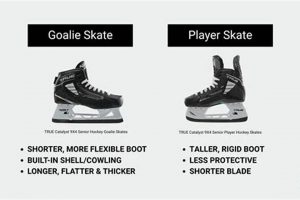
The initial choice between the two types of ice footwear impacts the learning experience. One is designed for speed, agility, and impact, while the other is tailored for precision movements, jumps, and spins. Selecting the appropriate style early on can significantly influence skill development and overall enjoyment of ice skating. For instance, attempting complex jumps on equipment designed for a different purpose can be both difficult and potentially hazardous.
Proper selection contributes to a positive introduction to ice skating and can greatly minimize frustration. The differences in blade construction, boot support, and overall design reflect distinct performance requirements. Choosing the correct style based on the intended skating discipline facilitates quicker progress and helps establish good habits, while using the wrong footwear might hinder learning and increase the risk of injury. The historical development of each style reflects its unique purpose within its respective skating domain.
This exploration will delve into specific design features that differentiate these two types of skates. A detailed comparison of blade curvature, boot construction, ankle support, and intended use will be provided. Considerations for comfort, safety, and skill progression will also be examined to aid beginners in making an informed decision.
Essential Considerations for Novice Skaters
Selecting between the two skate types demands a careful assessment of intended usage and learning objectives. The following tips offer guidance for navigating the initial selection process.
Tip 1: Prioritize Intended Discipline. If the primary goal is to participate in ice hockey, selecting the corresponding equipment is paramount. Conversely, if the interest lies in executing jumps, spins, and artistic routines, the alternative is the more suitable option.
Tip 2: Evaluate Ankle Support. Adequate ankle support is crucial for beginners to maintain balance and prevent injuries. Skates with higher, stiffer boots generally provide greater stability, especially beneficial during the initial learning phases.
Tip 3: Examine Blade Curvature. The blade curvature affects maneuverability and control. Blades designed for hockey typically have a more pronounced curve for quick turns, while those designed for figure skating offer a flatter profile for stability during jumps and spins.
Tip 4: Consider Boot Comfort. Ill-fitting skates can lead to discomfort and blisters, hindering the learning process. Proper sizing and fit are essential. Seek professional fitting advice to ensure optimal comfort and performance.
Tip 5: Seek Expert Guidance. Consulting with experienced skaters, coaches, or knowledgeable staff at a specialized skate shop can provide valuable insights tailored to individual needs and skill levels. Professional advice can greatly assist in the decision-making process.
Tip 6: Assess Skill Progression. Consider potential skill development trajectory. While initial focus might be on basic skating, future aspirations in either discipline should influence the initial choice. Upgrading equipment later may be necessary as skills advance.
Tip 7: Factor in Budget. The costs associated with skates can vary significantly. Establishing a budget beforehand can help narrow down options and prevent overspending. Consider balancing cost with quality and features appropriate for beginners.
These considerations underscore the importance of aligning the choice with intended use, prioritizing safety, and ensuring proper fit. A well-informed decision at the outset contributes significantly to a positive and successful skating experience.
The next section will explore specific differences in construction and design to further clarify distinctions and benefits of each skate type.
1. Intended Use

The intended use of skates forms the foundational determinant when deciding between the two types for beginners. This consideration transcends mere preference, dictating essential design features and functionality necessary for safe and effective skill acquisition.
- Hockey-Specific Maneuverability
The primary activity involves rapid acceleration, quick stops, and agile turns. The hockey skate’s design facilitates these movements with a shorter, more curved blade allowing for tighter radii of rotation. Attempting figure skating maneuvers with these skates would be cumbersome due to reduced blade surface area. An example is executing a tight turn around a defenseman versus attempting a spiral, which requires a longer, flatter blade.
- Figure Skating Elements
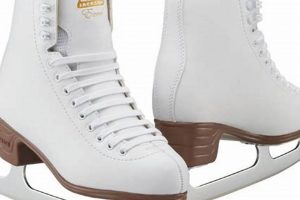
Executing jumps, spins, and intricate footwork patterns necessitates stability and control. The figure skate offers a longer, flatter blade with toe picks for precise takeoffs and landings. Utilizing these for hockey would inhibit quick pivoting and stopping, leading to decreased performance and elevated risk of collisions. A specific case is the inability to perform a toe loop jump using hockey skates.
- Ice Surface Interaction
The nature of interaction between the blade and the ice differs substantially. Hockey demands aggressive edges for power and grip during lateral movements, while figure skating involves controlled gliding and precisely timed edges for complex maneuvers. Attempting hockey stops with figure skates risks damaging the toe picks and compromising balance. Similarly, using hockey skates for intricate figure skating routines sacrifices precision and grace.
- Protective Equipment Compatibility
Selection also influences the type of protective equipment used. Hockey requires extensive padding, including shin guards and padded pants, which integrate seamlessly with the skate’s boot design. Figure skating attire allows for greater freedom of movement, with streamlined designs that accommodate the skate’s aesthetic. Combining hockey equipment with figure skates may restrict mobility and compromise comfort.
In summary, aligning the initial equipment choice with the intended skating discipline is paramount. The design disparities reflect the distinct skill sets and performance demands of each activity. Choosing incongruent skates compromises safety, hinders skill development, and diminishes the overall skating experience.
2. Blade Curvature
Blade curvature represents a critical differentiating factor when comparing skate types. This parameter significantly influences maneuverability, stability, and the ability to execute specific skating techniques, directly impacting the experience for novice skaters.
- Rocker Profile and Agility
The rocker, or curvature along the blade’s length, defines the contact area with the ice. Hockey skates exhibit a more pronounced rocker, creating a smaller contact patch. This facilitates rapid turns, pivots, and quick changes in direction crucial for gameplay. For beginners, this can initially feel less stable than a flatter blade, requiring more balance control. An example is a hockey player executing a tight turn to retrieve a puck versus a figure skater maintaining a straight line.
- Contact Surface and Stability
Figure skates feature a comparatively flatter blade profile, offering a larger contact surface with the ice. This design enhances stability, particularly essential for executing jumps, spins, and maintaining extended edges. Novice figure skaters benefit from the increased stability, enabling them to develop foundational skills with greater confidence. Consider the stability needed for a controlled landing after a jump compared to the constant adjustments required during hockey skating.
- Turning Radius and Maneuvering
The blade’s curvature directly affects the turning radius achievable. The more aggressive rocker of hockey skates allows for tighter turns, enabling players to navigate confined spaces on the ice with greater efficiency. Conversely, the flatter profile of figure skate blades results in a wider turning radius, prioritizing controlled glide and stability over immediate responsiveness. Visualize a hockey player making a sharp cut around a defender contrasted with a figure skater performing a graceful spiral.
- Toe Pick Integration and Functionality
The presence of toe picks on figure skate blades further influences turning and maneuvering. While not directly related to the overall blade curvature, their presence allows for specific maneuvers such as toe-assisted jumps and spins. The absence of toe picks on hockey skates necessitates reliance on edge control and body positioning for turns and stops. Think about using toe picks for initiating a jump or spin, a technique unavailable to hockey skaters.
The differences in blade curvature highlight the specialized design considerations tailored to each skating discipline. Beginners must recognize these distinctions to select equipment that aligns with their intended use and learning objectives. The appropriate selection optimizes performance, enhances safety, and accelerates skill development.
3. Ankle Support

Adequate ankle support is a paramount consideration when selecting between skate types for beginners. It directly impacts stability, balance, and injury prevention, shaping the initial learning curve and influencing the development of fundamental skating skills.
- Boot Height and Stiffness
Figure skates generally feature taller and stiffer boots than those designed for hockey. The extended height provides greater lateral support, preventing excessive ankle flexion and pronation, crucial for maintaining balance during complex maneuvers. Hockey skates prioritize forward flexion for agility, resulting in a shorter, more flexible boot. A figure skater landing a jump requires rigid ankle support, while a hockey player benefits from ankle mobility for quick pivoting.
- Material Composition and Reinforcement
The materials used in boot construction contribute significantly to the level of support offered. Figure skate boots often incorporate multiple layers of stiff leather or synthetic composites, reinforced with additional padding around the ankle area. Hockey skate boots utilize lighter, more flexible materials to enhance responsiveness, sacrificing some degree of ankle stability. The impact of a puck striking a hockey skate necessitates robust protection, while a figure skate boot is designed to withstand repetitive stress from jumps and landings.
- Lacing Systems and Customization
Lacing systems play a critical role in achieving a secure and customized fit. Figure skates typically employ intricate lacing patterns that allow for precise tightening around the ankle, maximizing support and preventing slippage. Hockey skate lacing systems prioritize quick adjustments and flexibility, often incorporating features like eyelets and speed hooks. A figure skater can fine-tune the lacing to provide targeted support for specific elements, while a hockey player might loosen the laces for increased mobility during gameplay.
- Potential for Injury Prevention
Insufficient ankle support increases the risk of sprains, strains, and other ankle-related injuries, particularly during the initial learning phases. Selecting skates with appropriate ankle support minimizes the likelihood of these injuries, enabling beginners to focus on skill development without fear of pain or instability. Over-tightening laces in an attempt to compensate for inadequate support can lead to discomfort and restricted circulation. The correct skate choice, coupled with proper lacing technique, provides optimal protection and comfort.
The selection between the two, therefore, demands careful consideration of ankle support. It’s essential to choose skates offering the appropriate level of stability and protection based on intended use and individual physical characteristics. Compromising on ankle support jeopardizes safety and hinders the development of essential skating skills.
4. Boot Stiffness
Boot stiffness serves as a defining characteristic when comparing skate types, influencing energy transfer, support, and control. The degree of stiffness directly correlates with the intended skating discipline and the level of skill progression anticipated.
- Energy Transfer Efficiency
Stiffer boots provide more efficient energy transfer from the skater’s leg muscles to the blade, maximizing power and control. Figure skates demand high stiffness to support jumps and landings, converting leg power into vertical lift and controlled rotation. Conversely, less rigid hockey skate boots allow for greater ankle flexion, facilitating quicker strides and agile movements. In figure skating, the entire boot contributes to propelling the skater upwards; in hockey, the ankle joint needs freedom to generate speed.
- Ankle Support and Stability
Increased boot stiffness directly enhances ankle support, a crucial factor for beginners developing fundamental skating skills. Figure skates offer substantial ankle support to prevent instability during jumps and landings. Hockey skates prioritize a balance between support and flexibility, accommodating the dynamic movements required for gameplay. A beginner figure skater relies on boot stiffness to maintain balance during initial attempts at edges and turns; a hockey skater requires ankle mobility to execute crossovers and quick stops.
- Skill Level and Progression
The appropriate level of boot stiffness varies depending on the skater’s skill level. Beginners generally benefit from stiffer boots, providing increased stability and support as they learn basic techniques. As skaters progress, they may transition to boots with varying degrees of stiffness to accommodate more advanced maneuvers. A beginner figure skater might start with a boot offering a stiffness rating of 40, while an advanced skater could progress to a boot rated 80 or higher. Similarly, a novice hockey player typically starts with a boot offering moderate support, progressing to a stiffer boot as their skating power increases.
- Protection and Impact Resistance
While stiffness primarily addresses support and energy transfer, it also contributes to protection. Hockey skate boots are constructed from materials designed to withstand impacts from pucks and collisions with other players. While figure skate boots also offer a degree of protection, the emphasis is on structural integrity to support jumps and landings. A high-end hockey skate might feature composite materials that deflect high-velocity impacts; a figure skate boot prioritizes maintaining its shape under repeated stress.
Boot stiffness represents a key element that differentiates the equipment. Selecting skates with appropriate boot stiffness, aligned with skating goals and current skill level, establishes a solid foundation for progression and minimizes the risk of injury. Recognizing these differences allows beginners to make informed choices tailored to their specific needs and aspirations.
5. Skill Development

The choice of equipment significantly influences the trajectory of skill development for novice skaters. The distinct design features of each skate type cater to specialized skill sets, thereby impacting the acquisition of fundamental techniques. Choosing hockey skates when the goal is figure skating, or vice versa, inherently creates obstacles, delaying or even preventing the mastery of essential skills within the desired discipline. This initial decision, therefore, becomes a critical factor in determining future proficiency.
Progress in either discipline necessitates equipment suited to the task. Attempting jumps and spins using footwear designed for rapid turns and stops proves not only difficult but potentially dangerous. Conversely, employing skates constructed for figure skating in a hockey environment impairs agility and speed. For example, learning crossovers in hockey requires ankle flexibility, which may be restricted by the stiffer boots found on the counterpart. Similarly, practicing edge work in figure skating demands blade length optimized for gliding, absent in the shorter blades of the equipment designed for a different purpose. These limitations emphasize the direct correlation between appropriate equipment selection and the rate of skill advancement.
Ultimately, proper equipment selection facilitates the learning process, fostering confidence and enjoyment. Mismatched gear leads to frustration and hinders progress. As such, beginners should prioritize understanding their intended skating goals and aligning their equipment choice accordingly. This initial investment significantly impacts skill development and the overall skating experience. It’s a decision that establishes the foundation for future success on the ice.
Frequently Asked Questions
The following questions address common concerns regarding the selection of skates for beginners.
Question 1: What are the primary differences?
The key differentiators reside in blade design, boot construction, and intended purpose. The type used in hockey emphasizes agility and maneuverability, featuring a shorter, more curved blade and a boot designed for forward flexion. The alternative prioritizes stability and control, incorporating a longer, flatter blade with toe picks and a stiffer boot for enhanced ankle support.
Question 2: Can the type used in hockey be used for figure skating, and vice versa?
While technically possible, it is not recommended. Using the incorrect style hinders skill development and increases the risk of injury. Each is specifically engineered for its respective discipline; attempting to perform maneuvers outside of the intended use compromises performance and safety.
Question 3: Which is easier to learn on as a beginner?
There is no inherently “easier” option. The appropriate choice depends entirely on the desired skating discipline. If the goal is to play hockey, the corresponding equipment is essential. If the aim is to learn jumps and spins, the alternative is more suitable. Starting with the correct type streamlines the learning process.
Question 4: How important is ankle support?
Ankle support is of paramount importance, especially for beginners. Adequate support enhances stability, promotes proper technique, and minimizes the risk of ankle-related injuries. Skates offering greater ankle support are generally recommended for novice skaters.
Question 5: What if the intended discipline is uncertain?
If the skater is unsure about their preferred discipline, prioritizing foundational skating skills on figure skates might be beneficial. The added stability can aid in developing basic balance and edge control, which are transferable to other disciplines. However, it’s crucial to transition to appropriate equipment once a specific direction is chosen.
Question 6: Are there alternatives suitable for both disciplines?
While hybrid options exist, they often represent a compromise and may not fully satisfy the requirements of either discipline. Such options are not generally recommended for serious beginners aiming to progress significantly in either hockey or figure skating.
The informed selection significantly impacts the initial skating experience and sets the stage for future skill development. A well-considered decision contributes to safety, progress, and overall enjoyment.
The subsequent section will provide guidance on proper fitting techniques to ensure optimal comfort and performance.
Decisive Equipment Selection
This exploration has underscored the fundamental differences between hockey skates vs figure skates for beginners, emphasizing the critical role of informed equipment selection. Distinct design features, encompassing blade curvature, boot construction, and ankle support, directly correlate with the specific demands of each skating discipline. Failure to align equipment choice with intended use compromises safety, hinders skill development, and ultimately diminishes the overall skating experience.
Therefore, novice skaters must prioritize a comprehensive understanding of their individual goals and carefully evaluate the attributes of each skate type. The initial investment in appropriately designed equipment serves as the cornerstone for future success on the ice, fostering both proficiency and a lifelong appreciation for the art and sport of ice skating. Continued diligence in maintaining and properly fitting the selected equipment remains essential for sustained performance and injury prevention.