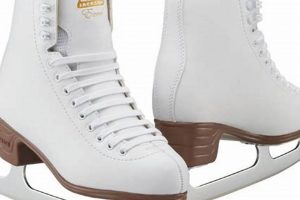
Specialized footwear designed for the sport of figure skating, these implements feature a blade attached to the sole of a boot. The blade, typically made of hardened steel, allows skaters to glide across the ice surface and perform various maneuvers. An example would be a skater using these to execute a triple axel jump.
The equipment is crucial for enabling the artistry and athleticism inherent in the sport. The design facilitates jumps, spins, and intricate footwork, allowing skaters to express creativity and technical skill. Their historical evolution reflects advancements in materials science and biomechanical understanding, leading to improved performance capabilities and skater safety.
The subsequent discussion will delve into the specific components, types, and maintenance considerations associated with this essential equipment, offering a detailed examination for skaters and enthusiasts alike.
Optimizing Performance with Figure Skating Skates
Selecting and maintaining figure skating equipment significantly impacts performance and safety. Adhering to specific guidelines ensures optimal functionality and longevity.
Tip 1: Blade Selection Based on Skill Level: Beginners benefit from blades with a larger radius of rocker for stability, whereas advanced skaters require blades with a smaller radius for enhanced maneuverability and edge control. Example: A novice might choose a blade with an 8-foot rocker, while an elite skater prefers a 7-foot or smaller radius.
Tip 2: Boot Fit is Paramount: Ill-fitting boots compromise support and increase the risk of injury. Professional fitting ensures proper ankle support and allows for optimal power transfer to the blade. Example: Ensure the heel is locked in place and the toes have minimal room to move within the boot.
Tip 3: Regular Blade Sharpening: Sharp blades are essential for maintaining precise edges and control. Sharpening frequency depends on skating intensity and ice conditions. Example: A skater training daily should sharpen blades every 2-3 weeks, whereas a recreational skater may require sharpening every few months.
Tip 4: Proper Blade Maintenance: After each use, dry the blades thoroughly to prevent rust. Apply a thin layer of rust preventative. Example: Use a soft cloth to wipe moisture from the blade, followed by an application of a silicone-based rust inhibitor.
Tip 5: Boot Lacing Technique: The lacing technique affects ankle support and comfort. Lace the lower portion of the boot snugly for stability and the upper portion with moderate tension for flexibility. Example: Tighten the laces around the instep for a secure fit and then adjust the upper laces to allow for free ankle movement during jumps and spins.
Tip 6: Blade Alignment Verification: Periodically check the blade alignment to ensure it is centered beneath the boot. Misalignment can lead to imbalances and increased risk of injury. Example: Consult a professional skate technician to assess blade placement and make necessary adjustments.
Tip 7: Break-in Period Considerations: New boots require a break-in period to conform to the skater’s foot. Gradual use prevents blisters and ensures a comfortable fit. Example: Wear the boots for short periods initially, gradually increasing the duration with each session. Use boot covers to minimize stiffness.
Implementing these tips enhances the performance, safety, and longevity of the figure skating equipment, optimizing the skating experience.
The subsequent sections will address the technological advancements in blade design and the impact of materials science on overall equipment performance.
1. Blade Material
The selection of blade material is a critical factor influencing the performance and longevity of figure skating equipment. The composition directly impacts edge quality, glide efficiency, and resistance to wear, thereby determining a skater’s ability to execute precise maneuvers and maintain control on the ice.
- Steel Composition and Hardness
High-carbon steel is commonly used due to its ability to achieve a high degree of hardness, essential for maintaining a sharp edge. The Rockwell hardness scale measures this property, with higher values indicating greater resistance to deformation. Blades with inadequate hardness dull quickly, compromising edge control and requiring more frequent sharpening. For instance, blades used for advanced jumps and spins necessitate a higher hardness rating to withstand the intense forces involved.
- Corrosion Resistance
The constant exposure to moisture during skating makes corrosion resistance a crucial consideration. Stainless steel alloys offer enhanced protection against rust and degradation, extending the lifespan of the blade. Regular maintenance, including drying and application of rust inhibitors, remains essential even with corrosion-resistant materials. Failure to address corrosion can lead to pitting and weakening of the blade, affecting its structural integrity and performance.
- Edge Retention Properties
The ability of the blade material to maintain a sharp edge over extended use is paramount. Edge retention is influenced by the steel’s composition and heat treatment. Blades with superior edge retention require less frequent sharpening, minimizing downtime and ensuring consistent performance. Materials that readily deform or chip under pressure are unsuitable for competitive figure skating.
- Tempering and Heat Treatment
The tempering process, involving controlled heating and cooling, significantly impacts the steel’s hardness and brittleness. Improper tempering can result in blades that are either too brittle and prone to cracking or too soft and unable to hold an edge. Precise heat treatment is crucial for achieving the optimal balance of hardness and durability required for the demanding conditions of figure skating.
The interconnectedness of these material properties directly impacts the functionality and effectiveness. Selecting figure skating equipment requires careful consideration of steel composition, corrosion resistance, edge retention, and heat treatment processes, optimizing performance and ensuring long-term reliability. The choice of blade material directly contributes to a skater’s ability to perform intricate maneuvers and maintain a competitive edge.
2. Boot Construction

Boot construction is a foundational element in the performance and safety of figure skating equipment. The design and materials employed directly influence ankle support, stability, and energy transfer, factors critical for executing complex maneuvers.
- Ankle Support and Stability
Rigid ankle support is essential to prevent injury and enable precise edge control. Layered leather or advanced synthetic materials provide the necessary stiffness. Insufficient support can lead to ankle instability, hindering the skater’s ability to maintain balance during jumps and spins. An example of robust support is seen in professional-grade boots featuring reinforced ankle padding and a high back, restricting excessive movement.
- Material Composition and Energy Transfer
The materials used in boot construction affect the transfer of energy from the skater to the blade. Stiff materials, such as carbon fiber, enhance responsiveness, allowing for quicker and more efficient transitions. Conversely, more flexible materials offer greater comfort but may compromise performance. Example: Skaters performing quadruple jumps often prefer carbon fiber boots for the increased power transfer.
- Customization and Fit
Proper fit is paramount for comfort and performance. Heat-moldable boots allow for customization, conforming to the skater’s foot shape and eliminating pressure points. Ill-fitting boots can cause blisters, discomfort, and reduced control. Example: Many high-end boots are equipped with heat-moldable liners, enabling skaters to achieve a precise, personalized fit.
- Lacing System and Support Distribution
The lacing system plays a role in distributing pressure evenly across the foot and ankle. Advanced lacing systems with strategically placed hooks and eyelets provide targeted support, preventing slippage and maximizing comfort. Improper lacing can lead to localized pressure points and reduced stability. An example is a system with a power strap across the instep to lock the heel in place and enhance ankle support.
The interconnectedness of ankle support, material composition, customization, and lacing systems defines the quality and functionality. Proper boot construction directly influences skater performance, safety, and comfort. Careful consideration of these factors during equipment selection is crucial for optimal results.
3. Rocker Profile

The rocker profile, the curvature of the blade along its length, is a critical design element of figure skating equipment. It directly influences the skater’s maneuverability and control on the ice. A pronounced curve facilitates tighter turns and spins, while a flatter profile enhances stability and gliding speed. The specific rocker profile selected is often dictated by the skater’s skill level and preferred skating style. For instance, a skater focused on intricate footwork will typically favor a blade with a more aggressive rocker.
Variations in rocker profile impact the location of the blade’s contact point with the ice. A smaller radius of rocker, resulting in a more curved blade, concentrates pressure on a smaller area, allowing for deeper edges and sharper turns. This design characteristic benefits skaters performing demanding jumps and complex spin sequences. Conversely, a larger radius of rocker distributes pressure over a wider area, enhancing stability and glide but potentially reducing agility. The choice represents a trade-off between maneuverability and stability, influencing a skater’s performance characteristics.
Understanding the rocker profile and its impact is crucial for selecting appropriate equipment and optimizing skating technique. Adjustments to blade sharpening can further modify the effective rocker profile, influencing edge control and glide. Therefore, a skater’s familiarity with this parameter and its interplay with other blade characteristics contributes to their overall performance. The careful matching of the rocker profile to the skater’s skill level, body mechanics, and skating goals is a hallmark of successful equipment selection and contributes to the overall success of figure skating performance.
4. Toe Pick
The toe pick, located at the front of the blade on figure skating equipment, serves a vital function in specific jumps and footwork. It provides a point of leverage and purchase during takeoffs, enabling skaters to achieve the necessary height and rotation for aerial maneuvers. For example, in a toe loop jump, the skater uses the toe pick of one skate to initiate the jump while pushing off from the opposite foot. The size, shape, and placement of the toe pick directly affect the skater’s ability to execute these jumps effectively, making it a critical component of the overall equipment design. It is also essential to note that, although many jumps use the toe pick, some do not. Edge jumps such as the Salchow, Loop, and Axel are launched from the blade’s edge and do not require the toe pick for propulsion.
Beyond its role in jumps, the toe pick also influences certain footwork sequences and pivots. Skaters utilize the toe pick to create intricate patterns on the ice and to maintain balance during complex maneuvers. However, excessive reliance on the toe pick can lead to instability and poor skating technique. Proper training emphasizes a balanced approach, incorporating both edge work and toe pick utilization for optimal performance. The careful design of the toe pick, including its shape, height, and angling, is vital for performance.
In summary, the toe pick is an integral element. Its design and skater’s proper use, can significantly affect jumps and footwork. It must be used with caution since relying on it to perform jumps (instead of the blade) can lead to injury. The interplay between the toe pick and the blade dictates overall maneuverability and control.
5. Blade Mounting
Blade mounting, the process of attaching the blade to the boot in figure skating equipment, significantly influences skater performance and safety. Improper mounting can lead to instability, edge control issues, and increased risk of injury. The precise positioning of the blade beneath the boot directly affects balance, glide efficiency, and the skater’s ability to execute intricate maneuvers. For instance, if the blade is mounted too far forward, the skater may experience difficulty maintaining a stable backward edge, impacting the performance of backward skating skills. Conversely, a blade mounted too far back can hinder forward momentum and jump takeoffs. The mounting process demands precision and expertise to ensure optimal alignment.
The relationship between the blade and the boot in these devices is symbiotic, with blade mounting acting as the critical interface. Adjustments to blade position, even minute ones, can dramatically alter the skater’s experience. Skilled technicians use specialized tools to fine-tune the blade’s placement, considering factors such as the skater’s body mechanics, skating style, and individual preferences. Example: Adjustments to the lateral blade position influence edge control, allowing skaters to execute precise turns and maintain stable landings. Professional skaters often consult with technicians throughout their careers to optimize their mounting setup, highlighting the ongoing practical relevance.
Effective blade mounting is therefore essential for the overall functionality. Challenges include accommodating variations in boot construction and accounting for individual skater biomechanics. Understanding these considerations is crucial for skaters and technicians alike. By prioritizing precision in blade mounting, the performance and safety on the ice increases.
6. Sharpening Quality

The quality of sharpening is a fundamental aspect influencing the performance characteristics of figure skating equipment. Blade sharpness directly affects edge control, glide efficiency, and the skater’s ability to execute precise maneuvers. Dull blades compromise the skater’s ability to maintain stable edges, leading to decreased control and an increased risk of falls. Conversely, properly sharpened blades allow for clean, efficient edge engagement, enabling tighter turns, controlled landings, and increased overall skating performance. The consistent maintenance of a sharp edge is therefore paramount. An example can be seen when comparing two skaters performing the same skill with one having sharp blades and one having dull blades. The sharpened blade will perform the maneuver far more smoothly.
Effective sharpening techniques involve maintaining the correct blade profile and creating a consistent hollow. The hollow, the concavity ground into the blade’s running surface, determines the depth of the edges and directly affects edge grip. Improper sharpening can result in uneven edges, inconsistent hollow depth, or damage to the blade steel. This can cause unpredictable performance on the ice. Regular sharpening by a skilled technician is critical to ensure that the blade maintains the correct profile and hollow depth. The impact of sharpening becomes apparent when a skater attempts complex figures after a sharpening. They will notice a significant improvement in the control and response of the edges.
In summary, the sharpness of figure skating blades is not merely a maintenance issue; it is a performance-defining characteristic. The quality of the sharpening, including the precision of the blade profile and the consistency of the hollow, directly impacts a skater’s control, glide, and overall ability. Challenges include accessing qualified sharpening technicians and maintaining a consistent sharpening schedule. Understanding the importance of sharpening quality allows skaters to optimize their equipment and maximize their potential on the ice.
Frequently Asked Questions
This section addresses common inquiries regarding the selection, maintenance, and functionality of these specialized skates, offering detailed insights to skaters and enthusiasts.
Question 1: How frequently should figure skating blades be sharpened?
Sharpening frequency depends on skating intensity and ice conditions. Skaters training daily may require sharpening every 2-3 weeks. Recreational skaters may sharpen every few months. Regular inspection for edge dullness is recommended.
Question 2: What is the significance of the rocker profile on a figure skating blade?
The rocker profile influences maneuverability and control. A smaller radius of rocker allows for tighter turns, while a larger radius enhances stability. The appropriate rocker profile is selected according to the skater’s skill level and preferred style.
Question 3: How should figure skating boots be properly fitted?
Boots should provide firm ankle support and a snug fit. Professional fitting ensures proper alignment and prevents slippage. Toes should have minimal room to move within the boot, and the heel should be locked in place.
Question 4: What materials are commonly used in the construction of figure skating blades?
High-carbon steel is predominantly used for its hardness and edge retention. Stainless steel alloys offer increased corrosion resistance, extending the blade’s lifespan. The material’s heat treatment influences its overall durability and performance.
Question 5: How does blade mounting affect skating performance?
Precise blade mounting is crucial for balance and edge control. Improper mounting can lead to instability and compromised maneuverability. Adjustments to blade position can significantly alter a skater’s performance, necessitating expert alignment.
Question 6: What maintenance practices are essential for preserving the condition of figure skating skates?
Regular maintenance includes drying blades thoroughly after each use, applying rust preventative, and periodic blade sharpening. Proper storage in a dry environment is also recommended to prevent corrosion and prolong the equipment’s lifespan.
Understanding these frequently asked questions enhances the skater’s ability to optimize their equipment and improve overall performance. Consistent adherence to proper maintenance practices ensures the longevity and reliability of figure skating equipment.
The subsequent section will explore technological advancements in the design and manufacturing of figure skating blades, examining the impact of innovation on performance and safety.
Conclusion
The preceding discussion has illuminated the multifaceted nature of figure skating skates, from material composition and boot construction to blade mounting and sharpening techniques. These skates are not merely footwear, but rather precision instruments that directly influence a skater’s ability to execute complex maneuvers and maintain control on the ice. Each component, meticulously engineered and carefully maintained, contributes to the overall performance capabilities and safety.
Continued advancements in materials science and manufacturing processes promise further refinement of these essential tools. Skaters and technicians must remain informed about these developments to optimize equipment selection and maintenance. The pursuit of excellence in figure skating is inextricably linked to the quality and proper utilization of these highly specialized skates, demanding a commitment to precision and ongoing education.