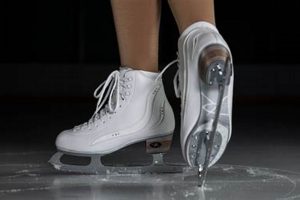
The specialized footwear utilized in ice-based athletic activities presents distinct characteristics contingent upon the specific discipline. One type is engineered for rapid acceleration, sharp turns, and powerful stops, enabling dynamic maneuvers within a team sport environment. Another is designed to facilitate intricate footwork, graceful movements, and the execution of aerial jumps and spins on the ice surface.
The differentiation in design directly impacts performance. Optimizing equipment to match the activity results in enhanced agility, improved control, and a reduced risk of injury. The evolution of these skates reflects the changing demands and technical advancements within their respective sports, emphasizing the critical role of equipment in competitive and recreational settings.
This article will examine the construction, features, and functional differences between these types of specialized ice skates, offering a detailed comparison to highlight the specific advantages each provides to its users.
Essential Considerations
Choosing between skate types requires careful assessment of intended use and skill level. Selecting the wrong skate can impede progress and increase the risk of injury. These tips offer guidance.
Tip 1: Assess Intended Use: The primary consideration should be the intended activity. Determine whether the skate will be used for figure skating or hockey, as the designs are highly specialized.
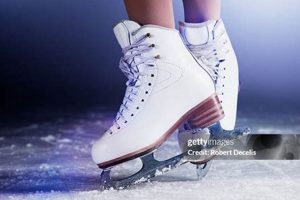
Tip 2: Evaluate Blade Design: Examine the blade profile. Figure skating blades feature a toe pick for jumps and spins, while hockey blades have a smooth, curved profile for speed and agility.
Tip 3: Consider Boot Stiffness: Boot stiffness is a crucial factor. Hockey skates generally have stiffer boots for support during rapid movements and impacts. Figure skate boot stiffness varies depending on the skater’s skill level. More advanced skaters require stiffer boots for complex maneuvers.
Tip 4: Inspect Ankle Support: Adequate ankle support is vital for preventing injuries. Ensure the skate provides firm support around the ankle, particularly for beginners who may lack the necessary strength and stability.
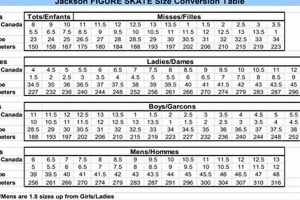
Tip 5: Prioritize Proper Fit: A snug, comfortable fit is essential. Ill-fitting skates can cause blisters, discomfort, and reduced performance. Professional fitting is recommended to ensure accurate sizing.
Tip 6: Understand Blade Material: Blade materials vary in quality and durability. Higher-quality steel blades offer superior edge retention and performance. Stainless steel blades are resistant to rust.
Tip 7: Maintenance is Key: Regular maintenance prolongs the life of the skates. This includes drying the blades after each use, sharpening the blades regularly, and checking for loose screws or rivets.
Adhering to these guidelines will ensure the selection of appropriate equipment, maximizing on-ice performance and minimizing the risk of injury.
The following sections will delve into the specific construction details and performance characteristics of each skate type, providing a deeper understanding of their respective advantages.
1. Blade Curvature
The blade curvature represents a critical design element distinguishing hockey skates from figure skates. This curvature, also referred to as the “rocker,” influences the skate’s agility, turning radius, and overall maneuverability on the ice. A more pronounced curve allows for tighter turns and quicker acceleration, while a flatter curve promotes stability and linear speed. The blade curvature is intrinsically linked to the specific demands of each sport.
In hockey skates, a tighter rocker profile facilitates rapid changes in direction and enhanced agility, essential for navigating the dynamic and fast-paced environment of a hockey game. This design enables players to execute sharp turns, pivots, and quick stops, providing a competitive advantage. Conversely, figure skate blades possess a gentler, more gradual curve, prioritizing stability and control necessary for executing complex figures, jumps, and spins. The flatter profile allows for a more consistent edge contact with the ice, a crucial factor in maintaining balance during intricate maneuvers. For instance, a figure skater executing a triple axel requires a stable platform, which is aided by the straighter blade.
In summary, blade curvature is a fundamental differentiator, directly impacting the performance capabilities of each skate type. Understanding the specific curvature and its effect on ice interaction is crucial for selecting the appropriate equipment and achieving optimal results within each discipline. The different blade curvature offers an optimal result for their own discipline.
2. Boot stiffness

Boot stiffness represents a critical parameter in the design and selection of specialized ice skates. The degree of rigidity directly influences support, control, and energy transfer during skating, thereby impacting performance and safety across different ice sports. A careful balance between stiffness and flexibility is essential to match the specific demands of hockey and figure skating.
- Support and Stability in Hockey
Hockey skates necessitate high boot stiffness to provide substantial ankle support during rapid acceleration, deceleration, and sharp turns. The rigid boot construction minimizes ankle flexion, reducing the risk of injury during high-impact collisions and sudden movements. For instance, professional hockey players often use skates with heat-moldable composite boots for a customized, extremely stiff fit that maximizes energy transfer with each stride. The enhanced support allows players to maintain stability and control when maneuvering at high speeds.
- Flexibility and Articulation in Figure Skating
In contrast, figure skates require a more nuanced balance between support and flexibility. While ankle support remains crucial, figure skaters need sufficient range of motion to execute intricate footwork, jumps, and spins. Boot stiffness levels vary depending on the skater’s skill level and the complexity of their routines. Beginner figure skates tend to have more flexible boots, while advanced skaters require stiffer boots to support the higher impact of complex jumps. The controlled flexibility allows skaters to achieve the deep knee bend and precise foot positioning necessary for artistic expression.
- Energy Transfer Efficiency
Boot stiffness directly influences the efficiency of energy transfer from the skater’s leg to the blade. Stiffer boots minimize energy loss due to boot deformation, maximizing the power delivered to the ice. This is particularly critical in hockey, where explosive acceleration and powerful strides are essential for performance. Figure skates also benefit from efficient energy transfer, but the focus is on controlled movements and precision rather than raw power. The boot is a medium where the energy generated in legs and core is transferred to the blade.
- Impact Absorption and Injury Prevention
While stiff boots provide excellent support and energy transfer, they also offer a degree of impact absorption. In hockey, the rigid boot construction helps to dissipate the force of collisions and protect the skater’s foot and ankle from injury. Similarly, figure skate boots provide some cushioning to mitigate the impact of landing jumps. However, the level of impact absorption is generally lower in figure skates compared to hockey skates, as the focus is on maintaining a precise connection with the ice.
In essence, the choice of boot stiffness is a critical decision that reflects the differing biomechanical demands of hockey and figure skating. Hockey prioritizes robust support and energy transfer for speed and agility, while figure skating emphasizes a balance of support and flexibility for artistic expression and controlled movements. Understanding these distinctions is essential for optimizing performance and minimizing the risk of injury in each discipline.
3. Toe pick (presence/absence)
The presence or absence of a toe pick constitutes a defining structural and functional difference between figure skates and hockey skates. This seemingly small appendage on the front of the figure skate blade dictates a significant portion of the sport’s technical possibilities. Conversely, the deliberate omission of a toe pick on hockey skates optimizes performance for the demands of speed, agility, and puck control. The presence/absence of this feature isnt arbitrary; its engineered for task-specific performance.
For figure skaters, the toe pick acts as an anchor, allowing for the initiation and execution of various jumps and spins. Without it, maneuvers like the Lutz jump or toe loop would be physically impossible. The toe pick enables the skater to gain height and control during jumps, transforming rotational energy into vertical lift. In contrast, a toe pick on a hockey skate would severely impede the player’s ability to skate efficiently and execute quick turns. It would create unwanted friction and present a tripping hazard during gameplay. The difference is a direct response to the needs of the sport.
The toe pick’s presence fundamentally alters the mechanics of skating. Figure skaters must develop the precise skill to utilize it effectively, transforming potential instability into a controlled maneuver. Conversely, hockey players rely on the smooth, uninterrupted glide afforded by the absence of a toe pick, facilitating rapid acceleration and directional changes. The “toe pick (presence/absence)” is more than a mere design choice; its a fundamental component that defines the performance envelope of “hockey skate vs figure skate”.
4. Ankle support
Ankle support constitutes a paramount consideration in the design of specialized ice skates, directly impacting stability, performance, and injury prevention. Variations in ankle support reflect the distinct biomechanical demands of hockey and figure skating, necessitating tailored engineering to optimize each discipline.
- Rigidity for Impact Absorption in Hockey
Hockey skates prioritize robust ankle support through rigid boot construction. This stiffness minimizes ankle flexion during rapid acceleration, deceleration, and sharp turns. The design mitigates the risk of injury from collisions and high-impact movements, providing the stability required for aggressive gameplay. Composite materials and reinforced ankle padding further enhance protection and support.
- Dynamic Flexibility in Figure Skating
Figure skates require a more nuanced approach to ankle support, balancing stability with the flexibility needed for intricate footwork and jump landings. While providing firm support, figure skate boots allow for a greater range of ankle motion than hockey skates. This controlled flexibility enables skaters to achieve the deep knee bends and precise foot positioning crucial for artistic expression and technical execution. Varying stiffness levels cater to different skill levels and routine complexities.
- Customization and Fit Considerations
Proper fit is paramount in maximizing the effectiveness of ankle support. Heat-moldable boots offer a customized fit, conforming to the skater’s unique foot shape and enhancing stability. Professional fitting ensures accurate sizing and optimal ankle support, minimizing the risk of discomfort and injury. Lacing systems also play a critical role, allowing skaters to fine-tune the level of support and adjust to individual preferences.
- Long-Term Ankle Health and Prevention
Adequate ankle support contributes significantly to long-term ankle health. Stabilizing the ankle joint reduces stress on ligaments and tendons, preventing chronic injuries. The design of skate boots aims to distribute forces evenly, minimizing localized pressure points. Properly supportive skates can also aid in rehabilitation following ankle injuries, facilitating a safe return to skating.
In essence, the design and implementation of ankle support mechanisms in hockey skates and figure skates reflect a careful consideration of the differing performance requirements and potential injury risks associated with each discipline. The degree of support, the materials used, and the fitting process are all critical elements that contribute to a skater’s overall safety, comfort, and performance on the ice. Properly designed and fitted, ankle support maximizes performance and minimizes injury risk.
5. Blade Material

Blade material is a critical determinant of performance, durability, and maintenance requirements in ice skates. The specific material composition is carefully selected to align with the distinct demands of hockey and figure skating, impacting edge retention, corrosion resistance, and overall lifespan.
- Steel Hardness and Edge Retention
The hardness of the steel directly correlates with its ability to maintain a sharp edge. High-carbon steel, often used in figure skate blades, provides exceptional edge retention, essential for executing intricate figures and jumps. Hockey skate blades also benefit from hardened steel, but the focus is on impact resistance rather than prolonged edge sharpness due to the frequent contact with the ice and other players’ equipment. For “hockey skate vs figure skate”, the blade material defines the capabilities of edge retention.
- Corrosion Resistance
Exposure to moisture necessitates corrosion resistance in skate blade materials. Stainless steel, a common choice for both “hockey skate vs figure skate”, offers excellent resistance to rust and corrosion, prolonging the blade’s lifespan and reducing maintenance requirements. However, the specific grade of stainless steel and any additional coatings applied can further enhance its protective properties. For example, chrome plating can further enhance durability, and corrosion resistance to both blades in either “hockey skate vs figure skate”.
- Material Composition and Flexibility
The material composition influences the blade’s flexibility and its ability to absorb vibrations. Softer steel alloys may provide greater shock absorption but sacrifice edge retention. Stiffer alloys offer superior edge control but may transmit more vibrations to the skater’s foot. Balancing these factors is crucial for optimizing comfort and performance in both “hockey skate vs figure skate”, depending on user preference and activity.
- Manufacturing Processes and Quality Control
The manufacturing processes employed in producing skate blades significantly impact their overall quality and performance. Precision grinding, heat treatment, and tempering are critical steps in achieving the desired hardness, flatness, and edge geometry. Stringent quality control measures are essential to ensure consistency and prevent defects that could compromise safety or performance. Therefore, manufacturing processes is important on “hockey skate vs figure skate” in terms of safety.
The choice of blade material represents a complex trade-off between performance, durability, and maintenance. While stainless steel offers a robust and corrosion-resistant option for both disciplines, high-carbon steel alloys may be favored in figure skating for their superior edge retention. Understanding the specific material properties and their influence on skating performance is crucial for selecting appropriate “hockey skate vs figure skate” and maximizing their lifespan.
6. Rocker profile

The rocker profile, referring to the curvature of the skate blade along its longitudinal axis, exerts a significant influence on maneuverability, stability, and the overall skating experience. This profile dictates how the blade interacts with the ice surface, and its optimization is critical for achieving peak performance. The rocker profile varies considerably between skate types due to differences in purpose between “hockey skate vs figure skate”.
- Maneuverability and Agility in Hockey Skates
Hockey skates typically exhibit a more pronounced rocker profile, characterized by a smaller radius of curvature. This design feature enhances agility and allows for tighter turns, enabling rapid changes in direction and quick acceleration. The increased curvature reduces the contact area between the blade and the ice, facilitating swift pivots and agile movements essential for competitive hockey. Players rely on this rocker profile for dynamic navigation within the fast-paced game environment. The maneuverability allows the player to quickly dodge for their enemies.
- Stability and Glide in Figure Skates
In contrast, figure skates incorporate a relatively flatter rocker profile, featuring a larger radius of curvature. This design maximizes the contact area between the blade and the ice, promoting stability and control. The flatter profile provides a more consistent edge for executing complex figures, jumps, and spins. The longer contact surface also aids in gliding, allowing skaters to maintain momentum with minimal effort. These attributes are key to maintaining balance during intricate maneuvers.
- Impact on Energy Transfer
The rocker profile influences the efficiency of energy transfer from the skater to the ice. A more curved rocker, as found in hockey skates, facilitates quicker acceleration and explosive bursts of speed. The reduced contact area concentrates force, enabling more efficient propulsion. A flatter rocker, prevalent in figure skates, distributes force more evenly, promoting stability and control during sustained gliding and intricate movements. As a result, this energy transfer results an efficient movement.
- Adaptation to Skating Style and Skill Level
The ideal rocker profile is often contingent on the skater’s individual style and skill level. Novice skaters may benefit from a flatter profile, which enhances stability and builds confidence. More advanced skaters may opt for a more pronounced rocker to maximize agility and control. This personalization is a crucial consideration in skate selection. The skaters can adapt to their skates for their safety and comfortable.
The divergent rocker profiles in “hockey skate vs figure skate” exemplify how design caters to the specific demands of each discipline. Where hockey prioritizes agility and quick acceleration, figure skating emphasizes stability, control, and the execution of complex maneuvers. These functional differences are directly attributable to the nuanced variations in the rocker profile, highlighting its fundamental importance in achieving optimal performance. With optimized performance, each skaters can do their performance.
Frequently Asked Questions
This section addresses common inquiries regarding the fundamental differences between hockey skates and figure skates, providing clarity on their distinct features and applications.
Question 1: Can figure skates be used for hockey?
The use of figure skates in hockey is strongly discouraged. Their blade design, specifically the toe pick, hinders rapid acceleration, turning, and stopping, significantly increasing the risk of injury. Hockey skates are engineered for the dynamic demands of the sport.
Question 2: What is the primary function of the toe pick on a figure skate?
The toe pick serves as an anchor for initiating jumps and spins. It allows skaters to gain height and control during these maneuvers, enabling complex routines. The toe pick is a defining characteristic of figure skates, absent in hockey skates.
Question 3: How does boot stiffness differ between the two skate types?
Hockey skates typically feature significantly stiffer boots to provide robust ankle support during high-impact activities. Figure skate boot stiffness varies, offering a balance between support and flexibility tailored to the skater’s skill level and routine complexity.
Question 4: What blade material is optimal for each skate type?
While both “hockey skate vs figure skate” often utilize stainless steel for its corrosion resistance, figure skates sometimes employ high-carbon steel for enhanced edge retention. The specific steel grade and any coatings applied influence performance and longevity.
Question 5: Why is the rocker profile different between hockey and figure skates?
Hockey skates feature a more pronounced rocker to facilitate agile turns and rapid acceleration. Figure skates have a flatter rocker, maximizing ice contact for stability and control during intricate maneuvers and sustained gliding.
Question 6: What maintenance is required for ice skates?
Regular maintenance involves drying blades after each use, periodic sharpening, and inspecting for loose components. Proper care prolongs the lifespan and maintains the performance of the skates. This is essential for both “hockey skate vs figure skate”.
Understanding these distinctions ensures informed equipment selection and promotes safe and effective participation in ice sports.
The subsequent section will explore advanced skate technologies and emerging trends in ice skate design.
Final Assessment
The preceding analysis has elucidated the fundamental design and functional distinctions between specialized ice skates intended for hockey and figure skating. Core differences reside in blade geometry, boot construction, and material selection, each optimized to meet the unique performance demands of its respective discipline. A thorough understanding of these nuances is crucial for informed equipment selection.
The ongoing evolution of ice skate technology reflects a commitment to enhanced performance, safety, and user experience. As materials science and engineering continue to advance, further refinements in skate design are anticipated, potentially blurring the lines between traditionally distinct skate types while further enhancing specialized performance characteristics. Diligent consideration of these factors remains paramount for athletes and recreational skaters alike.