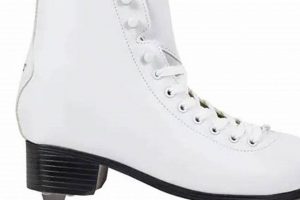
A key distinction exists in the design and function of footwear intended for ice hockey versus figure skating. The construction, blade profile, and support characteristics are tailored to meet the specific demands of each discipline. This specialization allows athletes to perform the required maneuvers and ensures optimal performance within their respective sports.
Understanding these variations is crucial for selecting the appropriate equipment, contributing to safety and skill development. The historical evolution of these skate types reflects the changing needs and increasing technical complexity of both sports, driving innovation in materials and manufacturing techniques. Consequently, athletes benefit from equipment designed to enhance agility, stability, and precision.
The following sections will delve into specific aspects, exploring the nuanced features that define each skate type, focusing on the boot structure, blade design, and intended use to illustrate the functional dissimilarities.
Essential Considerations for Distinguishing Between Ice Skates
Selecting the correct skate type is paramount for safety and performance on the ice. These tips outline key differences and considerations.
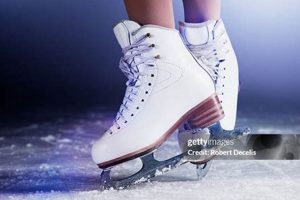
Tip 1: Blade Curvature. Observe the blade profile; figure skates exhibit a pronounced curve, facilitating spins and jumps. Hockey skate blades are straighter, designed for linear speed and agility.
Tip 2: Toe Picks. Figure skates incorporate toe picks at the front of the blade, essential for executing jumps. Hockey skates lack these, as they impede skating speed and maneuverability.
Tip 3: Boot Stiffness. Figure skate boots are typically constructed with greater stiffness to provide ankle support during landings. Hockey skate boots offer more flexibility for enhanced agility and range of motion.
Tip 4: Ankle Support. Examine the ankle support provided; figure skates generally have a higher and more rigid structure around the ankle, crucial for stability in complex maneuvers. Hockey skates prioritize a lower profile for increased flexibility.
Tip 5: Blade Mounting. Note the blade mounting; figure skate blades are typically screwed directly to the boot, allowing for minor adjustments. Hockey skate blades are often riveted or permanently attached, optimizing energy transfer for speed.
Tip 6: Intended Use. Determine the primary activity. Figure skates are for artistic performance; hockey skates for dynamic gameplay. Choose accordingly.
These considerations facilitate informed skate selection, optimizing the skating experience. Correct equipment improves performance and reduces injury risk.
The subsequent sections will explore the implications of these differences on skating technique.
1. Blade Curvature

Blade curvature constitutes a fundamental divergence between ice hockey and figure skating equipment, directly influencing maneuverability and performance characteristics in each discipline. This aspect dictates the skate’s contact area with the ice, affecting turning radius, stability, and overall responsiveness.
- Rocker Profile and Agility
The “rocker” refers to the curvature along the length of the blade. Figure skates exhibit a more pronounced rocker, creating a shorter contact patch. This allows for tighter turns and increased agility, crucial for executing spins and intricate footwork. In contrast, hockey skates have a shallower rocker, maximizing ice contact for straight-line speed and stability during rapid acceleration and deceleration.
- Turning Radius and Edge Control
The degree of blade curvature directly impacts the turning radius achievable by the skater. Figure skates, with their greater curvature, enable tighter turns and quicker transitions between edges. This facilitates complex patterns and artistic expression. Hockey skates, with a flatter profile, provide more predictable edge control at high speeds, allowing for powerful strides and sharp cuts in gameplay.
- Glide Efficiency and Momentum
The flatter blade profile of hockey skates enhances glide efficiency, allowing skaters to maintain momentum with less effort. This is essential for covering large distances and sustaining speed during a game. The greater curvature of figure skate blades, while sacrificing some glide efficiency, provides enhanced responsiveness and control for performing jumps and spins, which require quick changes in direction and balance.
- Impact on Skating Techniques
The difference in blade curvature dictates specific skating techniques utilized in each sport. Figure skaters rely on the blade’s curve to execute spins, jumps, and elaborate footwork patterns. Hockey players leverage the flatter blade profile for powerful strides, quick turns, and maintaining balance during physical contact. This necessitates distinct training regimens and skill development focused on maximizing the potential of each blade design.
These factors demonstrate how blade curvature is not merely a design element but a critical determinant of the performance capabilities of each skate type. It shapes the techniques employed by athletes and ultimately defines the inherent “feel” and responsiveness that differentiates the two sports.
2. Toe pick presence

The presence of toe picks represents a defining characteristic distinguishing figure skates from hockey skates. This seemingly small protuberance at the front of the figure skate blade serves as a crucial component in jump execution, providing a point of leverage for launching into aerial maneuvers. Its absence in hockey skates reflects the distinct demands of that sport, where unimpeded gliding and rapid acceleration are paramount. The toe pick, therefore, is not merely an accessory but an integral feature dictating the functionality of a figure skate.
The strategic placement and design of toe picks directly influence a skater’s ability to perform specific jumps. For instance, the Lutz and flip jumps rely heavily on the toe pick to initiate rotation and generate lift. Attempting these jumps in hockey skates, which lack this essential element, would be impractical and potentially dangerous. Conversely, the presence of toe picks would hinder a hockey player’s ability to achieve maximum speed and agility, as they would interfere with the smooth, continuous glide required for efficient skating and sharp turns.
In summary, the presence or absence of toe picks embodies a fundamental aspect of equipment specialization. The divergence in design reflects the disparate skill sets and performance objectives of figure skating and hockey. While figure skaters exploit the toe pick to achieve complex aerial feats, hockey players prioritize streamlined gliding and agility, rendering the toe pick superfluous and detrimental to their performance.
3. Boot stiffness
Boot stiffness is a primary differentiating factor between ice hockey and figure skating footwear, directly influencing the level of support, control, and performance achievable in each discipline. The varying degrees of rigidity reflect the distinct physical demands placed upon athletes in these respective sports, requiring specialized equipment for optimal execution of complex maneuvers.
- Ankle Support and Stability
Figure skates prioritize maximum ankle support due to the high impact forces generated during jumps and landings. A rigid boot construction minimizes ankle flexion, preventing injury and providing a stable platform for complex rotations. Hockey skates, conversely, offer greater ankle mobility to facilitate rapid changes in direction and enhance agility. The trade-off between stability and maneuverability reflects the fundamental differences in skating styles.
- Energy Transfer and Responsiveness
Stiffer boots in figure skates maximize energy transfer from the skater’s body to the blade, enabling precise control during intricate footwork and powerful jumps. The reduced boot stiffness in hockey skates promotes a more fluid skating style, allowing for dynamic movements and quick acceleration. The responsiveness of the skate is directly correlated with the boot’s rigidity, dictating the skater’s ability to react to changing conditions on the ice.
- Material Composition and Construction
Figure skate boots are commonly constructed from multiple layers of stiff leather or synthetic materials, reinforced with internal supports to maintain their shape under stress. Hockey skate boots often incorporate more flexible materials and padding to provide comfort and impact absorption, particularly in high-contact situations. The choice of materials and construction techniques directly influences the overall stiffness and durability of the boot.
- Impact on Skill Development
The appropriate boot stiffness is crucial for skill development in both disciplines. Figure skaters require a stiff boot to learn and execute complex jumps and spins safely and effectively. Hockey players benefit from the added flexibility of a less rigid boot, enabling them to develop agility, speed, and puck-handling skills. The boot stiffness, therefore, plays a critical role in shaping the skater’s technique and progression.
The differences in boot stiffness between hockey skates and figure skates are not arbitrary but rather a deliberate design choice dictated by the specific demands of each sport. This crucial distinction influences skater performance, injury prevention, and skill development, highlighting the importance of selecting the appropriate equipment based on the intended activity.
4. Ankle support
Ankle support serves as a pivotal element differentiating hockey skates from figure skates, fundamentally influencing stability, injury prevention, and the capacity to execute sport-specific techniques. This aspect of skate design directly responds to the varying biomechanical demands of each discipline.
- Rigidity and Stability in Figure Skating
Figure skates necessitate substantial ankle support due to the high-impact nature of jumps, spins, and intricate footwork. A rigid boot structure minimizes ankle flexion and extension, preventing instability during landings and providing a stable platform for executing complex rotations. The elevated stiffness reduces the risk of ankle injuries, particularly during demanding maneuvers. Examples include the execution of a triple axel, where significant forces are exerted on the ankle joint; insufficient support could lead to sprains or other injuries.
- Flexibility and Agility in Ice Hockey
Hockey skates prioritize ankle flexibility to facilitate rapid changes in direction, acceleration, and deceleration. A less restrictive boot structure allows for greater range of motion, enabling players to maintain agility and responsiveness during gameplay. While this design offers enhanced maneuverability, it necessitates a greater degree of muscular control and places a higher demand on the skater’s proprioceptive abilities. Quick turns and crossovers exemplify situations where ankle flexibility is advantageous, allowing players to maintain speed and control.
- Boot Height and Support Distribution
Figure skate boots typically extend higher up the ankle than hockey skates, providing increased surface area for support and distributing pressure more evenly across the joint. This design enhances stability but may limit ankle mobility to some extent. Hockey skate boots often feature a lower profile around the ankle, allowing for greater dorsiflexion and plantarflexion. The trade-off between boot height and range of motion reflects the divergent needs of each sport.
- Customization and Fit Considerations
Both hockey and figure skates offer varying degrees of customization to optimize ankle support and fit. Heat-moldable boots allow for personalized shaping, conforming to the unique contours of the skater’s foot and ankle. Custom orthotics can provide additional arch support and alignment, further enhancing stability and reducing the risk of injuries. Proper fit is crucial for maximizing the effectiveness of ankle support, regardless of the skate type.
The contrasting approaches to ankle support in hockey and figure skates exemplify the specialized equipment requirements of each sport. While figure skating emphasizes stability and injury prevention through rigid boot structures, hockey prioritizes agility and responsiveness with more flexible designs. The selection of appropriate skate type and fit is critical for optimizing performance and minimizing the risk of ankle-related injuries.
5. Blade mounting

Blade mounting, the method by which the blade is affixed to the boot, is a critical factor contributing to distinctions between hockey skates and figure skates. The mounting technique impacts energy transfer, blade adjustability, and overall skate responsiveness, thus influencing performance characteristics. Figure skates typically feature blades screwed directly to the sole of the boot. This allows for minor adjustments to blade positioning, enabling skaters to fine-tune the alignment for optimal balance and edge control. For example, slight adjustments can compensate for subtle differences in ankle pronation or supination, enhancing performance of specific jumps and spins. Hockey skates, conversely, often employ a riveted or permanently affixed mounting system. This robust connection prioritizes efficient energy transfer, ensuring maximum power is delivered during strides and turns.
The difference in blade mounting techniques also impacts the durability and maintenance requirements of each skate type. The screwed mounting system in figure skates allows for easier blade replacement, a necessity given the frequency of sharpening and the potential for damage during landings. Permanently mounted hockey skate blades are less susceptible to loosening or misalignment, but blade replacement requires more specialized equipment and expertise. These construction choices reflect the different demands placed on each skate type, with figure skates emphasizing adjustability and hockey skates prioritizing durability and energy transfer.
In summary, blade mounting represents a crucial aspect in differentiating hockey skates and figure skates. The mounting method influences blade adjustability, energy transfer efficiency, and maintenance requirements, each tailored to the specific demands of the respective sport. Understanding this connection is essential for both skaters and equipment technicians, ensuring optimal performance and safety on the ice.
Frequently Asked Questions
This section addresses common inquiries regarding the differences between hockey skates and figure skates, clarifying design features and intended uses.
Question 1: What is the primary difference in blade design?
Hockey skate blades exhibit a straighter profile, optimized for speed and agility. Figure skate blades possess a more pronounced curve, facilitating spins and jumps.
Question 2: Why do figure skates have toe picks?
Toe picks are integral for executing jumps in figure skating, providing a point of leverage. Hockey skates omit toe picks to prevent interference with skating speed and maneuverability.
Question 3: How does boot stiffness differ between the two types?
Figure skate boots are generally stiffer, providing enhanced ankle support during landings. Hockey skate boots offer more flexibility for increased agility.
Question 4: Is blade adjustability a factor?
Figure skate blades are often mounted in a manner allowing for minor adjustments to blade position. Hockey skate blades are typically permanently affixed for optimal energy transfer.
Question 5: Can a novice use either skate type interchangeably?
While both are ice skates, the specialized designs make either skate type less suited for the opposite sport. For example, it can be dangerous to wear figure skates to play hockey for lack of protection.
Question 6: Are protection or support differences between each type?
Figure skates are reinforced to provide better support and stability; however, are less protective than hockey skates, which offer protection due to potential impact during contact from pucks or collisions.
These distinctions highlight the specialized design and intended use of each skate type. Selecting the appropriate skate contributes significantly to performance and safety.
The next segment will delve into the specific implications of these differences on skating technique.
Difference between Hockey Skates and Figure Skates
The preceding analysis has underscored that the difference between hockey skates and figure skates is not merely superficial but represents a fundamental divergence in design philosophy, material selection, and intended functionality. From blade curvature and toe pick presence to boot stiffness and blade mounting techniques, each element reflects the unique demands of its respective discipline. These distinctions impact performance, safety, and the ability to execute sport-specific skills effectively.
Acknowledging these specialized features is paramount for both athletes and consumers. Informed equipment selection enhances performance potential, minimizes the risk of injury, and ultimately contributes to a more rewarding and successful experience on the ice. Continued advancements in skate technology promise to further refine these differences, offering even greater levels of customization and performance optimization for both hockey players and figure skaters.