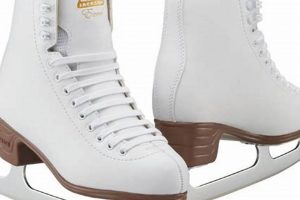
These specialized skating devices simulate the feel and movement of ice figure skates on dry surfaces. They incorporate a blade-like frame with wheels positioned to mimic the rocker of an ice blade, enabling spins, jumps, and edge work similar to those performed on ice. Examples include models designed with adjustable toe stops and specific wheel configurations for enhanced maneuverability.
The utilization of these skates facilitates year-round training for figure skaters, independent of ice availability. This consistent practice contributes to improved muscle memory, technique refinement, and the maintenance of skill levels during off-season periods. Historically, their development addressed the limitations of seasonal ice access, offering a practical solution for dedicated athletes.
The following sections will delve into the specific components of these skates, examine their impact on training methodologies, and compare their performance characteristics with traditional ice skating equipment. Further analysis will address appropriate maintenance procedures and considerations for selecting the optimal model based on individual skating needs and skill levels.
Essential Considerations for Figure Inline Skate Usage
The effective and safe utilization of these skates requires adherence to specific guidelines. The following recommendations aim to optimize performance and minimize the risk of injury.
Tip 1: Wheel Maintenance: Regular inspection and rotation of wheels are crucial. Uneven wear impacts stability and maneuverability. Replacement should occur when wheel diameter diminishes significantly.
Tip 2: Frame Alignment Verification: Ensure the frame is properly aligned with the boot. Misalignment impedes edge control and can contribute to incorrect technique execution. Professional fitting is recommended.
Tip 3: Boot Support Evaluation: Adequate ankle support is paramount. Stiff boots, similar to those used for ice skating, are necessary to provide the required stability for complex maneuvers. Consider heat-moldable options for a personalized fit.
Tip 4: Surface Selection: Opt for smooth, level surfaces devoid of debris. Rough or uneven terrain increases the risk of falls and can damage the equipment. Skate-specific surfaces are optimal where available.
Tip 5: Gradual Skill Progression: Introduce new skills incrementally. Mastering fundamental techniques is essential before attempting advanced jumps and spins. Overambitious training can lead to injury.
Tip 6: Safety Gear Implementation: Protective equipment, including a helmet, wrist guards, elbow pads, and knee pads, is mandatory. Consistent use minimizes the severity of potential injuries.
Tip 7: Toe Stop Adjustment: Proper toe stop height is essential for balance and jump takeoffs. Adjust the toe stop until it provides adequate support without hindering forward motion.
Adherence to these guidelines promotes a safer and more effective training experience, facilitating skill development and minimizing the risk of injury. Prioritizing proper equipment maintenance, technique progression, and safety precautions is fundamental for skaters of all levels.
The subsequent section will address the comparative advantages and disadvantages of utilizing these skates versus traditional ice skating equipment, further informing the user’s training decisions.
1. Rockered Frame
The rockered frame is a defining characteristic of these skates, distinguishing them from recreational inline skates and enabling performance attributes comparable to ice figure skates. This design feature is paramount for simulating the edge control and maneuverability required for figure skating techniques on dry surfaces.
- Mimicking Ice Blade Curvature
The frame’s rockered profile replicates the curved blade of ice skates, allowing for similar weight distribution and edge engagement. This curvature facilitates tight turns, spins, and the controlled execution of edges necessary for figure skating elements. Without this design, inline skates would lack the agility required for replicating ice skating techniques.
- Enhanced Maneuverability
The rockered frame allows for a smaller contact area between the wheels and the ground, which significantly increases the skate’s maneuverability. This smaller contact point enables skaters to transition quickly between edges, execute pivots, and perform complex footwork patterns that are fundamental to figure skating. This capability is essential for accurate simulation of ice skating maneuvers.
- Facilitating Spin Execution
The frame geometry allows for precise control during spin initiation and execution. The rocker enables the skater to find the center of balance more easily, allowing for smoother and more controlled spins. Specific models incorporate adjustable rocker configurations to cater to individual skater preferences and skill levels. The rocker is critical for stable and sustained rotations.
- Impact on Jump Landings
The rockered profile also influences jump landings. The curved frame assists in absorbing impact and maintaining balance upon landing, mimicking the way an ice blade interacts with the ice surface. This contributes to more controlled and stable landings, reducing the risk of injury and allowing for smoother transitions into subsequent movements.
The rockered frame is therefore not merely a structural component but a functional design element integral to the performance characteristics of these specialized skates. Its influence on maneuverability, spin execution, and jump landings directly impacts the skater’s ability to replicate and practice figure skating techniques off the ice. The design allows for more advanced movement than a standard inline skate.
2. Wheel Hardness

Wheel hardness is a critical parameter in the performance of figure inline skates, significantly influencing grip, glide, and overall maneuverability. The durometer rating, typically measured on the A scale, quantifies the wheel’s resistance to indentation, impacting a skater’s ability to execute precise movements.
- Grip and Edge Control
Softer wheels (e.g., 82A-85A) provide increased grip, enhancing edge control during turns and spins. This increased friction allows skaters to maintain sharper angles and execute more controlled movements, particularly beneficial for beginners or those practicing intricate footwork. The trade-off is increased rolling resistance and reduced speed.
- Glide and Speed
Harder wheels (e.g., 88A-90A) offer enhanced glide and reduced rolling resistance, facilitating greater speed and smoother transitions. This is advantageous for skaters performing jumps and advanced maneuvers requiring momentum. However, the reduced grip necessitates more precise technique to prevent slippage, particularly on smoother surfaces.
- Surface Compatibility
Wheel hardness must be selected in consideration of the skating surface. Softer wheels perform better on rougher surfaces, providing adequate grip. Conversely, harder wheels are more efficient on smooth, polished surfaces, maximizing glide. Selecting an inappropriate durometer can compromise performance and increase wear.
- Wear Resistance and Durability
Harder wheels generally exhibit greater wear resistance and durability, extending their lifespan. Softer wheels, while offering enhanced grip, tend to wear down more rapidly, particularly with frequent use or on abrasive surfaces. The choice between durability and performance depends on the skater’s training intensity and budget considerations.
In summary, the selection of appropriate wheel hardness for figure inline skates requires careful consideration of the skater’s skill level, the type of skating surface, and the desired balance between grip, glide, and durability. Optimal wheel hardness contributes significantly to performance and the overall skating experience.
3. Toe Stop Design

The toe stop constitutes a critical component of figure inline skates, significantly influencing jump execution, spin initiation, and overall balance. Its design and adjustability directly impact the skater’s ability to perform technical elements with precision and control. A poorly designed or improperly adjusted toe stop can impede performance and increase the risk of falls. For instance, a toe stop positioned too high may hinder forward motion and impede proper takeoffs, while one set too low can cause premature contact with the skating surface, disrupting balance. Different models offer varying toe stop designs, ranging from fixed to adjustable heights and angles, allowing skaters to customize their skates to individual preferences and skating styles. Real-world examples include experienced skaters favoring smaller, more streamlined toe stops for enhanced agility, while beginners often benefit from larger, more stable platforms.
The practical significance of understanding toe stop design extends to injury prevention and skill development. By correctly adjusting the toe stop, skaters can optimize their body mechanics and reduce the strain on joints during jumps and landings. Proper adjustment also facilitates the consistent execution of complex maneuvers, such as toe loop jumps and spins, contributing to a more efficient learning curve. Furthermore, the material composition of the toe stop affects its grip and durability, with higher-quality materials providing enhanced traction and longevity. Skaters should consider these factors when selecting replacement toe stops to maintain consistent performance.
In summary, the design and adjustability of the toe stop are integral to the functionality of figure inline skates. Optimal toe stop configuration enhances balance, facilitates jump execution, and minimizes the risk of injury. The selection and maintenance of appropriate toe stops are therefore essential for skaters seeking to maximize their performance and enjoyment of the sport. Failing to consider these factors can impede skill progression and compromise safety.
4. Boot Stiffness
Boot stiffness in figure inline skates is a pivotal factor influencing performance, stability, and injury prevention. It dictates the degree of support provided to the ankle and lower leg, directly impacting a skater’s ability to execute precise movements and maintain balance.
- Ankle Support and Stability
Higher boot stiffness provides greater ankle support, preventing excessive pronation or supination. This stability is crucial for executing complex maneuvers such as jumps and spins, where maintaining proper alignment is essential. For example, boots rated with a stiffness of 70 or higher on a standardized scale are typically recommended for advanced skaters performing triple jumps.
- Energy Transfer and Responsiveness
Stiffer boots facilitate more efficient energy transfer from the skater’s leg to the frame and wheels, enhancing responsiveness and control. This is particularly important during edge work, where subtle shifts in weight distribution can significantly affect the skater’s trajectory. A boot that flexes excessively absorbs energy, diminishing the skater’s ability to maintain precise edges.
- Injury Prevention
Adequate boot stiffness helps to protect the ankle and lower leg from injuries such as sprains and fractures. The rigid structure limits the range of motion, preventing the ankle from exceeding its physiological limits during high-impact landings or sudden changes in direction. Boots with insufficient stiffness offer inadequate support, increasing the risk of injury.
- Technique Development
Appropriate boot stiffness is essential for proper technique development. By providing a stable platform, stiffer boots allow skaters to develop the correct muscle memory and alignment necessary for executing figure skating elements. Boots that are too flexible can lead to compensatory movements, hindering long-term skill progression.
The selection of boot stiffness in figure inline skates should be carefully considered based on the skater’s skill level, body weight, and the intensity of their training regimen. A boot that is too stiff can restrict movement and cause discomfort, while one that is too flexible provides inadequate support. Consulting with a qualified skate technician is recommended to ensure proper fit and stiffness selection, optimizing performance and minimizing the risk of injury.
5. Surface Compatibility
The performance and longevity of figure inline skates are inextricably linked to surface compatibility. The skating surface directly influences wheel wear, grip, speed, and the skater’s ability to execute maneuvers safely and effectively. Incompatible surfaces can lead to premature equipment failure, reduced performance, and an increased risk of injury. For instance, skating on rough asphalt can rapidly degrade wheel integrity, diminishing grip and control, which is essential for executing precise figure skating elements. Conversely, using skates designed for smooth surfaces on uneven terrain can induce vibrations and instability, potentially causing falls. Consequently, surface selection becomes a primary consideration for maximizing the benefits of these specialized skates.
Appropriate surface selection extends beyond mere avoidance of damage. Optimal surfaces, such as smooth concrete or specialized inline skating rinks, provide a consistent and predictable skating experience. This consistency allows skaters to refine their technique and build confidence in executing complex jumps, spins, and footwork patterns. The absence of surface irregularities minimizes the risk of unexpected deviations, enabling more precise edge control and balance. Furthermore, specialized surfaces often incorporate features that enhance grip and reduce friction, optimizing both performance and safety. A practical example is the use of polyurethane-coated surfaces in indoor skating facilities, which provide a balanced blend of grip and glide.
In conclusion, surface compatibility represents a critical, often overlooked, component of figure inline skating. Understanding the cause-and-effect relationship between surface characteristics and skate performance is essential for both equipment maintenance and skater safety. Selecting appropriate surfaces maximizes skate longevity, enhances performance, and minimizes the risk of injury, ensuring a more effective and enjoyable training experience. Neglecting surface compatibility compromises the investment in specialized equipment and undermines the skater’s ability to progress safely and efficiently.
6. Technique Transfer
The successful adaptation of figure skating techniques from ice to inline surfaces represents a critical aspect of utilizing figure inline skates effectively. Technique transfer is not a direct replication but rather a nuanced adjustment of existing skills to accommodate the distinct properties of inline equipment and skating surfaces. This process necessitates a thorough understanding of biomechanical principles and the specific demands of each discipline.
- Edge Work Adaptation
On ice, edges are created by angling the blade, resulting in clean, defined lines. Inline skates, however, possess wheels, requiring a more pronounced shift in weight and body alignment to achieve comparable edge control. Skaters must exaggerate edge pressure to compensate for the increased rolling resistance and achieve similar results. Failure to adapt edge work leads to instability and imprecise movements.
- Jump Takeoff Modification
Ice skating jump takeoffs involve a distinct push and glide phase before initiating the jump. Inline skating takeoffs require a more immediate and forceful application of power due to the increased friction. Skaters must shorten the glide phase and focus on generating vertical lift more rapidly. Incorrect takeoff timing and power application can result in reduced jump height and rotation speed.
- Spin Centering Adjustments
Centering during spins on ice relies on precise blade placement and subtle adjustments in body position. Inline skating spins necessitate a higher degree of core stability and balance due to the reduced contact area and increased instability of the wheels. Skaters must actively engage core muscles and make frequent adjustments to maintain equilibrium. Inadequate core engagement leads to wobbly spins and potential falls.
- Landing Technique Refinement
Ice skating landings involve absorbing impact through the ankles and knees while maintaining balance on a narrow blade. Inline skating landings require a broader base of support and a more controlled distribution of weight across multiple wheels. Skaters must consciously adjust their landing technique to absorb impact and maintain stability. Failure to adapt landing technique can result in ankle strain and increased risk of injury.
The degree of successful technique transfer directly impacts the skater’s ability to replicate figure skating elements on inline skates. While inline skating provides an opportunity for off-ice training and skill maintenance, it is crucial to recognize the inherent differences and adapt techniques accordingly. Understanding and implementing these adjustments maximizes the benefits of using figure inline skates and minimizes the risk of developing detrimental habits.
7. Maintenance Requirements
The sustained performance and longevity of figure inline skates are contingent upon adherence to a rigorous maintenance schedule. Neglecting these requirements can lead to diminished functionality, increased risk of injury, and premature equipment failure, thereby compromising the skater’s training effectiveness and safety. Proper maintenance is not merely a matter of convenience but an essential aspect of responsible equipment stewardship.
- Wheel Rotation and Replacement
Wheels on figure inline skates experience uneven wear patterns due to the specific demands of figure skating maneuvers. Regular rotation of wheels redistributes wear, maximizing their lifespan and maintaining consistent performance characteristics. Failure to rotate wheels results in diminished edge control and increased vibration, compromising the skater’s ability to execute precise movements. Replacement becomes necessary when wheel diameter is significantly reduced or when wheels exhibit excessive wear, affecting grip and stability. The frequency of rotation and replacement depends on skating intensity and surface conditions.
- Bearing Cleaning and Lubrication
Bearings facilitate smooth wheel rotation and contribute significantly to the skater’s speed and glide. Over time, bearings accumulate dirt, debris, and moisture, which increase friction and reduce efficiency. Regular cleaning and lubrication with appropriate skate-specific lubricants are essential for maintaining optimal bearing performance. Neglecting bearing maintenance leads to reduced speed, increased effort, and potential bearing failure. In extreme cases, corroded bearings can seize, posing a safety hazard.
- Frame Alignment and Inspection
The alignment of the frame with the boot is critical for maintaining proper edge control and balance. Impacts and prolonged use can cause frame misalignment, leading to uneven wheel wear and compromised skating performance. Regular inspection of the frame for signs of damage, such as cracks or bends, is essential for ensuring structural integrity. Misaligned or damaged frames should be adjusted or replaced by a qualified technician to prevent further damage and maintain skater safety. For instance, if a frame bolt is loose, this impacts the skate, which can be a safety concern.
- Toe Stop Maintenance and Adjustment
The toe stop is a critical component for jump takeoffs and certain spin variations. Toe stops require regular inspection for wear and tear, as well as proper adjustment to ensure optimal height and angle. Worn toe stops provide inadequate grip, increasing the risk of slippage during jump takeoffs. Improperly adjusted toe stops can interfere with skating technique and increase the likelihood of falls. Replacement toe stops should be selected based on material composition and design to match the skater’s preferences and skill level.
These maintenance facets collectively contribute to the overall performance, safety, and longevity of figure inline skates. By adhering to a consistent maintenance schedule, skaters can maximize their investment, optimize their training, and minimize the risk of injury. Neglecting these requirements not only diminishes the equipment’s functionality but also compromises the skater’s ability to progress and perform at their highest potential.
Frequently Asked Questions About Figure Inline Skates
This section addresses common inquiries regarding these specialized skating devices, providing concise and informative answers to enhance understanding and promote informed decision-making.
Question 1: Are figure inline skates suitable for beginners?
These skates can be utilized by beginners, but a foundation in basic skating skills is recommended. The rockered frame and specialized components require a degree of balance and coordination. Starting with introductory lessons is advisable to develop fundamental skills before transitioning to these skates.
Question 2: How do figure inline skates differ from recreational inline skates?
The primary distinction lies in the frame design. These skates feature a rockered frame mimicking the curvature of an ice blade, enabling edge work and maneuverability similar to ice figure skates. Recreational inline skates typically have a flat frame optimized for forward speed and stability, rather than intricate maneuvers.
Question 3: What type of maintenance is required for figure inline skates?
Regular maintenance includes wheel rotation, bearing cleaning and lubrication, frame alignment checks, and toe stop inspection. These procedures ensure optimal performance and extend the lifespan of the skates. Neglecting maintenance can lead to diminished performance and increased risk of equipment failure.
Question 4: Can figure skating jumps be performed on figure inline skates?
Yes, these skates are designed to facilitate the practice of figure skating jumps. However, technique adjustments are necessary to account for the different surface properties and equipment characteristics. Mastering basic skating skills and receiving proper instruction are essential before attempting complex jumps.
Question 5: What type of surface is best for figure inline skating?
Smooth, level surfaces such as polished concrete or specialized inline skating rinks are optimal. Rough surfaces can damage the wheels and compromise performance. Surfaces should be free of debris and obstructions to minimize the risk of falls.
Question 6: How should figure inline skates fit?
The boots should fit snugly, providing adequate ankle support without restricting movement. A proper fit is essential for maintaining balance and executing precise maneuvers. Heat-moldable boots offer a customized fit for enhanced comfort and performance.
These FAQs provide a foundational understanding of figure inline skates. Consistent adherence to maintenance guidelines and safety precautions contributes to an enhanced and secure skating experience.
The subsequent section will address advanced training methodologies for figure inline skating, building upon the knowledge presented herein.
Conclusion
This examination of figure inline skates has traversed various facets, from core components and maintenance protocols to technique adaptation and surface considerations. The analysis underscores the specialized nature of this equipment, designed to emulate ice figure skating on alternative surfaces, and highlights the necessity for informed usage and meticulous upkeep.
The continued development and refinement of this technology hold promise for expanded accessibility to figure skating training. Understanding the nuances of figure inline skates empowers skaters to optimize their practice regimens, mitigate potential risks, and contribute to the ongoing evolution of the sport.