The comparative difficulty between skate types used in ice hockey and figure skating represents a common inquiry for those new to ice sports. The design differences inherent in each type of skate influence the learning curve and perceived ease of use. Hockey skates are engineered for speed, agility, and protection, while figure skates prioritize precision, balance, and artistry. This leads to distinct challenges and advantages for beginners.
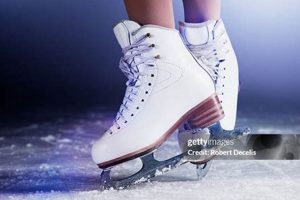
Understanding the nuances of each skate design is crucial. Hockey skates, with their shorter, more rounded blades and rigid boot, are generally considered to offer more immediate stability for forward motion and quicker stops. Conversely, figure skates, characterized by their longer blades, toe picks, and more flexible ankle support, enable complex maneuvers but demand a higher degree of balance and control. The historical development of each skate type reflects its specific purpose and influences its current functionality.
This analysis will explore the key distinctions in blade design, boot construction, and intended use, providing a detailed comparison to determine the relative ease of use associated with hockey and figure skating equipment. Factors such as ankle support, blade curvature, and the presence of toe picks will be considered to provide a comprehensive overview of the challenges and advantages presented by each type of skate. The goal is to offer clarity on which skate type might be more suitable for individuals starting their journey on the ice.
Guidance on Skate Selection and Initial Use
The following guidelines address considerations pertinent to selecting appropriate ice skates for beginners, with a focus on facilitating initial learning and minimizing potential difficulties.
Tip 1: Seek Professional Fitting: Obtain skates from a reputable retailer offering professional fitting services. Proper fit is paramount to comfort, performance, and injury prevention, regardless of the skate type chosen. Incorrect sizing can hinder progress and increase the risk of blisters and ankle instability.
Tip 2: Prioritize Ankle Support: Adequate ankle support is crucial for novice skaters. A stiff boot, particularly in hockey skates, provides greater stability, aiding in balance and reducing the risk of ankle strain. Figure skates often allow for more ankle flex, which is beneficial for advanced maneuvers but can be challenging for beginners.
Tip 3: Begin on a Smooth, Level Surface: Initial practice should occur on a meticulously maintained ice surface. Uneven ice introduces unnecessary difficulty and increases the likelihood of falls. Well-groomed ice allows for smoother gliding and enhanced control during early stages of learning.
Tip 4: Focus on Basic Balance and Posture: Before attempting complex maneuvers, concentrate on establishing a stable stance. Maintain a slightly bent knee position with weight distributed evenly over both skates. This posture promotes balance and control, crucial for developing fundamental skating skills.
Tip 5: Practice Controlled Gliding: Gradual acceleration and controlled gliding are essential. Avoid abrupt movements, which can lead to loss of balance. Practice pushing off with one foot and gliding on the other, gradually increasing the duration of the glide as balance improves.
Tip 6: Learn to Fall Safely: Mastering the art of falling safely is critical for injury prevention. Practice falling forward and sideways, aiming to distribute the impact across the body rather than concentrating it on a single joint. Protective gear, such as wrist guards and knee pads, can provide additional cushioning.
Tip 7: Consider Introductory Lessons: Formal instruction from a qualified skating coach can significantly accelerate learning and reduce the development of incorrect techniques. A coach can provide personalized guidance, correct posture and balance issues, and introduce fundamental skating skills in a structured manner.
These recommendations underscore the importance of proper equipment selection, fundamental skill development, and injury prevention when beginning to skate. Adherence to these guidelines can facilitate a smoother learning experience, regardless of whether hockey or figure skates are chosen.
Following these introductory steps will lead to a more informed decision regarding long-term goals on the ice.
1. Ankle Support

Ankle support constitutes a significant factor influencing the perceived ease of use between hockey and figure skates. Hockey skates are typically constructed with a rigid boot that extends higher up the leg, providing substantial lateral and medial ankle support. This inherent stability reduces the reliance on the skater’s own ankle strength, mitigating the risk of ankle roll and making it easier to maintain an upright position, particularly during initial learning phases. The enhanced support allows the skater to focus more on developing balance and coordination without the added burden of constantly stabilizing the ankle joint.
Figure skates, conversely, often feature more flexible ankle support, allowing for greater range of motion necessary for complex jumps, spins, and footwork. While advantageous for experienced figure skaters, this flexibility can be challenging for beginners. The lower level of ankle support necessitates greater intrinsic ankle strength and proprioceptive awareness, requiring more time and effort to develop. The relative lack of support can result in increased ankle fatigue and a higher risk of instability, potentially hindering early progress and leading to frustration. As a result, beginners may find it harder to maintain proper posture and control on figure skates compared to hockey skates.
In summary, the comparatively greater ankle support afforded by hockey skates contributes to a perception of increased ease of use for novice skaters. The reduced reliance on ankle strength allows beginners to concentrate on foundational skills, accelerating the learning process. While the enhanced ankle support of hockey skates might not be necessary for advanced figure skating techniques, it provides a valuable advantage for those starting their journey on the ice, impacting the overall perception of which skate type is “easier” to learn on initially.
2. Blade Curvature

Blade curvature is a critical element differentiating hockey and figure skates, significantly influencing maneuverability and, consequently, the perceived difficulty of each skate type. The curvature, or rocker, of the blade determines the contact area with the ice, affecting turning ability and stability.
- Turning Radius and Agility
Hockey skate blades exhibit a smaller turning radius due to a more pronounced rocker. This allows for tighter turns and quicker changes of direction, essential for the fast-paced nature of hockey. The increased agility can be advantageous for beginners, as it facilitates easier maneuvering and recovery from imbalances. In contrast, figure skate blades, with a straighter profile, require more deliberate weight shifts to execute turns.
- Forward Speed and Glide Efficiency
Figure skate blades, having a longer, flatter surface, generally offer greater glide efficiency and forward speed with each stride. The extended contact area with the ice maximizes propulsion. Hockey skates, with their more curved blades, require more frequent strides to maintain speed, which can be more physically demanding, but also provides increased control.
- Stability and Balance Considerations
The blade curvature impacts balance. A flatter blade, such as that found on figure skates, provides more inherent stability in a straight line but less maneuverability. The more pronounced rocker on hockey skates requires greater balance control, but allows for more dynamic movement. Beginners may initially find the stability of a flatter blade easier to manage, before needing the agility of hockey skate blades.
- Learning Curve and Skill Progression
The different blade curvatures influence the learning curve. Hockey skates, with their emphasis on agility, may allow for faster development of basic skating skills, such as forward and backward skating, and turning. Figure skates, requiring more precise balance and control, might necessitate a more gradual skill progression. The ease of attaining initial proficiency in hockey skates can contribute to a perception of lower difficulty for beginners.
Ultimately, blade curvature contributes significantly to the distinct characteristics of hockey and figure skates. The enhanced agility afforded by the more pronounced rocker of hockey skate blades may initially appear less daunting for beginners, while the flatter blade of figure skates demands greater stability. These subtle differences in blade design profoundly influence the skater’s experience, shaping perceptions of relative difficulty and impacting the overall learning trajectory.
3. Toe Pick Presence
The presence of toe picks on figure skates, absent in hockey skates, represents a significant factor influencing the initial learning curve and perceived difficulty for novice skaters. This seemingly small feature introduces unique challenges that contribute to the debate regarding which skate type is easier to master.
- Balance and Stability Disruption
Toe picks, located at the front of the figure skate blade, are designed for executing jumps and spins. However, for beginners, they often act as an impediment to smooth gliding and forward momentum. Accidental contact with the ice can cause abrupt stops and instability, increasing the likelihood of falls. The constant awareness required to avoid engaging the toe pick disrupts the natural balance, demanding a heightened level of control that novice skaters often lack. This contrasts sharply with hockey skates, which allow for unobstructed gliding and a more intuitive sense of balance.
- Technique and Posture Implications
Proper figure skating technique requires precise control over body alignment and weight distribution. Beginners unfamiliar with this technique often lean too far forward, increasing the risk of toe pick engagement. This tendency can lead to the development of poor posture habits, further exacerbating balance issues. In hockey skating, the absence of toe picks allows for a more forgiving posture, enabling beginners to focus on fundamental skills without the added complexity of toe pick avoidance.
- Skill Acquisition and Progression
The presence of toe picks necessitates a more deliberate and controlled approach to skill acquisition. Learning to navigate the ice without accidentally engaging the toe picks requires patience and precision. Simple maneuvers, such as forward skating and turning, can become significantly more challenging due to the added element of toe pick awareness. This slower progression can lead to frustration for beginners, potentially hindering their motivation to continue learning. Hockey skates, conversely, allow for a more rapid development of basic skills, contributing to a more positive and encouraging initial skating experience.
- Injury Risk Considerations
The unpredictable nature of toe pick engagement can contribute to an increased risk of certain types of injuries, particularly falls that result in wrist or head trauma. Beginners often struggle to react quickly enough to prevent falls caused by accidental toe pick contact. While falls are inherent to both hockey and figure skating, the presence of toe picks adds an additional layer of complexity to fall prevention. The reduced risk of such falls in hockey skating contributes to a perception of increased safety, potentially making it a more appealing option for beginners concerned about injury.
The multifaceted impact of toe pick presence on balance, technique, skill acquisition, and injury risk underscores its significance in differentiating the learning curves of figure and hockey skates. The challenges presented by toe picks contribute to the perception that hockey skates may offer a more accessible and less daunting introduction to the world of ice skating for beginners. The relative absence of such obstacles in hockey skates allows for a more streamlined and intuitive learning experience, potentially fostering greater enjoyment and long-term engagement with the sport.
4. Intended Use
The intended use of hockey and figure skates directly influences the skill sets prioritized and, consequently, the perceived ease of learning each discipline. The fundamental divergence in their respective purposes shapes the design characteristics and the techniques employed, contributing to the relative difficulty experienced by novice skaters.
- Skill Focus and Specialization
Hockey skates are designed for speed, agility, and rapid directional changes, crucial for team play and puck handling. The skills emphasized include forward and backward skating, quick stops, and sharp turns. Figure skates, in contrast, are engineered for artistry, precision, and complex maneuvers, prioritizing jumps, spins, and intricate footwork. This specialization dictates the techniques taught and the muscle groups developed, leading to distinct learning pathways. The more straightforward skill set of basic hockey skating contributes to a perception of initial accessibility, while the technical demands of figure skating can present a steeper learning curve.
- Protective Features and Aggressiveness
Hockey skates prioritize protection due to the inherent physicality of the sport. Reinforced boots, ankle support, and blade guards are common features designed to withstand impacts from pucks, sticks, and other players. The ability to withstand aggressive play lowers the immediate risk of injury associated with falls or collisions, which can increase confidence for beginners. Figure skates, while also offering some protection, place greater emphasis on flexibility and range of motion, potentially leaving skaters more vulnerable to certain types of injuries, such as ankle sprains. This heightened risk awareness can influence the perceived difficulty and attractiveness of figure skating for some novices.
- Performance Environment and Surface Interaction
Hockey is typically played on a larger ice surface with varied conditions, requiring skaters to adapt to different ice qualities and potential imperfections. This adaptability necessitates a robust and versatile skate design, allowing for efficient performance across a range of conditions. Figure skating, conversely, is often performed on pristine ice surfaces under controlled conditions, allowing for greater precision and consistency. The more demanding environment of hockey skating can contribute to a perception of increased difficulty, particularly for beginners who lack the experience to navigate varied ice conditions effectively.
- Physical Demands and Endurance Requirements
Hockey skating places a high premium on explosive power, speed, and endurance. Players are required to maintain high levels of intensity for extended periods, demanding significant cardiovascular fitness and muscular strength. Figure skating, while also physically demanding, places greater emphasis on balance, coordination, and flexibility. The differing physical demands contribute to distinct challenges for beginners. The intense physical requirements of hockey skating can be daunting for some, while others may find the more technical and controlled movements of figure skating to be more challenging.
The correlation between intended use and the perceived ease of hockey versus figure skates underscores the importance of aligning skate selection with individual goals and preferences. The more straightforward skill set and emphasis on protection in hockey skating may make it appear more accessible for beginners, while the technical demands and emphasis on artistry in figure skating can present a steeper learning curve. Understanding these differences allows prospective skaters to make informed decisions, optimizing their initial experience and increasing the likelihood of long-term engagement with their chosen discipline.
5. Balance Demands
The perception that hockey skates are easier than figure skates is inextricably linked to the balance demands inherent in each discipline. The design and functionality of each skate type directly influence the degree of balance required to perform fundamental maneuvers. Hockey skates, with their shorter, more rounded blades and generally stiffer boot construction, provide a more stable platform for beginners. This inherent stability reduces the reliance on intrinsic balance, allowing novices to focus on propulsion and basic control without the immediate need for highly refined equilibrium. In contrast, figure skates, characterized by longer blades, the presence of toe picks, and a greater degree of ankle flexibility, necessitate a more sophisticated understanding of balance and weight distribution from the outset. The toe pick, in particular, introduces a significant balance challenge, as improper weight placement can lead to sudden stops and falls.
The heightened balance demands of figure skates manifest in several practical ways. Novice figure skaters often struggle to maintain a stable center of gravity, leading to wobbling and difficulty executing even simple glides. The longer blade requires more precise weight transfer during turns and edges, increasing the complexity of movement. Furthermore, the flexible ankle support in many figure skates necessitates greater ankle strength and proprioceptive awareness to prevent instability. A real-world example illustrates this point: a beginner transitioning from hockey to figure skates often reports feeling significantly less stable, despite possessing basic skating proficiency. This reduced stability stems directly from the increased balance demands imposed by the figure skate design. Successful figure skating relies heavily on subtle adjustments to body posture and weight distribution, skills that take time and dedicated practice to develop.
Ultimately, the relative ease of hockey skates compared to figure skates is intrinsically tied to the balance requirements. Hockey skates offer a more forgiving platform for beginners, allowing them to develop fundamental skating skills without the immediate pressure of mastering complex balance techniques. This lower entry barrier contributes to the perception of hockey skates being “easier.” While figure skating presents a steeper initial learning curve due to its heightened balance demands, the long-term rewards of mastering this discipline are undeniable. A thorough understanding of the balance demands associated with each skate type is crucial for individuals seeking to embark on their skating journey, enabling them to make informed decisions based on their individual goals and skill levels.
Frequently Asked Questions
This section addresses common inquiries surrounding the relative difficulty of learning to skate on hockey skates versus figure skates, offering clear and concise answers based on fundamental design differences and skill requirements.
Question 1: Are hockey skates inherently easier to learn on than figure skates?
Hockey skates generally offer greater initial stability due to their rigid boot construction and shorter, more rounded blades. This inherent stability can facilitate easier balancing and forward movement for beginners. Figure skates, with their longer blades and toe picks, demand a higher degree of balance and control from the outset.
Question 2: What role does ankle support play in the learning curve?
Ankle support is a crucial factor. Hockey skates typically provide more substantial ankle support, reducing the reliance on the skater’s own ankle strength and mitigating the risk of instability. Figure skates often feature more flexible ankle support, allowing for greater range of motion but requiring greater inherent ankle stability.
Question 3: How do toe picks on figure skates affect the learning process?
Toe picks can present a significant challenge for beginners. Accidental engagement of the toe pick can cause abrupt stops and falls, disrupting balance and hindering smooth gliding. Hockey skates lack toe picks, allowing for unobstructed movement and a more intuitive sense of balance.
Question 4: Does blade curvature influence the ease of learning?
Blade curvature plays a vital role. Hockey skate blades exhibit a smaller turning radius, enabling tighter turns and quicker changes of direction. Figure skate blades, with a straighter profile, offer greater glide efficiency but require more deliberate weight shifts for turning.
Question 5: Is one type of skate safer for beginners than the other?
Hockey skates, with their enhanced ankle support and absence of toe picks, may offer a slightly lower risk of certain types of injuries, such as ankle sprains and falls caused by toe pick engagement. However, both disciplines carry inherent risks, and proper protective gear is essential regardless of the chosen skate type.
Question 6: Does prior athletic experience influence the choice between skate types?
Prior experience in sports requiring balance and coordination, such as snowboarding or gymnastics, can be beneficial for both hockey and figure skating. However, specific experience in one sport does not necessarily dictate which skate type is “easier” to learn on. The optimal choice depends on individual goals, preferences, and learning styles.
Ultimately, the perceived ease of hockey skates versus figure skates is subjective and depends on individual factors. While hockey skates may offer greater initial stability and a more forgiving learning curve, figure skates can provide a rewarding and challenging experience for those willing to invest the time and effort required to master the discipline.
Further exploration into specific skill development techniques and protective gear recommendations can provide a more comprehensive understanding of the demands associated with each skate type.
Conclusion
The preceding analysis has explored the multifaceted question of whether hockey skates are easier than figure skates, examining crucial design elements, skill requirements, and balance demands. The investigation reveals that hockey skates, with their inherent stability and forgiving design, often present a less daunting initial learning experience for novice skaters. This accessibility stems from factors such as enhanced ankle support, a more rounded blade profile, and the absence of toe picks, collectively reducing the initial balance and coordination challenges.
While hockey skates may offer a more streamlined entry point into the world of ice skating, the long-term pursuit of either discipline demands dedication, practice, and a willingness to overcome inherent challenges. Future investigations might explore the influence of coaching methodologies or the impact of specialized training programs on the learning curves associated with each skate type. Ultimately, the choice between hockey and figure skates should align with individual preferences and long-term athletic goals, recognizing that mastery in either domain requires commitment and perseverance.