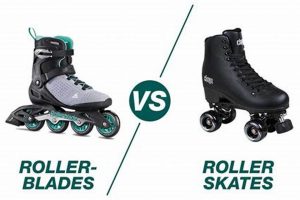
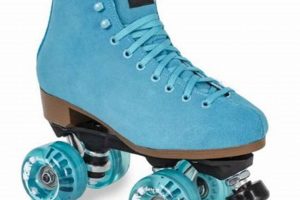
The selection of appropriate rolling components significantly impacts the performance and enjoyment of indoor skating activities. These components, designed for use on smooth, hard surfaces like rinks or indoor sports courts, are engineered to provide optimal grip, roll, and maneuverability. An example includes wheels constructed from softer durometer polyurethane, which offers enhanced traction on polished floors.
Proper selection enhances the skater’s control, reduces the risk of slippage, and contributes to a smoother, more efficient stride. Historically, advancements in materials and design have led to significant improvements in indoor skating performance, allowing for greater speeds, more intricate maneuvers, and overall improved skating experience. Selecting the right features ensures safety and maximizes the potential for skill development.
The following sections will detail the key considerations for choosing these components, including durometer, size, and core material, to assist skaters in making informed decisions for their specific needs and preferences.
Guidance on Indoor Roller Skating Wheel Selection
Effective indoor roller skating hinges on the proper selection of wheel components. The following recommendations outline key factors to consider for optimal performance.
Tip 1: Prioritize Durometer. A lower durometer rating (e.g., 78A-88A) generally provides enhanced grip on smooth indoor surfaces. This increased traction is crucial for maintaining control and executing precise movements.
Tip 2: Assess Wheel Size. Smaller diameter wheels (e.g., 59mm-62mm) offer increased maneuverability and quicker acceleration. Consider smaller sizes for rink skating or jam skating, where agility is paramount.
Tip 3: Evaluate Core Material. Polycarbonate or nylon cores offer a balance of durability and responsiveness. A robust core is essential for transferring energy efficiently during pushes and turns.
Tip 4: Consider Wheel Profile. A rounded wheel profile provides smoother transitions and improved roll. A flatter profile offers increased grip but may sacrifice some speed.
Tip 5: Inspect Surface Compatibility. Always verify that the selected wheel durometer and profile are suitable for the specific indoor surface. Extremely polished surfaces may require softer wheels to maximize grip.
Tip 6: Rotate Wheels Regularly. Consistent wheel rotation distributes wear evenly, extending the lifespan of the components and maintaining consistent performance characteristics.
Tip 7: Clean Wheels Periodically. Removing debris and dirt from the wheel surface ensures optimal grip and roll. Use a mild cleaning solution and a soft cloth for maintenance.
Adhering to these selection and maintenance guidelines contributes to an enhanced indoor skating experience, promoting both performance and safety.
The subsequent sections will further explore advanced considerations for customizing wheel selection to specific skating styles and skill levels.
1. Durometer

Durometer, a measure of a wheel’s hardness, is a critical factor in selecting components specifically engineered for indoor roller skating. Its impact is paramount in determining the level of grip and roll achievable on smooth, hard indoor surfaces. A softer durometer, typically ranging from 78A to 88A, provides enhanced friction and traction. This characteristic is particularly beneficial on polished concrete or wooden rink floors where slippage can be a significant impediment to performance and safety. The cause-and-effect relationship is direct: lower durometer equates to higher grip, enabling tighter turns and more controlled stops.
The selection of an inappropriate durometer can severely hinder a skater’s capabilities. For example, using a hard wheel (90A or higher) designed for outdoor surfaces on a polished indoor rink results in reduced control and increased risk of falls due to insufficient grip. Conversely, while an extremely soft wheel might maximize grip, it could sacrifice roll speed and efficiency. Therefore, understanding the correlation between durometer and surface characteristics is crucial for optimizing the skating experience. Different surfaces, from coated sports courts to traditional wooden rinks, necessitate specific durometer ranges to strike the optimal balance between grip and roll. This is where the “best roller skate wheels for indoor” come in, offer best range of durometer.
In summary, the significance of durometer cannot be overstated in the context of indoor roller skating. Its influence on grip and control is fundamental to skater safety and performance. Careful consideration of the surface type and desired skating style should guide the selection of a suitable durometer range. By understanding and applying this principle, skaters can ensure a more enjoyable and efficient indoor skating experience.
2. Diameter
Wheel diameter, measured in millimeters (mm), significantly influences the performance characteristics of indoor roller skates. Its selection directly impacts acceleration, top speed, and maneuverability, making it a crucial consideration for skaters seeking optimal performance. The size of the wheel must be tailored to the specific skating style and rink environment.
- Acceleration and Responsiveness
Smaller diameter wheels (typically 59mm-62mm) facilitate quicker acceleration and enhanced responsiveness. This is due to the reduced rotational inertia, allowing skaters to initiate movement and change direction rapidly. This advantage is particularly beneficial in environments requiring frequent stops and starts, such as jam skating or roller derby. The reduced size offers a performance increase due to smaller size and weight.
- Top Speed and Roll Efficiency
Larger diameter wheels (typically 63mm-70mm) possess a higher roll efficiency and potential for increased top speed. Once in motion, these wheels maintain momentum more effectively due to their larger circumference. This is advantageous for speed skating or longer sessions where sustained speed is desired. However, the increased size comes at the expense of maneuverability.
- Maneuverability and Agility
Smaller wheels inherently provide greater maneuverability due to their compact size and lower center of gravity. This allows for tighter turns and quicker transitions, essential for navigating crowded rinks or executing intricate dance moves. The trade-off lies in the reduced top speed and increased effort required to maintain momentum.
- Impact on Stability
Larger diameter wheels offer slightly enhanced stability, particularly at higher speeds. The increased contact patch with the skating surface provides a more secure platform, reducing the likelihood of wobbling or instability. However, this advantage is less pronounced on smooth, consistent indoor surfaces compared to uneven outdoor terrains.
Therefore, the optimal wheel diameter depends on the individual skater’s preferences and the demands of their chosen skating discipline. Smaller wheels prioritize agility and acceleration, while larger wheels emphasize speed and roll efficiency. Selecting the appropriate diameter ensures a balance between these characteristics, contributing significantly to the overall skating experience and the suitability of the wheels for indoor use.
3. Core Material

The core material within a roller skate wheel significantly impacts its performance, particularly in the context of indoor skating. The core provides structural integrity and serves as the interface between the wheel’s polyurethane tire and the bearings. Its properties directly influence energy transfer, rebound, and overall durability. The selection of core material is, therefore, a critical factor in determining whether a wheel can be considered among the “best roller skate wheels for indoor.”
Common core materials include polycarbonate, nylon, and aluminum. Polycarbonate offers a balance of stiffness and impact resistance, making it a popular choice for recreational and intermediate-level skating. Nylon cores provide a more cost-effective option, often found in entry-level wheels. Aluminum cores, while more expensive, deliver superior stiffness and energy transfer, favored by advanced skaters seeking maximum performance. The consequence of choosing a less rigid core is energy absorption during each push, reducing efficiency and speed. In contrast, a stiffer core allows for more direct power transmission, resulting in improved acceleration and responsiveness. For example, speed skaters competing on indoor tracks often opt for aluminum-cored wheels to minimize energy loss and maximize their speed potential.
Ultimately, the ideal core material depends on the skater’s skill level, skating style, and budget. While aluminum cores offer the highest performance, their increased cost may not be justified for casual skaters. Polycarbonate or nylon cores provide a more practical and affordable option for those prioritizing durability and affordability over ultimate performance. Understanding the specific properties of each core material allows skaters to make informed decisions, optimizing their indoor skating experience and selecting wheels that align with their individual needs and preferences. Therefore, knowledge of the core material allows skater to obtain “best roller skate wheels for indoor.”
4. Wheel Profile
The contour of a roller skate wheel, known as its profile, exerts a notable influence on maneuverability, grip, and roll characteristics, which are central considerations when determining the attributes of optimal indoor skating wheels. The wheel profile affects the contact patch with the skating surface, dictating how the skater interacts with the floor. Variations in profile design cater to different skating styles and preferences, influencing the overall skating experience.
- Rounded Profile: Enhanced Maneuverability
A rounded profile minimizes the contact area with the skating surface, facilitating smooth transitions and improved agility. This design enables skaters to execute quick turns and navigate tight spaces with greater ease. Rounded profiles are frequently favored in disciplines such as artistic skating and roller derby, where rapid directional changes are essential. The reduction in friction allows for greater fluidity in movement.
- Flat Profile: Maximized Grip
A flat profile increases the contact area with the skating surface, resulting in enhanced grip and stability. This design provides a more secure connection to the floor, improving control during powerful pushes and stops. Flat profiles are commonly preferred in speed skating and jam skating, where maintaining a consistent connection with the surface is paramount. However, the increased friction can reduce overall roll speed.
- Elliptical Profile: Hybrid Performance
An elliptical profile represents a compromise between rounded and flat designs, offering a balance of maneuverability and grip. This versatile profile provides a smooth roll while maintaining sufficient traction for controlled turns and stops. Elliptical profiles are often favored by recreational skaters seeking a balanced performance across various skating styles. The slight curvature facilitates smoother transitions compared to flat profiles.
- Conical Profile: Specialized Agility
A conical profile featuring a beveled edge can further enhance agility and allow for deeper lean angles during turns. This profile is often utilized by experienced skaters seeking to maximize their maneuverability and push the limits of their performance on indoor surfaces. However, conical profiles may sacrifice some straight-line stability compared to flatter designs.
The selection of an appropriate wheel profile depends largely on the skater’s individual preferences and the specific demands of their chosen skating discipline. Understanding the performance characteristics associated with each profile design allows skaters to optimize their equipment for enhanced control, speed, and maneuverability within the indoor skating environment. Ultimately, the profile is critical when searching for “best roller skate wheels for indoor.”
5. Bearing Fit
The precision of bearing fit within a roller skate wheel is paramount to achieving optimal rolling efficiency, stability, and longevity, directly impacting the categorization of components as “best roller skate wheels for indoor.” A properly executed bearing fit ensures seamless integration, minimizing friction and maximizing the transfer of energy during skating.
- Tolerance and Precision
The inner diameter of the wheel core must precisely match the outer diameter of the bearing. Deviation from this tolerance results in either excessive play (loose fit) or undue stress (tight fit). A loose fit causes wheel wobble, reducing stability and control. A tight fit can damage the bearing or the wheel core, hindering rotation and potentially leading to premature failure. High-quality wheels, recognized as “best roller skate wheels for indoor,” are manufactured with stringent tolerance control to ensure accurate bearing seating.
- Bearing Seat Material
The material composition of the bearing seat within the wheel core influences the consistency and reliability of the bearing fit. Polyurethane formulations vary in their dimensional stability and resistance to deformation under load. High-end “best roller skate wheels for indoor” often employ specialized polyurethane blends or reinforced cores to maintain precise bearing alignment and prevent core deformation over time. Core deformation contributes to an unstable skating experience and increased wear on bearings.
- Installation and Removal
The ease with which bearings can be installed and removed without causing damage to the wheel core is indicative of a well-designed bearing fit. A properly sized and finished bearing seat allows for smooth insertion and extraction using appropriate tools, minimizing the risk of core cracking or deformation. Wheels that require excessive force to install or remove bearings are not conducive to maintaining bearing health or ensuring consistent performance, thus disqualifying them from consideration as “best roller skate wheels for indoor.”
- Impact on Rolling Resistance
A misaligned or improperly seated bearing significantly increases rolling resistance, diminishing skating speed and efficiency. Friction between the bearing and the wheel core impedes free rotation, requiring the skater to exert more effort to maintain momentum. Wheels designed with precise bearing fit minimize this friction, allowing for smoother, faster, and more energy-efficient skating. The reduced rolling resistance is a key attribute associated with “best roller skate wheels for indoor,” contributing to an enhanced skating experience.
In summary, the quality of the bearing fit directly affects the performance and durability of roller skate wheels. Components engineered with precise tolerances, durable bearing seat materials, and user-friendly installation/removal characteristics contribute to reduced rolling resistance and enhanced skating efficiency. These attributes are essential criteria in determining whether a wheelset qualifies as the “best roller skate wheels for indoor,” ensuring a superior and reliable skating experience.
6. Surface Compatibility
Surface compatibility is a paramount consideration in selecting indoor roller skate wheels, directly impacting performance, safety, and the overall skating experience. The relationship between the wheel’s characteristics and the surface on which it is used determines grip, roll speed, and control. Categorizing wheels as “best roller skate wheels for indoor” hinges significantly on their ability to perform optimally across a range of typical indoor skating surfaces, which can vary considerably in material and texture.
Different indoor surfaces present distinct challenges. Polished concrete floors, common in sports complexes, demand softer durometer wheels to maximize grip and prevent slippage. Wood rinks, prevalent in traditional roller skating facilities, often require a medium-durometer wheel that balances grip and roll. Coated surfaces, such as those found in some gymnasium settings, may necessitate specialized wheel compounds to avoid marking or damaging the floor. A lack of surface compatibility can lead to reduced maneuverability, increased risk of falls, and even damage to the skating surface itself. For example, utilizing hard outdoor wheels on a polished indoor rink results in minimal grip, making controlled movements and stops exceedingly difficult and hazardous. Conversely, excessively soft wheels on a smooth surface may offer ample grip but sacrifice roll speed and create excessive friction, hindering performance.
Effective surface compatibility involves selecting wheel characteristics, such as durometer, profile, and compound, that align with the specific properties of the skating surface. Skaters should assess the floor’s material, texture, and cleanliness before choosing their wheels. Ultimately, the “best roller skate wheels for indoor” are those that provide the optimal balance of grip, roll, and surface protection, allowing skaters to perform safely and efficiently in their chosen environment. Choosing wheels to match surface provides the best result with safety.
Frequently Asked Questions
The following section addresses common inquiries regarding components designed for indoor roller skating. These answers provide insights into selection, maintenance, and performance considerations.
Question 1: What durometer range is most suitable for indoor roller skating?
Generally, a durometer range of 78A to 88A provides optimal grip on typical indoor surfaces. Softer wheels (78A-82A) excel on polished concrete, while slightly harder wheels (83A-88A) perform well on wooden rinks. Surface testing is recommended to fine-tune the selection.
Question 2: How does wheel size affect indoor skating performance?
Smaller diameter wheels (59mm-62mm) enhance maneuverability and acceleration, advantageous for rink skating and jam skating. Larger diameter wheels (63mm-70mm) offer improved roll efficiency and top speed, beneficial for speed skating or longer skating sessions.
Question 3: What core material is recommended for indoor roller skate wheels?
Polycarbonate cores offer a balanced combination of durability and responsiveness, suitable for most indoor skating applications. Nylon cores provide a cost-effective option, while aluminum cores deliver superior stiffness and energy transfer for advanced skaters.
Question 4: How frequently should indoor roller skate wheels be rotated?
Rotating wheels every 10-15 hours of skating time helps distribute wear evenly, extending the lifespan of the components and maintaining consistent performance. Regular inspection for uneven wear is also recommended.
Question 5: Can indoor roller skate wheels be used outdoors?
While technically possible, using wheels designed for indoor use outdoors is not recommended. Indoor wheels are typically softer and will wear down rapidly on rough outdoor surfaces. Performance and longevity will be compromised.
Question 6: How should indoor roller skate wheels be cleaned?
Use a soft cloth and a mild cleaning solution to remove dirt and debris from the wheel surface. Avoid harsh chemicals or abrasive cleaners, as they can damage the polyurethane compound. Ensure the wheels are thoroughly dry before use.
Proper selection and maintenance of rolling components are crucial for a safe and enjoyable indoor skating experience. Adhering to these guidelines ensures optimal performance and extends the lifespan of the equipment.
The following section provides guidance on troubleshooting common problems encountered with these components.
Selecting Optimized Indoor Roller Skate Wheels
The preceding analysis underscores the importance of informed decision-making when acquiring components designed for indoor roller skating. Durometer, diameter, core material, wheel profile, bearing fit, and surface compatibility each contribute to performance and safety. A comprehensive understanding of these factors enables skaters to select equipment that aligns with their skill level, skating style, and the specific characteristics of their intended skating surface. Ultimately, the “best roller skate wheels for indoor” constitute a carefully chosen system of interconnected attributes, not merely a single, isolated feature.
Continued research and technological advancements promise further refinements in rolling component design and materials. Skaters are encouraged to remain informed about these developments and to prioritize informed selection processes, ensuring both enhanced performance and a safe, enjoyable experience. The pursuit of optimized equipment remains an ongoing endeavor, requiring both diligence and a commitment to understanding the complex interplay of factors governing roller skating performance.

![Find Cheap Skate Roller Center Photos: [Location] Fun! | Learn to Surf & Skate: A Beginner's Step-by-Step Guide](https://universitysurfandskate.com/wp-content/uploads/2026/05/th-141-300x200.jpg "Find Cheap Skate Roller Center Photos: [Location] Fun! Learn to Surf & Skate: A Beginner's Step-by-Step Guide")