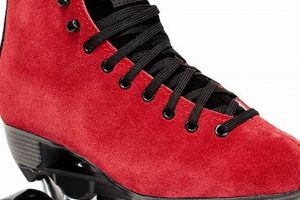
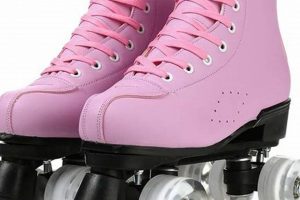
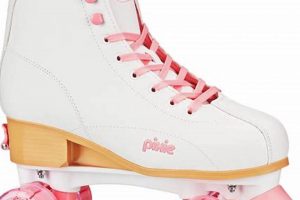
Footwear designed for gliding movement typically incorporates wheels attached to the sole. Models prioritizing reduced weight often utilize materials such as lightweight alloys, composite polymers, and streamlined designs. This contrasts with heavier models, which may prioritize durability or specialized features over ease of maneuverability.
The advantage of reduced mass in such equipment lies in enhanced agility and reduced user fatigue. Historically, advancements in material science have driven the evolution toward lighter recreational and competitive equipment, allowing for increased speed, complex maneuvers, and longer periods of use without significant strain. This contributes to broader participation across age groups and skill levels.
The subsequent sections will detail the specific materials and construction techniques employed in manufacturing such footwear, examine the performance characteristics of different models, and provide guidance on selecting appropriate equipment based on individual needs and intended use.
Optimizing Performance with Lightweight Roller Skates
Selecting and maintaining appropriate footwear is crucial for maximizing performance and ensuring safety. The following tips provide guidance on achieving these objectives when utilizing models designed for reduced mass.
Tip 1: Prioritize Fit: Correct sizing is paramount. Ill-fitting footwear can compromise control and increase the risk of injury. Ensure a snug yet comfortable fit, accounting for sock thickness.
Tip 2: Inspect Wheel Durometer: Wheel hardness, measured in durometer, affects grip and speed. Softer wheels offer greater grip on smooth surfaces, while harder wheels provide higher speeds on rougher terrain. Select the appropriate durometer based on the intended skating environment.
Tip 3: Maintain Bearings: Regular cleaning and lubrication of wheel bearings are essential for optimal performance. Dirty or dry bearings increase friction and reduce speed. Use a specialized bearing cleaner and lubricant for best results.
Tip 4: Tighten Axle Nuts Appropriately: Over-tightening axle nuts restricts wheel rotation and reduces speed. Conversely, under-tightening can lead to wheel detachment and potential injury. Tighten axle nuts until the wheel spins freely with minimal play.
Tip 5: Replace Wheels Regularly: Wheels wear down over time, affecting grip and performance. Inspect wheels for wear patterns and replace them when the diameter becomes significantly reduced or the edges become rounded.
Tip 6: Utilize Protective Gear: Regardless of experience level, wearing appropriate protective gear, including a helmet, knee pads, elbow pads, and wrist guards, is essential for mitigating the risk of injury.
Adhering to these guidelines ensures equipment longevity, promotes safety, and enhances the overall skating experience. Consistent maintenance and careful selection based on individual needs are key to optimal performance.
The subsequent section will address specific considerations for selecting appropriate models based on skill level and intended skating style.
1. Maneuverability
Maneuverability, in the context of wheeled footwear, refers to the ease and precision with which a user can change direction and navigate a course. In models designed for reduced mass, this characteristic is amplified, offering distinct advantages.
- Reduced Inertia
A lower overall mass translates directly to reduced inertia. This allows for quicker starts, stops, and changes in direction, as less force is required to overcome the resistance to motion. For example, a skater attempting a slalom course benefits significantly from decreased inertia, enabling faster transitions between cones.
- Enhanced Agility
The capacity to execute rapid and complex movements is a key component of agility. The reduced weight allows for more agile movement. Skaters can execute sharp turns and intricate footwork with greater ease and precision. This becomes particularly important in competitive disciplines or navigating crowded environments.
- Improved Responsiveness
Responsiveness refers to the speed at which the equipment reacts to user input. With a lighter configuration, directional changes initiated by the skater are translated more directly to the wheels, resulting in a more immediate and predictable response. This increased responsiveness provides a greater sense of control and allows for more nuanced adjustments to movement.
- Decreased Exertion
Operating heavier equipment requires greater physical effort. By decreasing the overall weight of the apparatus, users experience reduced fatigue during use. This reduction in exertion translates to a longer skating duration and the ability to perform more complex maneuvers without diminished performance. This allows for enhanced development of skating skills.
The facets of reduced inertia, enhanced agility, improved responsiveness, and decreased exertion collectively underscore the critical role that lightweight construction plays in optimizing the maneuverability of wheeled footwear. The combined effect creates a more responsive and agile skating experience, improving the overall performance and enjoyment.
2. Agility
Agility, defined as the capacity for rapid and precise changes in direction and body position, is significantly enhanced by the adoption of reduced-mass wheeled footwear. This is primarily due to the direct correlation between mass and inertia. Lower mass reduces inertia, thereby decreasing the force required to initiate and execute directional changes. As a result, the skater experiences a heightened responsiveness to their own movements. Consider a hockey player utilizing such equipment; the ability to transition quickly between forward and backward skating, or to perform tight turns around opponents, is fundamentally improved by the reduced weight on their feet. This translates to a tangible advantage in game play, influencing both offensive and defensive capabilities.
The practical significance of understanding this connection extends beyond competitive sports. Recreational skaters also benefit from enhanced agility, particularly in navigating crowded urban environments or performing complex maneuvers in skate parks. For instance, a skater performing tricks in a skate park, the ability to quickly adjust their body position and direction is essential for executing technical moves and maintaining balance. Likewise, the ability to perform rapid stops and avoid obstacles. Furthermore, agility contributes directly to user safety by enabling quicker reactions to unforeseen hazards. Reduced mass also decreases the physical demands of maintaining balance, further improving the skater’s ability to react to unforeseen hazards on varying terrains. This highlights the value of agility across a broad spectrum of skating activities.
In summary, the relationship between agility and footwear designed for reduced mass is causal and profound. The reduction in weight directly translates to enhanced agility. A key component improves user performance, safety, and overall enjoyment. While challenges remain in optimizing the balance between weight reduction and structural integrity, the pursuit of lighter, more agile skating equipment remains a central tenet of innovation in the field. This focus has broad applicability, as the principles of mass reduction and agility enhancement extend to various fields of sports and recreation.
3. Reduced Fatigue
The adoption of footwear designed for reduced mass has a direct and measurable impact on user endurance. Lower overall weight necessitates less physical exertion for propulsion, balance, and maneuverability, thus minimizing the accumulation of fatigue during use.
- Decreased Muscular Effort
Lighter equipment requires less muscular force to accelerate, decelerate, and maintain a desired velocity. The muscles responsible for lower limb movement, such as the quadriceps, hamstrings, and calf muscles, experience less strain during prolonged skating sessions. A study comparing energy expenditure between skaters using standard versus lightweight models would likely reveal a statistically significant reduction in oxygen consumption and heart rate among the latter group. This translates directly to a decreased perception of effort and prolonged periods of comfortable use.
- Minimized Joint Stress
The repetitive impact experienced during skating can contribute to joint fatigue and discomfort, particularly in the ankles, knees, and hips. Lowering the overall weight borne by these joints with each stride reduces the cumulative stress, thus mitigating the onset of joint-related fatigue. Furthermore, lighter equipment facilitates smoother and more controlled movements, further minimizing abrupt shocks and torsional forces that can exacerbate joint strain.
- Improved Biomechanical Efficiency
Equipment of reduced mass promotes a more natural and efficient skating gait. Heavier footwear can alter the skater’s stride length and cadence, leading to compensatory movements that increase energy expenditure. Lighter models allow for a more streamlined and biomechanically sound skating technique, reducing wasted energy and minimizing the risk of muscle imbalances and postural fatigue. For example, reduced weight for roller skating can lead to more balanced use of a skater’s muscles and joints leading to less strain and improved efficiency in movement.
- Enhanced Cardio Respiratory Performance
By minimizing muscular exertion and joint stress, lighter weight models reduce the overall physiological demand placed on the cardiovascular and respiratory systems. This leads to improved stamina, reduced breathlessness, and an increased capacity for sustained activity. Consequently, skaters can maintain higher speeds and perform more complex maneuvers for extended durations without experiencing the debilitating effects of fatigue. In general, a lighter load on the body has shown consistent improvement for cardio exercises that demand stamina for a long duration.
The cumulative effect of decreased muscular effort, minimized joint stress, improved biomechanical efficiency, and enhanced cardiovascular respiratory performance underscores the significant advantages of footwear designed for reduced mass. The principles apply across various skating disciplines. From recreational skating to competitive speed skating. The adoption of such equipment translates directly to improved endurance, reduced discomfort, and a more enjoyable and sustainable skating experience. Lighter weight equipment’s main benefit is a reduction in physical burden on the skater.
4. Responsiveness
Responsiveness, in the context of wheeled footwear, pertains to the immediacy and accuracy with which the equipment translates user input into action. Footwear designed for reduced mass inherently exhibits enhanced responsiveness due to a diminished moment of inertia. The fundamental principle at play is that a lighter object requires less force to alter its state of motion. Consequently, when a skater initiates a directional change, the apparatus reacts with greater alacrity compared to a heavier counterpart. Consider a speed skater navigating a tight turn; the ability to quickly adjust their trajectory is paramount to maintaining momentum and achieving optimal lap times. Footwear with reduced mass facilitates these rapid adjustments, allowing the skater to trace a more precise line around the curve.
The practical implications of this heightened responsiveness extend beyond competitive environments. For recreational skaters, improved responsiveness translates to enhanced control and maneuverability, particularly in navigating congested areas or avoiding obstacles. When confronted with an unforeseen hazard, such as a pedestrian stepping into the path, the ability to rapidly alter course becomes critical for preventing collisions. Furthermore, for novice skaters, the increased responsiveness can instill greater confidence and accelerate the learning process, as the equipment exhibits a more predictable and forgiving behavior. This is because the skater’s intended movement is more directly and accurately reflected in the equipment’s response.
In summary, the connection between reduced-mass wheeled footwear and enhanced responsiveness is both direct and significant. The decreased inertia inherent in lighter equipment allows for quicker and more precise reactions to user input, leading to improved performance, safety, and overall user experience. While the optimization of responsiveness must be balanced against factors such as stability and durability, the pursuit of lighter, more responsive equipment remains a central objective in the evolution of wheeled footwear design.
5. Material Composition
Material composition is a primary determinant of overall mass in wheeled footwear designed for recreation or competition. The selection of specific materials directly impacts not only weight but also durability, performance characteristics, and cost. An understanding of material properties is, therefore, crucial for evaluating and selecting appropriate models.
- Frame Materials
The frame, or chassis, constitutes a significant portion of the total weight. Common materials include aluminum alloys, composite polymers, and, in high-end models, carbon fiber composites. Aluminum alloys offer a balance of strength and weight reduction, while composite polymers prioritize lightweight construction and vibration damping. Carbon fiber composites provide the highest strength-to-weight ratio but are typically more expensive. The choice of frame material significantly influences the overall weight, stiffness, and responsiveness of the footwear.
- Wheel Core Materials
The wheel core, or hub, supports the polyurethane tire and houses the bearings. Similar to frames, wheel cores can be constructed from various materials, including aluminum alloys and composite polymers. Aluminum cores offer increased stiffness and improved power transfer, while polymer cores prioritize weight reduction and cost-effectiveness. The core material affects wheel performance, influencing rolling resistance and overall speed.
- Boot Materials
The boot provides support and stability for the foot and ankle. Boot materials range from synthetic leather and breathable mesh to rigid plastics and carbon fiber shells. Lighter boot materials, such as carbon fiber, contribute to overall weight reduction but may offer less cushioning and comfort. The selection of boot materials involves a trade-off between weight, support, and comfort, depending on the intended use.
- Fastener Materials
Even seemingly minor components such as axles, buckles, and laces contribute to the overall weight. Lightweight alloys, polymers, and specialized fabrics are often employed to minimize the mass of these fasteners. While the weight savings from individual fasteners may be marginal, the cumulative effect can be significant. A focus on lightweight materials across all components reflects a holistic approach to weight reduction.
The careful selection of materials for each component of wheeled footwear represents a complex engineering challenge. By balancing the properties of different materials, manufacturers can optimize the weight, performance, and durability of their products. Material composition is a critical factor in determining the suitability of footwear for specific applications, from recreational skating to competitive disciplines.
6. Wheel Configuration

Wheel configuration, encompassing wheel size, quantity, and arrangement, significantly influences the performance characteristics of footwear designed for reduced mass. The specific configuration directly impacts speed, maneuverability, stability, and energy efficiency. A smaller wheel diameter, for instance, generally enhances agility and reduces weight, but may compromise top speed and rolling efficiency. Conversely, larger wheels offer increased speed and smoother rolling over uneven surfaces, but can increase weight and reduce maneuverability. The number of wheels, typically ranging from two to four, also affects stability and control. A three-wheel configuration can provide a balance between speed and agility, while a four-wheel setup typically offers greater stability, particularly for novice users.
Consider, for example, competitive speed skaters who often utilize inline models with larger diameter wheels arranged in a single line. This configuration maximizes speed and rolling efficiency, crucial for achieving optimal lap times. However, such a setup may not be suitable for recreational skaters seeking greater stability and maneuverability. Quad models, with two wheels at the front and two at the rear, offer a stable platform and are often preferred by beginners or those engaging in artistic skating. In terms of material usage, this can dictate the lighter frames with fewer wheels. Similarly, the frame configuration of the lighter frame requires different spacing depending on the wheels used.
In summary, the selection of an appropriate wheel configuration for a lightweight skating model involves a careful consideration of the intended use, skill level, and desired performance characteristics. No single configuration is universally optimal; rather, the ideal choice depends on a complex interplay of factors. Understanding the relationship between wheel configuration and performance is essential for selecting equipment that maximizes efficiency and enjoyment while minimizing the risk of injury.
7. Bearing Quality
The quality of bearings significantly influences the performance of lightweight roller skates. Reduced mass accentuates the impact of bearing friction on overall speed and efficiency. Therefore, selecting bearings with appropriate characteristics is critical for optimizing the skating experience.
- Rolling Resistance
Bearing quality directly affects rolling resistance, the force opposing motion. High-quality bearings minimize friction through precision manufacturing, polished surfaces, and optimal lubrication. Reduced rolling resistance translates to increased speed and reduced energy expenditure for the skater. In models designed for reduced mass, even slight improvements in bearing quality can yield noticeable gains in performance.
- ABEC Rating
The Annular Bearing Engineers’ Committee (ABEC) rating is a common metric for bearing precision. Higher ABEC ratings (e.g., ABEC 7 or ABEC 9) indicate tighter tolerances and smoother operation. While a higher ABEC rating generally correlates with reduced friction, it does not encompass all aspects of bearing quality. Material selection and lubrication also play critical roles. For lightweight skates, the ABEC rating is a useful, though incomplete, indicator of potential performance.
- Material Selection
Bearing materials influence durability and corrosion resistance. Stainless steel bearings offer superior corrosion resistance, particularly in wet or humid environments. Ceramic bearings, while more expensive, provide exceptional hardness and low friction. Selecting appropriate bearing materials based on the intended skating environment is essential for maintaining performance and longevity in lightweight setups.
- Lubrication
Proper lubrication minimizes friction and protects bearing surfaces from wear. Synthetic lubricants offer superior performance compared to petroleum-based lubricants, maintaining viscosity over a wider temperature range. Regular cleaning and lubrication are essential for preserving bearing quality and maximizing performance in lightweight models, where friction is more noticeable.
The connection between bearing quality and lightweight roller skates is undeniable. By minimizing rolling resistance, bearings contribute directly to speed, efficiency, and overall skating experience. Consideration of ABEC rating, material selection, and lubrication practices is essential for optimizing bearing performance and realizing the full potential of lightweight skating equipment. The cumulative impact of these factors underscores the importance of bearing quality in the context of equipment designed for reduced mass.
Frequently Asked Questions
The following addresses common inquiries and misconceptions regarding the selection, use, and maintenance of roller skates designed for reduced mass.
Question 1: What quantifiable performance benefits are derived from utilizing models designed for reduced mass?
Reduced mass translates to decreased inertia, which yields improved acceleration, enhanced maneuverability, and reduced energy expenditure. Specific gains are contingent upon skater skill and terrain but generally result in faster lap times and prolonged periods of use before fatigue onset.
Question 2: Is there a trade-off between weight reduction and durability in such equipment?
Yes, excessive weight reduction can compromise structural integrity. Manufacturers often employ advanced materials, such as carbon fiber composites, to mitigate this trade-off, but proper maintenance and careful use remain essential for maximizing equipment longevity.
Question 3: What constitutes appropriate bearing maintenance for optimal performance?
Bearing maintenance involves regular cleaning with a solvent-based cleaner and subsequent lubrication with a synthetic lubricant. Frequency depends on usage conditions, but cleaning and lubrication are generally recommended every 20-40 hours of use.
Question 4: How does wheel durometer impact the skating experience?
Wheel durometer, measured on the A scale, indicates hardness. Softer wheels (lower durometer values) offer greater grip on smooth surfaces, while harder wheels (higher durometer values) provide faster speeds on rougher terrain. Selection should align with the intended skating environment.
Question 5: Are specialized skills required to operate equipment prioritizing reduced mass?
While not strictly required, advanced skating skills enhance the benefits derived from such equipment. Experienced skaters can leverage the increased responsiveness and agility to execute more complex maneuvers. Novice users may require a period of adjustment to acclimate to the reduced inertia.
Question 6: What safety considerations are particularly important when utilizing lightweight models?
Despite weight reduction, standard safety precautions remain paramount. Helmets, knee pads, elbow pads, and wrist guards are essential for mitigating the risk of injury. Furthermore, skaters should be mindful of the increased responsiveness and avoid exceeding their skill level.
In summary, equipment designed for reduced mass offers quantifiable performance benefits, but careful consideration must be given to durability, maintenance, and safety. Appropriate selection and responsible use are essential for maximizing the advantages of such models.
The subsequent section will address advanced topics in roller skate technology and future trends in the field.
Conclusion
The preceding analysis has detailed the various facets of lightweight roller skates, from material composition and wheel configuration to bearing quality and performance characteristics. The significance of reduced mass in enhancing maneuverability, agility, and overall skating efficiency has been underscored. A thorough understanding of these elements is essential for informed decision-making in equipment selection and utilization.
As technology continues to evolve, further advancements in materials science and engineering are anticipated, promising even lighter and more responsive skating equipment. Continued research and development efforts are crucial for optimizing the balance between weight reduction, durability, and safety. The pursuit of innovation in this field holds the potential to further enhance the skating experience for both recreational and competitive users.