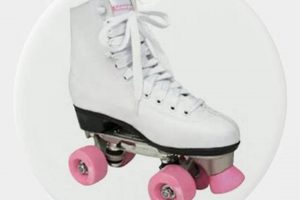
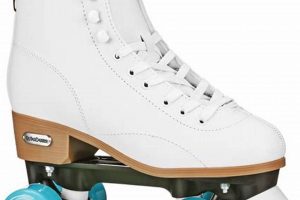
Specialized footwear designed for the sport of roller derby facilitates the unique demands of the game. These implements, typically featuring a low-cut boot for increased agility and non-marking wheels for grip on the track, enable athletes to execute quick turns, stops, and powerful strides. A durable toe stop provides a crucial braking mechanism and assists with positional play.
The functionality afforded by this equipment is paramount for competitive performance and safety. They offer the support and responsiveness required to navigate the tight formations and rapid changes in direction characteristic of the sport. Historically, modifications and advancements in design have mirrored the evolution of roller derby itself, contributing to the increased speed and athleticism seen in modern gameplay.
Understanding the various components and features of these specialized implements is crucial for selecting the optimal equipment. Further discussion will explore factors such as boot material, wheel durometer, and plate construction, enabling informed decision-making for both novice and experienced participants in the sport.
Roller Derby Skates
Optimal performance and longevity of roller derby equipment require careful consideration of selection criteria and consistent maintenance practices. The following guidelines outline essential factors to ensure safe and effective utilization of this specialized footwear.
Tip 1: Boot Selection. The boot’s material and construction directly impact comfort and support. Leather boots offer superior durability and molding to the foot, while synthetic options provide lighter weight and potentially better ventilation. Ensure a snug, but not restrictive, fit to maximize responsiveness and prevent injury.
Tip 2: Plate Material Considerations. The plate, connecting the boot to the wheels, significantly influences maneuverability. Aluminum plates provide greater rigidity and power transfer, ideal for advanced skaters. Nylon plates offer more flex and are suitable for beginners seeking enhanced control.
Tip 3: Wheel Durometer and Surface. Wheel hardness, measured in durometer, impacts grip and roll. Softer wheels (lower durometer) provide increased grip on slick surfaces, while harder wheels (higher durometer) offer faster roll on smoother tracks. Choose wheel durometer based on the specific track conditions.
Tip 4: Bearing Maintenance. Bearings facilitate wheel rotation. Regular cleaning and lubrication are crucial for maintaining optimal speed and reducing wear. Remove bearings from the wheels periodically, clean with a solvent, and lubricate with a light oil specifically designed for bearings.
Tip 5: Toe Stop Adjustment. Proper toe stop height is essential for braking and positional play. Adjust the toe stop to a height that allows for comfortable and controlled stops without causing excessive drag during regular skating. Regularly inspect toe stops for wear and replace them as needed.
Tip 6: Regular Inspection. Conduct routine inspections of all components, including boots, plates, wheels, bearings, and toe stops. Check for signs of wear, looseness, or damage. Address any issues promptly to prevent accidents and maintain peak performance.
Tip 7: Proper Storage. Store equipment in a dry, well-ventilated area away from direct sunlight and extreme temperatures. This prevents degradation of materials and prolongs the life of the items.
Implementing these selection and maintenance practices will contribute to a safer and more effective roller derby experience. Prioritizing quality equipment and diligent upkeep ensures optimal performance and maximizes the lifespan of the implement.
The subsequent sections of this article will delve into specific advanced techniques and specialized gear options within the roller derby sphere.
1. Boot Material

The selection of boot material is a critical determinant of performance and comfort within the context of roller derby skates. The boot serves as the primary interface between the skater and the equipment, directly influencing responsiveness, support, and overall agility.
- Leather Construction
Leather boots offer a traditional option, valued for their durability and ability to mold to the wearer’s foot over time. The inherent stiffness of leather provides excellent ankle support, crucial for preventing injuries during high-impact maneuvers. However, leather boots can be heavier and require a break-in period to achieve optimal comfort.
- Synthetic Alternatives
Synthetic materials, such as microfiber and nylon, present a lighter-weight alternative to leather. These materials often offer improved breathability and require minimal break-in. While they may not possess the same long-term durability as leather, synthetic boots can provide comparable support and responsiveness at a reduced weight, beneficial for skaters prioritizing agility.
- Boot Height and Cut
The height and cut of the boot influence ankle mobility and stability. Lower-cut boots allow for a greater range of motion, facilitating quick turns and transitions. Higher-cut boots offer increased ankle support, potentially reducing the risk of sprains and other injuries, particularly for skaters with a history of ankle instability.
- Heat Moldability
Certain boot materials and constructions offer heat moldability, allowing for customized fit. This process involves heating the boot and molding it to the specific contours of the skater’s foot, ensuring optimal comfort and reducing pressure points. Heat-moldable boots are particularly advantageous for skaters with unique foot shapes or those seeking a precise, performance-oriented fit.
The ultimate choice of boot material depends on individual preferences, skating style, and biomechanical considerations. Weighing the benefits of durability, weight, support, and moldability is essential for selecting a boot that optimizes performance and minimizes the risk of injury in the demanding environment of roller derby.
2. Plate Construction

The plate, a critical component of roller derby skates, connects the boot to the wheels and significantly influences a skater’s agility, stability, and power transfer. Its construction materials, design, and mounting configuration impact the overall performance characteristics of the equipment.
- Material Composition: Aluminum vs. Nylon
Aluminum plates offer superior rigidity and energy transfer, ideal for skaters seeking maximum responsiveness and power. Aluminum alloys withstand significant stress and deformation, providing a stable platform for executing demanding maneuvers. Nylon plates, conversely, offer greater flexibility and shock absorption, making them suitable for beginners or those prioritizing comfort and control on rougher surfaces. The choice depends on skating style and skill level.
- Plate Length and Wheelbase
Plate length, measured as the wheelbase between the front and rear axles, affects maneuverability and stability. Shorter plates enhance agility, allowing for quicker turns and transitions, favored by jammers and blockers requiring rapid directional changes. Longer plates increase stability at higher speeds, benefiting skaters focused on power skating and maintaining formations. Selecting the appropriate wheelbase is crucial for optimizing performance based on positional requirements.
- Kingpin Angle and Action
The kingpin angle, the inclination of the kingpin relative to the plate, influences the responsiveness of the skates. Steeper angles result in quicker turning response, advantageous for agile skaters, while shallower angles provide greater stability. Kingpin action refers to the adjustability of the cushions or bushings, allowing for fine-tuning of turning sensitivity. Skaters can customize the kingpin action to achieve their preferred level of responsiveness and control.
- Mounting Systems and Plate Placement
The method of attaching the plate to the boot impacts weight distribution and overall balance. Recessed or countersunk mounting systems provide a lower center of gravity, enhancing stability. Accurate plate placement, aligned with the skater’s natural stance and weight distribution, is essential for preventing imbalances and optimizing power transfer. Professional skate technicians typically handle precise plate mounting.
The construction of the plate directly translates into the performance characteristics of roller derby equipment. Selection should consider skating style, skill level, and positional demands to optimize agility, stability, and power transfer. Regular inspection and maintenance of the plate are vital for ensuring safety and extending the lifespan of the roller derby skates.
3. Wheel Durometer
Wheel durometer, a measurement of wheel hardness, profoundly impacts the performance characteristics of roller derby skates. It dictates the degree of grip, roll speed, and overall responsiveness experienced by the skater. A higher durometer indicates a harder wheel, resulting in less grip and faster roll on smooth surfaces. Conversely, a lower durometer signifies a softer wheel, providing increased grip but potentially reduced roll speed. The selection of appropriate wheel durometer is, therefore, a critical decision that directly affects a skater’s ability to execute maneuvers effectively and maintain optimal speed. For example, on a highly polished concrete track, a skater may opt for wheels with a durometer rating of 95A or higher to minimize friction and maximize speed. In contrast, on a more abrasive or slippery surface, a lower durometer wheel, such as 88A, would offer superior grip, preventing slippage and maintaining control during turns and stops.
The relationship between wheel durometer and surface condition is paramount in roller derby. Track surfaces vary considerably across different venues, necessitating adaptability in wheel selection. Teams often carry multiple sets of wheels with varying durometers to accommodate changing track conditions during a bout. Furthermore, skater weight and skating style also influence optimal wheel durometer choice. Heavier skaters may prefer harder wheels to prevent excessive compression and maintain roll speed, while lighter skaters might benefit from softer wheels to enhance grip and control. The ability to accurately assess track conditions and adjust wheel durometer accordingly is a skill honed through experience and observation.
In summary, wheel durometer represents a critical, tunable component of roller derby skates. Its influence on grip and roll speed directly translates to a skater’s maneuverability and overall performance. Understanding the interplay between wheel durometer, track surface, skater weight, and skating style enables informed decision-making, contributing to improved performance and reduced risk of injury. Choosing the wrong durometer can severely hinder performance, underscoring the importance of careful consideration and experimentation to determine the optimal setup for each individual and venue.
4. Bearing Precision
Bearing precision directly impacts the roll speed and efficiency of roller derby skates. Higher precision bearings minimize friction, allowing for faster and smoother skating, a critical advantage in the competitive environment of roller derby.
- ABEC Rating and Tolerance
The Annular Bearing Engineering Committee (ABEC) rating system classifies bearing precision on a scale. Higher ABEC ratings, such as ABEC 7 or ABEC 9, denote tighter tolerances and greater manufacturing accuracy, resulting in reduced friction and improved roll. While higher ABEC ratings generally indicate superior performance, the specific application in roller derby should be considered, as durability and impact resistance are also paramount.
- Bearing Material and Construction
Bearing material significantly influences performance and longevity. Steel bearings are common, offering a balance of durability and affordability. Ceramic bearings, while more expensive, exhibit lower friction and are less susceptible to heat buildup, resulting in faster roll and extended lifespan. Bearing construction, including the retainer type (e.g., nylon or metal), also impacts performance and maintenance requirements.
- Lubrication and Maintenance
Proper lubrication is crucial for maintaining bearing precision and performance. Applying a high-quality lubricant reduces friction and protects against corrosion and contamination. Regular cleaning and relubrication are essential for removing dirt and debris that can impede bearing function and reduce roll speed. Neglecting maintenance can significantly degrade bearing performance, regardless of the initial precision rating.
- Impact Resistance and Durability
Roller derby subjects bearings to significant impact and stress. Bearings must possess sufficient durability to withstand these forces without compromising performance. High-precision bearings with tighter tolerances may be more susceptible to damage from impacts. Therefore, selecting bearings that balance precision with impact resistance is vital for ensuring reliable performance and longevity in the demanding environment of roller derby.
The selection of bearings for roller derby skates involves considering the trade-offs between precision, durability, and maintenance. While higher precision bearings can offer a performance advantage, their suitability depends on skating style, track conditions, and the skater’s commitment to regular maintenance. Optimizing bearing selection and maintenance practices contributes to enhanced speed, efficiency, and overall performance in roller derby.
5. Toe Stop Adjustability
Toe stop adjustability represents a critical aspect of roller derby equipment, directly impacting a skater’s braking efficiency, positional stability, and overall maneuverability. The capacity to modify the toe stop’s height and angle allows skaters to tailor their equipment to individual preferences, skating styles, and positional requirements, thereby enhancing performance and mitigating the risk of injury.
- Height Adjustment and Braking Mechanics
The vertical height of the toe stop dictates the leverage and force required for effective braking. Lower toe stop settings enable quicker and more forceful stops, advantageous for agile jammers and blockers needing rapid directional changes. Conversely, higher settings may reduce the risk of accidental contact with the track during skating, beneficial for positional players prioritizing stability. Proper height adjustment optimizes braking mechanics based on individual strength and technique.
- Angle Adjustment and Positional Stability
Certain toe stop designs incorporate angle adjustability, allowing skaters to modify the angle of contact between the toe stop and the track. Adjusting the angle can influence stability during positional play, enabling skaters to maintain a balanced stance while engaging in blocking maneuvers. Experimentation with different angles allows for customization based on individual biomechanics and positional responsibilities.
- Toe Stop Material and Surface Friction
While adjustability primarily refers to height and angle, the material composition of the toe stop also warrants consideration. Different materials offer varying degrees of friction, impacting braking performance. Harder materials may provide greater durability but reduced grip, while softer materials offer increased grip but potentially reduced lifespan. Selecting the appropriate material in conjunction with height and angle adjustments contributes to optimized braking and stability.
- Impact on Agility and Maneuverability
Toe stop adjustability directly influences a skater’s agility and maneuverability within the confined space of the roller derby track. Precise control over braking and positional stability enables quick transitions, agile dodges, and effective blocking maneuvers. Skaters who fine-tune their toe stop settings gain a competitive advantage by maximizing their responsiveness and control, ultimately contributing to improved team performance.
In conclusion, toe stop adjustability constitutes an essential customization feature of roller derby implements. Through careful manipulation of height, angle, and material selection, skaters can optimize braking efficiency, positional stability, and overall maneuverability, leading to enhanced performance and reduced risk of injury. Consistent assessment and adjustment of toe stop settings are paramount for maintaining peak performance throughout a roller derby career.
6. Fit and Support
The correlation between fit and support in roller derby equipment is fundamental to both performance and injury prevention. Ill-fitting equipment directly compromises stability, maneuverability, and the skater’s ability to effectively translate power to the track. Conversely, properly fitted equipment that provides adequate support enhances responsiveness, reduces fatigue, and minimizes the risk of ankle sprains, stress fractures, and other common roller derby-related injuries. For instance, equipment lacking sufficient arch support may lead to plantar fasciitis, a painful inflammation of the foot’s connective tissue, thus limiting a skater’s ability to endure prolonged periods of skating and blocking. Similarly, equipment with excessive internal space can result in slippage and instability, particularly during rapid directional changes, increasing the likelihood of falls and collisions.
The selection process should prioritize a precise fit throughout the foot, ankle, and lower leg. This necessitates considering factors such as foot width, arch height, and ankle circumference. Custom orthotics can be incorporated to address individual biomechanical needs and enhance support. The type of lacing system and the presence of additional straps or buckles also contribute significantly to fit and support. Secure lacing prevents excessive movement within the implement, while strategically placed straps can provide targeted support to specific areas of the foot and ankle. Furthermore, the internal padding and lining materials should be carefully evaluated, ensuring both comfort and a secure, non-slip fit.
In conclusion, achieving optimal fit and support in roller derby implements is not merely a matter of comfort; it represents a critical investment in performance and long-term well-being. The implications of inadequate fit extend beyond minor discomfort, potentially leading to debilitating injuries and diminished competitive capacity. A diligent selection process, incorporating professional fitting services and consideration of individual biomechanical factors, is essential for maximizing the benefits and minimizing the risks associated with this demanding sport.
7. Maintenance Regimen

A comprehensive maintenance regimen is paramount for preserving the performance characteristics and extending the lifespan of roller derby skates. Consistent attention to detail mitigates wear, prevents component failure, and ensures skater safety.
- Bearing Cleaning and Lubrication
Roller derby bearings are subjected to significant stress and contamination. Regular cleaning with solvent removes dirt and debris, preventing friction and reducing roll speed. Re-lubrication with a specialized bearing lubricant restores optimal performance and protects against corrosion. Neglecting this facet leads to reduced speed, increased effort, and potential bearing failure during critical maneuvers.
- Wheel Rotation and Inspection
Uneven wear patterns develop on wheels due to varying forces exerted during skating. Periodic rotation of wheels distributes wear, prolonging their usable life and maintaining consistent grip characteristics. Visual inspection identifies cracks, chips, or other damage that compromise wheel integrity, necessitating timely replacement to prevent accidents.
- Toe Stop Maintenance and Adjustment
The toe stop experiences constant friction and impact during braking. Regular inspection ensures proper attachment and identifies excessive wear. Height adjustments maintain optimal braking leverage and prevent accidental contact with the track during regular skating. Neglecting toe stop maintenance can impair braking effectiveness and increase the risk of collisions.
- Boot and Plate Inspection
The boot and plate assembly is subject to stress from repetitive impacts and torsional forces. Regular inspection identifies loose mounting hardware, cracks in the plate, or delamination of the boot materials. Addressing these issues promptly prevents component failure and ensures the structural integrity of the skates, minimizing the risk of injury.
Adherence to a consistent maintenance schedule is crucial for maximizing the longevity and performance of roller derby implements. Neglecting even a single aspect of the regimen can lead to diminished performance, increased risk of injury, and ultimately, a shorter lifespan for the equipment. The investment in regular maintenance ensures continued safety and competitive advantage.
Frequently Asked Questions
The following section addresses common inquiries regarding roller derby implements, aiming to clarify misconceptions and provide comprehensive guidance for skaters of all levels.
Question 1: What distinguishes roller derby skates from recreational roller skates?
Roller derby implements are specifically engineered for the demands of the sport, emphasizing agility, durability, and responsiveness. They typically feature low-cut boots for enhanced maneuverability, non-marking wheels for optimal track grip, and robust toe stops for rapid braking. Recreational skates often prioritize comfort over performance and may lack the specialized features crucial for roller derby.
Question 2: How does wheel durometer affect performance on different track surfaces?
Wheel durometer, a measure of hardness, directly impacts grip and roll speed. Softer wheels (lower durometer) provide greater grip on slick surfaces, while harder wheels (higher durometer) offer faster roll on smoother tracks. Selection of appropriate wheel durometer is crucial for optimizing performance based on the specific track conditions.
Question 3: Why is bearing maintenance essential for roller derby skates?
Bearings facilitate wheel rotation, and their condition directly impacts roll speed and efficiency. Regular cleaning and lubrication remove dirt and debris, reducing friction and preventing corrosion. Neglecting bearing maintenance can significantly degrade performance and lead to premature bearing failure.
Question 4: What role does the plate play in the overall performance of roller derby equipment?
The plate connects the boot to the wheels and influences stability, maneuverability, and power transfer. Aluminum plates offer superior rigidity and responsiveness, while nylon plates provide greater flexibility and shock absorption. Selection of the appropriate plate material depends on skating style and skill level.
Question 5: How important is proper fit when selecting roller derby equipment?
Proper fit is paramount for both performance and injury prevention. Ill-fitting implements compromise stability, maneuverability, and the skater’s ability to effectively translate power to the track. A secure and comfortable fit minimizes the risk of blisters, ankle sprains, and other common injuries.
Question 6: What are the key components of a comprehensive roller derby equipment maintenance regimen?
A comprehensive regimen includes regular bearing cleaning and lubrication, wheel rotation and inspection, toe stop maintenance and adjustment, and thorough inspection of the boot and plate assembly. Consistent attention to these details ensures optimal performance, extends equipment lifespan, and enhances skater safety.
The proper care and selection of roller derby skates is essential for enjoying the sport and performing at your best. Remember that proper maintenance can prevent injuries and save money in the long run.
The next section will provide a conclusion to all the information about Roller Derby Skates.
Conclusion
This exploration has underscored the critical role implements play in the demanding sport of roller derby. From boot selection to bearing maintenance, each component contributes to the overall performance and safety of the athlete. A comprehensive understanding of materials, construction, and maintenance practices is essential for optimizing equipment and mitigating the risk of injury.
The commitment to informed equipment selection and diligent upkeep reflects a dedication to the sport itself. As technology advances and materials evolve, continued research and critical evaluation of these specialized implements will remain paramount for pushing the boundaries of athleticism and ensuring the longevity of roller derby.