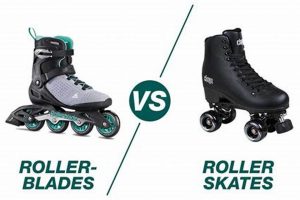
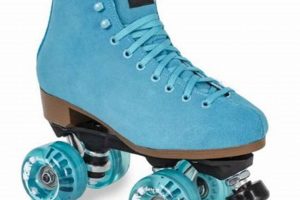
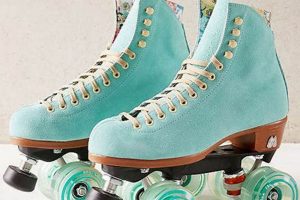
A prevalent comparison exists between two distinct wheeled foot implements, differentiated primarily by wheel configuration and boot design. One features wheels aligned in a single row, while the other typically presents two pairs of wheels set side-by-side. This fundamental distinction impacts maneuverability, speed, and intended use cases for each type of equipment.
The significance of understanding the variances lies in selecting the appropriate tool for specific activities and skill levels. Historically, the side-by-side configuration predates the inline arrangement, reflecting an evolution driven by advancements in materials and performance demands. The benefits of each are diverse, ranging from enhanced stability to greater speed potential.
The ensuing sections will delve into detailed comparisons regarding stability, speed, maneuverability, skill requirements, exercise benefits, target demographic, and associated cost. Each aspect will be examined impartially to provide a comprehensive understanding of the trade-offs involved in choosing between these two forms of recreational equipment.
Considerations for Selection
Selecting between the two wheeled options necessitates careful evaluation of individual priorities and skill levels. The following points offer guidance for informed decision-making:
Tip 1: Assess Intended Use: Determine the primary application. If speed and long-distance skating are priorities, the inline configuration is generally more suitable. For recreational use, artistic skating, or beginner learning, the side-by-side setup often provides enhanced stability.
Tip 2: Evaluate Skill Level: Beginners typically find the side-by-side arrangement easier to learn due to its wider base and increased stability. Inline requires a greater degree of balance and control, making it a more suitable option for experienced skaters or those willing to dedicate time to developing the necessary skills.
Tip 3: Prioritize Stability vs. Maneuverability: Side-by-side offers superior stability, particularly at slower speeds, allowing for easier balance and control. Inline provides greater maneuverability and agility, enabling tighter turns and more complex skating techniques.
Tip 4: Consider Fitness Goals: Both provide a cardiovascular workout, but the type of muscle engagement differs. Inline skating emphasizes leg muscles, particularly the quadriceps and glutes, due to the forward motion. Side-by-side engages a broader range of muscles, including the inner and outer thighs, due to the lateral movement required for propulsion.
Tip 5: Evaluate Terrain: The type of surface on which the equipment will be used also influences the selection process. Inline is better suited for smooth, paved surfaces, while side-by-side can handle slightly rougher terrain due to the wider wheel base.
Tip 6: Factor in Budget: The cost of the equipment can vary significantly. Generally, high-performance inline models tend to be more expensive than entry-level side-by-side options. However, budget-friendly options are available for both types.
Tip 7: Safety Equipment is Essential: Regardless of the chosen style, proper safety gear, including a helmet, wrist guards, elbow pads, and knee pads, is paramount. Select appropriately sized and certified equipment for optimal protection.
Careful consideration of these factors ensures a satisfying and safe skating experience. By matching the equipment to individual needs and preferences, users can maximize enjoyment and minimize the risk of injury.
The subsequent section will summarize the key differentiators, providing a concise overview to aid in the final decision-making process.
1. Stability

Stability, a crucial factor in the selection of wheeled skates, significantly impacts the user’s control, balance, and overall experience. The design and configuration of each type inherently influence its stability characteristics, affecting both beginner ease of use and advanced maneuverability.
- Wheelbase Width
The width of the wheelbase, defined by the distance between the wheels, directly correlates with stability. Side-by-side configurations possess a wider wheelbase, offering a lower center of gravity and a broader support base. This geometry reduces the likelihood of imbalance, particularly at lower speeds or during initial learning phases. Conversely, inline arrangements, with their narrower wheelbase, require greater core strength and balance control to maintain stability.
- Boot Height and Support
Boot height and ankle support contribute significantly to overall stability. Higher boot designs, common in many side-by-side models, provide enhanced ankle support, limiting lateral movement and reducing the risk of ankle strain or injury. Lower-cut boots, frequently found in inline speed models, offer greater range of motion but demand more inherent stability from the skater. The level of support must align with the skater’s skill and strength.
- Wheel Hardness and Surface Contact
The hardness of the wheels and the surface area in contact with the ground affect stability. Softer wheels provide better grip and shock absorption on uneven surfaces, contributing to a more stable ride. Side-by-side wheels, typically wider, offer a larger contact patch, enhancing stability, particularly on varied terrain. Inline wheels, with their narrower profile, require smoother surfaces to maintain optimal stability and rolling efficiency.
- Frame Material and Rigidity
The material and rigidity of the frame connecting the boot to the wheels play a critical role in transferring energy and maintaining stability. A stiffer frame offers greater responsiveness and control, particularly at higher speeds. In inline skating, frame length can also influence stability, with longer frames generally providing more stability but reduced maneuverability. Frame material affects weight and vibration dampening, further influencing overall stability.
These interconnected facets illustrate the complex relationship between design elements and stability in wheeled skates. While side-by-side often caters to beginners prioritizing inherent stability, inline can provide comparable stability when paired with appropriate frame and boot characteristics, and as user skill and control increase. The selection should reflect a balance of desired performance attributes and the user’s capacity to maintain control within those parameters.
2. Speed
The attribute of speed is a significant differentiator between inline and side-by-side wheeled skates. The inline configuration inherently allows for greater potential speed due to factors relating to energy transfer and aerodynamic profile. The alignment of wheels in a single row minimizes rolling resistance compared to the wider stance of side-by-side skates. Furthermore, the typical skating motion in inline skating, involving a longer stride and more efficient push-off, facilitates higher velocities. Competitive speed skating, for example, exclusively utilizes inline designs, demonstrating the practical advantage in speed-oriented applications.
However, achieving high speeds on inline skates requires a higher degree of skill and control. The inherent instability of the inline configuration at lower speeds necessitates a certain level of balance and proficiency. Conversely, side-by-side skates, while not capable of reaching the same maximum speeds, offer greater control and stability, particularly at lower velocities, making them suitable for recreational activities or beginners who prioritize control over raw speed. The practical application of either type is therefore contingent on the skill level of the user and the desired skating environment.
In summary, the relationship between speed and wheeled skates is multifaceted. Inline skates offer a demonstrably higher speed potential, making them suitable for speed-focused activities. Side-by-side skates sacrifice maximum speed for enhanced stability and control, catering to recreational use and beginners. Therefore, speed is not the sole determinant in the selection process, but rather one of several factors that must be considered in relation to the skater’s skill level and intended application.
3. Maneuverability
Maneuverability, defined as the ease and precision with which a skater can change direction or navigate obstacles, is a key differentiating factor between inline and side-by-side wheeled skates. The distinct wheel configurations influence the turning radius, responsiveness, and overall control experienced by the user. Inline skates, with their single line of wheels, offer a greater capacity for sharp turns and intricate movements. This design enables skaters to execute quick directional changes and navigate tight spaces with relative ease. Side-by-side skates, while possessing inherent stability, typically exhibit a wider turning radius, limiting their agility in confined environments.
The importance of maneuverability is evident in specific skating disciplines. For instance, slalom skating, which involves navigating a course of closely spaced cones, demands the precise control and rapid directional changes facilitated by inline skates. Artistic skating, while often associated with side-by-side skates, increasingly incorporates inline models for complex spins and jumps that require a tighter turning radius. In urban environments, where skaters frequently encounter obstacles and pedestrian traffic, the enhanced maneuverability of inline skates provides a significant advantage in navigating safely and efficiently. The type of maneuver that is optimal depends on environment of use cases, but with proper training, it can be applied easily.
In summary, maneuverability is a crucial attribute that distinguishes inline and side-by-side wheeled skates. Inline skates generally offer superior maneuverability due to their wheel configuration, making them suitable for activities requiring agility and precise control. Side-by-side skates, while sacrificing some maneuverability for stability, remain a viable option for recreational skating and environments where rapid directional changes are less critical. The selection should align with the intended use and the skater’s skill level, balancing the need for agility with the desire for stability and control.
4. Skill Level

The requisite skill level represents a primary determinant in the selection between inline and side-by-side wheeled skates. The inherent design characteristics of each type necessitate varying degrees of balance, coordination, and physical aptitude. A comprehensive assessment of an individual’s skating experience and physical capabilities is therefore essential for informed decision-making.
- Beginner Acquisition Phase
The initial learning curve differs significantly between the two types. Side-by-side skates, with their wider wheelbase, provide a more stable platform for novices. This enhanced stability allows beginners to develop fundamental balance and coordination skills with greater ease. Inline skates, conversely, demand a higher degree of initial balance and control, potentially leading to a steeper learning curve for inexperienced skaters. The beginner acquisition phase, therefore, often favors side-by-side configurations.
- Intermediate Skill Development
As skating proficiency progresses, the advantages of each type become more nuanced. Inline skates, with their enhanced maneuverability and speed potential, allow intermediate skaters to explore more advanced techniques, such as crossovers, backwards skating, and slalom maneuvers. Side-by-side skates, while still suitable for recreational skating, may limit the execution of these more complex skills. The intermediate stage often involves a transition to inline for skaters seeking to expand their technical repertoire.
- Advanced Technique Mastery
Advanced skating disciplines, such as speed skating, aggressive skating, and artistic rollerblading, typically necessitate the specialized performance characteristics of inline skates. The precise control, responsiveness, and speed capabilities of inline configurations enable athletes to execute complex maneuvers and achieve peak performance levels. Side-by-side skates are less commonly employed in these advanced disciplines due to their inherent limitations in speed and agility. Advanced technique mastery frequently involves specialized equipment configurations and rigorous training regimens specific to inline skating.
- Physical Aptitude and Conditioning
The physical demands of skating vary depending on the type and intensity of the activity. Inline skating, particularly at higher speeds or during prolonged sessions, requires a greater degree of cardiovascular fitness and muscular endurance. Side-by-side skating, while less demanding in terms of speed, still necessitates adequate lower body strength and core stability. Pre-existing physical limitations or injuries may influence the choice between the two types. Consultation with a healthcare professional or certified skating instructor is recommended for individuals with specific physical concerns.
The correlation between skill level and skate selection is multifaceted and dynamic. While side-by-side skates offer a more accessible entry point for beginners, inline skates provide greater potential for skill development and advanced performance. The optimal choice depends on an individual’s skating experience, physical capabilities, and desired level of proficiency. Careful consideration of these factors ensures a safe and rewarding skating experience.
5. Wheel Configuration
Wheel configuration constitutes the most fundamental distinction between rollerblades and roller skates. This single design choice dictates numerous performance characteristics, influencing stability, speed, maneuverability, and ultimately, the intended application of each skate type. Rollerblades, characterized by an inline configuration where wheels are aligned in a single row, exemplify a design focused on minimizing rolling resistance and maximizing speed. Conversely, roller skates typically feature a quad or side-by-side configuration, with two pairs of wheels positioned at the front and rear of the boot. This arrangement provides a wider base of support, prioritizing stability and control over raw speed.
The impact of wheel configuration extends beyond basic performance metrics. The inline arrangement of rollerblades allows for a longer stride and a more efficient transfer of energy, contributing to a faster top speed and improved endurance. The reduced contact area with the ground also results in lower rolling resistance, enabling skaters to maintain momentum with less effort. However, this design necessitates a higher degree of balance and control, making rollerblades generally less suitable for beginners. The quad configuration of roller skates, on the other hand, offers inherent stability, making them ideal for recreational skating, artistic skating, and beginners seeking a more forgiving learning experience. The wider wheelbase allows for easier balance and control, particularly at lower speeds, facilitating the development of fundamental skating skills.
In conclusion, wheel configuration is the cornerstone upon which the divergent performance characteristics of rollerblades and roller skates are built. The inline arrangement of rollerblades prioritizes speed and efficiency at the expense of stability, while the quad configuration of roller skates emphasizes stability and control, sacrificing speed potential. The practical significance of understanding this distinction lies in selecting the appropriate skate type for a given activity or skill level, optimizing both performance and safety. Challenges may arise when attempting to bridge the gap between the two, as mastering one style does not necessarily translate to proficiency in the other. The broader theme underscores the importance of design choices in shaping the functionality and applicability of recreational equipment.
6. Boot Design

Boot design represents a critical element differentiating rollerblades and roller skates, influencing comfort, performance, and overall suitability for various skating styles. The structural characteristics and materials employed in boot construction directly impact ankle support, energy transfer, and the skater’s ability to control the equipment.
- Ankle Support and Cuff Height
The height and rigidity of the boot cuff significantly affect ankle stability. Rollerblade boots often feature higher, more supportive cuffs designed to enhance ankle control, particularly during high-speed maneuvers or aggressive skating. Roller skate boots may exhibit lower-cut designs, allowing for greater ankle flexibility, which is advantageous for artistic skating and dance-oriented styles. The degree of ankle support should align with the skater’s skill level and intended use; beginners may benefit from increased support, while experienced skaters might prioritize flexibility.
- Material Composition and Stiffness
The materials used in boot construction dictate stiffness and responsiveness. Rollerblade boots frequently incorporate rigid plastics, carbon fiber, or composite materials to maximize energy transfer and provide precise control. These materials offer minimal flex, ensuring that the skater’s movements are directly translated to the wheels. Roller skate boots may utilize more pliable materials like leather or synthetic fabrics, providing a more comfortable fit and greater flexibility. The choice of materials reflects a trade-off between performance and comfort, with stiffer materials generally offering enhanced responsiveness but reduced comfort during extended use.
- Closure Systems and Fit Adjustment
Closure systems, including laces, buckles, and power straps, enable skaters to customize the fit and secure the boot to the foot. Rollerblade boots often feature multiple closure mechanisms to ensure a snug and supportive fit, particularly around the ankle and instep. Roller skate boots may rely primarily on laces, allowing for a more traditional and adjustable fit. The effectiveness of the closure system directly impacts energy transfer and control, with a secure fit minimizing slippage and maximizing responsiveness. Proper fit is crucial for preventing blisters and ensuring comfortable, controlled skating.
- Liner Construction and Comfort Features
The internal liner provides cushioning and support, enhancing comfort and reducing friction. Rollerblade liners often incorporate heat-moldable materials that conform to the skater’s foot, providing a customized fit and minimizing pressure points. Roller skate liners may consist of padded fabrics or foam, offering a more traditional level of comfort. The quality of the liner directly affects the overall skating experience, with well-designed liners minimizing discomfort and improving the fit and feel of the boot. Breathability is also a key consideration, as moisture buildup can lead to discomfort and blisters.
In summary, boot design is a pivotal aspect in the differentiation between rollerblades and roller skates. The interplay between ankle support, material composition, closure systems, and liner construction determines the overall performance, comfort, and suitability of each skate type for various skating styles. The selection of appropriate boot design should align with the skater’s skill level, intended use, and personal preferences, ensuring a safe and enjoyable skating experience.
Frequently Asked Questions
The following section addresses common inquiries and misconceptions regarding the distinctions between rollerblades and roller skates, offering clarification and guidance for prospective users.
Question 1: What is the primary differentiating factor between rollerblades and roller skates?
The core distinction lies in wheel configuration. Rollerblades feature wheels aligned in a single row, while roller skates employ a quad configuration with two pairs of wheels positioned side-by-side.
Question 2: Which type of skate is generally recommended for beginners?
Roller skates are typically recommended for beginners due to their wider base of support, which provides increased stability and facilitates the development of fundamental balance skills.
Question 3: Do rollerblades offer any performance advantages over roller skates?
Rollerblades generally exhibit superior speed potential and maneuverability compared to roller skates, making them suitable for activities requiring agility and rapid directional changes.
Question 4: Is specialized equipment required for either rollerblading or roller skating?
While basic safety gear (helmet, wrist guards, knee pads, elbow pads) is essential for both, specialized equipment, such as speed skates or aggressive inline skates, may be required for advanced disciplines.
Question 5: Does one type of skate offer a more effective cardiovascular workout?
Both rollerblades and roller skates provide a valuable cardiovascular workout. However, the specific muscle engagement differs, with rollerblading emphasizing leg muscles and roller skating engaging a broader range of muscles, including the inner and outer thighs.
Question 6: Is maintenance required for rollerblades and roller skates?
Regular maintenance, including wheel cleaning, bearing lubrication, and brake inspection, is necessary for both types of skates to ensure optimal performance and safety.
Understanding these frequently asked questions can aid in selecting the appropriate skate type based on individual skill level, intended use, and performance preferences. Prioritizing safety and selecting equipment that aligns with personal needs ensures a rewarding and enjoyable skating experience.
The concluding section will provide a concise summary of the key considerations for choosing between rollerblades and roller skates, offering a final perspective on the factors influencing the decision-making process.
Conclusion
This exploration of “rollerblade vs roller skate” has revealed fundamental differences in design, performance, and application. The single-row wheel configuration of rollerblades emphasizes speed and maneuverability, demanding a higher degree of skill and control. Conversely, the quad configuration of roller skates prioritizes stability and ease of use, catering to beginners and recreational skaters. Considerations of skill level, intended use, and personal preferences should guide the selection process.
Ultimately, the choice between “rollerblade vs roller skate” necessitates a careful evaluation of individual needs and priorities. Understanding the trade-offs between speed and stability, maneuverability and control, is crucial for ensuring a safe and fulfilling skating experience. Continued advancements in materials and design may further blur the lines between these two forms of recreational equipment, prompting ongoing evaluation and adaptation within the skating community.
![Find Cheap Skate Roller Center Photos: [Location] Fun! | Learn to Surf & Skate: A Beginner's Step-by-Step Guide](https://universitysurfandskate.com/wp-content/uploads/2026/05/th-141-300x200.jpg "Find Cheap Skate Roller Center Photos: [Location] Fun! Learn to Surf & Skate: A Beginner's Step-by-Step Guide")