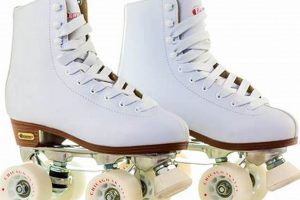
High-performance roller skates, engineered for competitive and advanced recreational use, represent a significant investment in precision and durability. These skates differ substantially from recreational models, featuring robust construction, superior wheel compounds, and highly responsive boot designs. For instance, speed skaters utilize specialized low-cut boots and large-diameter wheels optimized for minimal rolling resistance, while artistic skaters require boots with enhanced ankle support and smaller wheels for precise maneuvers.
The use of meticulously crafted skating equipment is paramount for maximizing athletic potential and achieving peak performance in various disciplines. Historically, advancements in materials and engineering have directly translated to increased speed, improved control, and reduced risk of injury. Investing in quality equipment allows skaters to execute complex techniques with greater confidence and efficiency, unlocking their full capabilities and fostering a higher level of skill development.
The subsequent sections will delve into the specific features that distinguish top-tier roller skates, the different disciplines they support, and the key considerations for selecting appropriate equipment to enhance the skating experience.
Guidance on Selecting High-Performance Roller Skates
The selection of suitable high-performance roller skates requires careful consideration of individual needs and skating discipline. The following tips offer a framework for informed decision-making.
Tip 1: Assess Intended Use: Determine the primary skating discipline (speed, artistic, roller derby, etc.) as each requires specific skate characteristics. Speed skates prioritize minimal weight and rolling resistance, whereas artistic skates emphasize ankle support and maneuverability.
Tip 2: Evaluate Boot Construction: A well-fitted boot is crucial. Consider materials (leather, carbon fiber, composite) and closure systems (laces, buckles, straps) based on desired stiffness, support, and adjustability. Heat-moldable boots allow for a customized fit.
Tip 3: Analyze Frame Material: The frame (chassis) connects the boot to the wheels. Aluminum frames offer a balance of strength and weight, while carbon fiber frames provide maximum stiffness for optimal power transfer.
Tip 4: Scrutinize Wheel Durometer: Wheel durometer (hardness) affects grip and roll. Softer wheels (lower durometer) offer more grip, suitable for indoor skating or slippery surfaces. Harder wheels (higher durometer) roll faster on smooth surfaces.
Tip 5: Inspect Bearing Quality: Bearings influence wheel speed and smoothness. ABEC ratings (1-9) indicate manufacturing precision; higher ratings generally provide smoother and faster rolling. Consider ceramic bearings for reduced friction and increased durability.
Tip 6: Consider Wheel Size: Larger wheels generally provide higher speeds but reduced maneuverability. Smaller wheels offer increased agility and control, often favored for artistic skating and roller derby.
Tip 7: Prioritize Proper Fit: Ensure a snug and comfortable fit to prevent blisters and maximize control. Professional fitting services can provide accurate measurements and recommendations.
Properly selected high-performance roller skates can significantly enhance skating performance and enjoyment. Careful evaluation of these factors will lead to a choice that optimizes both comfort and functionality.
The next section will discuss the maintenance and care required to preserve the lifespan and performance of high-performance roller skates.
1. Performance enhancement

Performance enhancement within the context of professional roller skates denotes the optimization of equipment characteristics to maximize a skater’s capabilities in their chosen discipline. The selection of appropriate skates is a direct investment in improving speed, agility, control, and overall athletic output.
- Optimized Energy Transfer
Professional roller skates often feature stiffer boot constructions and frame materials, minimizing energy loss during propulsion. This enhanced energy transfer translates to greater speed and efficiency. For example, a carbon fiber boot paired with a high-modulus aluminum frame ensures that the skater’s power is directly converted into forward momentum, rather than being dissipated through flex in the skate itself.
- Reduced Rolling Resistance
High-quality bearings and wheel compounds are crucial for minimizing rolling resistance. Ceramic bearings, known for their low friction properties, facilitate smoother and faster wheel rotation. Similarly, advanced urethane formulations in wheels are engineered for optimal grip and roll characteristics on various surfaces. The combination of these elements allows skaters to maintain speed with less effort.
- Enhanced Agility and Control
Professional roller skates offer increased precision and responsiveness, enabling skaters to execute complex maneuvers with greater control. This is achieved through features such as lower boot profiles, adjustable frame positioning, and optimized wheel sizes. These design elements allow for quicker turns, sharper stops, and improved balance, all of which are essential for competitive skating disciplines.
- Customized Fit and Comfort
Properly fitted skates minimize discomfort and prevent energy-wasting friction within the boot. Heat-moldable boots, custom footbeds, and advanced lacing systems allow for a personalized fit that maximizes comfort and support. This reduces the risk of blisters, pressure points, and other issues that can hinder performance. A comfortable and secure fit enables skaters to maintain focus and perform at their best.
The multifaceted approach to performance enhancement through professional roller skates underscores the importance of selecting equipment tailored to individual needs and skating discipline. While seemingly subtle, the combined impact of optimized energy transfer, reduced rolling resistance, enhanced agility, and customized fit translates to significant gains in overall performance. These improvements provide skaters with a competitive edge and allow them to push the boundaries of their capabilities.
2. Specialized design
The specialized design of professional roller skates is a critical determinant of performance capabilities and suitability for particular skating disciplines. Each component, from boot construction to wheel composition, is engineered to meet the unique demands of its intended application. This targeted approach distinguishes professional-grade skates from recreational models, where versatility often takes precedence over optimized performance.
The interplay between specialized design and skating discipline is evident in numerous examples. Speed skates, for instance, are characterized by low-cut boots, lightweight frames, and large-diameter wheels, all of which contribute to minimizing rolling resistance and maximizing aerodynamic efficiency. In contrast, artistic skates feature high-cut boots for enhanced ankle support, shorter wheelbases for increased maneuverability, and toe stops for executing jumps and spins. Roller derby skates prioritize agility and protection, incorporating reinforced boots, low profiles, and specialized toe guards to withstand the rigors of contact skating. The selection of inappropriate skate design for a given discipline directly impairs performance and increases the risk of injury. Consequently, a comprehensive understanding of these specialized design elements is paramount for athletes seeking to achieve peak performance. Frame design, including its material composition (aluminum, carbon fiber) and mounting angle, significantly alters skate responsiveness and stability. Similarly, wheel durometer, ranging from soft (indoor) to hard (outdoor), dictates grip and rolling speed. All are interconnected components that need to be understood.
In essence, the specialized design of professional roller skates transcends mere aesthetics; it is a functional imperative that directly influences a skater’s ability to execute complex techniques, maintain control at high speeds, and compete effectively. The ongoing evolution of skate technology and materials ensures that specialized designs continue to adapt to the ever-increasing demands of various skating disciplines, highlighting the enduring significance of this relationship.
3. Precision engineering
Precision engineering is fundamental to the performance characteristics of professional roller skates. The dimensional accuracy and material integrity achieved through precision engineering directly influence factors such as speed, maneuverability, and durability. Inadequate precision in bearing manufacture, for example, introduces friction, impeding rolling efficiency. Similarly, deviations from specified tolerances in frame construction compromise stability and responsiveness. The consequences of neglecting precision are not merely incremental losses in performance; they can manifest as catastrophic failures under the stresses of competitive skating.
A tangible illustration of this principle can be found in the development of high-performance skate wheels. The precise control over urethane compound mixing, molding, and curing is essential for achieving consistent durometer, rebound characteristics, and wear resistance. Minor variations in these parameters can significantly affect grip, roll speed, and wheel longevity. Elite skaters, for instance, rely on wheels manufactured to extremely tight tolerances, allowing them to maintain consistent performance across varying track conditions. This level of consistency is unattainable without rigorous precision engineering processes. Likewise, the frame, being the connection between boot and wheels, requires accuracy to maintain ideal angles and alignment. A slight misalignment can cause significant loss of speed and control which demands a precision cut to the frame.
In summary, precision engineering is not merely a desirable attribute of professional roller skates; it is a prerequisite for achieving optimal performance and ensuring skater safety. The incremental gains achieved through meticulous attention to detail accumulate into substantial advantages in competitive environments. Recognizing the critical role of precision engineering enables skaters and manufacturers to prioritize quality and invest in equipment that delivers demonstrable results. The link provides competitive edge and promotes safety.
4. Durable materials
The selection and application of durable materials are paramount in the construction of professional roller skates, directly influencing their performance, longevity, and safety. The rigorous demands of competitive skating necessitate components capable of withstanding significant stress, impact, and wear.
- Boot Construction Materials
The boot, providing ankle support and energy transfer, is often constructed from reinforced materials such as carbon fiber, leather, or advanced polymer composites. Carbon fiber offers a high strength-to-weight ratio, minimizing energy loss during skating while withstanding repeated impacts. Leather provides a degree of flexibility and moldability, conforming to the skater’s foot over time for a custom fit. Polymer composites offer a balance of stiffness and impact resistance. The choice depends on the skater’s preference for responsiveness versus durability.
- Frame Materials and Their Significance
The frame, linking the boot to the wheels, is typically manufactured from aluminum alloys or, in high-end models, carbon fiber. Aluminum frames offer a balance of strength, weight, and cost-effectiveness, while carbon fiber frames provide superior stiffness for enhanced power transfer. The frame’s ability to withstand bending and torsion forces is crucial for maintaining stability and control, particularly during high-speed turns and jumps. The durability of the frame is a key determinant of the skate’s overall lifespan.
- Wheel Compounds and Abrasion Resistance
Roller skate wheels are typically composed of polyurethane, with variations in durometer (hardness) influencing grip and roll characteristics. More durable wheel compounds exhibit enhanced abrasion resistance, extending their lifespan and maintaining consistent performance over time. High-performance wheels may incorporate additives to improve rebound and reduce heat buildup, further enhancing durability and performance. Abrasion is a constant factor that wheel compounds are designed to withstand to provide optimal performance.
- Bearing Durability and Material Composition
Bearings facilitate smooth wheel rotation and are typically constructed from steel or ceramic materials. Steel bearings offer a balance of cost-effectiveness and durability, while ceramic bearings provide reduced friction and increased lifespan. High-quality bearings are sealed to prevent contamination from dirt and moisture, further enhancing their durability. Bearing failure can lead to reduced speed and increased risk of injury, highlighting the importance of selecting durable bearing materials.
The strategic implementation of durable materials throughout the construction of professional roller skates ensures their ability to withstand the stresses of competitive skating, maintaining optimal performance and skater safety over extended periods. The integration of such quality materials also contributes to improved skater confidence in the reliability of the equipment.
5. Optimized fit
Optimized fit, in the context of professional roller skates, transcends mere comfort. It is a critical determinant of performance, control, and injury prevention. A skate that does not conform precisely to the skater’s foot can lead to energy loss, compromised agility, and an elevated risk of blisters, pressure sores, and musculoskeletal strain.
- Enhanced Energy Transfer
A precisely fitted boot minimizes internal slippage and maximizes the direct transfer of energy from the skater’s leg muscles to the skate frame and wheels. Gaps or pressure points within the boot force the skater to compensate, diverting energy and reducing efficiency. Properly molded or customized boots ensure a snug and uniform contact, allowing for a more powerful and responsive skating experience. Professional skates use heat molding and custom inserts for improved fit.
- Improved Ankle Support and Stability
Optimal ankle support is essential for maintaining balance and control, particularly during high-speed maneuvers and complex techniques. A skate that provides inadequate support can lead to ankle strain, instability, and an increased risk of falls. Customized or heat-moldable boots conform to the contours of the ankle, providing enhanced stability and preventing excessive pronation or supination. It gives enhanced control.
- Reduced Risk of Blisters and Hotspots
Ill-fitting skates are a primary cause of blisters and hotspots, which can severely impede performance and comfort. Friction between the foot and the boot lining, exacerbated by pressure points, leads to skin irritation and blistering. A properly fitted skate eliminates these pressure points, distributing forces evenly across the foot and reducing the likelihood of skin damage. Professional fittings involve precise foot measurements.
- Enhanced Proprioception and Control
A snug and secure fit enhances proprioception, the skater’s awareness of their body’s position in space. This heightened awareness allows for more precise movements and improved control over the skates. A skate that feels like a natural extension of the foot enables the skater to react more quickly and confidently to changing conditions. Better awareness and response increase performance.
The multifaceted benefits of optimized fit underscore its importance in professional roller skating. Beyond comfort, it directly impacts performance, safety, and the skater’s ability to reach their full potential. The investment in customized fitting services or heat-moldable boots is a worthwhile consideration for any serious skater seeking to maximize their capabilities and minimize the risk of injury.
Frequently Asked Questions About Professional Roller Skates
The following questions address common inquiries and misconceptions regarding high-performance roller skates used in competitive and advanced recreational skating.
Question 1: What distinguishes “professional roller skates” from recreational models?
Significant differences exist between professional and recreational roller skates. Professional models feature enhanced material quality, precision engineering, and specialized designs tailored to specific skating disciplines. Recreational skates prioritize versatility and affordability, often sacrificing performance characteristics critical for competitive use.
Question 2: How important is specialized design in relation to different skating disciplines?
Specialized design is paramount. Speed skates, artistic skates, and roller derby skates each incorporate distinct features optimized for their respective disciplines. Employing skates designed for a different discipline results in diminished performance and increased risk of injury.
Question 3: Why is precision engineering a critical attribute of professional roller skates?
Precision engineering directly impacts speed, maneuverability, and durability. Accurate dimensions and material integrity are essential for minimizing friction, ensuring stability, and preventing catastrophic failures under stress. Deviations from specified tolerances compromise performance.
Question 4: What are the key material considerations in the construction of professional roller skates?
Boot construction often utilizes carbon fiber, leather, or polymer composites. Frames are typically constructed from aluminum alloys or carbon fiber. Wheel compounds vary based on durometer and abrasion resistance. Bearing materials range from steel to ceramic. These material choices directly influence performance and longevity.
Question 5: How does “optimized fit” influence performance and safety?
Optimized fit is not merely a matter of comfort; it enhances energy transfer, improves ankle support, reduces the risk of blisters, and heightens proprioception. Skates that do not conform precisely to the skater’s foot compromise agility and elevate the risk of injury.
Question 6: What are the most important maintenance considerations for professional roller skates?
Regular cleaning, bearing lubrication, wheel rotation, and hardware inspections are essential for maintaining peak performance. Prompt replacement of worn components prevents further damage and ensures skater safety. Adherence to manufacturer recommendations prolongs the lifespan of the equipment.
These questions illuminate the nuanced considerations involved in selecting and maintaining professional roller skates. Recognizing the specific requirements of the chosen skating discipline is crucial for achieving optimal results.
The following section will examine the future trends and innovations impacting the field of professional roller skating equipment.
Conclusion
This exploration of professional roller skates has underscored the significance of specialized design, precision engineering, durable materials, and optimized fit. These elements are not merely desirable attributes; they are fundamental requirements for achieving peak performance, ensuring skater safety, and maximizing the longevity of the equipment. The selection of appropriate skates demands a thorough understanding of the specific demands of the chosen skating discipline, coupled with a meticulous evaluation of the available options.
As technology advances and skating disciplines evolve, the pursuit of ever-greater performance enhancements will continue to drive innovation in skate design and manufacturing. The informed selection and conscientious maintenance of high-performance equipment remain paramount for skaters striving to reach their full potential and contribute to the advancement of the sport.

![Get Rolling! Brand New Pair of Roller Skates Song [Audio] | Learn to Surf & Skate: A Beginner's Step-by-Step Guide](https://universitysurfandskate.com/wp-content/uploads/2026/05/th-191-300x200.jpg "Get Rolling! Brand New Pair of Roller Skates Song [Audio] Learn to Surf & Skate: A Beginner's Step-by-Step Guide")