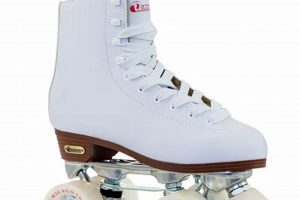
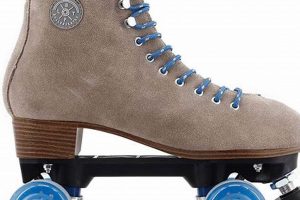
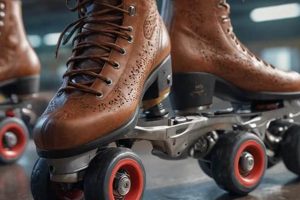
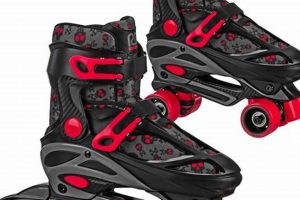
Wheels designed for use on asphalt, concrete, or other outdoor surfaces must possess specific characteristics to ensure a safe and enjoyable skating experience. Typically constructed from softer polyurethane compounds, these components provide increased grip and shock absorption compared to their counterparts intended for indoor rink use. For instance, a wheel with a durometer rating of 78A is frequently selected for its ability to navigate uneven outdoor terrains effectively.
The utilization of appropriately chosen rolling components significantly enhances comfort and control for skaters traversing outdoor environments. Historically, improvements in materials science have led to increasingly durable and performant wheel designs, enabling skaters to cover longer distances and execute more complex maneuvers with greater stability. This results in reduced fatigue, improved maneuverability, and a safer overall recreational activity.
The selection of the appropriate wheel involves considering factors such as durometer (hardness), diameter, and profile. Further discussion will delve into these parameters, outlining their respective influences on skating performance and longevity of the component. Subsequent sections will also cover maintenance best practices and strategies for optimizing your setup for varied outdoor conditions.
Selection and Maintenance Guidelines
Optimizing performance and lifespan requires careful selection and consistent maintenance. The following guidelines provide a framework for maximizing the utility of these components.
Tip 1: Durometer Assessment: Evaluate surface conditions to determine the optimal durometer. Softer compositions (78A-85A) are suited for rougher surfaces, providing enhanced grip and vibration dampening. Harder compositions are more suitable for smoother outdoor surfaces.
Tip 2: Diameter Considerations: Larger diameters (70mm and above) offer increased roll speed and the ability to traverse cracks and debris more readily. Smaller diameters provide increased maneuverability and acceleration.
Tip 3: Wheel Profile Evaluation: A round profile provides smoother turning and increased agility. A flatter profile maximizes contact area, enhancing grip and stability on straightaways.
Tip 4: Regular Bearing Maintenance: Clean and lubricate bearings periodically to reduce friction and maintain roll speed. The frequency of maintenance should be adjusted based on usage and environmental conditions.
Tip 5: Visual Inspection: Routinely inspect for signs of wear, such as flat spots, cracking, or delamination. Replace worn components to prevent performance degradation and potential safety hazards.
Tip 6: Rotation Practices: Rotate wheel positions periodically to ensure even wear. This practice extends the lifespan of the component and maintains consistent performance characteristics.
Tip 7: Storage Considerations: When not in use, store in a cool, dry place away from direct sunlight and extreme temperatures. This prevents material degradation and premature aging.
Tip 8: Axle Nut Tightness: Verify axle nuts are properly tightened before each use. Overtightening can damage bearings and impede roll, while undertightening can lead to wheel detachment.
Adherence to these guidelines will facilitate improved performance, enhanced durability, and a safer skating experience.
The subsequent section will address frequently asked questions regarding usage and compatibility, ensuring informed decision-making regarding these specialized skating components.
1. Durometer

Durometer, a measure of a material’s hardness, plays a critical role in the performance of outdoor roller skate wheels. The durometer rating, typically expressed on the A scale (e.g., 78A, 85A), directly influences the wheel’s grip, shock absorption, and wear resistance. A lower durometer indicates a softer wheel, while a higher durometer denotes a harder wheel. For outdoor skating, where surfaces are often uneven and abrasive, softer wheels are generally preferred due to their increased ability to conform to the terrain and absorb vibrations. This, in turn, leads to a smoother and more comfortable ride.
The selection of an appropriate durometer for outdoor wheels is crucial for optimizing the skating experience. A wheel that is too hard will provide minimal grip on rough surfaces, increasing the risk of slipping and loss of control. Conversely, a wheel that is too soft may wear down quickly on abrasive asphalt or concrete. As an example, skaters often select wheels in the 78A-85A range for general outdoor skating, as this range offers a balance between grip, comfort, and durability. Competitive outdoor skaters or skaters on very smooth outdoor surfaces, however, may prefer harder wheels for increased roll speed. The relationship is thus not a one-size-fits-all scenario, but rather a performance characteristic that needs to be balanced and tailored depending on a skater’s preference, use case, and the surface they most commonly skate on.
In conclusion, the durometer rating of an outdoor roller skate wheel is a key determinant of its performance and suitability for specific skating conditions. Understanding the relationship between durometer and factors such as grip, shock absorption, and wear resistance is essential for selecting wheels that provide a safe, comfortable, and enjoyable skating experience. Incorrect choices here will result in reduced performance and/or drastically reduced wheel life, therefore understanding durometer is paramount to selecting the right wheels.
2. Diameter
Wheel diameter, measured in millimeters (mm), is a critical attribute affecting the performance characteristics of rolling components used on skates designed for outdoor environments. Larger diameters generally translate to increased roll speed and the capacity to navigate uneven surfaces with greater ease. Conversely, smaller diameters typically offer enhanced maneuverability and acceleration. The selection of a wheel diameter must align with the intended skating application and the typical terrain encountered.
For example, wheels with diameters of 70mm to 80mm are frequently chosen for recreational skating on outdoor surfaces, providing a balance between speed, stability, and the ability to roll over small obstacles such as pebbles or cracks in the pavement. A skater prioritizing agility, such as in roller derby played on an outdoor surface, may opt for wheels in the 62mm to 65mm range. The effect of wheel diameter is further influenced by factors such as wheel profile and durometer, creating a complex interplay that skaters must consider when selecting equipment.
Ultimately, understanding the influence of diameter on performance facilitates informed decision-making regarding outdoor roller skating equipment. Choosing an inappropriate diameter can result in diminished efficiency, reduced control, and increased fatigue. By carefully considering individual skating style, terrain conditions, and desired performance characteristics, skaters can optimize their equipment selection for an enhanced outdoor skating experience.
3. Grip

Grip, the measure of a wheel’s ability to adhere to a surface, is a paramount characteristic of outdoor roller skate wheels. It directly impacts the skater’s control, stability, and overall safety. The composition and design of the wheel determine its grip capability, particularly the durometer and the contact patch. Softer compounds, indicated by lower durometer ratings, offer increased adhesion on varied outdoor surfaces such as asphalt and concrete, where debris and imperfections are common. This enhanced grip allows for controlled maneuvers, efficient power transfer, and reduced risk of slippage, especially during turns and braking.
The consequence of inadequate grip is readily apparent in real-world scenarios. For instance, a skater using hard indoor wheels on a coarse outdoor surface will experience significantly diminished control and an increased likelihood of falls. Conversely, wheels designed for outdoor use, typically featuring softer compounds, provide a noticeable increase in traction, enabling skaters to navigate uneven terrain and maintain stability even in less-than-ideal conditions. Professional skaters often select their outdoor wheels based on the specific course conditions, demonstrating the practical application of understanding the relationship between wheel composition and grip.
In summary, grip is an indispensable attribute of any wheel intended for outdoor roller skating. Optimizing grip levels is essential for enhanced performance, improved safety, and a more enjoyable skating experience. Though factors like speed and durability are also crucial, grip forms the foundation of confident and controlled movement. Recognizing the interplay between wheel materials, design, and surface conditions allows skaters to make informed decisions and select the appropriate wheels for their outdoor skating pursuits.
4. Durability
The durability of rolling components is a critical factor influencing the lifespan and overall performance of outdoor roller skates. Outdoor surfaces, such as asphalt and concrete, are inherently abrasive, leading to significant wear and tear on wheels. Material composition, manufacturing processes, and wheel design directly affect a wheel’s ability to withstand the rigors of outdoor use. Inadequate durability results in frequent replacements, increased costs, and a potentially compromised skating experience due to reduced performance and safety. Real-world examples abound; inexpensive wheels made from lower-quality polyurethane compounds may exhibit rapid degradation, developing flat spots or even delaminating after only a few uses on rough surfaces.
The importance of durability extends beyond mere economic considerations. A durable wheel maintains its shape and performance characteristics for a longer period, providing consistent grip, roll speed, and stability. This is particularly crucial for skaters who rely on their equipment for transportation, fitness, or competitive purposes. For example, a skater who regularly commutes on roller skates benefits significantly from durable wheels that can withstand the daily wear and tear of urban environments. Similarly, skaters engaging in distance skating or roller hockey require wheels that retain their performance characteristics throughout extended use. Manufacturers often employ specialized additives and manufacturing techniques to enhance the durability of their products, such as using high-rebound polyurethane formulations and reinforced cores.
In conclusion, durability is a fundamental attribute of quality rolling components engineered for outdoor applications. The ability to withstand abrasion, maintain shape, and provide consistent performance over an extended period directly influences the skater’s experience and the long-term cost-effectiveness of the equipment. By understanding the factors that contribute to durability, skaters can make informed purchasing decisions, selecting wheels that meet their specific needs and provide a safe and enjoyable skating experience. This focus on durability ultimately contributes to the sustained growth and popularity of roller skating as a recreational and transportation activity.
5. Roll Speed

Roll speed, the rate at which a wheel traverses a surface, is a primary performance metric directly influenced by the design and composition of outdoor roller skate wheels. Maximizing roll speed is often desired for efficient skating, but must be balanced with factors such as grip and stability, particularly in varied outdoor environments.
- Durometer’s Influence on Roll Speed
Durometer, the measurement of a wheel’s hardness, significantly impacts its roll speed. Harder wheels (higher durometer ratings) generally exhibit faster roll speed due to reduced friction with the skating surface. However, this increased speed comes at the expense of grip, particularly on rough or uneven outdoor surfaces. For instance, a wheel with a durometer of 85A will typically roll faster on smooth asphalt than a wheel with a durometer of 78A, but it may offer less control on a surface with cracks or pebbles.
- Diameter’s Influence on Roll Speed
Wheel diameter also plays a critical role in roll speed. Larger diameter wheels maintain momentum more effectively and require less effort to maintain a given speed. This is due to the increased circumference, which covers more ground per revolution. However, larger wheels can also be less maneuverable and may be more susceptible to the effects of wind resistance. For example, a 76mm wheel will generally roll faster than a 70mm wheel, but may be less agile in tight turns.
- Bearing Quality and Roll Speed
The quality and type of bearings significantly affect roll speed. High-precision bearings with low friction coefficients allow wheels to spin more freely and maintain momentum for a longer period. Regular maintenance, such as cleaning and lubrication, is essential to preserve bearing performance and maximize roll speed. Skaters frequently upgrade to higher-quality bearings to enhance roll speed.
- Surface Conditions and Roll Speed
Surface conditions exert a considerable influence on roll speed. Smooth, even surfaces, such as polished concrete or newly paved asphalt, allow for optimal roll speed. Rough or uneven surfaces create increased friction, which reduces roll speed and requires more effort from the skater. Choosing wheels with appropriate durometer and diameter for the specific surface is essential for optimizing roll speed in outdoor environments.
These factors highlight the complex relationship between outdoor wheel characteristics and achieving optimal roll speed. Selecting wheels that balance these considerations enhances the skating experience by providing both efficiency and control across varied terrains. The interplay of these factors is critical for skaters seeking to maximize both speed and safety in outdoor environments.
6. Surface Compatibility
The performance and longevity of rolling components are fundamentally linked to surface compatibility. Outdoor environments present a diverse range of surfaces, from smooth asphalt to rough concrete, each with distinct frictional properties and levels of abrasiveness. The interaction between the wheel material and the skating surface directly influences grip, roll speed, and the rate of wheel degradation. Employing wheels designed for a specific surface enhances the skating experience while prolonging the life of the equipment. For instance, utilizing wheels with a durometer rating of 78A on a heavily textured surface provides enhanced grip, shock absorption, and wear resistance compared to using harder wheels designed for indoor rinks.
Misalignment between wheel characteristics and surface conditions results in diminished performance and potential safety hazards. Skating on rough asphalt with hard wheels intended for smooth surfaces leads to reduced grip, increased vibration, and a greater risk of slipping. Conversely, utilizing excessively soft wheels on smooth surfaces results in increased rolling resistance, reduced speed, and accelerated wear. The practical significance of understanding surface compatibility lies in the ability to select wheels that optimize performance, improve safety, and extend the lifespan of the equipment. Skaters must assess the typical surfaces they encounter and choose wheels with appropriate durometer, diameter, and profile to match those conditions.
Selecting the correct wheel depends on understanding cause-and-effect. The wrong combination causes degraded performance, accelerated wear and possibly injuries. Aligning components with their ideal environment is the critical factor to consider. Prioritizing wheels designed to function correctly in a given environment leads to the maximization of enjoyment and longevity for the user.
7. Wear Resistance
Wear resistance is a paramount attribute of rolling components designed for outdoor use. The abrasiveness of outdoor surfaces, such as asphalt and concrete, subjects wheels to constant friction, necessitating materials and designs engineered for durability. Adequate wear resistance translates to extended wheel lifespan, consistent performance, and reduced replacement frequency, making it a key consideration for skaters.
- Polyurethane Composition and Wear
The polyurethane compound used in wheel construction is a primary determinant of wear resistance. Higher-quality polyurethane formulations, often incorporating specialized additives, exhibit superior resistance to abrasion. For instance, wheels made from a high-rebound polyurethane are less likely to develop flat spots or degrade rapidly compared to those made from lower-grade materials. The selection of appropriate polyurethane chemistry directly impacts the longevity and performance of outdoor wheels.
- Durometer and Abrasion
Durometer, or hardness, influences a wheel’s susceptibility to wear. Softer wheels, characterized by lower durometer ratings (e.g., 78A), tend to wear more quickly on abrasive surfaces compared to harder wheels (e.g., 85A). This is due to the increased flexibility of softer materials, which allows them to conform to surface irregularities but also makes them more vulnerable to abrasion. However, softer wheels provide better grip. Therefore, the selection of durometer involves a tradeoff between wear resistance and grip, depending on the intended skating surface.
- Wheel Profile and Wear Patterns
The wheel profile, or the shape of the wheel’s contact surface, affects the distribution of wear. Wheels with a round profile tend to wear more evenly, while wheels with a flat profile may develop flat spots more readily. The contact area is the area which degrades over time. Regular wheel rotation helps distribute wear more evenly across all wheels, extending their lifespan and maintaining consistent performance.
- Bearing Quality and Internal Wear
While often overlooked, bearing quality impacts overall wear. Damaged or poorly maintained bearings increase friction and heat, accelerating wear on the wheel’s inner core. Utilizing high-quality bearings and performing regular maintenance, such as cleaning and lubrication, reduces internal friction and contributes to increased wheel lifespan. The symbiotic relationship between bearings and wheels highlights the importance of comprehensive maintenance practices.
The interplay of these factors underscores the complexity of achieving optimal wear resistance in rolling components used in the outdoor world. Skaters must carefully consider material composition, durometer, wheel profile, and bearing quality to select wheels that provide a balance between durability, performance, and safety, ultimately maximizing the value and enjoyment of their skating experience.
Frequently Asked Questions
This section addresses prevalent inquiries and clarifies common misconceptions concerning rolling components engineered for outdoor skating.
Question 1: What is the typical lifespan of wheels used for outdoor skating?
The longevity of a wheel varies substantially based on factors such as the durometer, the quality of the polyurethane, the skater’s weight, the type of surfaces skated on, and the frequency of use. Softer wheels on rough surfaces degrade more rapidly than harder wheels on smooth surfaces. Regular rotation and proper maintenance can extend lifespan.
Question 2: How does wheel diameter affect outdoor skating performance?
Larger diameter wheels generally provide higher roll speed and improved navigation over uneven terrain. Smaller diameter wheels offer increased acceleration and maneuverability. The selection of diameter must align with the skater’s priorities and the typical skating environment.
Question 3: What durometer is recommended for outdoor wheels?
For general outdoor skating, wheels with a durometer rating between 78A and 85A are commonly recommended. Softer wheels (78A-82A) offer superior grip and shock absorption on rough surfaces. Harder wheels (82A-85A) provide increased roll speed on smoother surfaces.
Question 4: How frequently should outdoor wheels be rotated?
Wheel rotation frequency depends on skating habits and surface conditions. Inspect wheels regularly for uneven wear patterns. Rotate wheels when significant differences in wear are observed to ensure even degradation and maintain performance consistency.
Question 5: Can indoor wheels be used for outdoor skating?
While technically possible, utilizing indoor wheels outdoors is not recommended. Indoor wheels are typically harder and offer minimal grip on outdoor surfaces, increasing the risk of slipping. The accelerated wear on abrasive outdoor surfaces will drastically reduce the lifespan of wheels intended for indoor rinks.
Question 6: What maintenance is required for outdoor wheels?
Maintenance includes regular cleaning to remove dirt and debris, inspection for wear and damage, rotation to ensure even wear, and bearing maintenance (cleaning and lubrication) to maintain optimal roll speed. Proper maintenance enhances performance and prolongs wheel lifespan.
Selecting appropriate rolling components and implementing consistent maintenance protocols optimize outdoor skating outcomes. Prioritizing these considerations maximizes safety, performance and cost-effectiveness.
The subsequent section will discuss practical considerations for purchasing outdoor wheels for roller skates.
Conclusion
This exploration has illuminated the critical attributes and considerations associated with rolling components engineered for outdoor roller skating. From durometer and diameter to grip, durability, surface compatibility, and wear resistance, each characteristic plays a vital role in optimizing performance and ensuring safety. Thorough comprehension of these factors facilitates informed decision-making, enabling skaters to select appropriate wheels for their specific needs and environmental conditions.
Selecting the optimal rolling component transcends mere preference; it represents a commitment to safety, performance, and equipment longevity. Prioritizing informed decision-making empowers skaters to navigate outdoor environments with confidence, maximizing both enjoyment and minimizing risk. Further research into specialized materials and emerging technologies promises continued advancements in wheel design, offering the potential for enhanced performance and durability in the future.