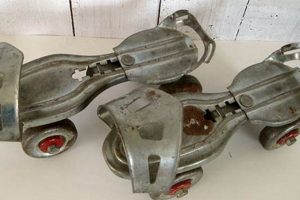
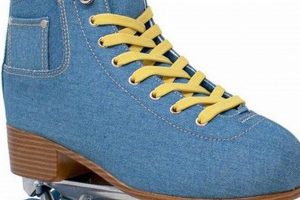
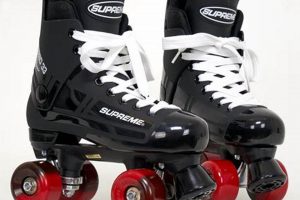
Acquiring the skill of propelling oneself on roller skates involves mastering balance, coordination, and specific techniques. This process typically begins with understanding basic safety measures, such as wearing protective gear like helmets, wrist guards, and knee pads. Initial attempts often focus on maintaining an upright position and developing a stable stance before progressing to controlled movements.
The advantages of mastering this activity extend beyond mere recreation. It provides a low-impact cardiovascular workout, enhancing physical fitness and overall well-being. Furthermore, the historical evolution of this activity showcases its enduring appeal as a popular form of exercise and leisure. It promotes balance and agility, contributing to improved motor skills and spatial awareness. From its early iterations to its contemporary forms, it remains a dynamic and engaging pastime.
The subsequent sections will delve into essential equipment considerations, fundamental techniques for beginners, strategies for overcoming common challenges, and methods for progressing to more advanced maneuvers. Understanding these elements is crucial for a safe and enjoyable experience.
Essential Guidance for Roller Skating Acquisition
The following recommendations provide fundamental direction for those undertaking the process of mastering roller skating. Adherence to these guidelines can significantly enhance the learning experience and mitigate potential risks.
Tip 1: Prioritize Protective Equipment. A helmet, wrist guards, elbow pads, and knee pads are non-negotiable. These items provide critical protection against injuries, particularly during the initial stages of learning.
Tip 2: Begin in a Controlled Environment. A smooth, flat surface, free from obstacles and vehicular traffic, is ideal. Indoor rinks or designated skating areas offer a safe and predictable environment for developing fundamental skills.
Tip 3: Master the Basic Stance. Maintain a slightly bent-knee posture with feet shoulder-width apart. This stance provides stability and allows for better balance control.
Tip 4: Practice Controlled Falls. Learning how to fall correctly can minimize the risk of injury. Aim to fall forward onto the knee pads and wrist guards, rather than backward.
Tip 5: Focus on Small, Controlled Movements. Avoid large, abrupt motions. Instead, concentrate on making small, deliberate adjustments to maintain balance and direction.
Tip 6: Gradually Increase Speed and Complexity. As proficiency increases, gradually introduce more challenging maneuvers, such as turning and stopping. Avoid attempting advanced techniques before mastering the basics.
Tip 7: Seek Professional Instruction. Enrolling in a roller skating class provides access to expert guidance and structured learning. A qualified instructor can offer personalized feedback and identify areas for improvement.
Adhering to these recommendations will contribute to a safer and more effective learning trajectory. Consistent practice and a focus on fundamental skills are crucial for achieving proficiency and enjoyment in this activity.
The subsequent sections will address specific techniques for enhancing skills and preventing common pitfalls.
1. Balance

Balance constitutes a foundational element in the process of acquiring roller skating proficiency. It is the ability to maintain equilibrium while in motion and is critical for controlling direction, speed, and overall stability on skates.
- Center of Gravity Management
Effective balance necessitates the ability to control one’s center of gravity. Shifting weight subtly allows for initiating turns, maintaining stability on uneven surfaces, and preventing falls. For instance, leaning slightly into a turn requires a constant adjustment of the center of gravity to avoid losing balance and falling to the outside of the curve. Improper center of gravity management leads to instability and potential accidents.
- Core Strength and Stability
The core muscles play a pivotal role in maintaining balance on roller skates. A strong core provides the stability necessary to counteract the forces generated by movement and uneven terrain. Weak core muscles often result in a loss of balance, particularly during more advanced maneuvers such as skating backwards or performing jumps. A stable core allows for controlled movements and reduces the likelihood of unexpected shifts in equilibrium.
- Proprioception and Body Awareness
Proprioception, the body’s awareness of its position in space, is essential for maintaining balance. It allows skaters to make minute adjustments to their posture and movements in response to changes in terrain or speed. Individuals with impaired proprioception often struggle with balance and coordination, making roller skating more challenging. Developing proprioceptive awareness through focused practice enhances stability and control.
- Dynamic Equilibrium
While static balance refers to maintaining equilibrium while stationary, dynamic equilibrium pertains to maintaining balance during movement. Roller skating inherently requires dynamic equilibrium, as the skater is constantly adjusting to changing forces and surfaces. This involves a complex interplay of muscular control, sensory feedback, and anticipatory adjustments. Mastering dynamic equilibrium is crucial for navigating various skating environments and executing more advanced skills.
The interrelated facets of balance, from managing one’s center of gravity to cultivating dynamic equilibrium, are indispensable for developing proficiency in roller skating. Mastering these elements allows for increased control, reduced risk of injury, and a more enjoyable skating experience. Neglecting the development of balance significantly hinders progress and increases the potential for mishaps.
2. Coordination
Coordination is a critical component in acquiring the skill of roller skating. It involves the harmonious and efficient interaction of various muscle groups and sensory inputs to execute controlled and purposeful movements. Without adequate coordination, the ability to maintain balance, propel oneself, and navigate effectively is significantly impaired.
- Upper and Lower Body Synchronization
Effective roller skating requires the seamless synchronization of upper and lower body movements. Arm swing, for example, contributes to momentum and balance, while leg movements propel the skater forward. An inability to coordinate these movements results in inefficient skating and an increased risk of imbalance. Inexperienced skaters often struggle with synchronizing their arm swing with their leg push-offs, leading to jerky and unstable movements.
- Spatial Awareness and Reaction Time
Coordination relies heavily on spatial awareness the ability to perceive one’s position and orientation in relation to the surrounding environment. Combined with rapid reaction time, this enables skaters to anticipate and respond to changes in terrain or obstacles. A skater with poor spatial awareness may misjudge distances, leading to collisions or falls. Quick reaction times allow for making timely adjustments to maintain balance or avoid hazards.
- Fine Motor Skills and Precision Movements
While roller skating involves gross motor skills, fine motor skills are also crucial for performing precise movements, such as executing turns or performing tricks. The subtle adjustments of ankle and foot positioning require a refined level of motor control. Skaters who lack fine motor skills may struggle with achieving the necessary precision for executing complex maneuvers, resulting in clumsy and inaccurate movements.
- Visual-Motor Integration
Visual-motor integration, the ability to coordinate visual information with motor output, is essential for guiding movements and making informed decisions while skating. Skaters rely on visual cues to anticipate changes in direction, avoid obstacles, and maintain balance. Poor visual-motor integration can lead to delayed reactions, inaccurate movements, and an increased risk of accidents. For example, judging the distance to an approaching object requires a complex interplay of visual input and motor response.
The facets of coordination highlighted above underscore its integral role in successful roller skating. Proficiency in this activity depends not only on strength and balance, but also on the ability to orchestrate a complex array of movements and sensory inputs. Skillful integration of these elements leads to improved control, efficiency, and safety on skates.
3. Technique
Technique represents a cornerstone in the process of acquiring proficiency in roller skating. The application of correct techniques directly influences efficiency, control, and safety. Suboptimal techniques, conversely, lead to wasted energy, reduced maneuverability, and an elevated risk of injury. The acquisition of skill is therefore inextricably linked to the mastery of appropriate skating techniques. For example, employing a proper push-off technique, utilizing the edges of the skates to generate forward momentum, results in a smoother, more efficient glide compared to an incorrect technique involving shuffling or stomping motions.
Specific techniques address various aspects of roller skating, including forward motion, braking, turning, and navigating different terrains. The T-stop, a fundamental braking technique, illustrates the practical application of technique for safety. Executing a T-stop involves positioning one skate perpendicular to the other, using friction to decelerate. Mastering this technique allows skaters to control their speed effectively and avoid collisions. Similarly, techniques for navigating uneven surfaces, such as maintaining a lower center of gravity and using shorter strides, enable skaters to traverse challenging environments with greater stability.
In conclusion, technique is not merely an ancillary aspect of learning to roller skate, but an indispensable component. Correct techniques foster efficiency, enhance control, and promote safety. The challenges associated with mastering roller skating are often directly attributable to deficiencies in technique. Prioritizing the acquisition of proper techniques, through instruction and deliberate practice, is crucial for achieving a high level of competence and deriving maximum enjoyment from the activity.
4. Safety
Safety is a paramount consideration in the acquisition of roller skating skills. Minimizing the risk of injury and fostering a secure learning environment are essential for effective skill development and sustained participation. The absence of appropriate safety measures can lead to physical harm, deterring individuals from pursuing this activity and hindering skill progression.
- Protective Equipment Utilization
The consistent and correct use of protective gear, including helmets, wrist guards, elbow pads, and knee pads, constitutes a fundamental safety measure. A helmet provides critical protection against head injuries in the event of a fall. Wrist guards mitigate the risk of fractures and sprains. Elbow and knee pads offer cushioning against impact, reducing the severity of abrasions and contusions. Failure to use appropriate protective equipment significantly increases the likelihood of injury, particularly during the initial learning stages when falls are more frequent.
- Environmental Awareness and Hazard Mitigation
Maintaining awareness of the surrounding environment and actively mitigating potential hazards is crucial for safe roller skating. This includes selecting appropriate skating surfaces free from obstacles such as cracks, debris, and vehicular traffic. Additionally, it involves anticipating and avoiding potential collisions with other skaters or pedestrians. Ignoring environmental hazards elevates the risk of accidents and injuries. Selecting well-maintained skating areas and exercising caution in crowded environments are essential for minimizing risk.
- Progressive Skill Development and Risk Assessment
A gradual and progressive approach to skill development, coupled with a realistic assessment of one’s abilities, is integral to promoting safety. Attempting advanced maneuvers before mastering fundamental skills increases the likelihood of falls and injuries. Skaters should incrementally challenge themselves, focusing on building a solid foundation before progressing to more complex techniques. A careful evaluation of one’s skill level and a conservative approach to risk-taking contribute to a safer learning experience.
- Adherence to Rules and Regulations
Compliance with established rules and regulations, particularly in designated skating areas, is essential for maintaining a safe environment for all participants. This includes following posted speed limits, yielding to pedestrians, and respecting designated skating lanes. Disregarding established guidelines can lead to collisions and injuries. Adherence to rules and regulations fosters a culture of safety and promotes a more predictable skating environment.
The facets of safety highlighted above underscore its pivotal role in facilitating the successful acquisition of roller skating skills. By prioritizing protective measures, maintaining environmental awareness, adopting a progressive approach to skill development, and adhering to established guidelines, individuals can minimize the risks associated with this activity and maximize their enjoyment and long-term participation.
5. Practice
Consistent and deliberate practice forms the cornerstone of skill acquisition in roller skating. While theoretical knowledge and understanding of techniques are valuable, practical application through repeated exercises is indispensable for translating conceptual knowledge into tangible proficiency. The correlation between time dedicated to practice and the level of skill attained is demonstrably strong.
- Repetition and Muscle Memory
Repeated execution of fundamental movements, such as maintaining balance, pushing off, and braking, facilitates the development of muscle memory. Muscle memory refers to the process by which the brain learns to execute motor skills automatically, reducing the cognitive load required for each movement. Through consistent practice, these fundamental actions become ingrained, allowing skaters to perform them with greater efficiency and precision. For example, the repeated practice of the “T-stop” braking technique gradually transforms from a conscious effort to a reflexive response. Therefore, more effortless stopping ability becomes the default.
- Error Correction and Refinement
Practice provides a platform for identifying and correcting errors in technique. Through repeated attempts, skaters can observe their movements, identify areas for improvement, and refine their technique accordingly. This iterative process of trial and error is crucial for optimizing performance and preventing the reinforcement of incorrect habits. A skater who consistently struggles with maintaining balance during turns, for instance, can analyze their body position and adjust their technique based on each practice repitition. This type of error correction refines the technique needed to find the ideal balance point.
- Progressive Overload and Skill Advancement
Practice enables skaters to progressively overload their skills by gradually increasing the difficulty and complexity of their routines. This involves transitioning from basic movements to more advanced maneuvers as proficiency increases. By consistently challenging themselves through practice, skaters can expand their skill set and reach higher levels of competence. An example of overload would be a beginner skater learning how to skate backwards. Once mastered, the backward skating will allow the skater to then focus on crossover turns with a base familiarity.
- Adaptability and Versatility
Extensive practice fosters adaptability and versatility by exposing skaters to a variety of surfaces, conditions, and challenges. This allows them to develop the ability to adjust their technique and strategy in response to changing circumstances. A skater who has only practiced on smooth, indoor surfaces, for example, may struggle when transitioning to rough, outdoor terrain. Consistent practice in diverse environments enhances adaptability and equips skaters to handle a wider range of skating situations. Such as transitioning to skating on a wood or metal park floor.
These facets collectively illustrate the integral role of practice in acquiring roller skating proficiency. Practice is not merely a passive repetition of movements, but an active process of learning, refining, and adapting. Therefore, regular and deliberate practice is indispensable for achieving mastery and reaping the full benefits of the skill.
Frequently Asked Questions
The following section addresses common inquiries related to the process of acquiring roller skating proficiency. These questions are answered with a focus on clarity, accuracy, and practical application.
Question 1: What is the recommended age to begin learning roller skating?
While there is no definitive age, motor skill development typically allows for safe introduction around five years old. The critical factor is sufficient coordination and balance. Supervised practice and appropriate protective gear are essential regardless of age.
Question 2: How long does it typically take to become proficient in roller skating?
Proficiency varies significantly depending on individual aptitude, frequency of practice, and dedication. Basic skills can be acquired within a few weeks with consistent effort, while advanced techniques may require months or years of dedicated practice.
Question 3: What type of roller skates are most suitable for beginners?
Quad skates, characterized by two wheels in front and two in back, are generally recommended for beginners due to their inherent stability. Inline skates, while offering greater speed and maneuverability, require more advanced balance and control.
Question 4: Is it possible to learn roller skating without formal instruction?
Self-directed learning is possible, but formal instruction offers significant advantages. A qualified instructor provides expert guidance, identifies areas for improvement, and ensures the adoption of correct techniques, thereby minimizing the risk of injury.
Question 5: What are the most common injuries associated with roller skating?
Common injuries include wrist fractures, ankle sprains, knee abrasions, and head trauma. The consistent use of protective gear, particularly wrist guards and helmets, significantly reduces the severity of these injuries.
Question 6: How does the skating surface impact the learning process?
A smooth, level surface free from obstacles is ideal for beginners. Rough or uneven surfaces increase the difficulty of maintaining balance and control, potentially leading to falls and injuries. Designated skating rinks or smooth concrete surfaces are recommended.
In summary, the acquisition of roller skating proficiency depends on a combination of factors, including individual aptitude, dedicated practice, and adherence to safety protocols. Formal instruction and a controlled learning environment are beneficial for optimizing skill development and minimizing risk.
The next section will explore advanced techniques and strategies for experienced roller skaters.
Conclusion
This exposition has comprehensively addressed the various facets of learning how to roller skate, encompassing essential equipment, fundamental techniques, safety protocols, and strategies for progression. The significance of balance, coordination, technique, safety awareness, and consistent practice has been consistently emphasized. The acquisition of roller skating proficiency is a multifaceted undertaking, requiring dedication and mindful adherence to established principles.
The continued pursuit of skill refinement in roller skating offers avenues for enhanced physical fitness, recreational enjoyment, and potential competitive engagement. Mastery of this skill transcends mere physical activity, fostering improved coordination, spatial awareness, and a heightened sense of personal accomplishment. Continued exploration and dedication remain paramount for realizing the full potential of this dynamic activity. The journey is perpetual.