The choice between different types of wheeled footwear often depends on individual preferences and intended use. One distinguishes between equipment where wheels are arranged in a single line and equipment where wheels are arranged in a quadrilateral configuration. Each design impacts stability, maneuverability, and overall skating experience.
The selection can have a significant impact on athletic performance, recreational enjoyment, and even injury risk. Historically, the shift from one design to another reflects advancements in materials science, engineering, and a changing understanding of human biomechanics in motion. Understanding the nuances of each option empowers consumers to make informed decisions tailored to their specific needs.
The subsequent sections will delve into the specific attributes of each design. These will include discussions on wheel configuration, frame construction, boot design, intended use cases, and skill level suitability. This comparison aims to provide a detailed understanding of the distinct characteristics of each type of skate.
Considerations for Wheeled Footwear Selection
The following are key considerations to ensure optimal performance and safety when selecting between different types of wheeled skates.
Tip 1: Assess Skill Level: Beginners typically benefit from the stability offered by a wider wheel base. More experienced skaters might prefer the agility and speed of inline designs.
Tip 2: Define Intended Use: For recreational skating on smooth surfaces, either type may suffice. However, aggressive skating or roller hockey necessitate specific design features and durability.
Tip 3: Evaluate Boot Support: A supportive boot is crucial for ankle stability and injury prevention. The degree of support required depends on skating style and terrain.
Tip 4: Examine Wheel Hardness: Wheel durometer (hardness) affects grip and rolling resistance. Softer wheels provide better grip on rough surfaces, while harder wheels offer greater speed on smooth surfaces.
Tip 5: Inspect Frame Material: The frame material influences the skate’s weight, responsiveness, and durability. Aluminum frames are generally stronger and more responsive than plastic frames, but also more expensive.
Tip 6: Consider Brake System: The presence and type of braking system impacts safety and ease of stopping. Heel brakes are common on recreational skates, while toe stops or T-stops are often preferred by experienced skaters.
Tip 7: Prioritize Fit: A properly fitting skate prevents blisters and discomfort. Ensure adequate toe room and a snug fit around the heel and ankle.
Adhering to these guidelines enhances the likelihood of selecting equipment best suited for individual needs and skating environments. Proper selection promotes both enjoyment and safety.
The conclusion will summarize the critical distinctions and offer final recommendations for making an informed choice.
1. Wheel configuration

Wheel configuration is a foundational distinction between inline skates and roller skates, directly influencing stability, maneuverability, and intended application. The arrangement of wheels dictates the skate’s handling characteristics and suitability for various skating styles.
- Inline Wheel Alignment
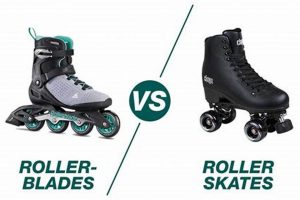
Inline skates feature wheels aligned in a single row along the center of the skate’s frame. This arrangement minimizes rolling resistance, promoting higher speeds and efficient energy transfer. Speed skating, aggressive skating, and hockey often utilize inline configurations due to their enhanced agility and acceleration. The inline arrangement necessitates greater balance and ankle strength compared to roller skates.
- Quad Wheel Arrangement
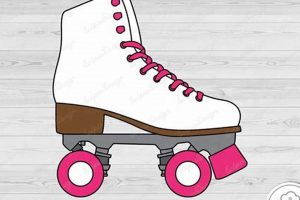
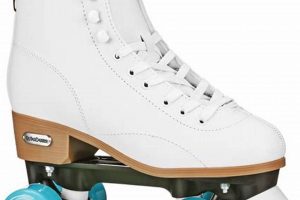
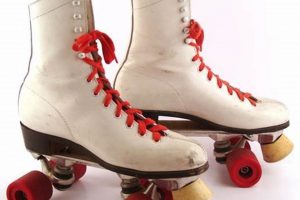
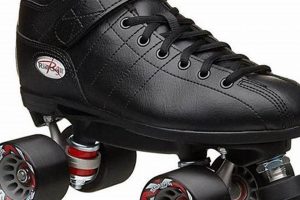
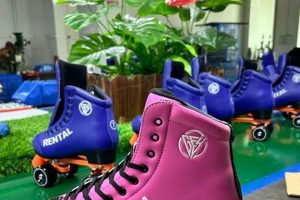
Roller skates, also known as quad skates, position wheels in a two-by-two arrangement, forming a quadrilateral footprint. This configuration offers inherent stability, making roller skates more accessible for beginners and recreational skaters. The wider base provides a stable platform for balance, reducing the likelihood of accidental falls. Historically, quad skates were the dominant form of wheeled footwear and remain popular for roller derby and recreational skating.
- Impact on Stability and Balance
The wheel configuration directly impacts the skater’s balance and stability. The spread-out quad design of roller skates provides a wide base of support, facilitating easier balance and control, especially at lower speeds. In contrast, the inline design requires a more active balance due to the narrow base. This demand translates to increased agility and responsiveness for experienced skaters, but poses a greater challenge for novices.
- Influence on Maneuverability
Wheel configuration also determines the skate’s maneuverability characteristics. Inline skates, with their streamlined wheel alignment, offer tighter turning radii and quicker directional changes. This agility is beneficial for aggressive skating, hockey, and speed skating. Roller skates, on the other hand, offer a more stable platform for smooth turns and controlled movements. The quad design excels in providing a consistent and predictable skating experience.
The divergence in wheel configuration fundamentally distinguishes inline skates from roller skates. The single-row design prioritizes speed and agility, while the quad arrangement emphasizes stability and ease of use. This crucial difference dictates their suitability for various applications and user skill levels, ultimately defining the skating experience.
2. Ankle support

Ankle support is a critical factor in the design and selection of wheeled skates. Its presence and characteristics profoundly influence stability, control, and injury prevention, particularly when considering the differences between inline skates and roller skates.
- Support Height and Stiffness
Inline skates often feature higher and stiffer cuffs than roller skates. This design aims to provide increased lateral support, compensating for the inherent instability of the inline wheel configuration. The rigid cuff minimizes ankle pronation and supination, reducing the risk of sprains. Roller skates, with their wider base, generally require less ankle support, often featuring lower and more flexible boot designs to allow for greater range of motion.
- Influence on Performance
The level of ankle support directly impacts skating performance. High ankle support, typical in inline skates, enhances responsiveness and control, enabling tighter turns and quicker directional changes. Skaters engaged in aggressive or speed skating often benefit from this enhanced control. Conversely, lower ankle support in roller skates promotes freedom of movement, which is desirable for dance or recreational skating. The trade-off is reduced stability at higher speeds or during abrupt maneuvers.
- Impact on Injury Prevention
Adequate ankle support is crucial for minimizing the risk of ankle injuries, particularly sprains and strains. Insufficient support can lead to instability and increase the likelihood of injury, especially for beginners or those engaging in high-impact activities. Inline skates, due to their inherent instability, necessitate robust ankle support features. Roller skates, with their more stable platform, may be more forgiving in terms of ankle support, though proper fit and support remain vital to prevent injuries.
- Material and Construction
The materials and construction of the boot and cuff contribute significantly to the overall level of ankle support. Stiffer materials, such as reinforced plastics or carbon fiber, provide greater rigidity and support, while softer materials offer more flexibility and comfort. The integration of padding and internal liners also influences the degree of ankle support. Inline skate boots often employ advanced materials and construction techniques to maximize both support and comfort, given the demanding nature of the sport.
In summary, the ankle support requirements differ substantially between inline skates and roller skates due to variations in wheel configuration and intended use. Inline skates typically demand higher and stiffer ankle support to compensate for their inherent instability, while roller skates often prioritize flexibility and range of motion. Selecting skates with appropriate ankle support is essential for optimizing performance, comfort, and, most importantly, injury prevention.
3. Maneuverability differences
Maneuverability constitutes a primary differentiator between inline skates and roller skates, stemming directly from the wheel configuration. Inline skates, with their wheels arranged in a single line, exhibit a distinct advantage in agility and responsiveness, facilitating tighter turning radii and quicker directional transitions. This characteristic renders them suitable for activities necessitating rapid changes in direction, such as hockey, speed skating, and slalom skating. Roller skates, conversely, present a more stable, albeit less agile, platform, owing to their quadrilateral wheel arrangement. This configuration enhances stability, allowing for controlled turns and smooth transitions, often favored in recreational skating, roller derby, and dance routines requiring graceful movements.
The cause of these maneuverability differences lies in the distribution of weight and the contact area with the skating surface. The inline skate’s concentrated wheel alignment allows for greater pressure to be applied to individual wheels, enabling sharper turns. The roller skate’s broader base distributes weight more evenly, creating a more stable platform but requiring more effort to initiate sharp turns. For instance, in a roller derby bout, skaters utilizing roller skates prioritize stability and blocking maneuvers, while a speed skater on inline skates aims for streamlined efficiency and rapid cornering on a track. Understanding these differences is not merely academic; it dictates the suitability of each skate type for specific applications and skill levels.
In conclusion, maneuverability represents a crucial aspect of the distinction between inline skates and roller skates. The choice between the two directly impacts the skater’s ability to perform specific maneuvers and achieve desired performance levels. While inline skates provide superior agility and responsiveness for dynamic movements, roller skates offer greater stability and control for recreational and specialized skating disciplines. This fundamental difference underscores the importance of selecting the appropriate skate type based on intended use and skill level, ensuring optimal performance and enjoyment. The broader theme here rests on emphasizing that proper equipment selection contributes significantly to a positive and safe skating experience.
4. Intended use
Intended use serves as a primary determinant in selecting between inline skates and roller skates. The intended application significantly impacts the optimal choice, as each skate type possesses distinct characteristics that cater to specific activities and environments. This consideration extends beyond mere preference; it influences performance, safety, and the overall skating experience. For instance, engaging in aggressive skating typically necessitates inline skates due to their maneuverability and frame design, whereas participating in roller derby demands the stability and agility afforded by roller skates.
The correlation between intended use and skate selection manifests in numerous practical scenarios. Consider roller hockey, where inline skates dominate due to the need for rapid acceleration, quick turns, and precise stick handling. Conversely, recreational skating on uneven surfaces often favors roller skates, as their wider wheel base provides enhanced stability and mitigates the impact of surface irregularities. Moreover, artistic skating frequently employs roller skates to capitalize on their maneuverability for intricate footwork and dance routines. These examples underscore the necessity of aligning the skate type with the intended application to maximize performance and minimize the risk of injury.
In summary, intended use represents a critical factor in the inline skates versus roller skates equation. The diverse characteristics of each skate type necessitate a careful evaluation of the planned activities to ensure the selection promotes optimal performance, safety, and enjoyment. Failure to consider intended use can result in suboptimal performance, increased risk of injury, and a diminished overall skating experience. Therefore, prospective skaters must prioritize this aspect when making their choice, ensuring that the selected equipment aligns with their specific needs and goals.
5. Learning curve
The learning curve associated with wheeled skates represents a critical factor for beginners and experienced skaters alike. The inherent stability, maneuverability, and required balance differ significantly between inline skates and roller skates, leading to distinct learning trajectories.
- Initial Stability and Balance
Roller skates, with their wider wheel base, generally offer a more stable initial platform. This inherent stability reduces the initial difficulty in maintaining balance, making them often considered easier for novices. Inline skates, conversely, demand a greater degree of balance from the outset due to their single line of wheels. The novice skater must actively engage core muscles and develop a precise sense of balance to avoid falling.
- Fundamental Skating Techniques
Basic techniques, such as forward propulsion and stopping, may present differing challenges. On roller skates, the wider stance facilitates easier pushing and gliding, allowing beginners to develop a sense of rhythm and coordination. The narrower profile of inline skates requires a more refined pushing technique, emphasizing efficient energy transfer. Stopping methods also differ, with the heel brake on many recreational inline skates offering a straightforward stopping mechanism, while roller skates often rely on the toe stop or more advanced techniques.
- Developing Advanced Skills
Once fundamental skills are established, the learning curve shifts. Inline skates offer a steeper trajectory for advanced maneuvers, enabling tighter turns, higher speeds, and specialized techniques such as slalom and aggressive skating. The agility afforded by inline skates facilitates the execution of complex skating patterns. Roller skates, while capable of certain advanced skills, may present limitations due to their inherent stability, requiring different techniques to achieve comparable results.
- Risk of Injury
The learning curve also influences the risk of injury. The initial instability of inline skates may lead to a higher incidence of falls during the early stages of learning. However, proper protective gear and instruction can mitigate this risk. Roller skates, while offering greater initial stability, may still present injury risks associated with backward falls or collisions. The overall risk of injury depends not only on the skate type but also on the individual’s skill level, the skating environment, and the use of appropriate safety precautions.
The contrasting learning curves of inline skates and roller skates underscore the importance of considering individual skill levels and intended skating activities when selecting equipment. While roller skates offer a more accessible entry point for beginners, inline skates ultimately provide a wider range of advanced skating possibilities. The choice should reflect a realistic assessment of one’s abilities and aspirations within the realm of wheeled skating.
Frequently Asked Questions
The following addresses common inquiries regarding the selection and utilization of wheeled skates, focusing on the distinctions between inline and roller skate designs.
Question 1: Is one type inherently safer than the other?
Safety depends on skill level, protective gear, and skating environment, not solely on the skate type. Roller skates offer greater initial stability, potentially reducing beginner falls. Inline skates, when mastered, provide enhanced control and maneuverability, minimizing risks in advanced scenarios.
Question 2: Which type is easier to learn for a complete beginner?
Roller skates generally present a shallower initial learning curve due to their wider base and inherent stability. Beginners often find balancing and basic movements easier to execute on roller skates.
Question 3: What are the primary maintenance differences?
Maintenance requirements are similar, involving regular cleaning, bearing lubrication, and wheel rotation. However, inline skates may require more frequent wheel replacement due to the smaller contact area and higher wear rates.
Question 4: Which skate is better for outdoor use on rough surfaces?
Roller skates, with their wider wheels and stable platform, typically perform better on uneven or rough surfaces. Inline skates can navigate rough terrain, but may require larger wheels and a higher degree of skill.
Question 5: Can the wheels be interchanged between inline and roller skates?
No, the wheels are not interchangeable. The hub size, bearing size, and mounting mechanisms differ significantly between inline and roller skate wheels.
Question 6: Which is better suited for roller rinks?
Both types can be used in roller rinks. Roller skates are often preferred for traditional rink skating and dance routines. Inline skates provide greater speed and agility for racing or specialized rink activities.
The selection of wheeled skates should align with individual skill levels, intended use cases, and environmental conditions to ensure optimal performance and safety.
The subsequent section will consolidate key takeaways and offer a concluding perspective on the choice between inline and roller skates.
Conclusion
The preceding analysis has explored the distinct characteristics of inline skates vs roller skates. It emphasized the critical role of wheel configuration, ankle support, maneuverability, intended use, and learning curve in determining the optimal choice. Inline skates prioritize speed and agility, while roller skates offer enhanced stability and accessibility. This detailed comparison underscores the importance of selecting equipment that aligns with individual needs and skating objectives.
Informed decision-making regarding wheeled skate selection is paramount for maximizing both performance and safety. Prospective purchasers should meticulously evaluate their skill level, intended activities, and environmental conditions to ensure a harmonious match between the equipment and its application. By prioritizing a well-informed approach, individuals can confidently pursue their skating endeavors with optimized results and minimized risks.