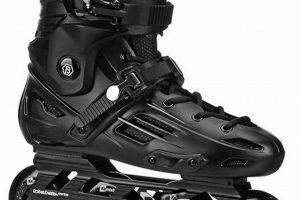
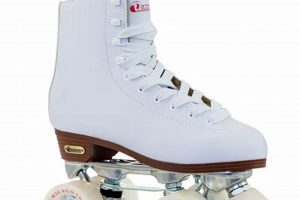
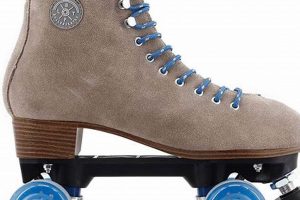
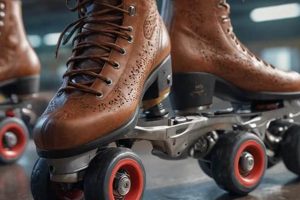
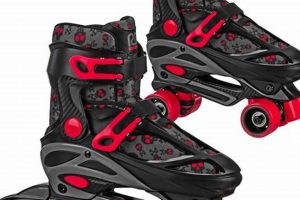
These components are circular objects affixed to a frame, enabling movement on paved surfaces. Typically constructed from polyurethane, these parts are characterized by varying degrees of hardness, size, and profile, each influencing the skating experience. For example, a smaller, harder option might suit a beginner, while a larger, softer variety could benefit a speed skater.
The performance and safety of inline roller skates are significantly dependent upon the quality and characteristics of these rolling elements. They directly affect speed, grip, and maneuverability. Historically, the development of improved materials and designs has contributed to advancements in the sport and recreational use of these skates, leading to enhanced performance capabilities and increased user safety.
A thorough understanding of the specifications and selection criteria associated with these components is essential. Further discussion will delve into the factors that influence their selection, maintenance, and overall impact on skating performance, covering topics such as durometer, bearing compatibility, and frame alignment.
Selection and Maintenance Guidance
Proper selection and maintenance are crucial for optimal performance and longevity. The following guidelines offer insight into maximizing the utility and lifespan of these components.
Tip 1: Durometer Considerations: The hardness, measured by durometer, significantly impacts grip and speed. Lower durometer ratings (e.g., 78A-82A) provide enhanced grip suitable for recreational skating and slick surfaces. Higher ratings (e.g., 84A-88A+) offer greater speed and durability, advantageous for advanced skaters and smoother terrains.
Tip 2: Size Selection: Larger diameters generally yield faster speeds and improved roll-over capability, useful for long-distance skating and overcoming obstacles. Smaller diameters offer increased maneuverability, suitable for agility-based skating styles and tighter spaces. Frame compatibility is paramount; consult manufacturer specifications before altering sizes.
Tip 3: Bearing Inspection: Regular inspection of associated bearings is essential. Clean and lubricate bearings periodically to maintain optimal rolling efficiency. Replace bearings exhibiting excessive wear or play to ensure smooth, predictable performance and prevent potential wheel damage.
Tip 4: Rotation Practices: Implement a consistent rotation schedule to promote even wear. As inner edges typically experience greater friction, rotate the position within the frame to equalize wear patterns and extend lifespan.
Tip 5: Surface Compatibility: Select those that are specifically designed for the skating surface. Outdoor varieties often incorporate enhanced abrasion resistance, while indoor formulations prioritize grip and floor protection.
Tip 6: Frame Alignment: Ensure proper alignment of the frames. Misalignment can cause uneven pressure and premature degradation. Periodically check and adjust frame positioning as needed.
Adhering to these guidelines will optimize performance characteristics, extend the usable lifespan, and enhance overall skating experience.
The next section will examine the various types of skating styles and how these choices may influence the selection process.
1. Durometer

Durometer, in the context of inline roller skates wheels, refers to the measurement of its hardness. This property is critical because it directly influences several performance characteristics. A higher durometer rating signifies a harder material, resulting in lower rolling resistance and increased speed. Conversely, a lower durometer rating denotes a softer material, providing enhanced grip and shock absorption. For example, wheels with a durometer rating of 84A or higher are often preferred by speed skaters seeking minimal energy loss, while wheels rated around 78A-82A are typically favored by recreational skaters who prioritize control and comfort on varied surfaces. The durometer value is, therefore, a key determinant of the suitability of for different skating styles and conditions.
The selection of an appropriate durometer is not solely based on skating style; the skating surface also plays a significant role. A smoother surface, such as a polished indoor rink, can accommodate harder models because grip is less of a concern. Rougher outdoor surfaces, however, necessitate softer variants to maintain adequate traction and minimize vibrations. Furthermore, weight influences wheel selection. A heavier skater may benefit from slightly harder construction to prevent excessive compression and maintain speed. Understanding the interplay between durometer, surface conditions, and skater weight allows for optimized performance and reduced wear.
In summary, durometer is an essential material property that significantly impacts the performance of inline roller skates wheels. Its careful consideration, based on skating style, surface type, and skater weight, is crucial for maximizing efficiency, comfort, and safety. Challenges may arise in environments with highly variable surfaces, requiring skaters to compromise or switch between different models. Ultimately, the optimal choice represents a balance between speed, grip, and durability tailored to specific needs.
2. Diameter
The diameter of an inline roller skate wheel is a critical dimension influencing performance characteristics. It directly affects speed, maneuverability, and the ability to navigate varied surfaces. A comprehensive understanding of diameter’s implications is essential for selecting appropriate components.
- Speed and Roll-Over Efficiency
Larger diameters generally equate to higher top speeds. This is attributable to a greater circumference per revolution, covering more ground with each rotation. Furthermore, larger offer improved roll-over efficiency, allowing skaters to navigate cracks, debris, and uneven surfaces with greater ease. A common example is the use of 100mm or 110mm wheels by speed skaters, maximizing velocity on smooth tracks.
- Maneuverability and Agility
Conversely, smaller diameters promote enhanced maneuverability and agility. Shorter provides a more responsive feel, facilitating quicker turns and tighter control. Aggressive skaters often utilize smaller to execute intricate tricks and navigate skate parks. A wheel diameter of 72mm or 80mm is frequently found in aggressive skate setups.
- Frame Compatibility and Clearance
Diameter selection is constrained by frame compatibility. Each frame is designed to accommodate a specific range of wheel sizes. Exceeding the maximum wheel size can result in contact with the skate boot or frame, impeding rotation and potentially causing damage. Prior to selecting , verifying compatibility with the existing or intended frame is imperative.
- Energy Expenditure and Fatigue
The diameter of can impact the amount of energy required for skating. Larger diameter wheels can cover more distance with each push, potentially reducing fatigue over long distances, especially when combined with appropriate bearings and durometer. The reduced effort per push translates to energy conservation and sustained performance.
In summary, the diameter of inline roller skates wheels is a multifaceted parameter influencing various aspects of skating. The optimal choice depends on the skater’s style, the intended skating environment, and the limitations imposed by the skate frame. A balanced approach, considering these factors, is crucial for maximizing performance and enjoyment.
3. Bearing Compatibility

Bearing compatibility is a foundational aspect of inline roller skates, directly impacting their functionality and performance. The central connection lies in the necessity for properly sized and specified bearings to be securely and functionally integrated within the bore of the wheels. The effect of incompatible bearings is immediate: compromised wheel rotation, increased friction, potential damage to both the wheel and the bearing, and ultimately, impaired skating performance. As an illustrative example, the standardized 608 bearing, with an 8mm inner diameter, is the most prevalent type; wheels designed for 608 bearings will not function correctly with smaller or larger bearing types, such as the less common 688 micro-bearings, which require a different bore size. Ignoring this compatibility results in either the bearing being too loose within the wheel (compromising stability) or being impossible to install without damaging the wheel’s core.
Furthermore, material compatibility can also play a role. The vast majority of inline roller skate wheels utilize polyurethane as their primary material. Standard steel bearings, typically manufactured from chrome steel, function predictably within polyurethane wheels. However, extreme operating conditions or specialized skating disciplines may necessitate ceramic bearings for reduced friction and heat generation. In such cases, careful consideration must be given to ensure the durometer and material properties of the wheels can withstand the increased forces and temperatures associated with high-performance bearings. Any mismatch in thermal expansion coefficients between the wheel material and bearing material could lead to premature wear or even failure. Proper bearing seating is equally critical; pressing bearings into the wheel core improperly can distort the wheel and compromise bearing alignment.
In conclusion, bearing compatibility is not merely a matter of physical fit, but a holistic consideration encompassing dimensional accuracy, material compatibility, and installation technique. A failure to appreciate this interconnectedness can result in suboptimal performance, reduced equipment lifespan, and potential safety hazards. While adherence to industry-standard bearing sizes like 608 simplifies the selection process for most skaters, understanding the nuances of material properties and installation practices remains vital for those seeking peak performance or operating in specialized skating environments. Challenges arise particularly when modifying skates or sourcing components from disparate manufacturers, necessitating careful verification of compatibility specifications.
4. Material Composition

The material composition of inline roller skates wheels is a determining factor in performance, durability, and user experience. The selection of materials significantly influences attributes such as rolling resistance, grip, wear resistance, and vibration dampening. Each component within the wheel construction contributes unique properties, affecting the overall functionality and suitability for various skating styles and environments.
- Polyurethane Formulation
Polyurethane (PU) is the predominant material used in the construction of . Variations in PU formulation, specifically the type and quantity of additives, tailor the wheel’s performance. Higher-quality PU formulations offer improved abrasion resistance, extending the wheel’s lifespan. The elasticity of PU affects energy return, influencing rolling speed and efficiency. For example, speed skating wheels often employ PU formulations optimized for minimal energy loss, whereas recreational wheels may prioritize comfort and shock absorption.
- Core Material and Design
The wheel core, typically constructed from rigid polymers such as nylon or fiberglass-reinforced plastic, provides structural support and influences load distribution. The design of the core, including spoke patterns and ribbing, impacts weight, rigidity, and heat dissipation. A stiffer core enhances power transfer and responsiveness, beneficial for aggressive skating styles. Conversely, a more flexible core can improve shock absorption and comfort on uneven surfaces. The core material must withstand the stresses induced by bearing insertion and sustained use.
- Additives and Fillers
Various additives and fillers are incorporated into the PU matrix to modify specific properties. Colorants, UV stabilizers, and lubricants are common examples. Certain fillers can enhance abrasion resistance, while others improve grip or reduce rolling resistance. The type and concentration of these additives are carefully controlled to achieve the desired balance of performance characteristics. For instance, adding silica to the PU compound can increase grip in wet conditions.
- Bonding Agents and Adhesives
In multi-component wheels, bonding agents or adhesives are used to join the PU tire to the core. The strength and durability of this bond are critical to prevent delamination or separation under stress. High-performance adhesives ensure a secure and reliable connection, even under demanding conditions. The selection of an appropriate bonding agent must consider the chemical compatibility of the PU and core materials.
In summary, the material composition of inline roller skates wheels is a complex interplay of various components, each contributing specific properties that collectively determine the wheel’s performance characteristics. Understanding these relationships is essential for selecting the appropriate for specific skating styles, environments, and user preferences. Continuous advancements in material science drive ongoing improvements in performance, durability, and user comfort.
5. Core Design
The core design of inline roller skate wheels is an integral element influencing structural integrity, performance characteristics, and overall longevity. Its configuration dictates load distribution, resistance to deformation, and heat dissipation, thereby significantly impacting the skating experience.
- Spoke Configuration and Load Distribution
The arrangement of spokes within the core directly affects the distribution of load across the wheel. Radial spoke designs typically offer uniform support, suitable for general-purpose skating. However, intricate spoke patterns, such as those incorporating angled or curved elements, can optimize load transfer and reduce stress concentrations in specific areas. For example, high-performance wheels often feature complex spoke geometries to withstand the high impact forces associated with aggressive skating.
- Material Selection and Rigidity
The core material, commonly a high-density polymer or composite, governs the overall rigidity of the wheel. Stiffer core materials enhance power transfer, resulting in increased responsiveness and control. Softer core materials, conversely, improve shock absorption, enhancing comfort on uneven surfaces. The choice of material depends on the intended application; racing wheels generally utilize stiffer cores, while recreational wheels prioritize comfort with more flexible materials.
- Hub Diameter and Bearing Integration
The diameter of the central hub influences bearing integration and stability. A precisely machined hub ensures proper bearing alignment and minimizes play, contributing to smoother rolling and reduced friction. Furthermore, the hub design must withstand the compressive forces exerted during bearing insertion and removal. Variations in hub diameter can accommodate different bearing types, influencing compatibility and performance.
- Weight Optimization and Inertia
Core design plays a crucial role in minimizing wheel weight, thereby reducing rotational inertia. Lighter wheels accelerate more quickly and require less energy to maintain speed. Weight reduction strategies include the use of lightweight materials and the incorporation of strategically placed cutouts within the core structure. However, weight optimization must be balanced against structural integrity to ensure the wheel can withstand the stresses of skating.
The interplay between spoke configuration, material selection, hub diameter, and weight optimization underscores the importance of core design in determining the overall performance of inline roller skates wheels. These design elements are meticulously engineered to optimize load distribution, enhance rigidity, facilitate bearing integration, and minimize rotational inertia, ultimately contributing to a superior skating experience. Deviations from optimal core design can result in compromised performance, reduced durability, and increased risk of failure.
6. Profile
The profile of inline roller skates wheels describes the cross-sectional shape of the tire, influencing contact area, maneuverability, and rolling resistance. Understanding the various profile designs is essential for optimizing performance based on skating style and terrain.
- Round Profile
A round profile features a curved cross-section, providing a smaller contact patch with the skating surface. This design enhances maneuverability, allowing for easier turning and carving. Round-profiled are often preferred by skaters who prioritize agility and control, such as slalom or artistic skaters. The reduced contact area minimizes rolling resistance on smooth surfaces but can decrease grip on rougher terrains.
- Flat Profile
A flat profile presents a wider, flatter contact surface. This maximizes grip and stability, particularly beneficial for speed skating or long-distance skating where maintaining a consistent trajectory is paramount. The increased contact area, however, results in higher rolling resistance compared to round profiles, potentially reducing top speed. Additionally, flat profiles can feel less responsive during sharp turns.
- Elliptical Profile
An elliptical profile represents a compromise between round and flat designs. It offers a balance of maneuverability and grip, making it suitable for a variety of skating styles. The subtly curved shape provides a reasonably sized contact patch for stability while still allowing for relatively easy turning. This versatile profile is commonly found in recreational and fitness skates.
- Bullet Profile
A bullet profile exhibits a more pointed, aggressive shape, further reducing contact area compared to round profiles. This design emphasizes speed and responsiveness, making it ideal for skaters seeking maximum acceleration and agility. However, the limited contact area reduces grip and stability, requiring a higher level of skill and control. Bullet profiles are often used in speed skating events on smooth, controlled surfaces.
The selection of an appropriate wheel profile is contingent upon the skater’s skill level, skating style, and the intended skating environment. Experimentation with different profiles can help skaters identify the optimal configuration for maximizing performance and enjoyment. Variations in profile design, combined with other wheel characteristics like durometer and diameter, allow for precise customization of skating equipment.
7. Surface Condition

The condition of the skating surface is a primary determinant of the performance, longevity, and safety of inline roller skates wheels. Variations in surface texture, material, and cleanliness significantly impact wheel grip, rolling resistance, wear rate, and overall skating experience. Understanding the interplay between surface condition and wheel characteristics is crucial for selecting appropriate equipment and optimizing performance.
- Texture and Grip
Surface texture dictates the degree of grip attainable. Smooth surfaces, such as polished concrete or hardwood floors, offer minimal frictional resistance, necessitating wheels with higher grip coefficients (lower durometer). Conversely, rough surfaces, such as asphalt or textured concrete, provide increased grip, allowing for the use of harder (higher durometer) that prioritize speed and durability. The optimal balance between grip and rolling resistance is directly influenced by surface texture.
- Material Composition and Wear
The material composition of the skating surface affects wheel wear rates. Abrasive surfaces, such as rough asphalt, accelerate wheel degradation due to increased friction and material removal. Conversely, smoother surfaces minimize wear. Outdoor skating on asphalt typically requires more durable polyurethane compounds compared to indoor skating on smoother, less abrasive surfaces. The presence of contaminants, such as dirt, sand, or debris, further exacerbates wear.
- Cleanliness and Rolling Resistance
Surface cleanliness directly impacts rolling resistance. Debris, such as dirt, gravel, or small objects, increases friction and impedes wheel rotation. Regularly cleaning the skating surface, or selecting skating locations with minimal debris, reduces rolling resistance and improves efficiency. Skaters traversing dirty surfaces may experience reduced speed and increased effort.
- Environmental Conditions and Wheel Performance
Environmental conditions, such as temperature and moisture, can alter surface characteristics and affect wheel performance. High temperatures can soften wheels, increasing grip but also accelerating wear. Wet surfaces reduce grip and increase the risk of hydroplaning. Selecting wheels with appropriate durometer and water-repellent properties can mitigate these effects. Surface temperature also influences the coefficient of friction between the wheel and the surface.
The integration of these facets emphasizes the critical influence of surface condition on inline roller skates wheels. The interplay between surface texture, material, cleanliness, and environmental conditions affects wheel performance, wear, and safety. Proper assessment of the skating surface is essential for selecting appropriate wheel characteristics and ensuring an optimal skating experience. Furthermore, regular maintenance of both the wheels and the skating surface contributes to improved performance and extended equipment lifespan.
Frequently Asked Questions
The following addresses common inquiries regarding inline roller skates wheels, providing concise, factual information to enhance understanding and inform decision-making.
Question 1: What durometer rating is appropriate for outdoor skating?
A durometer rating of 78A to 85A is generally recommended for outdoor surfaces. This range provides a balance of grip and durability necessary to navigate the irregularities and abrasive nature of outdoor terrain. Higher durometer models may be suitable for exceptionally smooth outdoor surfaces.
Question 2: How frequently should inline roller skates wheels be rotated?
Rotation frequency depends on skating intensity and surface conditions. A rotation schedule of every 2-4 skating sessions is advisable to ensure even wear and maximize lifespan. Uneven wear patterns often necessitate more frequent rotation.
Question 3: What is the impact of wheel diameter on skating speed?
Larger diameters generally correspond to higher potential speeds. Due to a greater circumference, each rotation covers more distance. However, increased diameter can also impact acceleration and maneuverability.
Question 4: Are there specific lubricants recommended for inline roller skate wheel bearings?
Synthetic lubricants formulated for roller skate bearings are recommended. These lubricants offer superior friction reduction and thermal stability compared to general-purpose lubricants. Avoid lubricants containing petroleum distillates, which can degrade bearing components.
Question 5: How can wheel delamination be prevented?
Wheel delamination, the separation of the polyurethane tire from the core, can be mitigated by selecting wheels with high-quality bonding agents and avoiding exposure to extreme temperatures or prolonged periods of inactivity. Proper storage practices contribute to extended lifespan.
Question 6: What factors should be considered when choosing a wheel profile?
Wheel profile selection should align with the intended skating style. Round profiles enhance maneuverability, while flat profiles prioritize grip and stability. Elliptical profiles offer a compromise between these characteristics.
In conclusion, understanding durometer, rotation practices, diameter implications, bearing lubrication, delamination prevention, and profile selection enables informed decisions regarding inline roller skates wheels. Prioritizing these factors contributes to enhanced performance, safety, and equipment longevity.
The following section will discuss advanced techniques to extend the lifespan.
Conclusion
The preceding exploration has detailed the multifaceted nature of inline roller skates wheels, emphasizing the critical interplay of durometer, diameter, material composition, core design, profile, and surface condition. A comprehensive understanding of these elements is paramount for optimizing performance, enhancing safety, and prolonging the lifespan of skating equipment. Appropriate selection and maintenance, predicated on specific skating styles and environmental factors, directly influence the overall skating experience.
Continued advancements in materials science and design engineering promise to further refine the capabilities and durability of these components. A commitment to informed decision-making and proactive maintenance practices will ensure skaters can fully realize the potential of their equipment and mitigate risks associated with wear and tear. The principles outlined herein provide a foundation for informed engagement with this essential element of inline skating.