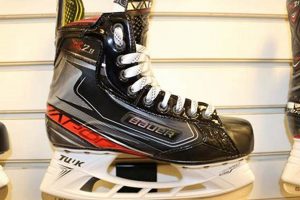
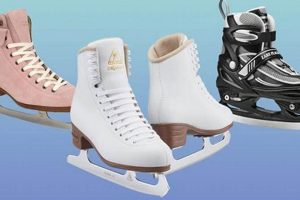
Specialized footwear designed for ice skating accommodates individuals with broader feet. These skates provide increased volume and width in the boot, minimizing discomfort and potential foot issues associated with standard-width skates. For instance, a skater experiencing pinching or numbness in regular skates may find relief and improved performance with equipment that provides more space.
Properly fitted skates enhance the skating experience by allowing for greater control, stability, and endurance. They reduce the likelihood of blisters, bunions, and other foot ailments that can arise from constricting footwear. Historically, skaters with wider feet often faced challenges finding appropriate equipment, leading to modifications or the use of ill-fitting skates. The development and availability of appropriately sized equipment represents a significant advancement in providing comfort and performance for all skaters.
The subsequent sections will explore specific features to consider when selecting specialized ice skates, including boot construction, blade mounting, and available sizing options. Considerations regarding foot support, heat molding capabilities, and common fitting challenges will also be addressed.
Selection Guidance for Wide-Foot Ice Skates
This section offers essential recommendations for selecting ice skates tailored to broader foot dimensions, ensuring optimal fit and performance.
Tip 1: Boot Width Assessment: Prioritize models explicitly designated as “wide” or “EE” width. Manufacturers often provide sizing charts with width measurements; consult these charts before purchase.
Tip 2: Heat Molding Evaluation: Consider skates with heat-moldable boots. This allows for customization of the boot’s shape to accommodate unique foot contours, including bony prominences or asymmetries.
Tip 3: Liner Material Inspection: Opt for skates with liners constructed from materials that offer both cushioning and conformability. This aids in distributing pressure evenly across the foot, minimizing friction and potential irritation.
Tip 4: Lace System Examination: Choose skates with a lacing system that allows for independent adjustment of the forefoot and ankle areas. This ensures a secure fit without undue constriction in the widest part of the foot.
Tip 5: Professional Fitting Consultation: Seek advice from a qualified skate fitter. Professionals possess the expertise to assess foot dimensions, identify pressure points, and recommend appropriate skate models and sizes.
Tip 6: Blade Alignment Consideration: Ensure that the blade is properly aligned with the boot. Misalignment can exacerbate discomfort and impact skating performance, particularly for individuals with foot abnormalities.
Tip 7: Trial Period Utilization: If possible, utilize any available trial periods to thoroughly assess the comfort and performance of the skates on the ice before committing to a final purchase.
Adhering to these recommendations will significantly enhance the likelihood of selecting ice skates that provide a comfortable, supportive, and performance-oriented fit for wider feet.
The subsequent section will address potential problems, including adjustments and customizing for individual needs.
1. Boot Width Availability

The provision of varying boot widths in ice skates directly addresses the fit and performance needs of individuals with broader feet. The limited availability of suitable widths has historically presented a significant challenge for this demographic, often resulting in discomfort, compromised performance, and potential foot health issues. The presence or absence of appropriately sized boots critically influences the overall skating experience.
- Standard Width Limitations
Traditional ice skate manufacturing often prioritizes standard width (D width), which can be insufficient for individuals with wider feet (EE or wider). Forcing a wider foot into a narrow boot can lead to pinching, numbness, and reduced circulation. This not only diminishes comfort but also impairs the skater’s ability to execute precise movements and maintain balance.
- Wide Width Designations (EE, EEE)
Manufacturers offering skates in wide (EE) and extra-wide (EEE) widths provide a necessary accommodation for individuals with broader feet. These boots are designed with increased volume in the forefoot and midfoot, allowing the foot to sit comfortably without constriction. This promotes better blood flow, reduces the risk of foot injuries, and enhances overall comfort and performance.
- Sizing Inconsistencies Across Brands
It is essential to acknowledge that sizing conventions can vary significantly between different ice skate manufacturers. A “wide” designation from one brand may not be equivalent to another. Therefore, relying solely on labeled width without considering specific measurements and trying on different models is inadvisable. Consulting sizing charts and seeking professional fitting advice are crucial steps in ensuring proper fit.
- Impact on Performance and Injury Prevention
Adequate boot width availability directly impacts both skating performance and injury prevention. A comfortable and properly fitted skate allows for more efficient power transfer, improved agility, and enhanced control. Conversely, ill-fitting skates can lead to blisters, bunions, plantar fasciitis, and other foot ailments, potentially sidelining skaters for extended periods. Prioritizing proper fit, particularly in terms of width, is therefore paramount for both competitive and recreational skaters.
In summary, the availability of varying boot widths is not merely a matter of comfort; it is a critical factor influencing performance, injury prevention, and overall enjoyment of the skating experience. Skaters with wider feet must prioritize models offering suitable widths, and manufacturers should continue to expand their size offerings to meet the diverse needs of the skating population.
2. Heat moldability

Heat moldability, a crucial feature in modern ice skate construction, plays a particularly significant role for individuals requiring wider footwear. Standard skates often exert pressure on the sides of a broad foot, leading to discomfort and impaired performance. Heat moldable boots, however, offer a means to customize the skate’s shape, alleviating this pressure and conforming to the individual’s unique foot anatomy. During the heat molding process, the skate’s internal materials soften, allowing the boot to expand slightly and adapt to the contours of the foot. This results in a more precise and comfortable fit, especially beneficial for those with wider feet where off-the-shelf sizing may prove inadequate. A skater with bunions, for example, can have the boot molded to create extra space in that specific area, preventing friction and pain.
The practical application of heat moldability extends beyond simple comfort. A properly molded skate provides enhanced stability and control, translating to improved skating technique and reduced risk of injury. By eliminating pressure points and ensuring a snug, supportive fit, the skater can exert more force through the blade, resulting in more efficient skating. Furthermore, the heat molding process can address asymmetries in foot shape, a common occurrence that can lead to imbalances and discomfort in standard skates. Customizing the fit ensures that both feet receive equal support, promoting proper alignment and reducing the likelihood of overuse injuries. The molding process also allows to optimize the boot for a tighter fit at the ankle, increasing stability and reducing movement inside the skate.
In conclusion, heat moldability is an essential feature for individuals with wider feet seeking optimal performance and comfort in ice skates. It allows for a level of customization that is not achievable with standard skates, addressing specific fit issues and promoting a more efficient and injury-free skating experience. While not a substitute for proper width sizing, heat moldability serves as a valuable tool for fine-tuning the fit and maximizing the benefits of specialized skates.
3. Liner Customization
Liner customization represents a pivotal aspect of achieving optimal fit and performance in ice skates, particularly for individuals with broader feet. The factory-standard liners often fail to adequately address the unique anatomical contours and volume requirements of wider feet, leading to discomfort, reduced skating efficiency, and potential foot ailments. Customization offers a tailored solution to mitigate these challenges.
- Volume Adjustment and Accommodation
Standard liners may not provide sufficient volume in the forefoot or midfoot areas, resulting in compression and restricted blood flow. Customized liners, crafted from materials with varying densities and thicknesses, allow for targeted volume adjustments to accommodate the specific width of the foot. This prevents pressure points and promotes a more comfortable and supportive fit. For example, thicker padding can be strategically placed in areas where the foot experiences excessive rubbing or pressure, while thinner materials can be used in areas requiring greater flexibility.
- Ankle Support and Heel Lock Optimization
Proper ankle support and heel lock are critical for stability and control during skating. Standard liners may not provide adequate support for individuals with lower or higher arches or those with ankle instability. Custom liners can be molded to conform precisely to the ankle and heel contours, enhancing support and preventing excessive movement within the boot. This reduces the risk of ankle sprains and improves overall skating performance. Moreover, customization can address differences in ankle prominence between the left and right feet, ensuring a symmetrical and balanced fit.
- Arch Support Integration
Individuals with wider feet often have associated arch support needs. Custom liners can incorporate integrated arch supports that provide optimal support and alignment for the foot. This can alleviate strain on the plantar fascia and other foot structures, reducing the risk of plantar fasciitis and other arch-related pain. The level of arch support can be tailored to the individual’s specific arch height and foot type, ensuring a personalized and effective solution.
- Material Selection for Comfort and Performance
Custom liners offer the opportunity to select materials based on individual preferences and performance requirements. Options include heat-moldable foams, gel padding, and moisture-wicking fabrics. Heat-moldable foams conform to the foot’s shape with body heat, providing a personalized fit. Gel padding offers enhanced cushioning and shock absorption, while moisture-wicking fabrics help to keep the feet dry and comfortable, reducing the risk of blisters. The selection of appropriate materials can significantly enhance the overall skating experience.
The multifaceted benefits of liner customization underscore its importance in achieving optimal fit and performance in ice skates for individuals with wider feet. By addressing volume discrepancies, optimizing ankle support, integrating arch support, and allowing for tailored material selection, custom liners provide a personalized solution that enhances comfort, stability, and skating efficiency. These benefits lead to a better experience on the ice and mitigates foot-related complications.
4. Lace system adjustability
Lace system adjustability in ice skates is a critical factor influencing comfort and performance, particularly for individuals with broader feet. Standard lacing configurations may not adequately accommodate the varying foot volumes and contours characteristic of wider foot dimensions, potentially leading to discomfort, restricted circulation, and compromised skating technique. Adaptable lace systems are therefore essential for achieving a secure and personalized fit.
- Independent Zone Lacing
Independent zone lacing allows skaters to tighten the laces differently across various sections of the boot. This is crucial for wider feet as it permits a looser fit in the forefoot area to avoid compression, while maintaining firm support around the ankle for stability. A single lace running the entire length often cannot provide this nuanced adjustment. The skater can customize the tightness in specific areas that need less pressure.
- Eyelet Placement and Design
The arrangement and design of eyelets significantly impact the effectiveness of the lacing system. Skates designed for wider feet often feature eyelets strategically positioned to allow for greater adjustability across the instep and forefoot. Reinforced eyelets prevent tearing and maintain consistent lace tension, ensuring a secure fit throughout the skating session. Some configurations provide hooks at the top of the ankle to keep it aligned.
- Lace Material and Thickness
The material and thickness of the laces themselves contribute to the overall adjustability and comfort. Thicker laces distribute pressure more evenly across the foot, reducing the risk of lace bite, a common issue experienced when thin laces dig into the instep. Durable, non-stretch laces maintain consistent tension and prevent loosening during skating, contributing to a secure and supportive fit. Furthermore, textured laces improve grip, making it easier to tighten and adjust the laces precisely.
- Power Straps and Integrated Systems
Some high-end skates incorporate power straps or integrated lacing systems to enhance adjustability and support. Power straps, typically located across the instep, provide an additional layer of security and allow for fine-tuning of the fit. Integrated systems, such as Boa closures, offer precise and consistent tension across the entire boot, eliminating pressure points and providing a customized fit with minimal effort. These systems are usually located on the outside of the skate.
The intricacies of lace system adjustability, from independent zone lacing to specialized hardware, directly address the unique fitting challenges encountered by skaters with wider feet. The ability to customize the fit in specific areas of the boot not only enhances comfort but also optimizes performance by promoting proper foot alignment, stability, and power transfer. Therefore, evaluating the adjustability features of a lace system is paramount when selecting ice skates for individuals with wider foot dimensions.
5. Blade alignment precision
Blade alignment precision is a critical factor in ice skate performance and comfort, particularly for individuals requiring wider skates. Misalignment can exacerbate existing biomechanical issues, leading to discomfort, reduced efficiency, and an increased risk of injury. Ensuring accurate blade placement is, therefore, a paramount consideration when selecting and fitting equipment.
- Lateral Stability and Edge Control
Proper blade alignment directly influences lateral stability and edge control, essential components of skating technique. For individuals with wider feet, any misalignment can amplify pronation or supination tendencies, causing the skater to favor one edge over the other. This results in inefficient power transfer, difficulty maintaining balance, and compromised agility. Precise alignment ensures even weight distribution and optimal edge engagement, enhancing stability and control.
- Pressure Distribution and Foot Comfort
Misaligned blades can create uneven pressure distribution within the skate boot, leading to discomfort and potential foot problems. For skaters with wider feet, who may already experience pressure from the boot’s sides, improper blade placement can exacerbate these issues. Concentrated pressure points can result in blisters, calluses, and nerve compression. Accurate alignment ensures even pressure distribution across the plantar surface of the foot, enhancing comfort and reducing the risk of foot ailments.
- Biomechanical Efficiency and Injury Prevention
Precise blade alignment promotes biomechanical efficiency, allowing the skater to generate more power with less effort. Misalignment can force the skater to compensate with unnatural movements, leading to muscle fatigue and an increased risk of injury. For individuals with wider feet, who may already have altered biomechanics, proper alignment is crucial for minimizing stress on joints and soft tissues. This reduces the likelihood of ankle sprains, knee pain, and other overuse injuries.
- Customization and Adjustability
Achieving optimal blade alignment often requires customization and adjustability. Skate technicians can use specialized tools and techniques to fine-tune blade placement, ensuring a personalized fit. Adjustability features, such as adjustable blade holders, allow for further customization to accommodate individual biomechanical needs. For skaters with wider feet, these customization options are particularly valuable, as they can address specific alignment issues and optimize performance and comfort.
The interconnectedness of blade alignment precision and the requirements of wider skates underscores the importance of professional fitting and customization. Ensuring accurate blade placement is not merely a matter of comfort; it is a critical factor influencing performance, injury prevention, and overall skating enjoyment. Therefore, skaters with wider feet should prioritize skates with adjustable blade systems and seek expert advice to achieve optimal alignment.
6. Professional fitting expertise
The selection and fitting of ice skates for individuals with broader feet necessitate specialized knowledge and experience. Off-the-shelf solutions frequently prove inadequate, highlighting the critical role of professional fitting expertise in optimizing comfort, performance, and injury prevention.
- Foot Measurement and Assessment
Professional fitters employ precise measurement techniques to determine foot length, width, and arch height. They also assess foot shape, identifying potential issues such as bunions, hammertoes, or pronation. This comprehensive evaluation provides a foundation for selecting skates with appropriate volume and support characteristics. Without this expertise, individuals are likely to select skates based on inaccurate assumptions, leading to discomfort and potential injury.
- Skate Model and Size Selection
Experienced fitters possess in-depth knowledge of various skate brands and models, understanding their unique fit profiles and suitability for different foot types. They can recommend skates with sufficient width and depth to accommodate wider feet, while also considering factors such as skating style, skill level, and personal preferences. This personalized approach ensures that the selected skates align with the individual’s specific needs and goals. This is something online guides and articles can’t do effectively.
- Customization and Adjustment Techniques
Professional fitters utilize a range of customization techniques to optimize skate fit. These may include heat molding, boot stretching, and liner modifications. They can also adjust blade alignment to correct biomechanical imbalances and improve skating efficiency. These adjustments address individual foot characteristics and maximize comfort and performance. This is highly beneficial for skaters whose feet differ in size or shape.
- Ongoing Support and Maintenance
Professional fitters provide ongoing support, offering advice on skate maintenance, lacing techniques, and troubleshooting fit issues. They can also make further adjustments as needed to accommodate changes in foot shape or skating style. This long-term relationship ensures that the skates continue to provide optimal comfort and performance over time. This dedication helps avoid potential problems such as blisters and pain.
The intricacies involved in achieving a proper fit for wider feet underscore the indispensable value of professional fitting expertise. By combining precise measurement, specialized knowledge, customization techniques, and ongoing support, skilled fitters play a crucial role in enhancing the skating experience and preventing foot-related problems for this specific demographic.
7. Foot support system
The foot support system within ice skates significantly impacts comfort, stability, and performance, particularly for individuals with wider feet. The standard design of ice skate boots often fails to accommodate the anatomical variations of broader feet, potentially leading to discomfort, compromised stability, and an increased risk of injury. Specialized foot support systems are crucial for mitigating these challenges.
- Arch Support Integration
Skaters with wider feet often require enhanced arch support to maintain proper alignment and distribute pressure evenly across the plantar surface. Integrated arch supports, whether custom-molded or pre-fabricated, can prevent overpronation or supination, common biomechanical issues associated with broader feet. Examples include orthotic inserts designed to correct arch collapse, reducing strain on ligaments and tendons. The absence of adequate arch support can lead to plantar fasciitis, shin splints, and other overuse injuries.
- Ankle Support and Stabilization
Wider feet may exhibit increased instability at the ankle joint, necessitating enhanced ankle support within the skate boot. Features such as reinforced ankle padding, higher boot cuffs, and customizable lacing systems contribute to improved ankle stabilization. For example, a skater with a history of ankle sprains may benefit from a skate with a rigid ankle support structure to prevent further injury. Insufficient ankle support can compromise balance and control, particularly during demanding maneuvers.
- Heel Lock Mechanism
A secure heel lock is essential for preventing heel slippage and maximizing power transfer during skating. Skates designed for wider feet should incorporate features that effectively secure the heel, such as contoured heel cups, adjustable heel straps, or heat-moldable liners. For instance, a skater with a narrow heel relative to their forefoot width may require a skate with a narrower heel pocket to prevent excessive movement. Inadequate heel lock can lead to blisters, reduced efficiency, and compromised stability.
- Customizable Footbeds and Liners
Customizable footbeds and liners allow for a personalized fit, addressing the unique contours and volume requirements of wider feet. Heat-moldable liners conform to the foot’s shape, distributing pressure evenly and minimizing friction. Customizable footbeds provide targeted support for specific areas of the foot, such as the arch or heel. Examples include custom orthotics designed to correct biomechanical imbalances or gel inserts for enhanced cushioning. Generic footbeds and liners often fail to provide adequate support and comfort for wider feet, increasing the risk of discomfort and injury.
These components of the foot support system collectively contribute to a more comfortable, stable, and efficient skating experience for individuals with wider feet. Specialized designs and customizable features address the unique anatomical challenges associated with broader feet, minimizing the risk of injury and maximizing performance. Prioritizing a robust and adaptable foot support system is crucial when selecting ice skates for this demographic.
Frequently Asked Questions
The following section addresses common inquiries regarding the selection, fitting, and maintenance of ice skates designed for individuals with wider foot dimensions.
Question 1: How is a “wide” ice skate defined?
A “wide” ice skate typically features a boot constructed with increased volume in the forefoot and midfoot areas, accommodating broader foot measurements. Manufacturers commonly designate wide widths as “EE” or “E,” though sizing conventions may vary.
Question 2: Are wide ice skates necessary for all individuals with wider feet?
While not universally required, wide ice skates generally benefit individuals experiencing discomfort, pinching, or numbness in standard-width skates. Proper assessment of foot dimensions is essential in determining the need for specialized equipment.
Question 3: Can standard ice skates be modified to accommodate wider feet?
While some modifications, such as heat molding, can provide limited relief, altering the structural integrity of standard skates to accommodate significant width discrepancies is generally inadvisable. Purchasing skates specifically designed for wider feet is the preferred approach.
Question 4: What factors influence the optimal fit of wide ice skates?
Several factors contribute to proper fit, including boot width, lacing system adjustability, arch support, and heel lock. Seeking professional fitting assistance is recommended to ensure optimal comfort and performance.
Question 5: How does blade alignment impact skaters with wider feet?
Precise blade alignment is crucial for maintaining balance and control. Misalignment can exacerbate biomechanical issues, leading to discomfort and reduced efficiency. Seeking professional blade alignment services is advised.
Question 6: What maintenance practices are recommended for wide ice skates?
Regular cleaning and drying of both the boot and blade are essential to prevent corrosion and maintain optimal performance. Periodic sharpening of the blades is also necessary to ensure proper edge control.
Proper selection and maintenance of appropriately sized ice skates are crucial for ensuring comfort, performance, and injury prevention for individuals with wider feet.
The next article section will explore potential issues, including adjustments and customizing for individual needs.
Concluding Remarks
The preceding exploration has emphasized the critical importance of specialized ice skates for individuals with broader foot dimensions. Proper fit transcends mere comfort, directly influencing stability, control, and the prevention of foot-related ailments. Key considerations include appropriate boot width, heat moldability, customizable liners, adjustable lacing systems, precise blade alignment, and professional fitting expertise.
The informed selection and diligent maintenance of ice skates tailored to individual foot morphology represent a significant investment in long-term skating enjoyment and well-being. Prioritizing these factors ensures that all skaters, regardless of foot width, can confidently and safely pursue their athletic endeavors on the ice.