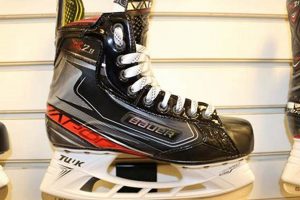
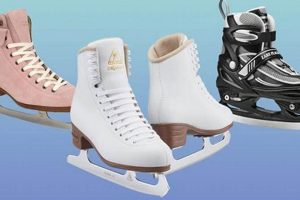
A device or covering designed to shield the blade of footwear used for gliding on ice surfaces. These protective elements are typically constructed from materials such as rubber, plastic, or fabric, and they serve to prevent damage to the blade when not in use on the ice. For example, after a figure skating session, individuals often place these guards on their blades to walk safely on non-ice surfaces.
The utilization of these coverings offers significant advantages. Primarily, they preserve the sharpness and integrity of the blade edge, which is crucial for optimal performance on the ice. Damage prevention leads to extended lifespan and reduces the frequency of costly resharpening. Historically, improvised solutions, like wrapping the blades in cloth, preceded the development of purpose-built versions, reflecting a longstanding need to safeguard this specialized equipment.
The subsequent sections will delve into various types of these safeguarding components, examining their construction materials, design variations, and specific applications for different types of ice skates. Performance characteristics and maintenance recommendations will also be addressed.
Tips for Maintaining Ice Skate Blade Shields
Adherence to proper usage and maintenance guidelines will maximize the lifespan and effectiveness of blade shields, thereby extending the longevity of the ice skate blades themselves.
Tip 1: Proper Sizing is Essential: Ensure the blade guards fit snugly to prevent slippage. Ill-fitting guards can cause the blades to rub against the interior, leading to dulling or damage.
Tip 2: Thorough Drying Before Storage: Always dry the blades completely before placing the blade guards on. Trapped moisture accelerates rust formation, compromising blade integrity.
Tip 3: Regular Cleaning of Guards: Periodically clean the inside of the guards to remove accumulated debris, such as ice shavings and dirt, which can scratch the blades.
Tip 4: Inspect for Wear and Tear: Regularly examine the guards for cracks, splits, or other signs of damage. Replace them promptly if any compromise to their structural integrity is observed.
Tip 5: Use Soft Guards for Storage: When storing skates for extended periods, consider using soft, absorbent guards to prevent moisture buildup and promote air circulation.
Tip 6: Avoid Walking Long Distances: While designed for short distances, prolonged walking on hard surfaces with blade shields can accelerate wear and tear on both the guards and the blades.
Tip 7: Rotate Guards Periodically: If using rubber or plastic guards, rotate them periodically to distribute wear evenly and prevent deformation from consistent pressure points.
Consistent application of these strategies will significantly contribute to preserving the condition of ice skate blades, reducing the need for frequent sharpening and replacements.
The next section will address common issues encountered with blade protection and offer solutions for effective troubleshooting.
1. Blade Edge Protection

Blade edge protection is a primary function inherent in the design and purpose of ice skate protectors. The razor-sharp edge of a skate blade is fundamental to performance, enabling precise movements and controlled gliding on ice. The inherent fragility of this edge necessitates a protective barrier when not in use, as contact with hard surfaces like concrete or tile can immediately degrade its sharpness. The ice skate protector, therefore, directly addresses the cause of potential damage by encasing the blade, preventing abrasive contact and impact forces from compromising the integrity of the edge.
The composition of the protector directly influences its effectiveness in blade edge protection. Harder materials, such as rigid plastics, provide a robust shield against direct impacts, while softer materials, such as rubber or terry cloth linings, offer cushioning against vibration and minor abrasions. The fit of the protector is equally crucial. A loose or ill-fitting guard can allow movement of the blade within, causing friction against the interior surface of the protector, effectively dulling the edge over time. Properly sized and fitted protectors minimize internal movement, ensuring the blade edge remains pristine.
In summary, blade edge protection is not merely an attribute of an ice skate protector; it is its defining purpose. The efficacy of a protector is directly proportional to its ability to prevent damage to the blade edge. Understanding this connection is crucial for selecting and maintaining protectors that effectively safeguard the performance and longevity of ice skate blades.
2. Material Durability

Material durability is a crucial determinant of an ice skate protector’s effectiveness and lifespan. The protector’s ability to withstand repeated use, abrasion from various surfaces, and potential impact forces directly correlates with the durability of its constituent materials. A protector fabricated from inferior materials is prone to premature wear, cracking, or complete failure, negating its protective function and potentially exposing the skate blade to damage. For instance, a protector made from low-grade plastic may fracture upon impact with a hard surface, offering minimal protection, whereas one constructed from high-density polyethylene or durable rubber is far more likely to absorb the impact and preserve the blade’s integrity.
The choice of materials also influences the protector’s resistance to environmental factors such as moisture and temperature fluctuations. A protector designed for use in humid environments should ideally be made from non-porous materials that resist water absorption, thereby preventing rust formation on the blade. Similarly, materials that maintain their structural integrity across a wide temperature range are preferable, as they avoid becoming brittle and prone to cracking in cold conditions. Real-world examples include protectors incorporating stainless steel components for added strength and rust prevention, or utilizing specialized polymers that maintain flexibility and impact resistance even in sub-zero temperatures. The practical significance of this understanding lies in the selection of protectors that not only provide immediate protection but also offer long-term durability, reducing the frequency of replacements and ensuring continued blade safeguarding.
In summary, the longevity and reliability of an ice skate protector are inextricably linked to the durability of its constituent materials. Selecting protectors made from robust, weather-resistant materials is essential for optimizing blade protection and minimizing the long-term cost and inconvenience associated with protector replacements. The challenge lies in balancing material durability with other factors, such as cost and ease of use, to achieve a protector that provides optimal value and performance. Understanding the properties and performance characteristics of various materials is therefore paramount for making informed purchasing decisions.
3. Moisture Management

The relationship between moisture management and blade protection is crucial. Moisture accumulation on skate blades, particularly after use, accelerates corrosion processes, commonly known as rust. This corrosion degrades the blade’s surface, dulls its edge, and compromises its structural integrity. Therefore, an effective blade protector design incorporates features that mitigate moisture buildup, either through absorption, ventilation, or a combination of both. Protectors lacking adequate moisture management mechanisms inadvertently contribute to blade deterioration despite their primary protective function against physical damage. For example, a rubber protector that completely seals the blade without allowing for airflow will trap moisture, creating a conducive environment for rust.
The inclusion of absorbent materials within the protector’s inner lining represents a common solution. These materials, such as terry cloth or specialized synthetic fabrics, wick away moisture from the blade surface, thereby reducing the risk of corrosion. Alternative designs employ ventilation holes or channels that facilitate air circulation, promoting evaporation and further minimizing moisture retention. The choice between absorbent materials and ventilation depends on the specific skating environment and the user’s post-skating routine. Skaters who frequently encounter wet or humid conditions may benefit from protectors with enhanced absorbent properties, while those who have access to well-ventilated storage spaces may find that ventilated protectors provide sufficient moisture control.
In summary, moisture management is not merely an ancillary feature but an integral component of effective blade protection. Neglecting this aspect can lead to significant blade damage despite the use of protectors designed to prevent physical impacts. The practical significance of understanding this connection lies in selecting protectors that actively combat moisture buildup, thereby extending the lifespan of the skate blades and preserving their performance characteristics. Furthermore, regular maintenance practices, such as drying the blades thoroughly before inserting them into the protector, are essential for maximizing the protector’s moisture management capabilities.
4. Secure Fit
A secure fit is paramount to the effective functioning of any ice skate blade protector. The device’s intended purpose safeguarding the delicate blade from damage is contingent upon its stable and reliable positioning relative to the blade. A poorly fitting protector risks compromising its protective function and potentially causing damage it is designed to prevent.
- Prevention of Slippage
A secure fit prevents the protector from slipping off the blade during transport or storage. Slippage exposes the blade to potential impacts and abrasions from surrounding surfaces. A protector that readily detaches offers no practical protection, rendering it ineffective. Properly sized protectors, often featuring elasticized components or adjustable straps, minimize the risk of inadvertent detachment.
- Minimizing Internal Movement
A secure fit reduces internal movement of the blade within the protector. Excessive movement can result in frictional wear against the protector’s inner surfaces, potentially dulling the blade edge over time. A snug fit, tailored to the specific blade profile, immobilizes the blade, preventing abrasive contact. The choice of materials, such as soft linings, also contributes to minimizing friction.
- Maintaining Alignment
A secure fit ensures correct alignment of the protector with the blade. Misalignment can leave portions of the blade exposed or create pressure points that could lead to bending or deformation. Protectors designed with precise contours and fastening mechanisms maintain the intended orientation, ensuring comprehensive coverage and even distribution of pressure.
- Enhancing User Safety
A secure fit contributes to user safety by preventing accidental dislodgement of the protector while walking on hard surfaces. A loose protector can shift unexpectedly, creating an unstable walking surface and increasing the risk of slips and falls. A firmly secured protector provides a stable platform, allowing the skater to traverse non-ice surfaces with confidence.
The multifaceted benefits of a secure fit underscore its critical importance in the selection and use of ice skate blade protectors. A protector that effectively addresses each of these considerations provides optimal blade safeguarding and enhances the overall skating experience.
5. Ease of Use
Ease of use is a significant factor in determining the practical value and adoption rate of any protective equipment, including ice skate blade protectors. A protector, regardless of its protective capabilities, will be ineffective if its application is cumbersome or time-consuming. The accessibility and simplicity of use are key determinants of whether skaters consistently utilize blade protectors, thereby influencing long-term blade maintenance.
- Simple Attachment and Removal
The attachment and removal process should be straightforward and intuitive, minimizing the effort and time required. Complex fastening mechanisms or tight fits can deter frequent use. A protector designed with elasticized openings or simplified clip systems facilitates quick and effortless application and removal. This ease of handling is particularly important for younger skaters or individuals with limited dexterity.
- Clear Indication of Correct Placement
The protector’s design should provide a clear visual indication of correct blade placement. Ambiguous designs can lead to improper installation, potentially compromising the protector’s effectiveness or even causing damage to the blade. Distinct markings, asymmetrical designs, or tactile cues ensure the protector is correctly aligned, minimizing the risk of misalignment or incomplete coverage.
- Minimal Maintenance Requirements
Protectors that require extensive cleaning or specialized maintenance are less likely to be consistently used. Designs incorporating materials that resist dirt accumulation and are easily cleaned with common household products promote long-term use. Furthermore, protectors that dry quickly after exposure to moisture minimize the risk of rust formation on the blade, reducing the need for frequent maintenance interventions.
- Compatibility with Skate Bags
The protector’s size and shape should be compatible with standard skate bags, allowing for convenient storage and transport. Bulky or oddly shaped protectors can be difficult to pack and may discourage consistent use. Designs that prioritize compactness and conform to the contours of the skate blade enhance portability and storage convenience.
In conclusion, the ease of use of ice skate blade protectors is not merely a convenience but a critical factor in ensuring consistent application and, consequently, long-term blade protection. Designs that prioritize simplicity, intuitiveness, and minimal maintenance promote user adoption and contribute significantly to preserving the performance and longevity of ice skate blades. A well-designed protector effectively balances protective capabilities with user-friendliness, maximizing its overall value and effectiveness.
Frequently Asked Questions
This section addresses common inquiries regarding ice skate blade protection. The objective is to provide clear, concise, and accurate information to aid in the proper selection and utilization of blade protection devices.
Question 1: What is the primary function of an ice skate protector?
The primary function is to safeguard the skate blade from damage when not in use on ice. This includes protection against impacts, abrasion, and environmental factors such as moisture, which can lead to corrosion.
Question 2: What materials are commonly used in the construction of blade protectors?
Common materials include rubber, plastic (such as high-density polyethylene), and absorbent fabrics like terry cloth. The choice of material depends on the desired balance between impact resistance, moisture absorption, and cost.
Question 3: How frequently should blade protectors be replaced?
The replacement frequency depends on the intensity of use and the quality of the protector. Regular inspection for signs of wear, such as cracks, splits, or tears, is essential. Replacement is warranted when the protector’s structural integrity is compromised.
Question 4: Is it necessary to dry skate blades before placing protectors on them?
Yes, thoroughly drying the blades before placing protectors on is crucial. Moisture trapped between the blade and the protector can accelerate rust formation, leading to blade degradation.
Question 5: Are all blade protectors universally compatible with all skate types?
No, blade protectors are not universally compatible. Different skate types (e.g., figure skates, hockey skates) have varying blade profiles. It is essential to select protectors designed specifically for the relevant skate type to ensure a secure and effective fit.
Question 6: Can walking long distances on hard surfaces with blade protectors damage the skates?
Yes, prolonged walking on hard surfaces can accelerate wear and tear on both the protectors and the blades. While designed for short distances between the ice surface and changing areas, extended use on abrasive surfaces should be avoided.
Proper use and maintenance of blade protectors contribute significantly to extending the lifespan and performance of ice skate blades. Regular inspection, appropriate sizing, and diligent drying practices are key to maximizing their effectiveness.
The following section will provide a summary of key considerations for choosing the most suitable ice skate protector based on individual needs and skating discipline.
Conclusion
This exploration of the ice skate protector has underscored its significance in preserving the condition and performance of ice skate blades. The discussion encompassed material composition, design variations, maintenance practices, and common troubleshooting issues, highlighting the interconnectedness of these factors in ensuring effective blade safeguarding. Proper selection and diligent usage of this equipment are paramount.
Given the investment associated with ice skates and the critical role of blade sharpness in skating performance, prioritizing appropriate protection measures is a sound practice. Consistent attention to detail in blade care, including the use of a suitable protector, represents a commitment to maintaining equipment integrity and maximizing the skating experience.