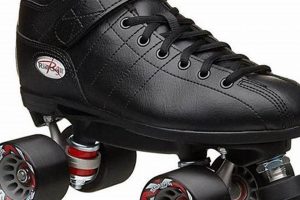
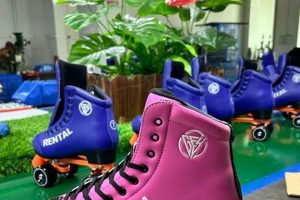
The process of fastening the laces on roller skates to achieve a secure and comfortable fit is a critical element of skating. This action involves threading laces through the eyelets or hooks of the skate boot, adjusting the tension, and tying them securely. The resulting snugness around the foot and ankle provides stability and support during use.
Properly secured footwear enhances balance, control, and overall performance. Furthermore, appropriately tightened laces can minimize the risk of injuries such as ankle sprains and blisters. Historically, methods have evolved, reflecting advancements in skate design and materials to optimize both function and comfort.
This document will provide detailed instructions on achieving optimal lacing, exploring variations for different foot types and skating styles, and discussing considerations for lace maintenance and replacement. The following sections will guide the reader through this important procedure.
Lacing Techniques for Roller Skates
The following recommendations aim to optimize skate fit and performance through effective lacing practices. Strict adherence to these principles contributes to enhanced safety and control.
Tip 1: Initial Lace Positioning: Begin by ensuring laces are evenly distributed across the tongue of the skate. Uneven lengths can lead to asymmetrical tightening and discomfort.
Tip 2: Gradual Tightening: Tighten laces incrementally, working from the toe towards the ankle. Avoid overtightening individual sections, as this can restrict circulation.
Tip 3: Ankle Support Enhancement: For enhanced ankle stability, consider utilizing a ‘heel lock’ lacing technique. This involves creating a loop near the ankle to draw the heel firmly into the back of the skate.
Tip 4: Addressing Pressure Points: If pressure points are present, selectively loosen laces in the affected area. Employ padding or specialized lace patterns to alleviate discomfort without compromising overall support.
Tip 5: Lace Material Selection: Opt for durable, high-quality laces constructed from materials resistant to abrasion and stretching. Regular inspection and replacement are necessary to maintain optimal performance.
Tip 6: Knot Security: Utilize a secure knot-tying method, such as a surgeon’s knot or a double knot, to prevent slippage during skating. Regularly check knot integrity and re-tie as needed.
Tip 7: Consistent Lace Tension: Strive for uniform lace tension throughout the boot. Inconsistent tension can result in instability and potential injury.
Mastering these techniques provides a foundation for a secure and comfortable skating experience. Proper lacing is not merely an aesthetic concern but rather an essential element of skater safety and performance.
With these considerations in mind, the skater can proceed with confidence, knowing that their skates are properly secured and adjusted for optimal use.
1. Tension distribution.

Tension distribution is a critical element in the effective securing of roller skates. Inadequate or uneven distribution of tension during lacing directly impacts the skater’s stability and control. If the laces are tightened more in one area than another, the foot may shift within the boot, leading to instability, reduced responsiveness, and increased risk of injury. The purpose of the action is not only to secure the foot but to do so in a manner that promotes uniform support. For example, overtightening at the ankle while leaving the forefoot loose can restrict ankle mobility while failing to provide adequate support to the toes, a balance must be struck. This concept is fundamentally intertwined with the goal of effectively tightening roller skates.
Achieving optimal tension involves a systematic approach. The laces must be tightened incrementally, working from the toe to the ankle, ensuring each section is appropriately snug before proceeding. Varied lacing techniques, such as those designed to relieve pressure points or enhance ankle support, further illustrate the practical application of tension distribution principles. These methods allow skaters to customize the tightness in specific regions of the boot, addressing individual foot contours and skating styles. Incorrect usage of this can lead to discomfort, blisters, and even more serious issues such as restricted blood circulation. Consider a skater with a high arch: a uniform tightening would exert excessive pressure on the top of the foot, while a targeted loosening in that area would provide relief without compromising overall support.
In summary, the uniform tightening process is integral to the desired outcome of the securing task of roller skates. While the underlying action may seem simple, the consequences of poor practices are significant. Understanding and applying the principles of even tension improves the functionality and safety of the skating experience. This understanding must be coupled with regular inspection and adjustment of the lacing system to adapt to changing conditions and maintain optimal performance.
2. Lace material quality.
The selection of appropriate material directly impacts the effectiveness and longevity of securing roller skates. This aspect extends beyond mere aesthetics, influencing the user’s safety, comfort, and overall skating experience.
- Durability and Tensile Strength
High-quality materials, such as reinforced nylon or polyester blends, exhibit superior resistance to abrasion, tearing, and stretching. This is crucial in a high-stress environment where laces are repeatedly tightened and subjected to friction. Inferior materials are prone to fraying and breakage, potentially leading to sudden skate loosening and increased risk of falls. For example, laces composed of thin, weak fibers may fail during a vigorous skating session, necessitating immediate replacement and potentially causing an accident.
- Friction Coefficient
The surface properties of the material affect how well the laces grip against themselves and the skate’s eyelets or hooks. Laces with a low friction coefficient may slip easily, requiring frequent re-tightening. Conversely, excessively high friction can make adjustment difficult and contribute to premature wear. Optimal material selection balances grip and ease of handling, ensuring a secure and adjustable fit. Waxed laces represent one solution, providing increased grip and resistance to loosening.
- Water Resistance and Environmental Factors
Laces are exposed to various environmental conditions, including moisture, dirt, and UV radiation. Materials that readily absorb water can weaken, stretch, and become prone to mildew. UV exposure can degrade the fibers, reducing their strength and elasticity. Selecting water-resistant and UV-resistant materials prolongs the lifespan of the laces and maintains their performance characteristics under diverse conditions. Skaters who frequently skate outdoors benefit significantly from such considerations.
- Elasticity and Stretch Resistance
While some degree of elasticity is desirable for comfort and flexibility, excessive stretching reduces the laces’ ability to maintain consistent tension. Materials with low stretch resistance require frequent re-tightening and may ultimately fail to provide adequate support. High-quality laces maintain their original length and tension over time, ensuring a secure and reliable fit. This is particularly important for skaters who require precise control and support, such as those engaged in aggressive skating or roller derby.
In conclusion, selection dictates the overall effectiveness of the securing process. Paying attention to material properties ensures that the skates remain securely fastened throughout the skating session, providing both safety and an enhanced skating experience. A robust and well-chosen set of laces is a fundamental component of proper skate maintenance and a crucial factor in mitigating risk.
3. Knot security.

The integrity of the knot employed to secure roller skate laces is directly related to safety and performance. Inadequate knot security can lead to loosening during use, compromising support and increasing the risk of falls. Therefore, selecting and executing a reliable knot-tying method is paramount.
- Knot Slippage and Stability
Knot slippage refers to the gradual loosening of the knot due to friction and tension. A secure knot resists slippage, maintaining consistent lace tension. For example, a poorly tied square knot is prone to slippage, whereas a surgeon’s knot, with its additional loop, provides increased stability. The choice of knot significantly impacts the frequency of required adjustments and the overall reliability of the skate fastening.
- Knot Strength and Material Compatibility
Knot strength represents the force a knot can withstand before failing. The strength of a knot is influenced by both the knot’s structure and the material of the laces. Certain knots, such as the figure-eight knot, are inherently stronger than others. Furthermore, the compatibility of the knot with the lace material is crucial. A knot that works well with one type of lace may perform poorly with another. For instance, a knot that relies on friction may be less effective with slick, waxed laces.
- Knot Profile and Interference
The knot’s profile, or size and shape, can affect its susceptibility to external interference. A bulky knot is more likely to catch on objects or create pressure points. A streamlined knot, on the other hand, minimizes the risk of snagging and maximizes comfort. The ideal knot profile is compact, secure, and unlikely to cause irritation. Securing the loose ends of the knot, either by tucking them or using a specialized knot, can further reduce the risk of interference.
- Knot Tying Technique and Consistency
Even the most secure knot can fail if tied improperly. Consistent and precise execution of the chosen knot-tying method is essential. This includes ensuring that the knot is tightened correctly, that the loops are properly formed, and that the ends are adequately secured. Regular practice and attention to detail are necessary to maintain consistency and ensure reliable knot security. Skaters should routinely inspect their knots for signs of wear or loosening, re-tying them as needed.
In summary, “knot security” is a vital component of effectively tightening roller skates. By selecting an appropriate knot, considering material compatibility, minimizing interference, and executing the knot-tying technique with precision, skaters can enhance safety, improve performance, and enjoy a more secure and comfortable skating experience.
4. Ankle support.
Ankle support, in the context of roller skating, refers to the degree of stabilization provided to the ankle joint by the skate boot. The method used to fasten the laces directly influences this support. Inadequate securing can lead to excessive ankle movement, increasing the risk of sprains, strains, and other injuries. Conversely, optimal fastening provides a rigid or semi-rigid structure that limits lateral and medial motion, thereby protecting the joint during dynamic movements. For example, a skater performing a crossover maneuver relies on the skate boot and laces to prevent the ankle from rolling inwards, which could result in a fall. The connection between the lacing technique and the level of ankle support is a direct cause-and-effect relationship.
Various fastening techniques can be employed to modulate the level of support provided. A simple, uniform tightening distributes pressure evenly but may not provide sufficient support for skaters with weak ankles or those performing demanding maneuvers. Lacing patterns that incorporate heel locks or strategically tightened sections near the ankle can significantly enhance stability. Furthermore, the type of laces used, their material, and their condition influence the effectiveness of the tightening method. Worn or stretched laces offer less resistance and can compromise the support provided, regardless of the fastening pattern. The choice of technique depends upon individual needs, skating style, and skate design. Figure skaters, for instance, often require a high degree of ankle support to execute complex jumps and spins.
The proper fastening of roller skates is not merely a matter of tightening the laces but rather a deliberate process of engineering support for the ankle joint. Understanding the principles of force distribution, the properties of lace materials, and the biomechanics of skating movements is essential for achieving optimal ankle stability. The skater must consider individual needs, skate design, and skating style to determine the most appropriate tightening method. Consistent maintenance of the laces and regular inspection of the skate boot are necessary to ensure continued support and prevent injuries.
5. Pressure point mitigation.
Effective footwear management necessitates addressing localized areas of discomfort, often referred to as pressure points. The method used in securing roller skates directly influences the formation and severity of these points, making pressure point mitigation a critical component of proper lacing.
- Localized Lace Adjustment
The tightening method can be modified to alleviate pressure in specific areas. Selective loosening of laces in the regions where pressure points occur can redistribute tension and reduce discomfort. For instance, if a skater experiences pressure on the top of the foot, loosening the laces in that area while maintaining overall tightness elsewhere can provide relief. This targeted approach represents a direct application of pressure point mitigation principles.
- Lace Pattern Modification
Alternative patterns can be employed to bypass or redistribute pressure. Skipping eyelets or using parallel lacing in problematic areas can reduce direct contact and friction. Skaters with bony prominences or sensitive areas may benefit from such modifications. These adjustments alter the way the laces interact with the foot, shifting the location and intensity of pressure. An example is the use of bar lacing to create a channel that avoids direct pressure on a sensitive area on the instep.
- Tongue and Padding Enhancement
Additional padding or modification to the skate tongue can provide a buffer between the laces and the foot. Gel pads, foam inserts, or thicker tongues can cushion sensitive areas and prevent the laces from digging in. This indirect approach addresses pressure points by increasing the surface area of contact and reducing localized stress. The implementation of such padding is especially relevant for skaters who experience discomfort despite employing modified lacing techniques.
- Material Selection and Compatibility
The material properties of both the laces and the skate boot lining influence the formation of pressure points. Stiff or abrasive materials can exacerbate discomfort, while soft, pliable materials can reduce friction and provide greater comfort. Selecting laces made from smooth, non-abrasive materials and ensuring that the skate boot lining is free from wrinkles or rough seams can minimize the risk of pressure point development. The consideration of material compatibility is a proactive approach to prevention.
Pressure point mitigation strategies are intrinsically linked to the overall objective of roller skates. A well-executed tightening system not only provides secure support but also minimizes the risk of discomfort and injury. The described facets highlight various methods for achieving this balance, emphasizing the importance of individual adjustment and careful consideration of materials and techniques.
6. Even lace length.

The distribution of lace material is a prerequisite for achieving balanced tension and symmetrical support when securing roller skates. Disparate lace lengths impede uniform tightening, potentially leading to instability and discomfort. The process involves threading the laces through the eyelets or hooks of the skate boot, and the execution necessitates equal lengths to ensure that each side can be tightened with equal force and precision. An uneven distribution introduces asymmetry, where one side might be excessively tight while the other remains loose, compromising both comfort and control. For instance, if one lace is significantly shorter than the other, the skater may find it difficult to achieve a snug fit around the ankle, increasing the risk of injury.
The practical significance of equal lace lengths becomes evident when considering the biomechanics of skating. Balanced support is crucial for maintaining proper alignment and distributing weight evenly across the foot. Unequal tension caused by differing lengths can lead to pronation or supination, affecting the skater’s balance and increasing the risk of ankle strain. Furthermore, inconsistent tightening can cause premature wear and tear on the skate boot, as stress is unevenly distributed across the material. This understanding informs the initial steps of the securing process, emphasizing the need to measure and adjust the lace length before proceeding with threading and tightening. Cases of repeated lace breakage on one side often stem from an initially uneven lace length.
In conclusion, maintaining equal lace lengths is an integral component of effectively securing roller skates. It directly influences the skater’s ability to achieve balanced support, mitigate injury risk, and ensure the longevity of the skate boot. Failure to adhere to this principle undermines the intended functionality, turning an otherwise straightforward action into a source of instability and discomfort. The principles impact underscores its non-negotiable nature within the comprehensive process.
7. Consistent tightening.
The application of uniform tension throughout the lacing process is essential for achieving a secure and supportive fit when securing roller skates. Inconsistent tightening introduces imbalances that can compromise stability, comfort, and overall performance. A structured approach to lacing, therefore, is vital.
- Uniform Pressure Distribution
Uniform pressure distribution, achieved through consistent tightening, minimizes the risk of pressure points and discomfort. Localized areas of excessive tightness can restrict circulation and cause pain, while loose areas fail to provide adequate support. Maintaining uniform tension throughout prevents these issues by distributing pressure evenly across the foot. As an example, consider a skater who tightens the laces excessively at the ankle but neglects the forefoot. This uneven distribution can lead to discomfort at the ankle and instability in the toes, affecting balance and control.
- Enhanced Ankle Stability
Consistent tightening from the toe to the ankle contributes to enhanced ankle stability. A secure and uniform fit around the ankle joint restricts excessive movement, reducing the risk of sprains and strains. When the tightening is inconsistent, the ankle may be inadequately supported, especially during lateral movements. The use of techniques such as heel locks, combined with consistent tightening, further reinforces ankle stability, creating a more secure and controlled skating experience.
- Improved Responsiveness and Control
Consistent tightening enhances the skater’s responsiveness and control by ensuring that the foot and skate function as a unified unit. When the skate fits snugly and uniformly, movements of the foot are translated directly to the skate, allowing for precise control and maneuverability. Inconsistent tightening, on the other hand, introduces lag and imprecision, as the foot can move independently within the skate. This is particularly important in activities such as roller derby or figure skating, where precise movements and quick reactions are essential.
- Extended Lace and Skate Lifespan
Consistent tightening can also contribute to the extended lifespan of both the laces and the skate boot. When tension is evenly distributed, the laces are less likely to fray or break due to localized stress. Similarly, the skate boot experiences less strain, as the forces are distributed uniformly across its structure. This practice minimizes the need for frequent lace replacements and reduces the risk of premature boot wear, ultimately saving the skater time and money.
In summary, the systematic application of consistent tightening during the fastening process directly influences the overall safety, comfort, and performance of roller skating. Addressing each facetpressure distribution, ankle stability, responsiveness, and equipment lifespanhighlights the multifaceted benefits. The principles of consistently applied tension transform a simple, physical action into an optimized, high-performance process.
Frequently Asked Questions
The following section addresses common inquiries regarding proper methods, emphasizing safety and optimal performance.
Question 1: What is the recommended method to initiate the process?
The process should commence with the ensuring the laces are of equal length. This prevents uneven tension during subsequent steps.
Question 2: What type of knot is most suitable to prevent loosening during skating?
A surgeon’s knot or double knot is advisable due to their inherent resistance to slippage. Regular inspection and re-tying are also recommended.
Question 3: How tight should the laces be to achieve optimal ankle support without restricting circulation?
The laces should be snug enough to provide stability but loose enough to permit adequate blood flow. A general guideline is to ensure one can comfortably insert a finger between the laces and the ankle.
Question 4: Is there a specific approach to mitigate pressure points on the foot?
Adjustments to lace tension in affected areas can alleviate pressure. Additionally, specialized padding or alternative patterns can redistribute pressure and enhance comfort.
Question 5: How frequently should laces be replaced to maintain functionality and safety?
Lace replacement frequency depends on usage and material quality. Regular inspection for fraying, stretching, or damage is crucial, and replacement should occur promptly upon detection of any compromise.
Question 6: Can different lacing patterns improve performance or comfort?
Yes, alternative lacing patterns can accommodate different foot types and skating styles. Patterns such as heel locks can enhance ankle support, while parallel lacing can reduce pressure on sensitive areas.
Consistent technique application contributes significantly to both skater safety and overall performance. Regular maintenance and vigilance are also essential.
With the foundation provided through these FAQs, the subsequent sections will provide more detailed guidance on specialized techniques.
Conclusion
The preceding analysis has explored the multifaceted considerations involved in how to lace roller skates effectively. Attention to detail, including lace material selection, knot security, and tension distribution, directly impacts the user’s safety, comfort, and skating performance. Individualized adjustments may be necessary to accommodate variations in foot anatomy and skating style.
Mastery of this skill is paramount for maximizing both the enjoyment and safety of roller skating. Continued attention to proper technique and regular equipment maintenance will yield consistent results, contributing to a secure and optimized skating experience. Proper execution transforms a mundane task into a critical element of athletic performance.