Achieving proficiency on the ice involves developing a combination of balance, control, and technique. Mastering these elements significantly reduces the likelihood of unwanted tumbles. For example, a skater with strong core stability and controlled edge work will experience greater stability and fewer unexpected losses of balance.
The ability to navigate an ice surface with confidence offers numerous advantages. Beyond the immediate enjoyment of the activity, proficient skating builds physical fitness, improves coordination, and enhances spatial awareness. Historically, skating has evolved from a practical means of transportation to a recreational pursuit and a highly competitive sport, with stable movement fundamental to both.
The subsequent sections will explore specific techniques and strategies designed to cultivate a robust foundation on the ice, focusing on posture, edge control, balance exercises, and proactive fall prevention methods.
Essential Techniques for Enhanced Ice Skating Stability
This section outlines crucial techniques that foster stability and minimize the risk of falls while ice skating. Mastering these skills is foundational for progress and confidence on the ice.
Tip 1: Maintain Proper Posture: A slightly forward lean from the ankles, with knees bent and shoulders aligned over the hips, establishes a balanced center of gravity. Avoid leaning too far forward or backward, as this disrupts equilibrium.
Tip 2: Master Edge Control: Developing control over both the inside and outside edges of the skates is paramount. Practice gliding on a single edge in a controlled manner to increase stability and maneuverability.
Tip 3: Practice Core Engagement: Activating core muscles provides stability and control during movement. Consciously engage abdominal and back muscles to maintain balance and prevent unwanted twisting.
Tip 4: Execute Controlled Glides: Focus on smooth, deliberate movements rather than jerky or rushed steps. A controlled glide reduces the likelihood of catching an edge and losing balance.
Tip 5: Develop Fall Recovery Techniques: Learn how to fall safely and recover quickly. Practice bending knees and bracing with arms to minimize impact. Knowing how to get back up efficiently restores confidence.
Tip 6: Gradually Increase Speed: As proficiency increases, gradually increase skating speed. Maintain focus on posture and edge control at higher speeds to prevent imbalances.
Tip 7: Focus on Balance Exercises: Off-ice balance training, such as single-leg squats and wobble board exercises, can significantly improve on-ice stability.
Consistent application of these techniques fosters confidence and reduces the frequency of falls. A stable skating foundation allows for progression to more advanced skills.
The following section will address advanced strategies for further enhancing stability and control on the ice.
1. Balance

Maintaining equilibrium is fundamental to achieving proficiency and reducing the incidence of falls while ice skating. It is not a singular attribute but rather a complex interplay of physical and cognitive factors.
- Center of Gravity Management
The ability to consciously control and adjust the center of gravity over the skates is paramount. This involves subtle shifts in body weight to compensate for changes in momentum, direction, and ice conditions. For example, a slight lean forward during a glide helps maintain balance by aligning the center of gravity with the direction of movement, whereas a backward lean can easily result in a fall.
- Proprioception and Kinesthetic Awareness
Proprioception, the awareness of one’s body position in space, and kinesthetic awareness, the sense of movement, are crucial for maintaining balance. Skilled skaters rely on these senses to make instantaneous adjustments to their posture and muscle activation to counteract imbalances. A loss of proprioception, due to fatigue or distraction, can significantly increase the risk of falling.
- Muscle Strength and Endurance
Adequate muscle strength, particularly in the core, legs, and ankles, is necessary to support and stabilize the body during skating. Furthermore, muscular endurance is critical for maintaining balance over extended periods. Weak muscles fatigue quickly, leading to decreased control and increased susceptibility to falls. Regular strength training and skating practice are essential for developing both strength and endurance.
- Dynamic Equilibrium Adjustments
Maintaining balance is not a static process; it requires continuous adjustments to counteract external forces and maintain stability. This is particularly evident during turns, jumps, and spins. Skaters must anticipate changes in momentum and adjust their body position accordingly to maintain equilibrium. Failure to make these dynamic adjustments results in a loss of balance and a likely fall.
The facets outlined above represent interconnected components of balance that directly influence the ability to skate effectively and minimize falls. Cultivating these elements through targeted training and consistent practice leads to enhanced stability, control, and confidence on the ice.
2. Edge Control
Effective management of skate edges represents a cornerstone skill in ice skating proficiency and a critical component in mitigating the risk of falls. The ability to precisely control the edges of the skates determines the skater’s ability to maneuver, maintain balance, and execute various skating techniques with stability and precision.
- Inside and Outside Edge Mastery
Proficient skaters demonstrate equal competence utilizing both the inside and outside edges of each skate. The inside edge allows for inward curves and turns, while the outside edge facilitates outward movements. Inadequate control of either edge leads to instability and unpredictable movements. For instance, a skater attempting a crossover turn without sufficient outside edge control on the supporting skate is likely to lose balance and fall.
- Edge Pressure and Weight Distribution
Effective edge control necessitates precise manipulation of pressure and weight distribution. Applying too much pressure on an edge can cause the skate to dig in abruptly, leading to a fall, while insufficient pressure reduces control and stability. Skilled skaters modulate edge pressure based on speed, angle, and desired maneuver. Subtle shifts in body weight dictate the amount of pressure applied to each edge, allowing for controlled glides and turns.
- Deep vs. Shallow Edges
The angle at which the skate engages the ice determines the depth of the edge. A deep edge provides greater grip and stability, useful for powerful turns and stops, while a shallow edge allows for smoother glides and transitions. Employing the appropriate edge depth for the situation is crucial for maintaining balance and control. Attempting a quick stop with a shallow edge, for example, may result in the skate sliding out from under the skater.
- Transitional Edge Control
Seamless transitions between inside and outside edges, and between forward and backward skating, are hallmarks of advanced edge control. Abrupt or uncontrolled edge transitions disrupt balance and increase the likelihood of falls. Skaters who can fluidly shift between edges demonstrate superior control and adaptability on the ice.
The mastery of edge control directly translates to enhanced stability and reduced fall frequency. Skaters who dedicate time to developing these skills will experience increased confidence and a greater capacity to execute challenging maneuvers without compromising their balance. The interdependence of these facets creates a foundation for more advanced skating techniques.
3. Core Strength
Core strength constitutes a critical element in maintaining stability and control on the ice, directly influencing the ability to skate effectively and minimize the risk of falls. A robust core acts as a central point of stabilization, enabling efficient transfer of power and precise control of body movements.
- Stabilization of the Spine and Pelvis
A strong core stabilizes the spine and pelvis, providing a solid foundation for upper and lower body movements. This stabilization prevents excessive twisting or swaying, which can easily lead to loss of balance on the ice. For instance, during a quick turn, core muscles engage to maintain spinal alignment, preventing uncontrolled rotation that could result in a fall. Weak core musculature results in instability, making it difficult to maintain a consistent center of gravity.
- Efficient Power Transfer
The core serves as a conduit for transferring power generated by the legs to the upper body, and vice versa. Effective power transfer is essential for executing skating techniques such as pushes, crossovers, and jumps. A weak core impedes this transfer, resulting in inefficient movements and increased risk of instability. For example, the force generated during a push-off is stabilized and directed by the core muscles, allowing for a smooth and powerful stride. Insufficient core strength compromises the efficiency and control of this movement.
- Improved Balance and Posture
Core muscles contribute significantly to overall balance and posture, allowing for greater control over body position on the ice. Strong core muscles enable a skater to maintain a proper upright posture, reducing the likelihood of leaning too far forward or backward, which disrupts equilibrium. Regular core strengthening exercises enhance proprioception and kinesthetic awareness, further improving balance and reducing the potential for falls.
- Enhanced Resistance to External Forces
A well-developed core provides greater resistance to external forces, such as bumps on the ice or unexpected shifts in momentum. This resilience allows skaters to maintain their balance even when encountering unforeseen challenges. For instance, if a skater encounters a rut in the ice, strong core muscles will help stabilize the body and prevent a loss of control. Weak core muscles offer less resistance, making the skater more susceptible to falls in unpredictable situations.
In summary, a strong core is not merely a desirable attribute, but a fundamental requirement for stable and controlled ice skating. The integrated function of core stabilization, efficient power transfer, improved balance, and resistance to external forces collectively contributes to a significant reduction in falls, enabling skaters to develop proficiency and confidence on the ice.
4. Smooth Gliding

Smooth gliding directly correlates with enhanced stability and a reduced propensity for falls. Uneven, jerky movements introduce imbalances that can easily disrupt a skater’s center of gravity, leading to loss of control. Conversely, consistent, controlled gliding allows for a more predictable and stable platform, minimizing the likelihood of sudden shifts that result in falls. For instance, a skater transitioning from a standstill to forward motion should aim for a seamless initiation, avoiding abrupt pushes that can destabilize the body. This controlled start facilitates a smoother glide, enhancing overall balance and reducing the chance of an early fall.
Achieving this necessitates a focus on consistent edge pressure and a controlled transfer of weight. The practice of long, deliberate glides on both inside and outside edges is crucial. This develops both the necessary muscle memory and the ability to sense subtle shifts in balance. Furthermore, smooth gliding contributes to increased efficiency, reducing fatigue and enabling longer periods of sustained skating. Overexertion, stemming from inefficient, jerky movements, leads to muscle fatigue, further compromising balance and increasing fall risk. Therefore, the cultivation of smooth gliding as a technique yields both immediate and long-term benefits in terms of stability and endurance.
The ability to execute controlled glides is a fundamental skill, directly contributing to proficiency on the ice and significantly minimizing the occurrence of falls. Developing this skill involves conscious effort, dedicated practice, and a consistent focus on maintaining balance and control. The benefits extend beyond fall prevention, fostering greater confidence and enjoyment in the activity. By prioritizing smooth gliding, skaters establish a robust foundation for progressing to more advanced techniques and maneuvers.
5. Fall Recovery
Effective fall recovery, paradoxically, is an integral component of developing proficiency and minimizing falls while ice skating. While the ultimate goal is to remain upright, the reality is that even experienced skaters encounter situations leading to falls. The ability to recover quickly and safely from a fall reduces the psychological barrier to attempting new skills and minimizes the risk of injury. For example, a skater attempting a challenging jump may lose balance mid-air. Knowing how to tuck, roll, and get back on their feet swiftly allows them to resume skating without prolonged hesitation or fear.
The connection resides in building confidence and mitigating potential negative consequences. A skater preoccupied with the fear of falling is less likely to take risks and push their boundaries, hindering skill development. However, possessing effective fall recovery techniques reduces anxiety, encouraging experimentation and accelerated learning. Consider a beginner skater repeatedly attempting a forward crossover. Initial attempts often result in stumbles. The ability to absorb the impact, roll, and quickly regain a skating stance not only prevents injury but also fosters a sense of resilience, motivating them to persist and improve their technique.
Therefore, fall recovery is not merely a reactive measure but a proactive element of skill acquisition. It allows for pushing boundaries, learning from mistakes, and developing the confidence necessary to execute increasingly complex maneuvers. Incorporating fall recovery training into skating practice, alongside balance and edge control drills, is crucial for fostering well-rounded skaters who are both skilled and resilient. The absence of such training can lead to hesitancy, fear, and ultimately, a slower progression in overall skating ability. Learning to fall well becomes a key element to skating well and staying safe.
Frequently Asked Questions
The following section addresses common inquiries and concerns regarding stability and fall prevention in ice skating, providing informative answers grounded in technique and best practices.
Question 1: What are the most common causes of falls among beginner ice skaters?
Common causes include improper posture, inadequate edge control, and a lack of core strength. A forward or backward lean throws off balance, while inability to control skate edges leads to unintended slips. Insufficient core engagement impairs stability, particularly during turns and changes in direction.
Question 2: How important is off-ice training in preventing falls on the ice?
Off-ice training is highly beneficial. Exercises focusing on balance, core strength, and leg strength directly translate to improved stability on the ice. Examples include single-leg squats, plank variations, and plyometric exercises that enhance agility and control.
Question 3: What type of skates is most suitable for beginners concerned about falling?
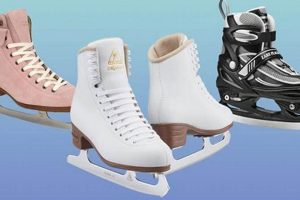
For beginners, recreational skates offering ankle support and a stable blade are generally recommended. Avoid figure skates with toe picks, as they can increase the likelihood of tripping. Ensure skates fit properly to enhance control and prevent ankle instability.
Question 4: Is there a specific method for getting up after a fall that minimizes the risk of further injury?
The recommended method involves tucking the chin to the chest, bringing knees towards the chest, and rolling to the side. Once on the side, position one skate flat on the ice, push up with hands, and bring the other foot to a skating position. Avoid using hands behind to push, as this can lead to wrist injuries.
Question 5: How can fear of falling be overcome to improve skating ability?
Gradual exposure to progressively challenging maneuvers can reduce fear. Practicing fall recovery techniques and focusing on mastering fundamental skills builds confidence. Skating with a supportive instructor or experienced skater can also provide encouragement and guidance.
Question 6: What role does ice condition play in the frequency of falls?
Ice quality significantly impacts stability. Uneven or excessively wet ice increases the risk of catching an edge and losing balance. Skaters should be aware of ice conditions and adjust their skating accordingly. Maintaining sharp skate blades is also crucial for optimal grip and control.
These insights aim to equip individuals with the knowledge necessary to minimize falls and enhance their skating experience through proactive measures and a focus on fundamental techniques.
The concluding section will offer a comprehensive summary of the key principles discussed, emphasizing the holistic approach required for achieving sustained stability on the ice.
Conclusion
This exposition has detailed the essential components required to minimize falls and enhance proficiency while ice skating. Core elements such as proper posture, refined edge control, robust core strength, smooth gliding techniques, and effective fall recovery methods have been thoroughly examined. The integrated application of these principles is paramount for developing a solid foundation on the ice.
Sustained progress in skating necessitates consistent practice and a diligent focus on mastering fundamental skills. The pursuit of enhanced stability is not merely about avoiding falls, but about unlocking the potential for graceful movement, increased confidence, and a deeper appreciation for the art and athleticism of ice skating. Through dedication and mindful application of the techniques outlined, individuals can realize their aspirations of becoming accomplished skaters.