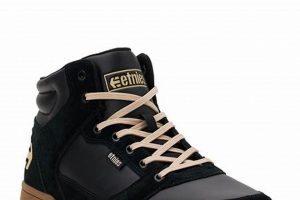
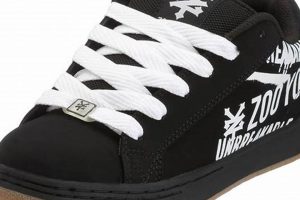
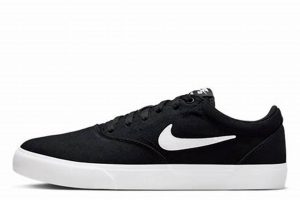
Affordable footwear designed for skateboarding is a segment of the athletic shoe market characterized by accessible pricing. These products typically offer a balance between durability, functionality, and cost-effectiveness, making skateboarding accessible to a broader demographic. For example, entry-level models featuring reinforced stitching and vulcanized rubber soles fall within this category.
The availability of budget-friendly options facilitates participation in skateboarding, particularly among younger individuals and those with limited financial resources. Historically, advancements in manufacturing and materials sourcing have contributed to the creation of more affordable yet reasonably performing skateboarding footwear. This accessibility helps promote physical activity and fosters a community centered around skateboarding.
The following sections will delve into the materials used in construction, factors influencing pricing, brands offering value-oriented choices, and maintenance tips for extending the lifespan of these products.
Tips for Selecting Economical Skateboarding Footwear
Maximizing the value and longevity of budget-conscious skateboarding shoes requires careful consideration and proactive maintenance.
Tip 1: Prioritize Durability in High-Impact Areas: Examine the toe and ollie patch reinforcements. These areas are subject to significant wear during skateboarding. Shoes with multiple layers of material or reinforced stitching in these zones tend to offer increased resistance to abrasion.
Tip 2: Assess Sole Construction: Vulcanized soles, while generally more affordable, provide adequate grip and board feel. Cupsole construction offers enhanced impact protection but may increase the overall cost. Evaluate skateboarding style and typical terrain to determine the most suitable sole type.
Tip 3: Consider Material Composition: Synthetic materials, such as canvas or synthetic suede, are often employed in cost-effective skateboarding shoes. While not as durable as premium leather, these materials can withstand moderate use if properly maintained. Inspect the stitching and overall construction quality, regardless of the material.
Tip 4: Seek Sales and Discounts: Retailers frequently offer promotional pricing on older models or end-of-season inventory. Subscribing to email lists and monitoring online marketplaces can provide access to discounted skateboarding footwear.
Tip 5: Implement Preventative Maintenance: Regular cleaning, using appropriate cleaning agents, can extend the life of skateboarding shoes. Applying shoe goo or similar adhesives to worn areas can prevent further damage and delay the need for replacement.
Tip 6: Rotate Shoe Usage: If possible, alternate between multiple pairs of skateboarding shoes. This allows each pair to rest and dry out, reducing the rate of wear and tear and extending the overall lifespan of the footwear.
Adherence to these recommendations can significantly enhance the performance and extend the lifespan of economical skateboarding shoes, providing a cost-effective solution for participating in the sport.
The subsequent section will explore specific brands and models known for offering a balance of affordability and performance in skateboarding footwear.
1. Material Composition

Material selection is paramount in determining the affordability and overall suitability of skateboarding footwear. The specific materials used significantly impact the shoe’s durability, performance, and ultimately, its price point. Understanding the trade-offs associated with different material choices is crucial when selecting budget-conscious options.
- Canvas Construction
Canvas is a common material in economical skateboarding shoes due to its low cost and ease of manufacturing. While offering breathability and a lightweight feel, canvas is inherently less durable than leather or suede, making it susceptible to tearing and abrasion. Shoes made primarily of canvas may require more frequent replacement under heavy use.
- Synthetic Suede Alternatives
Synthetic suede provides a balance between cost and durability. Often constructed from microfiber blends, synthetic suede offers better abrasion resistance than canvas while remaining more affordable than genuine leather. However, it may not offer the same level of long-term wear or flexibility as natural materials. Its performance can vary greatly depending on the specific blend and manufacturing process.
- Rubber Outsole Variations
The rubber compound used in the outsole affects grip, board feel, and wear resistance. Cheaper skateboarding shoes may utilize lower-grade rubber compounds that offer adequate grip initially but degrade more quickly with use. Vulcanized rubber is commonly used in budget options, offering a flexible and grippy sole at a lower cost than more advanced cupsole constructions.
- Reinforcement and Stitching Details
Even in economical skateboarding shoes, strategic reinforcement is crucial. Reinforced toe caps, ollie patches, and double or triple stitching in high-stress areas can significantly extend the shoe’s lifespan. The quality and placement of these reinforcements can differentiate a durable budget option from one that will quickly wear out.
In conclusion, the material composition of economical skateboarding footwear represents a series of compromises between cost, durability, and performance. Consumers should carefully consider their skateboarding style and frequency of use when selecting shoes made from less expensive materials, paying close attention to reinforcement details and the overall construction quality to maximize the value of their purchase.
2. Construction Techniques

The methods employed in manufacturing skateboarding footwear significantly influence both the production cost and the performance characteristics of the final product. When examining more economical options, an understanding of these techniques becomes crucial in assessing durability and overall value.
- Vulcanization Process
Vulcanization is a common and cost-effective method of bonding the sole to the upper in skateboarding shoes. This process involves heating the rubber sole and pressing it onto the upper, creating a strong bond. While effective, vulcanization may offer less impact protection compared to cupsole construction. It is prevalent in budget-friendly models due to its simplicity and lower manufacturing costs. For example, many entry-level skate shoes utilize a single layer of vulcanized rubber, prioritizing board feel over impact absorption.
- Stitching Density and Patterns
The density and pattern of stitching directly impact the shoe’s resistance to tearing and abrasion. Economical options often employ fewer stitches per inch and simpler stitching patterns to reduce labor costs. Strategic reinforcement with double or triple stitching in high-wear areas, such as the ollie patch or toe cap, can mitigate this weakness. The absence of robust stitching is a common trade-off in cheaper models, potentially shortening the shoe’s lifespan.
- Adhesive Bonding Quality
Beyond stitching, adhesives play a crucial role in holding different parts of the shoe together. Lower-cost manufacturing often involves the use of less expensive adhesives, which may be more prone to separation under stress or exposure to moisture. Delamination of the sole or upper is a common indicator of compromised adhesive bonding. Careful inspection of seams and edges can reveal potential weaknesses in this area.
- Simplified Upper Construction
The design and construction of the upper can significantly affect production costs. Simplified designs with fewer panels and less complex shapes reduce material waste and labor time. This simplification often translates to less support and cushioning compared to more intricate designs. For instance, a one-piece canvas upper is far less expensive to produce than a multi-layered leather upper with internal padding.
In summary, construction techniques are a primary determinant of the cost and performance of skateboarding footwear. While economical options often involve compromises in materials and methods, understanding these trade-offs allows consumers to make informed decisions based on their individual needs and skateboarding style. Prioritizing specific features, such as reinforced stitching or durable adhesives, can help maximize the value and longevity of cheaper alternatives.
3. Durability Thresholds

The performance lifespan of economical skateboarding footwear is fundamentally defined by its inherent resistance to wear and tear, known as its durability threshold. This threshold represents the point at which the shoe’s structural integrity or functional performance degrades to an unacceptable level, necessitating replacement. Understanding the factors influencing this threshold is critical for evaluating the true cost-effectiveness of budget-friendly options.
- Material Degradation Rate
The rate at which materials break down under stress is a primary determinant of durability. Cheaper skateboarding shoes often utilize less resilient materials, such as lower-grade canvas or synthetic suede, which are more susceptible to abrasion and tearing. This accelerated degradation directly reduces the shoe’s functional lifespan. For instance, a canvas upper may exhibit significant wear after only a few sessions, while a leather counterpart might withstand considerably more abuse. The degradation rate is influenced by both the intrinsic properties of the material and the intensity of use.
- Structural Weak Points
Certain areas of skateboarding shoes are inherently more prone to wear and failure. These structural weak points, such as the ollie patch, toe cap, and sole-to-upper bond, often dictate the overall durability threshold. Economical designs may lack sufficient reinforcement in these critical zones, leading to premature failure. A poorly reinforced ollie patch, for example, can quickly wear through, exposing the underlying layers and rendering the shoe unusable. Identifying and reinforcing these weak points can significantly extend the shoe’s lifespan.
- Construction Quality and Stitching Integrity
The quality of construction and the integrity of stitching play a crucial role in maintaining structural integrity under stress. Cheaper manufacturing processes may compromise stitching density, pattern, or the strength of the thread used. This can lead to seam separation and overall structural weakening. A poorly stitched sole-to-upper bond is a common point of failure in budget-friendly options, resulting in delamination and rendering the shoe unwearable. Robust stitching patterns and high-quality thread are essential for resisting these failures.
- Environmental Factors and Maintenance
External factors, such as exposure to moisture, abrasive surfaces, and improper storage, can significantly impact the durability threshold. Neglecting proper cleaning and maintenance can accelerate material degradation and shorten the shoe’s lifespan. For example, consistently skating in wet conditions can weaken adhesives and promote the growth of mold or mildew, compromising structural integrity. Regular cleaning and preventative maintenance, such as applying shoe goo to worn areas, can help mitigate these effects and extend the shoe’s lifespan.
In conclusion, the durability threshold of economical skateboarding footwear is a complex interplay of material properties, structural design, construction quality, and environmental factors. While budget-friendly options may inherently possess lower durability thresholds compared to premium models, understanding these influencing factors allows consumers to make informed choices and implement maintenance strategies to maximize the value and longevity of their purchases.
4. Brand Reputation

The perceived quality and reliability associated with a brand name exert a significant influence on the purchasing decisions related to economical skateboarding footwear. Established brands, even when offering products at lower price points, often benefit from a pre-existing reputation for durability and performance built upon their higher-end offerings. This brand halo effect can lead consumers to perceive greater value in a cheaper option from a reputable manufacturer than in an equivalent or even superior product from a lesser-known entity. For instance, a skater might select a budget-friendly Vans or Converse model over an ostensibly better-constructed shoe from an unfamiliar brand due to the perceived assurance of quality associated with the established name. This highlights how brand recognition acts as a powerful signal of expected performance, even within the “cheapest skate shoes” market segment.
Conversely, a negative brand reputation, stemming from past issues with product quality or ethical concerns, can severely impact sales, even if the current “cheapest skate shoes” offered by that brand represent a genuine value. Consumer skepticism, fueled by prior negative experiences or widely publicized issues, can make it difficult to gain traction in the market, irrespective of price competitiveness. The association between brand image and product quality remains deeply ingrained in consumer psychology, influencing purchasing behavior even in the budget sector. Brands aspiring to succeed in the economical skateboard shoe market must therefore prioritize maintaining a positive reputation through consistent product performance and ethical business practices.
In conclusion, the interplay between brand reputation and consumer perception profoundly affects the market for affordable skateboarding footwear. Established brands with positive track records hold a distinct advantage, while brands with compromised reputations face significant challenges. Ultimately, consistent quality, ethical manufacturing, and effective communication are crucial for building and maintaining the brand trust necessary for success in this competitive market segment. Consumers, in turn, must carefully evaluate the balance between brand perception and actual product attributes to make informed purchasing decisions.
5. Retailer Pricing

Retailer pricing fundamentally dictates accessibility within the skateboarding footwear market. The cost at which retailers offer skate shoes directly influences the availability of budget-friendly options. A strategic pricing approach, often involving reduced profit margins or negotiated bulk purchase agreements, enables retailers to offer certain models as “cheapest skate shoes.” This pricing strategy, in turn, broadens the consumer base by appealing to individuals with limited financial resources. Without retailers deliberately curating and pricing specific items within reach, wider participation in skateboarding would likely be curtailed. For instance, a local skate shop may secure a discount from a brand on overstocked models, enabling the retailer to then offer a particular shoe at a drastically reduced rate for a limited time, therefore it can become part of the promotion.
Furthermore, retailer pricing strategies are affected by competition within the market. In areas with numerous skate shops or sporting goods stores, competitive pricing pressures force retailers to offer more affordable options to attract customers. Online retailers also contribute to this pressure, offering discounts and promotions that brick-and-mortar stores must often match. This competition benefits consumers by driving down prices and increasing the availability of “cheapest skate shoes.” Conversely, in areas with limited competition, retailers may have less incentive to offer deep discounts, potentially restricting access to affordable options. Moreover, retailer pricing are also affected by seasonal sales.
In summary, retailer pricing forms a critical bridge between skateboarding footwear manufacturers and consumers seeking accessible options. Strategic pricing decisions, influenced by factors such as bulk purchasing, competition, and promotional events, directly determine the availability of “cheapest skate shoes” in the market. An understanding of these pricing dynamics is crucial for both retailers aiming to expand their customer base and consumers seeking budget-friendly options to participate in skateboarding.
Frequently Asked Questions
The following questions address common inquiries regarding affordability and performance within the skateboarding footwear market.
Question 1: What defines “cheapest skate shoes” in terms of price range?
The term typically refers to footwear specifically marketed towards skateboarding, available at a price point significantly below that of premium, high-performance models. A precise price range varies by retailer and brand, but generally falls within the lower quartile of the skateboarding shoe market.
Question 2: Are “cheapest skate shoes” durable enough for regular skateboarding?
Durability varies significantly among economical options. While some models offer reinforced construction and resilient materials, others may compromise on these features to minimize costs. Careful inspection of stitching, material thickness, and reinforcement in high-wear areas is recommended to assess durability.
Question 3: What materials are commonly used in the construction of “cheapest skate shoes”?
Common materials include canvas, synthetic suede, and vulcanized rubber. These materials are generally less expensive than leather or advanced synthetic composites but can provide adequate performance for recreational skateboarding.
Question 4: How does the construction of “cheapest skate shoes” differ from more expensive options?
Construction methods often prioritize cost efficiency. Vulcanized soles are prevalent, offering flexibility and board feel at a lower manufacturing cost. Stitching may be less dense, and reinforcement may be limited compared to cupsole constructions or models featuring multiple layers of padding and support.
Question 5: Can the lifespan of “cheapest skate shoes” be extended?
Yes, implementing preventative maintenance can prolong the lifespan of affordable skateboarding footwear. Regular cleaning, applying shoe goo to worn areas, and rotating shoe usage can mitigate wear and tear.
Question 6: Are “cheapest skate shoes” suitable for all skateboarding styles?
Suitability depends on the individual’s skateboarding style and intensity. While adequate for casual skateboarding or beginners, more demanding styles, such as vert or technical street skateboarding, may require the enhanced support and durability of higher-end models.
In summary, economical skateboarding footwear offers a cost-effective entry point into the sport, but careful consideration of material quality, construction techniques, and maintenance practices is essential for maximizing value and performance.
The subsequent section will provide recommendations for specific brands and models known for offering a balance of affordability and durability in skateboarding footwear.
Conclusion
This exploration has elucidated the key considerations surrounding “cheapest skate shoes,” from material composition and construction techniques to brand reputation and retailer pricing strategies. The analysis reveals a complex interplay of factors influencing durability, performance, and ultimately, value. Navigating this market segment requires a discerning eye and a realistic assessment of individual skateboarding needs.
The accessibility afforded by these footwear options serves as a gateway for participation in skateboarding. By understanding the compromises inherent in budget-friendly designs and embracing preventative maintenance, consumers can maximize the lifespan and utility of their purchases. Continued innovation in materials science and manufacturing processes holds the potential to further bridge the gap between affordability and performance within the skateboarding footwear industry. The future may see even more durable and functional “cheapest skate shoes” emerging, enhancing accessibility and expanding the skateboarding community.