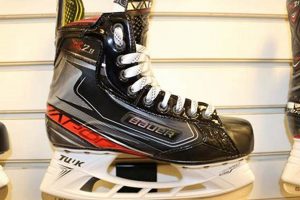
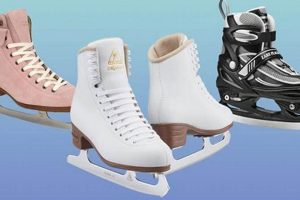
Protective sheaths designed to fit over the blades of ice skates are commonly used to safeguard both the skater and the skating surface. These accessories, typically made of rubber or plastic, prevent the sharp metal edges from dulling when walking off the ice, and also protect the ice surface from damage caused by exposed blades. For example, a skater wearing guards can walk from the locker room to the rink without risking injury or damaging the floor.
The use of these blade protectors is crucial for maintaining the sharpness and longevity of the blades, impacting performance and safety. Historically, skaters would use makeshift coverings or simply avoid walking on hard surfaces without adequate protection. Modern blade guards offer a more convenient and effective solution, allowing for greater mobility and blade preservation. This protects skaters from the high cost of frequent blade sharpening or replacement.
The following sections will delve further into the different types of blade guards available, proper usage and maintenance techniques, and factors to consider when selecting the appropriate type for specific skating disciplines.
Essential Usage Guidance
The correct implementation of protective blade coverings extends the lifespan of ice skate blades and ensures safety. The following provides crucial guidance for optimal utilization.
Tip 1: Proper Selection: Choose a covering specifically designed for the type of ice skate in use. Figure skates, hockey skates, and speed skates have different blade geometries necessitating appropriately shaped protectors.
Tip 2: Immediate Application: Always apply blade protectors immediately after stepping off the ice. Delaying the application exposes the blades to abrasive surfaces, accelerating dulling and potential damage.
Tip 3: Secure Fit: Ensure a snug and secure fit. Loose or ill-fitting protectors can slip off, negating their protective function and creating a tripping hazard.
Tip 4: Regular Cleaning: Clean the inside of blade protectors regularly. Debris and moisture accumulation can lead to corrosion and degradation of the blade’s edge.
Tip 5: Separate Storage: Store blade protectors separately from the skates when not in use. Trapped moisture can accelerate rust formation on the blades, even with the protector applied.
Tip 6: Avoid Prolonged Walking: Limit walking on abrasive surfaces, even with protectors in place. Extended walking can still wear down the blade edges, particularly on rough or uneven terrain.
Tip 7: Hard Guard Usage: Employ hard guards for walking and softer soakers for storage. This two-part approach provides optimal protection against both physical damage and corrosion.
Adhering to these guidelines maximizes blade protection and contributes to enhanced skating performance and safety.
The subsequent discussion will address common issues associated with blade maintenance and troubleshooting techniques for optimal performance.
1. Material Composition

The material composition of blade coverings significantly impacts their ability to protect ice skate blades and maintain their sharpness. Different materials offer varying levels of durability, impact resistance, and moisture control, directly influencing the longevity and performance of both the blades and the coverings themselves.
- Rubber Compounds
Rubber, particularly vulcanized rubber, is commonly used for its flexibility and shock absorption. Rubber guards provide a good level of impact protection when walking on hard surfaces, mitigating the risk of nicks and dings to the blade’s edge. However, rubber can be porous and may retain moisture, potentially leading to corrosion if not properly maintained. Example: a molded rubber guard that snaps over the blade for ease of use.
- Plastic Polymers
Plastic polymers, such as PVC or polypropylene, offer a more rigid protective barrier. These materials are generally less absorbent than rubber, reducing the risk of moisture-related corrosion. They also tend to be more durable against abrasion. However, plastics may lack the shock-absorbing qualities of rubber, potentially transmitting more impact force to the blade. Example: a hard plastic guard used for walking on rough surfaces or storing skates in a skate bag.
- Fabric Soakers
While not designed for walking, fabric “soakers” (often made of terry cloth or synthetic absorbent materials) play a crucial role in moisture management. These coverings are used after skating to wick away moisture from the blade, preventing rust formation. Soakers offer minimal impact protection and are intended solely for storage and transport within a skate bag. Example: a terry cloth soaker placed over the blade after use to absorb residual water and prevent corrosion.
- Metal Reinforcements
Some high-end blade coverings incorporate metal reinforcements, such as steel or aluminum, for added durability and structural support. These reinforcements are typically integrated into the sole or sides of the guard to prevent cracking or deformation under heavy use. These are often found in hard guards meant for rigorous off-ice use. Example: hard guards with steel supports integrated into the sole for increased durability during frequent walking on concrete.
In summary, the choice of material composition for blade coverings is a critical consideration. Rubber compounds prioritize shock absorption, while plastics offer greater durability and reduced moisture retention. Fabric soakers manage moisture but provide no impact protection, and metal reinforcements enhance overall structural integrity. Selecting the appropriate material or combination of materials depends on the specific needs of the skater, considering factors such as skating frequency, storage conditions, and the type of surfaces encountered off the ice.
2. Proper Sizing

Appropriate sizing of protective blade coverings is paramount to ensure effective protection, longevity, and safe usage. Ill-fitting coverings can compromise blade safety, accelerate wear and tear on both the blades and the coverings, and introduce potential hazards to the skater.
- Secure Blade Enclosure
Properly sized coverings fully encase the blade, preventing exposure to abrasive surfaces. Undersized coverings leave portions of the blade vulnerable to damage, negating their primary function. Conversely, oversized coverings may slip off, creating a tripping hazard or failing to protect the blade adequately. A snug fit is essential for consistent and reliable protection. Example: A blade cover that extends fully from the toe pick to the heel of the blade provides complete protection during off-ice walking.
- Optimal Tension and Grip
Correct sizing contributes to optimal tension and grip between the covering and the blade. Excessive tightness can cause stress on the covering material, leading to premature wear or breakage. Insufficient tightness results in slippage and reduced protection. The ideal fit provides a secure hold without undue pressure. Example: A blade cover made of flexible plastic that grips the blade firmly without bending or deforming.
- Compatibility with Blade Profile
Different blade types possess varying profiles (e.g., figure skating blades versus hockey skating blades). Proper sizing accounts for these variations to ensure a secure and functional fit. A covering designed for a figure skating blade will likely be unsuitable for a hockey skate blade due to differences in curvature and length. Example: Blade covers specifically designed for figure skates have a curved profile that matches the blade’s rocker, ensuring a snug and secure fit.
- Facilitating Drainage and Ventilation
Properly sized coverings, when used in conjunction with soakers, facilitate adequate drainage and ventilation to minimize moisture buildup. An overly tight covering can restrict airflow, increasing the risk of corrosion. A well-fitting covering allows for some air circulation, promoting drying and reducing the likelihood of rust formation. Example: Blade covers with small ventilation holes on the sides allow for airflow and prevent moisture from trapping inside, even when combined with absorbent soakers.
In summary, proper sizing of blade coverings is crucial for ensuring secure blade enclosure, optimal tension and grip, compatibility with blade profiles, and facilitating drainage and ventilation. Failing to adhere to appropriate sizing guidelines can compromise blade protection, accelerate wear and tear, and potentially create safety hazards for the skater. The selection of appropriately sized coverings should be a primary consideration in any blade maintenance program.
3. Blade protection

Blade protection is the primary functional attribute intrinsically linked to blade coverings designed for ice skates. The coverings serve as a preventative measure against damage that can occur when ice skate blades are exposed to abrasive surfaces off the ice. Without these coverings, the blades are susceptible to nicks, scratches, and dulling, which degrades their performance and necessitates frequent sharpening. The direct cause and effect relationship is evident: unprotected blades encounter damage, while protected blades maintain their integrity. A skater walking across a concrete floor without blade coverings will quickly experience blade degradation, contrasting sharply with the preservation achieved by utilizing appropriate protective guards.
The importance of blade protection as a component of blade coverings lies in its influence on skating performance and safety. Sharp blades are essential for precise movements, secure edges, and overall control on the ice. Dulling of the blades compromises these aspects, increasing the risk of falls and hindering athletic performance. Blade coverings are not merely accessories; they are vital tools in ensuring the blades function as intended. For example, competitive figure skaters rely on consistent blade sharpness for executing complex jumps and spins, and regularly use blade coverings to maintain the necessary edge quality. Hockey players similarly depend on sharp blades for quick starts, stops, and turns, all facilitated by consistent maintenance through protective coverings.
The practical significance of understanding this connection underscores the need for proper selection and usage of blade coverings. Different types of coverings offer varying levels of protection, depending on the material, design, and intended use. Hard guards are suitable for walking on hard surfaces, while soft soakers are primarily for moisture absorption and storage. Choosing the appropriate covering for each situation is crucial. Moreover, consistent application and maintenance of the coverings are essential to maximizing their effectiveness. Neglecting to use coverings regularly, or failing to clean and dry them properly, diminishes their protective benefits. In conclusion, blade coverings are a fundamental component of ice skate maintenance, and a clear understanding of their role in blade protection is essential for skaters of all levels seeking to optimize performance, enhance safety, and extend the lifespan of their equipment.
4. Moisture control
Moisture control is a critical consideration in the maintenance and longevity of ice skate blades, and the use of blade coverings plays a significant role in this aspect. Preventing corrosion is paramount for preserving blade sharpness and performance; blade coverings facilitate moisture management in several key ways.
- Absorption Properties of Soakers
Certain blade coverings, commonly referred to as “soakers,” are specifically designed with absorbent materials like terry cloth or synthetic fabrics. These soakers wick away residual moisture from the blade after use, preventing the formation of rust. This is particularly important because melting ice and condensation can quickly lead to corrosion if left unchecked. For example, after a skating session, placing soakers over the blades before storing the skates in a bag significantly reduces the risk of rust formation. The material’s ability to draw moisture away from the metal is crucial for long-term blade health.
- Ventilation and Airflow
Some blade coverings incorporate ventilation features to promote airflow around the blade. This helps to dissipate moisture and prevent a humid environment from forming, which can accelerate corrosion. Ventilation holes or breathable materials allow for evaporation, reducing the risk of rust. For example, hard guards with small ventilation ports on the sides help to dry the blades even when stored within a skate bag. The balance between protection and breathability is key in minimizing moisture-related damage.
- Material Selection and Water Resistance
The material composition of blade coverings influences their ability to manage moisture. Non-absorbent materials, such as certain plastics, prevent water from being trapped against the blade. While these materials don’t actively absorb moisture, they do not contribute to corrosion by retaining it. For example, a hard plastic blade guard repels water, preventing it from soaking into the material and contacting the blade. This is especially useful in environments with high humidity or where the skates are exposed to wet surfaces.
- Proper Storage Practices
The combination of blade coverings and appropriate storage practices maximizes moisture control. Storing skates with absorbent soakers and allowing them to air dry minimizes the risk of corrosion. Conversely, storing wet skates in an airtight bag can create a humid environment, accelerating rust formation even with blade coverings in place. For example, removing the soakers periodically to allow them to dry separately ensures that they do not become saturated and ineffective. The interaction between blade coverings and storage conditions significantly impacts blade longevity.
In conclusion, moisture control is a crucial consideration in ice skate blade maintenance, and blade coverings play a multifaceted role in achieving this. From absorbent soakers to ventilated guards and water-resistant materials, the selection and proper use of blade coverings contribute significantly to preventing corrosion and prolonging the life of ice skate blades. Understanding these connections is essential for skaters seeking to maintain their equipment and optimize their performance.
5. Ease of Use
The practical benefits of blade coverings for ice skates are significantly influenced by their ease of use. Coverings that are difficult to apply or remove may discourage consistent use, thereby negating their protective function. Simplicity and convenience in design are crucial factors that determine how readily skaters will incorporate blade coverings into their routine.
- Intuitive Application and Removal
Coverings with straightforward application and removal mechanisms promote regular use. Complex designs involving multiple steps or requiring excessive force can be cumbersome, especially for younger skaters or those with limited dexterity. A simple slip-on or snap-on design encourages adherence to blade protection protocols. For example, a rubber guard with a flexible opening allows for quick and effortless application and removal, making it more likely to be used consistently.
- Secure and Stable Fit
Coverings should maintain a secure and stable fit during use without requiring constant readjustment. Coverings that frequently slip or become dislodged can be distracting and potentially hazardous. Designs that incorporate elastic straps or adjustable closures ensure a snug fit that minimizes movement. An example of this is a hard guard with adjustable straps that can be tightened to accommodate different blade sizes and prevent slippage during walking.
- Minimal Maintenance Requirements
Coverings that require minimal maintenance are more likely to be used consistently. Complex cleaning procedures or the need for specialized tools can deter skaters from maintaining their coverings properly. Coverings made from materials that are easy to clean and dry contribute to their overall usability. For instance, plastic guards that can be easily rinsed and dried after use require less effort to maintain than fabric coverings that may require more thorough cleaning.
- Compact and Portable Design
Coverings should be compact and portable, allowing skaters to carry them conveniently. Bulky or cumbersome coverings can be difficult to store in a skate bag or carry around the rink. A streamlined design that minimizes bulk enhances portability and encourages use. An example would be soakers made of lightweight, foldable material that can be easily stored in a pocket or skate bag when not in use.
The usability of blade coverings directly impacts their effectiveness in protecting ice skate blades. Prioritizing ease of use in the design and selection of coverings can encourage skaters to adopt a consistent blade protection routine, thereby extending the lifespan of their blades and enhancing their skating experience.
6. Storage solutions

The manner in which ice skates are stored significantly impacts the effectiveness of blade coverings and the overall maintenance of the blades. Proper storage solutions, used in conjunction with blade coverings, are essential for preventing corrosion and physical damage, thereby extending the lifespan of the blades.
- Skate Bags and Ventilation
Skate bags, designed specifically for carrying ice skates, offer a degree of protection from external elements and physical impacts. However, if not properly ventilated, skate bags can trap moisture, creating a humid environment that promotes rust. Integrating ventilated sections within the bag design facilitates airflow, mitigating moisture buildup. For example, skate bags with mesh panels allow for evaporation, even when the skates are stored with soakers. Bags without ventilation can exacerbate corrosion issues, negating the protective benefits of blade coverings.
- Separate Blade Storage Compartments
Some skate bags incorporate separate compartments for storing blades. These compartments prevent the blades from coming into contact with other items in the bag, reducing the risk of physical damage and contamination. Keeping the blades isolated minimizes the transfer of dirt and debris, which can accelerate wear and tear, even with blade coverings in place. Furthermore, dedicated compartments allow for the proper positioning of the blades, preventing them from rubbing against each other during transport. This is particularly beneficial for maintaining the edges of sharpened blades.
- Dry Storage Environments
Regardless of the type of storage container, maintaining a dry environment is crucial. Storing skates in damp or humid locations, such as basements or garages, increases the likelihood of corrosion. Ideally, skates should be stored in a dry, well-ventilated area, away from direct sunlight and extreme temperatures. In particularly humid climates, desiccants can be used within the storage container to absorb excess moisture. Ensuring a dry storage environment complements the protective function of blade coverings, providing a comprehensive defense against corrosion.
- Blade Covering Material Compatibility
The material of the storage solution should be compatible with the blade coverings used. Some materials can react with certain types of blade covering materials, causing degradation or discoloration. For example, storing skates with rubber blade guards in a plastic bag that contains certain plasticizers can cause the rubber to break down over time. It is important to ensure that the storage solution is made from materials that are inert and do not interact negatively with the blade coverings.
In summary, storage solutions play a crucial role in maintaining the condition of ice skate blades, working in conjunction with blade coverings to prevent both physical damage and corrosion. Selecting appropriate storage methods, focusing on ventilation, separation, dry environments, and material compatibility, optimizes the effectiveness of blade coverings and extends the lifespan of ice skate blades.
7. Durability Assessment

Durability assessment, in the context of ice skate blade coverings, encompasses the evaluation of a protective item’s ability to withstand wear, tear, and degradation under various usage conditions. A thorough durability assessment informs purchasing decisions, impacts maintenance schedules, and ultimately influences the lifespan of both the blade coverings and the protected ice skate blades.
- Material Resilience and Abrasion Resistance
The fundamental aspect of a durability assessment is the evaluation of the materials used in the blade covering’s construction. This involves assessing the material’s resistance to abrasion from walking on rough surfaces, its ability to withstand impacts, and its susceptibility to cracking or tearing. For instance, a blade covering made from high-density polyethylene (HDPE) would exhibit superior abrasion resistance compared to one made from low-density polyethylene (LDPE). A real-world example would be comparing two blade guards, one showing significant wear after a month of regular use on concrete, while another remains largely intact after the same period. Understanding the material’s properties and how they relate to the intended use is paramount in predicting the covering’s long-term performance.
- Structural Integrity under Stress
Beyond the inherent properties of the material, the structural design of the blade covering contributes significantly to its durability. Points of stress concentration, such as hinges, seams, or closure mechanisms, are particularly susceptible to failure. A robust design will distribute stress evenly, minimizing the risk of breakage. An example of this is a blade guard with reinforced hinges that are less likely to snap under repeated opening and closing. Furthermore, the method of attachment to the blade (e.g., elastic straps, buckles, or slip-on design) influences the overall stability and durability. A poorly designed closure mechanism can lead to premature wear and eventual failure, rendering the covering unusable.
- Resistance to Environmental Factors
Environmental factors, such as moisture, temperature fluctuations, and exposure to ultraviolet (UV) radiation, can significantly impact the durability of blade coverings. Materials that are susceptible to degradation from these factors will exhibit reduced performance and a shorter lifespan. For example, a blade covering made from a material that becomes brittle in cold temperatures is more likely to crack under stress. Similarly, a material that is not UV resistant may fade, weaken, and become more prone to damage when exposed to sunlight. Evaluating the covering’s resistance to these environmental factors is crucial for predicting its performance in various climates and usage scenarios. Consider a blade covering left in a hot car regularlyit will degrade faster than the same cover kept in a temperature-controlled environment.
- Longevity and Life Cycle Cost
Ultimately, the durability assessment informs the overall longevity and life cycle cost of the blade coverings. A covering that requires frequent replacement, despite a lower initial cost, may prove more expensive in the long run compared to a more durable option with a higher upfront investment. Assessing the expected lifespan of the covering under typical usage conditions allows skaters to make informed purchasing decisions. This includes considering the frequency of skating, the types of surfaces encountered off the ice, and the level of care and maintenance provided. A blade covering designed for occasional recreational use will likely have a different lifespan expectancy than one designed for daily use by a competitive skater. Calculating the cost per use over the expected lifespan provides a more accurate picture of the covering’s economic value.
In conclusion, a comprehensive durability assessment is essential for selecting ice skate blade coverings that provide effective protection, withstand the rigors of regular use, and offer a cost-effective solution for blade maintenance. Considering material resilience, structural integrity, environmental resistance, and long-term cost allows skaters to make informed decisions that optimize the performance and lifespan of their equipment.
Frequently Asked Questions
The following questions address common inquiries regarding protective coverings for ice skate blades, focusing on functionality, maintenance, and selection criteria.
Question 1: What is the primary purpose of protective coverings used with ice skate blades?
The primary purpose is to protect the blades from damage when not on the ice surface. These coverings prevent the blades from dulling or incurring nicks and scratches when walking on abrasive surfaces such as concrete or rubber flooring.
Question 2: What are the different types of materials commonly used for blade coverings?
Common materials include rubber, plastic, and absorbent fabrics such as terry cloth. Rubber and plastic are used for hard guards intended for walking, while absorbent fabrics are used for soakers designed to wick moisture away during storage.
Question 3: How often should blade coverings be replaced?
The replacement frequency depends on the type of covering, the frequency of use, and the surfaces encountered. Hard guards exhibiting significant wear or damage should be replaced. Soakers should be replaced if they become excessively worn, stained, or lose their absorbent properties.
Question 4: How should blade coverings be cleaned and maintained?
Hard guards can be cleaned with soap and water. Soakers should be laundered regularly to remove accumulated moisture and debris. Ensure that all coverings are completely dry before storing the skates to prevent corrosion.
Question 5: Are blade coverings necessary for all types of ice skates?
Blade coverings are recommended for all types of ice skates, including figure skates, hockey skates, and recreational skates. Protecting the blades from damage is essential for maintaining performance and safety, regardless of skating discipline.
Question 6: Can blade coverings prevent rust formation on ice skate blades?
Blade coverings made of absorbent materials, when used properly, can help to prevent rust formation by wicking away moisture from the blades. However, they should not be considered a substitute for proper drying and storage practices.
In summary, selecting and maintaining appropriate blade coverings contributes significantly to the longevity and performance of ice skate blades. Adherence to proper usage and maintenance protocols ensures optimal blade protection.
The following section will explore advanced blade maintenance techniques and strategies for optimizing skating performance.
Conclusion
This exploration of blade cover ice skate has underscored its significance in ice skate maintenance. Protecting blades from damage and corrosion, as facilitated by blade coverings, extends their lifespan, enhances performance, and improves skater safety. Proper selection, utilization, and maintenance of these coverings are vital.
Considering the direct correlation between blade condition and skating performance, diligent application of the principles outlined herein is paramount. Skaters, coaches, and equipment managers must recognize blade cover ice skate as an indispensable element of responsible skate care. The continued pursuit of advanced materials and designs in blade coverings will further refine the protection and longevity of ice skate blades, thereby benefiting the entire skating community.