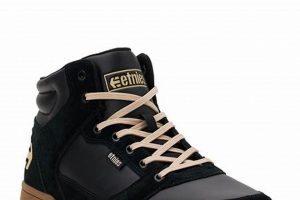
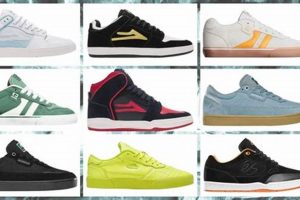
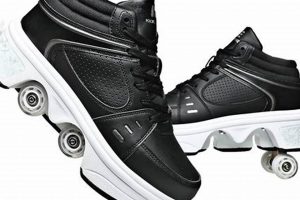
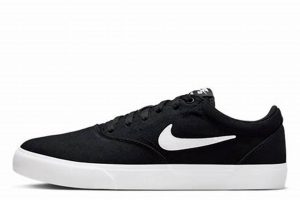
Footwear designed to withstand the unique demands of skateboarding comprises specialized athletic shoes. These shoes prioritize durability, grip, and board feel, enabling skaters to perform tricks and maneuvers effectively. Examples include models featuring reinforced stitching, vulcanized rubber soles, and padded collars for impact absorption.
The selection of appropriate footwear can significantly impact a skater’s performance and safety. Durable construction extends the lifespan of the shoe under abrasive conditions, while superior grip enhances board control. Historically, advancements in materials and design have continually improved the functionality and protective qualities of these specialized shoes, contributing to the evolution of skateboarding itself.
The following discussion will explore key considerations when selecting appropriate skateboarding footwear, examining various brands, technologies, and features that cater to diverse skating styles and preferences. Furthermore, aspects of shoe care and maintenance will be addressed to maximize the lifespan and performance of these essential pieces of skateboarding equipment.
Essential Considerations for Skateboarding Footwear Selection
Selecting appropriate skateboarding footwear involves several critical factors that influence performance, comfort, and durability. Awareness of these aspects can aid in making informed decisions that align with individual skating styles and needs.
Tip 1: Prioritize Sole Construction: Vulcanized rubber soles are a standard choice due to their flexibility and board feel. Cupsole constructions offer enhanced impact protection and support, beneficial for skaters engaging in more aggressive styles. Consider the trade-offs between board feel and cushioning based on individual preferences.
Tip 2: Evaluate Upper Material Durability: Suede and leather uppers provide superior abrasion resistance compared to canvas. Reinforced stitching in high-wear areas, such as the ollie patch, significantly extends the lifespan of the shoe.
Tip 3: Assess Padding and Support: Padded collars and tongues offer ankle support and impact absorption. Insoles with enhanced cushioning can mitigate the impact of landings, reducing stress on joints. Evaluate the level of support required based on skating style and intensity.
Tip 4: Consider Grip Pattern: The tread pattern on the sole directly impacts grip. Herringbone and geometric patterns generally provide reliable traction. Inspect the depth and spacing of the tread to ensure consistent grip across various surfaces.
Tip 5: Analyze Fit and Comfort: Proper fit is crucial for both performance and comfort. Ensure adequate toe room and a snug fit around the heel to prevent slippage. Break in new shoes gradually to avoid blisters and discomfort.
Tip 6: Research Brand Reputation: Established skateboarding shoe brands often possess a proven track record of quality and durability. Read reviews and seek recommendations from experienced skaters to gain insights into brand reliability.
Tip 7: Account for Skateboarding Style: Different skateboarding disciplines, such as street skating, park skating, or vert skating, may require specific shoe features. Tailor shoe selection to align with the demands of the primary skating style.
Adhering to these guidelines when selecting skateboarding footwear will contribute to improved performance, enhanced comfort, and prolonged shoe lifespan. Careful consideration of sole construction, upper material durability, support features, grip pattern, fit, brand reputation, and intended skating style is essential for optimal results.
Following these suggestions sets a strong foundation for choosing the right footwear. The next section will delve into specific technologies and advancements within the skateboarding shoe market.
1. Durability

The assessment of skateboarding footwear frequently prioritizes durability as a fundamental attribute. The abrasive nature of skateboarding, involving constant friction against concrete, asphalt, and griptape, places extreme demands on shoe construction. A lack of durability directly leads to premature wear and tear, rendering the footwear ineffective and potentially hazardous. Examples include sole separation, upper material tears, and stitching failures, all of which compromise the shoe’s integrity and protective capabilities.
The correlation between durability and optimal skateboarding performance is direct. A more durable shoe withstands the rigors of repeated ollies, kickflips, and other maneuvers, maintaining its structural integrity and protective qualities over extended periods. This translates to improved board feel, consistent grip, and reduced risk of injury. Real-world examples include skaters consistently opting for models featuring reinforced ollie patches and vulcanized soles known for their longevity in high-impact environments. Brands recognized for durability often employ high-quality materials, such as suede or reinforced canvas, and implement meticulous construction techniques.
Therefore, durability serves as a core component when evaluating footwear suitability for skateboarding. While factors such as style and board feel are relevant, the ability of a shoe to withstand the demanding conditions of skateboarding is paramount. Understanding the importance of durable construction, materials, and reinforcement techniques enables skaters to make informed decisions, maximizing shoe lifespan and ultimately enhancing their skateboarding experience. The consideration of durability therefore becomes fundamental, establishing a baseline requirement when categorizing and selecting the best available options.
2. Grip

Grip, in the context of skateboarding footwear, refers to the frictional force between the shoe’s sole and the skateboard deck. This attribute is paramount in determining the functionality and overall suitability of skateboarding footwear. Effective grip facilitates board control, enabling skaters to execute complex maneuvers with precision and stability. Inadequate grip, conversely, leads to slippage, compromising performance and increasing the risk of falls and injuries.
- Rubber Compound Composition
The specific type of rubber compound utilized in the sole construction directly influences grip performance. Softer, tackier rubber compounds generally provide superior grip compared to harder, more rigid compounds. Skateboarding footwear manufacturers often formulate proprietary rubber blends to optimize grip characteristics. For instance, certain models are designed with a higher concentration of silica, enhancing adhesion to the griptape surface. A direct correlation exists between the quality of the rubber compound and the degree of board control achievable.
- Tread Pattern Design
The tread pattern imprinted on the sole of skateboarding footwear plays a crucial role in grip effectiveness. Herringbone patterns, geometric shapes, and variations thereof are commonly employed to maximize surface contact and channel away debris, ensuring consistent adhesion. Deeper, more pronounced tread patterns are generally advantageous in maintaining grip in wet or dusty conditions. Conversely, smoother, less aggressive tread patterns may offer enhanced board feel, albeit with a potential compromise in overall grip strength.
- Surface Area Contact
The total surface area of the sole that comes into contact with the skateboard deck is a significant factor in determining grip performance. A larger contact area generally translates to increased frictional force, enhancing stability and control. However, excessive surface area can also impede board feel and flexibility. Therefore, skateboarding footwear designers strive to strike a balance between maximizing surface contact and maintaining the desired level of board sensitivity. Molded patterns and sole designs aim to optimize the balance.
- Sole Flexibility and Responsiveness
Grip is not solely dictated by the rubber compound or tread pattern, but also influenced by the overall flexibility of the sole. A more flexible sole allows the skater to better conform to the contours of the skateboard deck, maximizing surface contact and enhancing board feel. Stiff, inflexible soles, conversely, can hinder grip and reduce control. High-quality skateboarding footwear often incorporates flex grooves or strategically placed cuts in the sole to enhance flexibility without compromising durability.
These facets of grip collectively contribute to the performance of skateboarding footwear. The efficacy of the rubber compound, the design of the tread pattern, the extent of surface area contact, and the overall flexibility of the sole all interact to determine the level of board control a skater can achieve. Consequently, the “best” models of skateboarding footwear are frequently distinguished by their ability to provide a superior combination of these grip-enhancing features, optimizing the skater’s connection to the board.
3. Board Feel

Board feel, as it pertains to skateboarding footwear, signifies the tactile feedback transmitted from the skateboard deck to the skater’s feet. This sensory information is crucial for precise board control and execution of technical maneuvers. The extent to which footwear facilitates or inhibits board feel significantly influences a skater’s ability to perform optimally, rendering it a key determinant in evaluating skateboarding shoe quality.
- Sole Thickness and Construction
The thickness of the sole directly impacts board feel. Thinner soles, typically found in vulcanized construction, offer heightened sensitivity, allowing skaters to perceive subtle changes in the board’s position and orientation. Conversely, thicker soles, commonly associated with cupsole construction, provide increased cushioning and impact protection, potentially sacrificing some degree of board feel. The selection between these options is contingent upon the skater’s preference and skating style, with street skaters often favoring thinner soles for enhanced board feel and vert skaters potentially prioritizing the impact absorption of thicker soles.
- Sole Material Composition
The material composition of the sole influences the responsiveness and dampening characteristics of the footwear. Softer, more pliable rubber compounds enhance board feel by allowing for greater conformity to the deck’s contours. Stiffer compounds, while potentially more durable, can reduce sensitivity and diminish the skater’s ability to accurately perceive the board’s movements. The optimal balance between durability and board feel is a critical consideration in the design and selection of skateboarding shoes.
- Insole Design and Material
The insole plays a significant role in mediating the sensory input from the board. Thin, low-profile insoles maximize board feel by minimizing the distance between the foot and the deck. Conversely, thicker, more cushioned insoles attenuate sensory feedback, prioritizing comfort and impact absorption over board feel. Some insoles are designed with specific contours or materials to enhance board feel while still providing adequate support and cushioning.
- Upper Construction and Flexibility
While the sole directly interfaces with the skateboard, the upper construction indirectly influences board feel. A flexible upper allows for a greater range of motion, enabling the skater to articulate their feet and ankles more freely, thereby enhancing control and sensitivity. Stiff, restrictive uppers can limit movement and reduce the skater’s ability to feel the board. The materials used in the upper construction, such as suede or canvas, also contribute to the overall flexibility and responsiveness of the footwear.
The interplay between sole thickness, material composition, insole design, and upper construction collectively determines the degree of board feel provided by skateboarding footwear. The “best” skateboarding shoe, in this context, is one that optimizes these factors to provide the skater with the precise level of sensory feedback required to execute their desired maneuvers with confidence and control. As such, the assessment of board feel is an essential component in the comprehensive evaluation of skateboarding shoe performance. Understanding that balance is critical allows skaters to find the right match.
4. Impact Absorption

Impact absorption constitutes a critical performance parameter in skateboarding footwear. The repetitive nature of skateboarding, characterized by frequent jumps, landings, and forceful ground contacts, subjects the skater’s feet and joints to considerable stress. Effective impact absorption mitigates the transmission of these forces, reducing the risk of injuries and enhancing comfort. Skateboarding footwear with inadequate impact absorption can contribute to conditions such as heel bruising, ankle sprains, and long-term joint damage.
- Midsole Material Composition
The midsole, situated between the insole and outsole, serves as the primary impact absorption layer. Materials such as ethylene-vinyl acetate (EVA) and polyurethane (PU) are commonly employed, each possessing distinct cushioning properties. EVA offers lightweight cushioning and flexibility, while PU provides superior impact absorption and durability. Skateboarding shoe designs often incorporate dual-density midsoles, strategically combining EVA and PU to optimize both comfort and protection. For example, models designed for vert skating frequently feature thicker PU midsoles to withstand the higher impact forces associated with that discipline.
- Insole Technology and Design
The insole contributes to impact absorption through its material composition and contoured design. Ortholite and Poron are prevalent insole materials known for their cushioning and shock-absorbing properties. Insole designs incorporating heel cups and arch supports further enhance impact distribution and stability. Premium skateboarding shoes may feature custom-designed insoles with strategically placed cushioning zones to address specific impact areas, such as the heel and forefoot.
- Outsole Construction and Pattern
The outsole, while primarily responsible for grip and durability, also contributes to impact absorption through its material and construction. Thicker outsoles, particularly those made from high-density rubber compounds, provide an additional layer of cushioning. Outsole patterns with deep grooves or flex zones allow for greater deformation upon impact, dissipating energy and reducing stress on the joints. Cupsole constructions, where the outsole wraps around the upper, offer enhanced impact protection compared to traditional vulcanized constructions.
- Airbag and Gel Insert Integration
Advanced skateboarding footwear designs may incorporate specialized airbag or gel inserts within the midsole to enhance impact absorption. Airbags provide lightweight cushioning and responsive energy return, while gel inserts offer superior shock absorption and stability. These technologies are often strategically placed in high-impact areas, such as the heel, to provide targeted protection. Examples include models featuring visible or encapsulated airbags in the heel, designed to attenuate the forces generated during high-impact landings.
The synergistic effect of midsole material, insole technology, outsole construction, and specialized impact-absorbing inserts ultimately determines the effectiveness of skateboarding footwear in mitigating impact forces. Skateboarding shoes that prioritize these elements are more likely to reduce the risk of injuries, enhance comfort, and improve overall performance. The “best” models are distinguished by their ability to provide a balanced combination of cushioning, support, and board feel, allowing skaters to push their limits with confidence. Selecting footwear with superior absorption extends skaters ability to continue their activities safely, and comfortably.
5. Ankle Support
Ankle support is a critical element in skateboarding footwear, directly influencing stability, injury prevention, and overall performance. The dynamic and often unpredictable nature of skateboarding subjects the ankles to significant stress, including lateral movements, impacts, and the risk of sprains. Footwear design incorporating adequate ankle support mitigates these risks by providing structural reinforcement and limiting excessive range of motion. The omission of sufficient ankle support in skateboarding shoes can directly contribute to acute injuries, such as sprains, and chronic conditions, stemming from repetitive strain and instability. For example, skaters executing flip tricks often rely on the lateral support provided by the shoe to maintain balance upon landing, preventing ankle roll. The specific type of support offered depends on the shoe’s construction, materials, and design features.
Several design elements contribute to effective ankle support. High-top designs inherently offer greater coverage and stability compared to low-top styles. Padded collars, typically constructed from foam or similar cushioning materials, provide comfort and reduce friction while also limiting ankle movement. Internal or external heel counters, often made from rigid materials like plastic or reinforced fabric, reinforce the heel and ankle structure, preventing excessive pronation or supination. Lacing systems that extend higher up the ankle provide adjustable support, allowing skaters to customize the fit and level of constraint. Specific brands are known for incorporating innovative support technologies, such as articulated ankle collars or integrated support cages, further enhancing stability without sacrificing mobility. In practice, skaters transitioning from low-top to high-top shoes often report improved stability and a reduced incidence of ankle injuries.
In summary, ankle support is an indispensable feature in skateboarding footwear, directly impacting safety and performance. The presence of high-top designs, padded collars, heel counters, and adjustable lacing systems contributes to enhanced stability and reduced risk of ankle injuries. A comprehensive understanding of these design elements enables skaters to make informed decisions when selecting footwear, prioritizing ankle support based on their individual needs and skating style. Prioritizing this essential design attribute reduces the potential for both acute and chronic injuries, prolonging the skater’s career and optimizing performance potential. Without sufficient support from external factors, there is higher likelihood of potential career ending injuries.
6. Material Quality
Material quality is inextricably linked to the designation of skateboarding footwear as superior. The inherently demanding nature of skateboarding places immense stress on shoes, making material selection a primary determinant of durability, performance, and safety. High-quality materials withstand abrasion, resist tearing, and maintain structural integrity under repetitive impact. Conversely, substandard materials are prone to premature failure, compromising both the functionality of the shoe and the skater’s well-being. For instance, suede or leather uppers, known for their abrasion resistance, are frequently preferred over canvas for their enhanced longevity in high-wear areas such as the ollie patch. This demonstrates a direct cause-and-effect relationship: superior materials lead to increased product lifespan and enhanced performance.
The importance of material quality extends beyond mere durability. It also influences board feel, grip, and impact absorption. Flexible, high-quality rubber compounds in the sole contribute to enhanced board feel, enabling skaters to perceive subtle nuances in board control. Durable stitching and reinforced construction prevent premature sole separation, ensuring consistent grip and stability. Moreover, high-density foam or gel inserts, strategically placed within the midsole, effectively absorb impact forces, reducing stress on joints and preventing injuries. Practical examples include professional skaters consistently opting for footwear constructed from premium materials, attesting to the direct correlation between material quality and performance at the highest levels of the sport. Furthermore, shoes made with quality materials can withstand varied weather conditions.
In summation, material quality is a foundational attribute of high-performance skateboarding footwear. Its influence extends from durability and protection to enhanced board feel and performance. While factors such as design and style contribute to the overall appeal of skateboarding shoes, material quality remains paramount. Understanding the significance of material selection enables skaters to make informed purchasing decisions, prioritizing long-term value and safety over superficial aesthetics. The selection and use of materials remains one of the strongest determining factors in overall skater performance and longevity of equipment.
7. Style
Within the realm of skateboarding footwear, style transcends mere aesthetics; it encompasses personal expression, cultural affiliation, and functional considerations that contribute to the overall perception of the “best” options. While performance characteristics such as durability and grip are paramount, stylistic elements often play a decisive role in consumer choice and brand identity.
- Aesthetic Design and Branding
The visual design of skateboarding shoes, including color schemes, logos, and silhouette, significantly influences consumer appeal. Established brands often cultivate distinct aesthetic identities that resonate with specific subcultures within skateboarding. For instance, certain brands may favor minimalist designs, while others embrace bolder graphics and color combinations. The consistent application of branding elements fosters brand recognition and loyalty, shaping perceptions of quality and performance. Ultimately, the visual appeal of skateboarding shoes can directly impact purchasing decisions, particularly among skaters seeking to align their footwear with their personal style and subcultural affiliations.
- Historical Influences and Trends
The style of skateboarding shoes is often shaped by historical trends and influences within skateboarding culture. Retro designs, inspired by iconic models from previous eras, frequently resurface, appealing to skaters seeking a nostalgic aesthetic. Conversely, contemporary designs incorporate modern materials, technologies, and stylistic elements, catering to skaters seeking innovative and progressive footwear. The cyclical nature of fashion trends ensures that skateboarding shoe styles are constantly evolving, reflecting broader cultural shifts and influencing perceptions of what constitutes the “best” or most desirable footwear. Vintage inspired shoe style is always on trend with skater community.
- Customization and Personalization
The ability to customize and personalize skateboarding shoes contributes significantly to their stylistic appeal. Many skaters modify their footwear through custom artwork, unique lacing patterns, or the addition of aftermarket accessories. Some brands offer customization services, allowing consumers to design their own shoes with specific color combinations, materials, and branding elements. This level of personalization enhances the skater’s sense of ownership and self-expression, transforming their footwear into a unique reflection of their individual style. As a result, customized or personalized skateboarding shoes often hold greater value and significance compared to mass-produced models.
- Functional Style and Skateboarding Discipline
The stylistic elements of skateboarding shoes can also be influenced by the specific skateboarding discipline for which they are intended. Street skaters may prioritize low-profile designs with enhanced board feel, while vert skaters may favor high-top models with increased ankle support and cushioning. The functional requirements of different skateboarding styles often dictate design choices, resulting in distinct aesthetic variations. For example, shoes designed for technical street skating frequently incorporate reinforced ollie patches and durable materials, which can also contribute to their visual appeal and convey a sense of rugged functionality. Form always follows function in skater gear.
These facets of style, while seemingly subjective, are integral to the broader understanding of skateboarding footwear. Style is a multifaceted element, influencing consumer choices and brand reputations. The interplay between aesthetic design, historical trends, customization options, and functional considerations ultimately shapes the perception and valuation of skateboarding shoes within the skateboarding community. As such, the notion of ” style” cannot be disregarded when evaluating the “best” skating shoe because it is an expression of a sport or hobby.
Frequently Asked Questions
The following section addresses common inquiries regarding the selection and usage of skateboarding footwear. Information presented is intended to provide clarity and guidance for skaters of all skill levels.
Question 1: How frequently should skateboarding shoes be replaced?
The lifespan of skateboarding shoes varies significantly depending on skating frequency, style, and the quality of the footwear. Shoes exhibiting significant wear, such as sole separation, fabric tears, or compromised support, should be replaced immediately to ensure safety and optimal performance. Professional skaters often replace their shoes every few weeks, while recreational skaters may extend the lifespan to several months.
Question 2: What distinguishes skateboarding shoes from other athletic footwear?
Skateboarding shoes are specifically engineered to withstand the abrasive conditions and high-impact forces associated with skateboarding. Key distinctions include reinforced stitching, durable upper materials (e.g., suede or leather), specialized rubber compounds in the sole for enhanced grip, and increased padding for impact absorption. Generic athletic footwear typically lacks these features and is therefore ill-suited for skateboarding.
Question 3: Does shoe weight affect skateboarding performance?
Shoe weight can influence board feel and agility. Lighter shoes generally provide increased sensitivity and maneuverability, while heavier shoes may offer greater stability and impact protection. The optimal weight balance is subjective and dependent on individual skater preferences and skating style. Experimentation with different shoe weights is recommended to determine the ideal fit.
Question 4: How can the lifespan of skateboarding shoes be extended?
Several strategies can prolong the lifespan of skateboarding shoes. Applying shoe goo or similar adhesives to reinforce high-wear areas, rotating between multiple pairs of shoes, and avoiding excessive exposure to water can all contribute to increased longevity. Proper cleaning and maintenance also help prevent premature deterioration.
Question 5: Are specific brands inherently superior for skateboarding footwear?
Certain brands have established a reputation for producing high-quality skateboarding shoes, consistently incorporating durable materials, innovative designs, and skater-centric features. However, individual preferences and specific needs ultimately dictate the optimal brand choice. Researching product reviews and seeking recommendations from experienced skaters can provide valuable insights.
Question 6: Is there a correlation between skateboarding shoe price and performance?
While higher-priced skateboarding shoes often incorporate premium materials and advanced technologies, price is not always a definitive indicator of performance. Mid-range options from reputable brands can provide excellent durability, grip, and support. Evaluating shoe features and construction quality is more important than solely focusing on price.
Careful consideration of these points facilitates informed decision-making when selecting skateboarding footwear. Prioritizing durability, grip, support, and a suitable fit ultimately contributes to enhanced safety and performance.
The following section will delve into maintenance practices and provide practical tips for ensuring the longevity of skateboarding footwear.
Best Skater Shoes
The preceding exploration has illuminated the multifaceted attributes that define skateboarding footwear. Durability, grip, board feel, impact absorption, ankle support, material quality, and style collectively determine the suitability of a given shoe for skateboarding’s demanding conditions. Each attribute interrelates, influencing performance, safety, and the overall skateboarding experience. Identifying superior models requires a comprehensive assessment, weighing the relative importance of each factor based on individual skating style and preferences.
Selecting appropriate skateboarding footwear represents an investment in performance and personal safety. Continued advancements in materials and design will undoubtedly yield further improvements in these specialized athletic shoes. Skaters should remain informed about these innovations, prioritizing informed decisions that optimize their connection to the board and mitigate the inherent risks of the sport. The pursuit of optimal equipment remains central to progress and preservation within the skateboarding community.