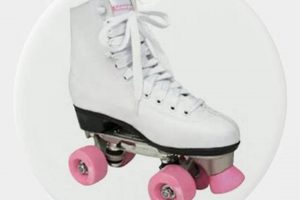
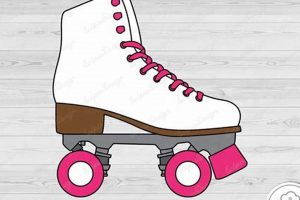
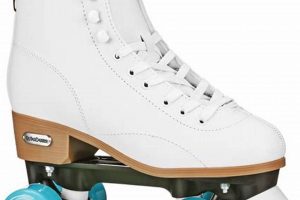
Footwear designed for recreational or competitive wheeled movement, specifically tailored to the anatomical and ergonomic needs of the female foot, facilitates gliding across smooth surfaces. These items typically consist of a supportive boot attached to a chassis with four wheels arranged in various configurations. This type of sporting equipment enables individuals to perform maneuvers ranging from basic forward motion to complex artistic routines.
The advantages of utilizing these specialized implements include improved cardiovascular health, enhanced lower body strength, and the development of balance and coordination. Their usage offers a low-impact exercise option compared to activities like running. Historically, advancements in materials and design have led to increased comfort, performance, and safety features, contributing to widespread adoption and continued evolution of the product category.
The subsequent sections will delve into the various types available, considerations for selecting the appropriate model, maintenance procedures, and the broader impact on fitness and recreational activities. Factors such as wheel durometer, bearing quality, and boot construction significantly affect the user experience and will be examined in detail.
Guidance for Female Roller Skating Enthusiasts
The following guidelines are provided to enhance the experience and safety associated with the use of wheeled footwear designed for women.
Tip 1: Prioritize Proper Fit. Ill-fitting footwear can lead to discomfort, blisters, and reduced control. Ensure adequate toe room and a snug, but not constricting, fit around the ankle and heel.
Tip 2: Select Appropriate Wheel Durometer. Softer wheels (lower durometer) offer greater grip and are suitable for outdoor surfaces. Harder wheels (higher durometer) provide faster speeds and are preferred for smooth, indoor rinks.
Tip 3: Invest in Quality Bearings. Higher-quality bearings reduce friction, resulting in smoother and more efficient rolling. ABEC ratings provide an indication of bearing precision; consider ABEC-5 or higher for recreational use.
Tip 4: Wear Protective Gear. Helmet use is non-negotiable. Additionally, wrist guards, elbow pads, and knee pads significantly mitigate the risk of injury from falls.
Tip 5: Practice Basic Skills in a Controlled Environment. Before attempting advanced maneuvers, master fundamental techniques such as stopping, turning, and maintaining balance on a flat, smooth surface.
Tip 6: Inspect Equipment Regularly. Check wheel tightness, bearing condition, and brake functionality before each use. Address any issues promptly to prevent accidents.
Tip 7: Be Aware of Surroundings. Pay attention to pedestrians, obstacles, and traffic when skating outdoors. Adhere to all applicable local regulations.
Adherence to these recommendations promotes a safer and more enjoyable experience, contributing to the long-term benefits associated with this activity.
The following sections will provide more detailed information on specific equipment types and maintenance procedures.
1. Anatomical Fit

The congruence between the internal geometry of female footwear and the biological architecture of the female foot is paramount in the selection of wheeled sporting equipment. Compromised anatomical fit can lead to discomfort, injury, and diminished performance.
- Arch Support and Footbed Contouring
Proper arch support distributes body weight evenly, reducing strain on the plantar fascia and metatarsals. Footbed contouring, mirroring the natural curves of the foot, enhances stability and reduces pressure points. Absence of adequate arch support can precipitate plantar fasciitis and metatarsalgia.
- Heel Cup Depth and Width
The heel cup should firmly cradle the heel, preventing slippage and promoting secure alignment. Insufficient heel cup depth or width may cause instability and increase the risk of ankle sprains or Achilles tendonitis. Accurate heel fit contributes to effective force transfer during propulsion and maneuvering.
- Toe Box Volume and Shape
Adequate toe box volume allows for natural toe splay, preventing compression and promoting circulation. The toe box shape should conform to the typical forefoot morphology, avoiding constriction. Insufficient toe box space can cause bunions, hammertoes, and nerve compression, such as Morton’s neuroma.
- Ankle Cuff Height and Padding
The ankle cuff provides lateral support and stability. Height and padding should be sufficient to prevent ankle roll without restricting range of motion. Insufficient cuff support can lead to ankle instability and increased vulnerability to sprains. Proper padding minimizes friction and pressure, enhancing comfort during prolonged use.
Therefore, selecting footwear that accurately reflects the distinct anatomical attributes of the female foot is crucial. Failure to address these considerations can result in discomfort, injury, and compromised performance, diminishing the potential benefits derived from wheeled sporting activities. The principles outlined above should serve as a guiding framework in the selection process.
2. Boot Support

Boot support in wheeled sporting equipment designed for women is a critical determinant of stability, control, and injury prevention. Insufficient support precipitates ankle instability, leading to an elevated risk of sprains and impaired maneuverability. Conversely, excessive rigidity can restrict range of motion, hindering performance and causing discomfort. The correlation between boot structure and user experience is demonstrably causal.
Consider the example of a recreational skater utilizing footwear with inadequate ankle reinforcement. This deficiency increases the propensity for lateral ankle deviation during turns or uneven terrain negotiation. The resultant instability compromises balance and necessitates compensatory muscle activation, expediting fatigue and elevating the probability of injury. In contrast, a competitive athlete employing high-performance boots with carbon fiber reinforcement benefits from enhanced energy transfer and precise control, optimizing speed and agility. These distinct scenarios illustrate the practical significance of boot architecture.
Understanding the mechanical implications of support mechanisms is paramount for selecting appropriate equipment. Achieving a harmonious equilibrium between flexibility and stability is essential for optimizing performance and mitigating potential harm. Boot support thereby constitutes a critical nexus between footwear design and user well-being in the realm of wheeled sporting activities for women.
3. Wheel Durometer
Wheel durometer, a measure of hardness, directly influences the performance characteristics of wheeled footwear for women. Measured on the Shore A scale, the durometer rating correlates inversely with grip and directly with speed. Lower durometer values, typically ranging from 78A to 85A, indicate softer wheels that provide increased friction and shock absorption, making them suitable for outdoor surfaces with imperfections. Conversely, higher durometer values, ranging from 85A and above, represent harder wheels that prioritize speed and reduced rolling resistance, optimized for smooth indoor surfaces. The selection of appropriate wheel durometer therefore constitutes a critical decision in optimizing performance and safety.
For instance, a recreational skater utilizing women roller skates primarily on outdoor paths would benefit from softer wheels (e.g., 80A). These wheels offer improved grip on uneven surfaces, enhancing stability and reducing the risk of falls. Furthermore, softer wheels absorb vibrations, contributing to a more comfortable skating experience. In contrast, an athlete engaged in competitive speed skating on an indoor rink would opt for harder wheels (e.g., 90A or higher). The reduced rolling resistance of harder wheels allows for greater velocity and efficiency. The choice of wheel durometer must therefore align with the intended skating environment and desired performance attributes.
In conclusion, understanding the relationship between wheel durometer and the operational characteristics of wheeled sporting equipment for women is essential. Inappropriate selection of wheel durometer can compromise safety, diminish performance, and reduce overall enjoyment. Empirical observation and informed decision-making, based on an appreciation of durometer’s impact, significantly enhance the skating experience.
4. Bearing Quality

Bearing quality in wheeled footwear directly impacts the rolling efficiency, speed, and longevity of the equipment. These small, circular components facilitate smooth wheel rotation, and their quality dictates the effort required for propulsion. Inferior bearings generate increased friction, demanding greater exertion from the user and potentially leading to premature fatigue. Conversely, high-quality bearings reduce friction, enabling smoother gliding and conserving energy. Consider a recreational user of women roller skates traversing a relatively flat surface. With low-quality bearings, this individual experiences a noticeable drag, impeding momentum and requiring more frequent and forceful pushes. This inefficiency diminishes the enjoyment and physical benefits of the activity.
Conversely, a competitive speed skater relies on bearings manufactured to exacting tolerances with hardened steel or ceramic components. These premium bearings minimize friction, translating into greater speed and reduced energy expenditure over the duration of a race. The difference in performance, measured in fractions of a second, can determine success or failure. Furthermore, superior bearing materials resist wear and corrosion, extending the operational lifespan of the equipment and reducing the frequency of replacements. This cost-effectiveness is particularly relevant for those who use wheeled footwear regularly for training or commuting.
In summation, the selection of bearings represents a crucial element in the optimization of wheeled sporting equipment for women. While seemingly insignificant, the quality of bearings directly influences rolling resistance, energy expenditure, and equipment durability. The practical consequences of bearing selection range from enhanced recreational enjoyment to competitive advantage, underscoring the importance of informed decision-making in this area.
5. Chassis Material
The chassis, the structural framework connecting the boot to the wheels in wheeled footwear for women, exerts a profound influence on stability, responsiveness, and weight. Chassis material directly determines the load-bearing capacity, vibration dampening characteristics, and overall durability of the equipment. Aluminum alloy chassis, for example, provide a high strength-to-weight ratio, facilitating efficient energy transfer and precise control. Conversely, composite or plastic chassis offer greater flexibility and shock absorption, suitable for recreational use on uneven surfaces. A discrepancy between chassis material properties and the intended application can lead to compromised performance, increased risk of injury, or premature equipment failure.
Consider a competitive roller derby athlete using wheeled footwear with a composite chassis. The inherent flexibility of the material, while offering comfort, may impede the rapid directional changes and forceful impacts characteristic of the sport. Energy is absorbed by the flexing chassis rather than translated into forward motion. This inefficiency compromises agility and potentially increases the risk of ankle strain. In contrast, the same athlete utilizing equipment with a rigid aluminum alloy chassis would experience superior responsiveness and power transfer, enabling more precise movements and greater control. The selection of chassis material, therefore, requires a careful assessment of the user’s skill level, skating style, and intended application.
In conclusion, chassis material is a critical determinant of the overall performance and suitability of wheeled footwear for women. Its properties influence stability, responsiveness, weight, and durability, directly impacting the user’s experience. Appropriate selection, based on a thorough understanding of material characteristics and intended application, is essential for optimizing performance, ensuring safety, and maximizing the longevity of the equipment. Further research into advanced materials and manufacturing techniques continues to refine the capabilities of chassis design, providing users with enhanced performance and comfort.
6. Braking System
The braking system constitutes a critical safety feature in wheeled footwear designed for women. Its primary function is to decelerate or stop motion, mitigating the risk of collisions and injuries. Variations in braking system design directly influence stopping distance, control, and ease of use. Heel brakes, typically found on recreational models, offer intuitive operation for novice skaters. Toe stops, prevalent in artistic and roller derby equipment, enable abrupt stops and agile maneuvers. The efficacy of the braking system is paramount, as its failure can result in a loss of control with potentially serious consequences. For example, a recreational skater descending a moderate slope relies on the heel brake to regulate speed; malfunction necessitates emergency maneuvers or uncontrolled acceleration.
Braking system maintenance is of significant practical concern. Regular inspection of brake pad wear is essential to ensure adequate stopping power. Replacement of worn brake pads is a necessary procedure, and the use of manufacturer-approved replacement parts is advised to maintain system integrity. The braking system’s design also impacts its suitability for various skating styles. Aggressive skating maneuvers involving rapid directional changes require toe stops, while long-distance skating may prioritize the consistent and controlled deceleration offered by a heel brake. Selection of an appropriate braking system, therefore, should align with both the intended use and the skater’s skill level. The practical application is exemplified by a roller derby skater who needs to execute rapid stops and pivots, and the type of braking system needs to accommodate that skill.
In conclusion, the braking system is an indispensable component of wheeled footwear for women. Its effective operation is crucial for skater safety and control. Variations in design and maintenance requirements necessitate a thorough understanding of its function and limitations. Neglecting the braking system poses significant risks, while prioritizing its proper selection and maintenance significantly enhances the safety and enjoyment of wheeled sporting activities. Integrating advanced braking technologies into future footwear designs is expected to further enhance safety and control, reflecting a continued commitment to skater well-being.
7. Safety Standards

Adherence to established safety standards is paramount in the design, manufacture, and utilization of wheeled footwear for women. These standards, often dictated by regulatory bodies or industry consensus, aim to minimize the risk of injury associated with skating activities. The implementation and enforcement of these standards directly influence product design, testing protocols, and user education. Failure to comply with these standards can result in product recalls, legal liabilities, and, most importantly, increased risk of harm to consumers.
- Impact Resistance Testing
Safety standards mandate rigorous impact testing of key components, such as the boot, chassis, and wheels. This testing simulates real-world collision scenarios to evaluate the structural integrity of the equipment and its ability to protect the wearer. For example, a standardized drop test assesses the boot’s capacity to withstand vertical impact forces, mimicking a fall from a certain height. Equipment failing to meet minimum impact resistance thresholds is deemed non-compliant and unsuitable for sale, due to the potential for catastrophic failure during use.
- Braking System Performance
Standards governing braking systems dictate minimum stopping distances and require the brake mechanism to function reliably under various conditions. Testing procedures evaluate the effectiveness of the brake on different surface types and at varying speeds. A braking system that exceeds the prescribed stopping distance, or exhibits erratic performance, presents a clear safety hazard. These standards ensure that users possess the ability to decelerate and stop effectively, minimizing the risk of collisions.
- Material Toxicity and Chemical Safety
Safety standards address the chemical composition of materials used in wheeled footwear, restricting or prohibiting the use of substances known to be toxic or harmful. Regulations may limit the concentration of lead, phthalates, and other hazardous chemicals in boot materials, wheels, and coatings. Compliance with these standards protects users from potential health risks associated with prolonged skin contact or inhalation of volatile compounds. This is especially important considering the extended periods of time skaters spend wearing roller skates.
- Labeling and User Information
Standards mandate comprehensive labeling and user information to be provided with wheeled footwear. This includes instructions on proper use, maintenance procedures, and recommended protective gear. Clear warnings regarding potential hazards and limitations of the equipment are also required. Effective labeling empowers users to make informed decisions, reducing the likelihood of misuse and promoting safe skating practices. Standards also prescribe the minimum font size and formatting requirements of the information to ensure it is accessible to the user.
The facets described here, though non-exhaustive, highlight the critical role of safety standards in wheeled footwear for women. These standards are not static; they evolve in response to new technologies, materials, and emerging injury patterns. Continuous improvement in safety standards, combined with diligent enforcement and user education, is essential for promoting safe skating practices and minimizing the risk of injury. Consumers are encouraged to select products certified by reputable organizations to ensure compliance with relevant safety standards.
Frequently Asked Questions
This section addresses common inquiries regarding wheeled footwear designed for women, providing objective information to enhance understanding and inform purchasing decisions.
Question 1: Are there specific anatomical differences in wheeled footwear designed for women compared to unisex or men’s models?
Yes, models tailored for women often incorporate a narrower footbed, reduced heel width, and increased arch support to accommodate the distinct anatomical characteristics of the female foot. Failure to account for these variations can lead to discomfort and compromised performance.
Question 2: What durometer rating is appropriate for outdoor use?
Wheels with a lower durometer rating, typically between 78A and 85A, are generally recommended for outdoor skating. These softer wheels offer improved grip on uneven surfaces and enhanced shock absorption.
Question 3: How frequently should the bearings be cleaned and lubricated?
Bearing maintenance frequency depends on usage intensity and environmental conditions. Regular cleaning and lubrication every 20 to 40 hours of skating, or more frequently in dusty or wet environments, will prolong bearing life and optimize performance.
Question 4: What are the key indicators of a worn or damaged wheel?
Visible signs of wear include uneven wear patterns, flat spots, cracking, and a significant reduction in wheel diameter. Damaged wheels compromise stability and should be replaced immediately.
Question 5: Is there a correlation between the price of wheeled footwear and its performance or durability?
While price is not the sole determinant of quality, higher-priced models often incorporate superior materials, advanced engineering, and enhanced features, contributing to improved performance and extended durability. Investing in quality footwear can translate to long-term cost savings.
Question 6: What safety certifications should be considered when selecting equipment?
Certification marks from recognized organizations, such as ASTM International or the Consumer Product Safety Commission (CPSC), indicate that the product has undergone testing to meet established safety standards. Selecting certified equipment can provide an additional level of assurance regarding product safety and performance.
These answers provide a foundational understanding of key considerations when selecting and maintaining wheeled footwear for women. Diligence in equipment selection and maintenance promotes both safety and performance.
The next article section will delve into considerations for optimizing skating technique and improving performance outcomes.
Conclusion
The preceding exploration has detailed various aspects of wheeled footwear specifically designed for women. Topics addressed include anatomical fit, boot support, wheel durometer, bearing quality, chassis material, and braking system efficacy. Each of these elements contributes significantly to the overall performance, safety, and user satisfaction associated with utilizing this specialized equipment. Adherence to established safety standards and a comprehensive understanding of equipment maintenance procedures are critical for maximizing the benefits and mitigating potential risks.
Continued advancements in materials science and engineering hold the potential to further refine the design and functionality of this specialized equipment. Prioritizing informed purchasing decisions, consistent maintenance, and adherence to safety guidelines will promote safe and effective participation in wheeled sporting activities. The responsibility for ensuring user safety rests not only with manufacturers and retailers, but also with individual consumers who must exercise diligence in selecting, maintaining, and utilizing this equipment responsibly.