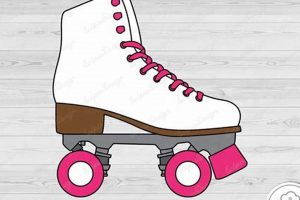
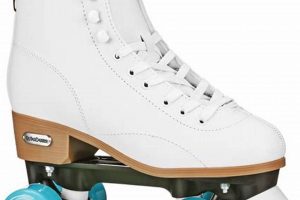
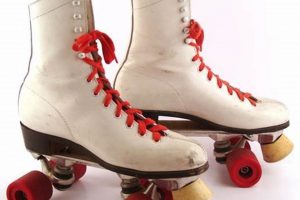
These components, designed for use on smooth, hard surfaces, are typically characterized by a high rebound and grip coefficient. The material composition often involves a softer durometer polyurethane, allowing for optimal performance on surfaces such as wood or coated concrete. A common example is a wheel with a durometer rating between 78A and 85A, indicating its suitability for indoor skating environments.
Proper wheel selection significantly impacts a skater’s agility, speed, and overall experience. The attributes of these specialized designs enhance maneuverability and control. Historically, the development of these components evolved alongside the expansion of roller skating as both a recreational activity and a competitive sport, driving innovation in materials and construction techniques to meet the demands of indoor surfaces.
The subsequent sections will delve into the specific characteristics of these skating components, covering considerations such as durometer ratings, hub materials, bearing compatibility, and maintenance practices. Understanding these elements is crucial for selecting the appropriate wheels for different skating styles and ensuring optimal performance and longevity.
Essential Considerations for Optimal Performance
This section outlines crucial factors to consider when selecting and maintaining equipment designed for indoor skating environments.
Tip 1: Durometer Selection: The durometer, measured on the A scale, indicates hardness. Softer wheels (78A-85A) offer greater grip and shock absorption on smooth indoor surfaces. Harder wheels provide increased speed but may sacrifice traction.
Tip 2: Hub Material: The hub, or core, affects the wheel’s overall performance. Nylon or reinforced plastic hubs offer a balance of weight and durability, while aluminum hubs provide superior rigidity and power transfer.
Tip 3: Bearing Compatibility: Ensure the wheel hub is compatible with standard 608 bearings. Proper bearing installation and lubrication are essential for smooth rolling and prolonged bearing lifespan.
Tip 4: Surface Condition Assessment: Prior to skating, assess the condition of the indoor surface. Clean floors free of debris will optimize wheel performance and minimize the risk of damage.
Tip 5: Regular Maintenance: Regularly inspect for wear and tear. Rotate wheels periodically to ensure even wear and maximize longevity. Clean wheels with a suitable solvent to remove dirt and grime.
Tip 6: Skating Style Consideration: The chosen wheels must correspond with the skater’s style. Artistic skaters may prioritize grip, while speed skaters might prefer harder, faster wheels.
Tip 7: Load Capacity: Consider the skater’s weight and skating intensity. Overloading the wheels can lead to premature wear and potential failure. Choose wheels with an appropriate load rating.
Adhering to these considerations can enhance the skating experience, improve performance, and extend the lifespan of the chosen equipment.
The final section will provide a summary of essential points and concluding thoughts regarding the use of indoor skating equipment.
1. Durometer Rating

Durometer rating is a critical specification directly influencing performance characteristics. This measurement, typically expressed on the A scale, quantifies the hardness and resilience, impacting traction, speed, and wear rate when used on interior surfaces.
- Grip Optimization
Lower durometer ratings, such as 78A to 85A, indicate a softer composition. These softer wheels exhibit enhanced grip on smooth surfaces like wood or coated concrete, offering superior control during turns and stops. Skaters prioritizing agility and precision benefit significantly from this increased traction. The trade-off is potentially reduced speed compared to harder options.
- Rolling Resistance
Higher durometer ratings represent harder compounds, reducing rolling resistance. This translates to faster speeds and greater efficiency, particularly on impeccably smooth indoor surfaces. However, skaters may experience diminished grip and increased vibration transmission, potentially compromising stability and comfort.
- Wear Characteristics
Softer compounds tend to wear faster than harder ones, especially under aggressive use. The durometer rating should therefore align with the skater’s style and frequency of use. Skaters who perform frequent slides or stops will likely observe accelerated wear on softer wheels. Regular inspection and rotation can mitigate uneven wear patterns.
- Surface Compatibility
The durometer rating must be matched to the specific indoor surface. A wheel with a durometer rating that is too hard for the surface may slide excessively and cause a lack of control, while a wheel with a durometer rating that is too soft for the surface may wear down quickly. By finding the correct balance point for optimal skating is a critical point to consider.
In conclusion, the durometer rating directly dictates its performance characteristics on indoor surfaces. Appropriate selection requires careful consideration of skating style, surface conditions, and desired balance between grip, speed, and longevity. The skater’s weight and skill level can also play roles in this consideration.
2. Surface Grip

Surface grip, the frictional force between the wheel material and the skating surface, constitutes a pivotal factor in the performance and safety characteristics of components designed for interior environments. Optimizing this attribute dictates maneuverability, control, and overall skater experience.
- Material Composition and Adhesion
The polymeric composition dictates the coefficient of friction against the indoor surface. Polyurethane, a common material, can be formulated to achieve varying degrees of grip through alterations in its chemical structure. The presence of additives may further modify surface adhesion, influencing the wheel’s ability to maintain contact during turns and stops. For instance, a softer polyurethane compound exhibits greater surface conformity, enhancing grip on polished concrete or hardwood floors.
- Durometer and Deformation
Durometer, a measure of hardness, correlates inversely with grip on most indoor surfaces. Softer wheels, characterized by lower durometer values, undergo greater deformation under load, increasing the contact area and, consequently, the frictional force. Conversely, harder wheels exhibit reduced deformation, resulting in diminished grip but potentially enhanced speed. A skater’s weight and skating style must factor into durometer selection to optimize surface grip.
- Surface Texture and Micro-Interlock
The micro-texture influences the mechanical interlocking between the wheel and the skating surface. Microscopic irregularities present on both the wheel and the floor create frictional resistance, contributing to overall grip. Engineered surface textures, such as strategically placed grooves or patterns, enhance this interlocking effect, particularly on smooth or slightly uneven indoor surfaces. Maintaining a clean surface, free from debris, is crucial for preserving optimal micro-interlock.
- Environmental Conditions and Contaminants
Ambient temperature and humidity can affect the properties of the wheel material and the skating surface, influencing surface grip. Additionally, the presence of contaminants, such as dust, oil, or cleaning agents, can drastically reduce friction, compromising control and increasing the risk of slippage. Regular maintenance of both the wheels and the skating surface is essential for mitigating the effects of environmental factors and contaminants on grip performance.
The interrelation of material composition, durometer, surface texture, and environmental conditions collectively determines the surface grip performance. Careful consideration of these aspects is essential for selecting appropriate components and ensuring a safe and controlled skating experience within indoor environments. Different applications can be met by adjusting these considerations.
3. Hub Material

The hub, the central core that houses the bearings, significantly influences the performance of components used on indoor surfaces. The selection of hub material impacts the wheel’s rigidity, weight, and ability to efficiently transfer energy. Inadequate hub design or material choice can result in reduced speed, compromised maneuverability, and premature failure of the wheel. For example, a flexible plastic hub may deform under the stress of aggressive skating, leading to bearing misalignment and reduced roll speed. Conversely, a rigid aluminum hub provides superior support and energy transfer, enhancing responsiveness and control, albeit potentially increasing weight.
Various materials are employed in hub construction, each offering distinct advantages and disadvantages. Nylon hubs offer a balance of weight and cost-effectiveness, suitable for recreational skaters. Reinforced plastics, such as fiberglass-filled polymers, provide enhanced stiffness compared to standard nylon, improving power transfer. Aluminum hubs, often machined for precision, represent the premium option, offering maximum rigidity and durability, favored by competitive skaters. The practical implication of hub material choice manifests in the responsiveness of the wheel; a stiffer hub delivers quicker acceleration and more precise handling, while a more compliant hub may offer a smoother ride, absorbing minor imperfections in the skating surface. Different skater’s levels can be met based on skill, ability, or use.
In summary, hub material serves as a critical determinant of performance and durability. Selecting the appropriate material necessitates a thorough assessment of skating style, skill level, and intended use. Compromising on hub quality can negate the benefits of high-quality urethane and bearings. Therefore, careful consideration of hub material is paramount for optimizing the skating experience and ensuring the longevity of skating components.
4. Bearing Interface
The bearing interface, the contact region between the wheel hub and the bearings, serves as a critical determinant of performance and longevity within indoor skating assemblies. Its precise design and execution ensure optimal rotational efficiency and minimize wear and tear on the bearings and wheels alike.
- Dimensional Tolerance and Fit
Precise dimensional tolerances between the bearing bore in the hub and the outer diameter of the bearing are paramount. An excessively tight fit can induce pre-loading on the bearing, leading to increased friction and premature failure. Conversely, a loose fit allows for axial play, generating vibration and diminished energy transfer. Industry standards, such as the 608 bearing specification, dictate the acceptable range of these dimensions to ensure compatibility and optimal performance. Improper fit impacts smoothness and power transfer and is essential for performance.
- Material Compatibility and Friction
The materials of the hub and bearing influence friction and potential galvanic corrosion. Dissimilar metals in contact can experience accelerated corrosion in the presence of moisture, compromising the structural integrity of the bearing interface. Lubrication between the bearing and hub reduces friction and mitigates corrosion risk. The use of non-metallic hub materials, such as nylon or polyurethane, eliminates galvanic corrosion concerns but introduces considerations regarding dimensional stability under load.
- Surface Finish and Concentricity
The surface finish of the bearing bore influences friction and facilitates proper bearing seating. A rough surface finish increases friction and can introduce stress concentrations on the bearing outer race. Maintaining concentricity between the bearing bore and the wheel’s rotational axis is critical for minimizing vibration and ensuring even load distribution on the bearings. Deviations from concentricity result in uneven wear patterns on the tire and diminished skating efficiency.
- Bearing Retention and Security
Secure bearing retention prevents axial displacement during use, ensuring consistent performance. Interference fits, snap rings, or bonded interfaces achieve bearing retention. Inadequate retention compromises stability, leading to uneven wear and potential catastrophic failure. Periodically inspecting bearing seating and retention mechanisms prevents premature component degradation.
The attributes of the bearing interface directly translate into tangible performance outcomes. A meticulously engineered interface minimizes energy loss, enhances skating speed, and extends component lifespan. Conversely, a poorly designed interface undermines performance, reduces safety margins, and necessitates frequent maintenance interventions. The engineering between bearings and indoor skate wheels is a key factor that influences the end product.
5. Rolling Resistance
Rolling resistance, the force opposing the motion of a rolling object, directly influences the performance characteristics of components used on indoor surfaces. This force arises from hysteresis within the wheel material as it deforms under load. Minimizing rolling resistance is crucial for maximizing speed, efficiency, and overall skating experience. The selection of inappropriate materials or designs can result in excessive energy dissipation, hindering performance and increasing skater fatigue. For example, wheels constructed from low-rebound polyurethane exhibit higher rolling resistance compared to those utilizing high-rebound formulations. This difference translates to a noticeable reduction in speed and increased effort required to maintain momentum. The optimization of it is important for speed and performance.
The magnitude of rolling resistance is affected by several key factors, including material properties, wheel diameter, load, and surface conditions. Harder compounds generally exhibit lower rolling resistance, facilitating faster speeds on smooth indoor surfaces. Larger diameter wheels also tend to roll more efficiently due to reduced deformation. Maintaining proper inflation pressure (if applicable) minimizes hysteresis losses, further reducing resistance. Real-world applications demonstrate that skaters employing wheels with optimized rolling resistance achieve significantly faster lap times and experience less fatigue during prolonged skating sessions. Competitive skaters will be very interested in optimizing for speed and efficiency.
Understanding and mitigating rolling resistance represents a critical aspect of component selection and maintenance. Careful consideration of material properties, wheel design, and surface conditions optimizes performance and enhances the skating experience. Challenges arise in balancing the need for low rolling resistance with other desirable attributes such as grip and durability. However, continued advancements in material science and wheel design offer promising avenues for further reducing rolling resistance without compromising other essential performance characteristics. The goal should be to reduce this force while not compromising other needs for roller skate wheels.
Frequently Asked Questions
This section addresses common inquiries regarding the selection, maintenance, and optimal use of skating components designed for indoor surfaces. The information provided aims to clarify misconceptions and offer guidance based on established principles of mechanics and materials science.
Question 1: What durometer rating is most appropriate for indoor roller skating?
The ideal durometer rating depends on the surface characteristics and the skater’s preference. Softer options (78A-85A) offer enhanced grip on smooth surfaces, while harder wheels provide greater speed but may sacrifice traction. Experimentation is recommended to determine the optimal balance.
Question 2: How frequently should wheels be rotated?
Rotation frequency depends on skating style and surface conditions. Uneven wear patterns necessitate more frequent rotation. A general guideline is to rotate wheels after every 5-10 hours of use to ensure even wear and prolong lifespan.
Question 3: What materials are commonly used in the construction of indoor skate wheel hubs?
Common hub materials include nylon, reinforced plastics, and aluminum. Nylon hubs offer a balance of cost and weight, while reinforced plastics provide increased stiffness. Aluminum hubs offer maximum rigidity and power transfer.
Question 4: How does wheel diameter affect performance on indoor surfaces?
Larger diameter wheels generally roll more efficiently due to a reduced angle of attack and lower rolling resistance. However, larger wheels may also reduce maneuverability. Selection must balance speed and agility requirements.
Question 5: How should indoor roller skate wheels be cleaned?
Cleaning requires a solvent compatible with the wheel material. Isopropyl alcohol is generally effective for removing dirt and grime. Avoid abrasive cleaners, as they can damage the wheel surface and reduce grip.
Question 6: What factors contribute to premature wheel wear?
Factors contributing to premature wear include aggressive skating, exposure to abrasive surfaces, overloading, and improper bearing installation. Regular maintenance and appropriate wheel selection can mitigate wear rates.
Selecting appropriate equipment and adhering to proper maintenance practices are crucial for maximizing performance and ensuring safety during indoor roller skating activities. Informed decisions based on sound engineering principles contribute to an enhanced skating experience.
The following section will provide a brief conclusion on the main points.
Conclusion
This exploration has underscored the critical role of specialized rolling components in optimizing the indoor skating experience. From durometer selection and hub material considerations to bearing interface design and rolling resistance mitigation, a comprehensive understanding of these elements is essential for achieving peak performance. The documented interplay between material properties, design parameters, and skating conditions highlights the necessity for informed decision-making in component selection and maintenance. The right selection can influence performance, speed, and the overall experience of using “indoor roller skate wheels”.
Continued advancements in material science and engineering promise further refinements in rolling component technology. As indoor skating evolves, a persistent focus on innovation and empirical testing will be paramount for achieving enhanced performance, durability, and safety. Those involved in the sport are encouraged to utilize this information for better informed future decisions.