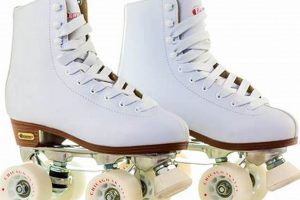
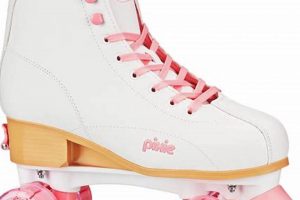
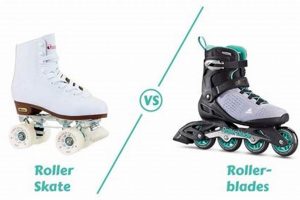
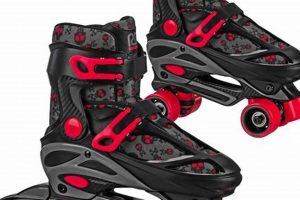
The selection of appropriate recreational footwear significantly impacts a novice’s initial experience in rollerskating. These items are designed with specific features to promote stability, control, and comfort, facilitating skill development and minimizing the risk of injury. For example, models with wider wheelbases and adjustable components provide enhanced balance and a customized fit for individuals new to the sport.
Choosing suitable equipment fosters confidence, encourages continued participation, and contributes to overall physical fitness. Historically, advancements in materials and design have led to increasingly user-friendly options, making rollerskating more accessible to individuals of all ages and abilities. This progression has transformed rollerskating from a niche activity to a mainstream recreational pursuit.
The subsequent sections will explore the key characteristics, types, and considerations involved in acquiring recreational footwear tailored to those new to rollerskating. This includes examining various boot styles, wheel materials, bearing types, and safety features that contribute to a positive and productive learning experience.
Essential Guidance for Selecting Appropriate Recreational Footwear
The following guidelines offer valuable insights into the acquisition of recreational footwear designed to support individuals commencing their rollerskating journey. Adhering to these recommendations can improve the learning process and enhance overall safety.
Tip 1: Prioritize Ankle Support: Stiff, high-cut boots provide crucial ankle stability, reducing the likelihood of sprains and facilitating proper technique development. Seek models that securely cradle the ankle without restricting movement excessively.
Tip 2: Opt for Controlled Rolling Resistance: Wheels with a lower durometer rating (softer wheels) offer increased grip and slower speeds, which are beneficial for beginners. Such wheels provide enhanced control and reduce the risk of uncontrolled acceleration.
Tip 3: Evaluate Brake Accessibility: Ensure the chosen model features a readily accessible and easily operable braking system. Novices should practice braking techniques in a controlled environment to develop proficiency and confidence.
Tip 4: Confirm Proper Fit: A snug, comfortable fit is paramount. Footwear should not be excessively tight, restricting circulation, nor should it be so loose that the foot moves excessively within the boot. Precise sizing is essential for optimal control and comfort.
Tip 5: Consider Adjustable Features: Models with adjustable straps or buckles allow for customized fitting, accommodating various foot shapes and sizes. This adaptability ensures a secure and comfortable fit throughout the learning process.
Tip 6: Investigate Wheel Bearing Quality: While not immediately apparent, wheel bearings significantly impact rolling efficiency. ABEC-rated bearings are a common standard, with higher numbers generally indicating greater precision and smoother rolling. However, for beginners, durability is often more important than top-end speed.
Adhering to these tips will empower individuals to make informed decisions when selecting recreational footwear. Proper footwear selection enhances safety, improves control, and contributes to a more enjoyable and effective learning experience.
The subsequent sections will provide a detailed analysis of specific models and brands, further assisting in the selection process.
1. Ankle Support

Ankle support is a foundational element in recreational footwear designed for individuals new to rollerskating. Its primary function is to provide stability and mitigate the risk of ankle injuries, thereby fostering confidence and promoting proper technique acquisition.
- Lateral Stability and Injury Prevention
Adequate ankle support restricts excessive lateral movement of the ankle joint. This is particularly important for beginners, who may lack the muscle strength and coordination to maintain balance. By limiting lateral movement, the likelihood of sprains and other ankle injuries is significantly reduced. For example, a high-cuff boot constructed from rigid materials provides substantial lateral support.
- Enhanced Balance and Control
By providing a stable base, ankle support enhances overall balance and control. This allows beginners to focus on developing fundamental skating skills, such as gliding, turning, and stopping. A secure and supportive ankle facilitates efficient energy transfer from the legs to the skates, improving responsiveness and maneuverability. A properly fitted skate with effective ankle support contributes to a more intuitive and controlled skating experience.
- Proper Posture and Technique
Ankle support encourages correct posture, which is crucial for efficient and injury-free skating. When the ankle is adequately supported, individuals are more likely to maintain an upright stance and avoid pronation or supination of the foot. This, in turn, promotes proper alignment of the legs and spine, reducing strain on joints and muscles. Supportive skates can assist beginners in developing sound skating habits from the outset.
- Comfort and Confidence Building
A secure and stable ankle promotes a sense of comfort and confidence, enabling beginners to progress at their own pace without fear of injury. When individuals feel secure in their skates, they are more likely to experiment with new skills and overcome challenges. This positive feedback loop reinforces their enjoyment of the activity and encourages continued participation. Confidence, bolstered by adequate ankle support, is a critical factor in the overall rollerskating learning experience.
In summation, ankle support transcends mere comfort; it is a fundamental safety feature that directly influences balance, control, and technique development in novice rollerskaters. Recreational footwear incorporating robust ankle support contributes significantly to a positive and injury-free introduction to the sport.
2. Wheel Durometer

Wheel durometer, a measurement of a roller skate wheel’s hardness, is a crucial consideration in selecting appropriate recreational footwear for novice skaters. The durometer scale, typically ranging from 74A to 101A, dictates the wheel’s grip, speed, and durability, each of which significantly affects the learning experience.
- Grip and Control
Softer wheels, those with a lower durometer rating (e.g., 78A-85A), provide enhanced grip on various surfaces. This increased traction is particularly beneficial for beginners, as it reduces the likelihood of slipping and promotes greater control. The added grip facilitates easier turning and stopping, essential skills for developing confidence. For example, a skater learning on an asphalt surface will find softer wheels more forgiving and stable than harder wheels.
- Speed and Stability
Harder wheels, those with a higher durometer rating (e.g., 88A and above), offer increased speed but reduced grip. While experienced skaters may prefer this characteristic, it can be detrimental for beginners. The increased speed can be difficult to manage, potentially leading to a loss of control and an elevated risk of falls. Therefore, recreational footwear designed for novices should prioritize stability over high speeds, favoring softer wheels.
- Surface Compatibility
The ideal wheel durometer is influenced by the skating surface. Softer wheels are generally better suited for rougher surfaces, such as asphalt or concrete, as they absorb vibrations and provide a smoother ride. Harder wheels are more appropriate for smoother surfaces, such as polished concrete or wood floors. Beginners typically benefit from softer wheels, as they are more versatile and adaptable to different environments.
- Durability and Longevity
Wheel durometer also affects durability. Softer wheels tend to wear down more quickly than harder wheels, especially on abrasive surfaces. However, for beginners, the increased grip and control provided by softer wheels outweigh the reduced lifespan. Furthermore, the lower speeds associated with novice skating typically result in less wear and tear, extending the life of the wheels.
In conclusion, the selection of wheel durometer plays a vital role in the suitability of recreational footwear for beginning rollerskaters. Prioritizing softer wheels with lower durometer ratings provides enhanced grip, control, and stability, contributing to a safer and more enjoyable learning experience. While harder wheels may offer increased speed, their reduced grip makes them less appropriate for individuals who are new to the sport.
3. Braking System
A functional and easily accessible braking system is a critical component of recreational footwear designed for novice rollerskaters. The braking system directly influences user safety, control, and confidence, thereby shaping the overall learning experience. Inadequate braking mechanisms can lead to increased anxiety, inhibited skill development, and a higher risk of accidents. Conversely, a well-designed system allows learners to control their speed and stop reliably, building confidence and encouraging further exploration of the sport.
The heel brake is a common type of braking system found on recreational skates intended for beginners. This system operates by applying pressure to a rubber or composite pad located on the heel of one or both skates. For the system to be effective, the user must be able to comfortably and consistently lift the toe of the skate, engaging the brake pad with the ground. Regular practice and proper adjustment of the brake pad are necessary to maintain optimal stopping power. Alternative braking systems, such as toe stops or inline skate brakes, may present a steeper learning curve for beginners.
In summary, the braking system on recreational footwear serves as a critical safety feature for new rollerskaters. Its ease of use and effectiveness directly impact the user’s ability to control their movement and avoid collisions. The selection of footwear with a reliable and readily accessible braking system is essential for fostering a positive and safe learning environment. This crucial component contributes significantly to skill development, confidence building, and the overall enjoyment of the sport.
4. Fit Precision
The concept of “fit precision” holds paramount importance within the context of recreational footwear designed for novice rollerskaters. Accurate fit directly influences control, stability, and comfort, factors critical for a positive initial experience and subsequent skill development. Footwear that deviates from precise fit parameters introduces risks of injury, reduced maneuverability, and diminished user confidence, thereby hindering the learning process. For example, improperly sized skates can lead to blisters, chafing, and an unstable platform, all contributing to a diminished ability to learn and perform basic skating maneuvers.
The correlation between fit precision and successful rollerskating is multifaceted. An ill-fitting skate compels the user to compensate through altered posture and muscle activation patterns, ultimately compromising technique and increasing the likelihood of strain or injury. Conversely, a well-fitted skate allows for optimal power transfer from the foot to the wheels, promoting efficient movement and responsiveness. The practical application of this understanding manifests in careful measurement of foot length and width, consideration of sock thickness, and a thorough assessment of boot volume. Adjustable features, such as straps or laces, enable further refinement of the fit to accommodate individual foot morphologies.
In conclusion, fit precision constitutes a fundamental pillar of “good roller skates for beginners.” Failure to prioritize accurate sizing and fit adjustment can negate the benefits of other design features, such as supportive ankle cuffs or appropriate wheel durometer. Addressing the challenges of fit precision through careful measurement, informed selection, and proper adjustment procedures is essential for ensuring that the chosen recreational footwear effectively supports the novice skater’s journey towards competence and enjoyment.
5. Adjustability
Adjustability represents a critical design attribute in recreational footwear intended for individuals initiating their rollerskating experience. Its presence directly correlates with the suitability of the equipment, influencing user comfort, control, and progression. Fixed-size skates, lacking adjustable components, often fail to accommodate variations in foot morphology or accommodate growth, potentially leading to discomfort, reduced performance, and even injury. Conversely, recreational footwear incorporating features that allow for modification of fit parameters enhances the overall user experience and fosters skill development. For instance, a skate equipped with adjustable buckles or straps around the ankle and instep allows for a customized fit, ensuring a secure and supportive hold without restricting movement.
The importance of adjustability extends beyond mere comfort. It plays a pivotal role in promoting proper technique and control. A skate that can be precisely adjusted minimizes slippage and prevents the foot from moving excessively within the boot. This stability translates to more efficient power transfer and improved responsiveness, facilitating the execution of fundamental skating maneuvers. Furthermore, adjustable features enable the equipment to adapt to varying sock thicknesses or the use of orthotics, ensuring a consistently secure and comfortable fit regardless of external factors. Models with adjustable sizing ranges are also beneficial for growing children, extending the lifespan of the equipment and reducing the frequency of replacements.
In summary, adjustability is a fundamental element in recreational footwear targeting beginning rollerskaters. Its incorporation promotes optimal fit, enhances control, and extends the usability of the equipment. The benefits of adjustability directly contribute to a more positive and productive learning experience, underscoring its importance as a defining characteristic of appropriate rollerskating equipment for novices. Prioritizing adjustability in the selection process is essential for ensuring that the chosen recreational footwear effectively supports the skater’s progression from beginner to proficient practitioner.
6. Bearing Quality

Bearing quality constitutes a significant, albeit often overlooked, component of recreational footwear suitable for novice rollerskaters. The bearings, typically standardized components (e.g., 608 series), facilitate wheel rotation and directly influence the smoothness, speed, and overall efficiency of the skating experience. While high-performance bearings are often associated with advanced skating disciplines, the selection of appropriate bearings for beginners has a direct impact on their ability to learn fundamental skills and maintain control. For instance, bearings with excessive friction hinder forward momentum, requiring increased effort to maintain speed, which can be fatiguing and discouraging for new skaters. Furthermore, inconsistent bearing performance can create unpredictable rolling characteristics, making it difficult for learners to develop a consistent stride and maintain balance.
The relationship between bearing quality and user experience is further exemplified by considering the impact of bearing lubrication and sealing. Bearings pre-lubricated with a high-viscosity grease offer enhanced protection against dirt and debris, contributing to extended lifespan and consistent performance. Sealed bearings, featuring protective shields, further mitigate contamination, reducing the need for frequent maintenance and ensuring reliable operation over time. In contrast, low-quality bearings lacking adequate lubrication or sealing are prone to premature wear, increased friction, and potential failure, ultimately diminishing the quality of the rollerskating experience. Real-world examples of this effect can be observed in recreational skating environments, where individuals equipped with skates containing subpar bearings often struggle to keep pace with others, exhibit reduced control, and express frustration with the equipment’s performance.
In conclusion, bearing quality exerts a considerable influence on the suitability of recreational footwear for beginners. While the immediate focus may be on features such as ankle support and wheel durometer, the long-term performance and user satisfaction are directly tied to the quality and maintenance of the wheel bearings. The selection of bearings characterized by low friction, effective lubrication, and robust sealing mechanisms is essential for creating a positive and rewarding introduction to rollerskating. Investing in recreational footwear equipped with appropriately specified bearings represents a proactive step towards ensuring a smooth, efficient, and enjoyable learning experience for novice skaters.
7. Stability Design
Stability design is a critical aspect of recreational footwear intended for individuals new to rollerskating. It encompasses a collection of engineering principles and design features aimed at enhancing balance, control, and overall safety, thereby directly impacting the user’s learning experience and confidence.
- Wheelbase Configuration
The wheelbase, defined as the distance between the front and rear axles, significantly affects stability. A wider wheelbase provides a greater base of support, making the skates more resistant to tipping or wobbling. Conversely, a narrower wheelbase offers increased maneuverability but can compromise stability, particularly at higher speeds. Recreational footwear designed for beginners often features a wider wheelbase to enhance stability and facilitate the development of fundamental skating skills. This design choice promotes a secure and controlled learning environment, reducing the risk of falls and injuries.
- Low Center of Gravity
A low center of gravity enhances stability by reducing the leverage that external forces can exert on the skater. This is achieved through design features such as a low-profile boot and a strategic placement of components. By lowering the center of gravity, the skates become more resistant to tipping and offer a more stable platform for learning. This design consideration is particularly beneficial for beginners, who may lack the muscle strength and coordination to maintain balance independently.
- Ankle Support Structure
The ankle support structure, including the boot height and rigidity, plays a crucial role in maintaining stability. A high-cut boot constructed from stiff materials provides significant lateral support, preventing excessive ankle flexion and reducing the risk of sprains. This feature is especially important for beginners, who may be prone to ankle instability. The ankle support structure also contributes to proper posture, which is essential for maintaining balance and control. The integration of a robust ankle support system directly contributes to the overall stability of recreational footwear designed for novice skaters.
- Frame Material and Rigidity
The frame, which connects the boot to the wheels, significantly impacts the stability of the skates. A rigid frame transmits energy efficiently, providing a responsive and predictable skating experience. Conversely, a flexible frame can absorb vibrations but may also compromise stability, particularly at higher speeds. Recreational footwear designed for beginners typically features a frame constructed from durable and rigid materials, such as aluminum or reinforced composite, to enhance stability and control. The frame’s rigidity also contributes to the skater’s ability to execute turns and other maneuvers with precision.
These elements of stability design, integrated thoughtfully into recreational footwear, provide novice rollerskaters with the necessary foundation for safe and effective learning. From the wheel base and center of gravity to ankle support and rigid frame, each attribute contributes to overall balance. Focusing on stability promotes confidence and helps to ensure that an introductory foray into skating is a positive experience.
Frequently Asked Questions
The following section addresses common inquiries and concerns pertaining to recreational footwear selection for individuals beginning their rollerskating journey. These questions are answered with a focus on providing clear and informative guidance, promoting informed decision-making.
Question 1: What specific features distinguish recreational footwear designed for novices from those intended for experienced skaters?
Recreational footwear tailored to beginners typically emphasizes stability and control over high-performance characteristics. This often translates to features such as wider wheelbases, lower durometer wheels, enhanced ankle support, and readily accessible braking systems. The focus is on facilitating skill development and minimizing the risk of injury, rather than maximizing speed or maneuverability.
Question 2: How does wheel durometer impact the learning experience for a novice rollerskater?
Wheel durometer, a measure of wheel hardness, significantly influences grip and speed. Softer wheels (lower durometer ratings) provide greater grip and slower speeds, making them more suitable for beginners. Harder wheels (higher durometer ratings) offer increased speed but reduced grip, potentially leading to instability and difficulty controlling the skates. Softer wheels are generally recommended for novices to enhance control and reduce the risk of falls.
Question 3: Why is ankle support a critical consideration when selecting recreational footwear for beginners?
Ankle support is essential for providing stability and preventing ankle injuries, particularly sprains. Stiff, high-cut boots offer enhanced lateral support, restricting excessive ankle movement and promoting proper posture. This is especially beneficial for beginners, who may lack the muscle strength and coordination to maintain balance independently. Adequate ankle support contributes to a more secure and confident skating experience.
Question 4: How does the braking system impact the safety of a beginning rollerskater?
The braking system is a primary safety mechanism, enabling users to control their speed and stop reliably. A readily accessible and easily operable braking system is crucial for preventing collisions and reducing the risk of injury. Novices should practice braking techniques in a controlled environment to develop proficiency and confidence. Footwear with an effective braking system allows beginners to skate with greater assurance and control.
Question 5: What are the key indicators of proper fit in recreational footwear for a novice skater?
Proper fit is characterized by a snug yet comfortable feel, without excessive tightness or looseness. The foot should not move excessively within the boot, and there should be adequate room in the toe box to prevent cramping. Adjustable features, such as straps or laces, allow for customized fitting, accommodating various foot shapes and sizes. Precise sizing is essential for optimal control and comfort.
Question 6: How does bearing quality influence the performance of recreational footwear for beginners?
Bearing quality directly impacts rolling efficiency and smoothness. While high-performance bearings may not be essential for beginners, bearings with excessive friction can hinder forward momentum and make skating more challenging. Bearings that are well-lubricated and sealed provide consistent performance and require less maintenance, contributing to a more enjoyable skating experience.
These FAQs are intended to provide a foundation for informed decision-making when selecting recreational footwear. The characteristics discussed should be carefully weighed to facilitate a rewarding introduction to the sport.
The subsequent section will delve into specific brands and models commonly recommended for novice rollerskaters, offering a practical application of the concepts discussed herein.
Concluding Remarks
This discourse has thoroughly examined the essential attributes of suitable recreational footwear for novice rollerskaters. The discussion has spanned considerations of ankle support, wheel durometer, braking systems, fit precision, adjustability, bearing quality, and overall stability design. Each factor directly influences the user’s safety, control, and learning trajectory.
The acquisition of recreational footwear tailored to beginners necessitates a deliberate and informed approach. Prioritizing features that promote stability, control, and comfort will not only enhance the initial skating experience but also foster long-term engagement in the activity. A well-informed decision ensures that the chosen equipment facilitates skill development and enjoyment while minimizing the potential for injury.
![Get Rolling! Brand New Pair of Roller Skates Song [Audio] | Learn to Surf & Skate: A Beginner's Step-by-Step Guide](https://universitysurfandskate.com/wp-content/uploads/2026/05/th-191-300x200.jpg "Get Rolling! Brand New Pair of Roller Skates Song [Audio] Learn to Surf & Skate: A Beginner's Step-by-Step Guide")