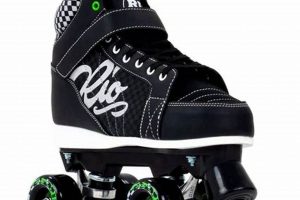
Protective footwear engineered for the demands of a high-impact, full-contact sport is essential equipment. These specialized boots, mounted on a chassis with wheels, enable athletes to navigate the track with speed and agility. Examples include low-cut boot designs for maneuverability and high-cut boots offering increased ankle support.
The appropriate equipment enables players to perform fundamental skills, such as skating, stopping, and blocking, with greater efficiency and reduced risk of injury. Historically, evolving designs reflect advancements in materials and engineering, improving both performance and skater safety. The selection of suitable equipment is critical for both novice and experienced players aiming to maximize their potential and enjoyment of the sport.
The following sections will delve deeper into the specific components, features, and considerations when choosing appropriate equipment for optimal performance and safety in the sport.
Equipment Selection Guidance
Proper selection and maintenance are critical for both performance enhancement and injury prevention within the sport. The following guidelines address key aspects of equipment to optimize skater safety and competitive capabilities.
Tip 1: Boot Selection: Evaluate boot rigidity based on skating style and ankle strength. Stiffer boots offer greater support, while more flexible boots enhance agility. Prioritize a snug, comfortable fit to minimize slippage and potential blisters.
Tip 2: Plate Material Considerations: Aluminum plates offer superior responsiveness and durability compared to nylon or composite materials. Consider the plate angle and kingpin adjustment system to match individual skating preferences.
Tip 3: Wheel Hardness and Diameter: Wheel durometer (hardness) affects grip and roll. Softer wheels (lower durometer) provide more grip, while harder wheels (higher durometer) offer faster roll. Select wheel size and profile based on track surface and desired maneuverability.
Tip 4: Bearing Maintenance: Regularly clean and lubricate bearings to ensure smooth wheel rotation and optimal speed. Use a bearing press for safe removal and installation to avoid damage.
Tip 5: Toe Stop Adjustment and Replacement: Adjust toe stops to the appropriate height for effective stops and starts. Replace worn toe stops promptly to maintain consistent braking performance.
Tip 6: Protective Gear Inspection: Thoroughly inspect all protective gear, including helmets, mouthguards, elbow pads, wrist guards, and knee pads, before each session. Replace any damaged or worn components immediately.
Tip 7: Regular Hardware Checks: Periodically inspect all nuts, bolts, and screws on the equipment to ensure they are tightened securely. Loose hardware can compromise performance and safety.
Adhering to these selection and maintenance recommendations will contribute to a safer and more effective experience within the sport.
The subsequent sections will provide further insights into advanced customization and performance optimization strategies.
1. Boot Construction

Boot construction is a critical determinant of performance characteristics. The boot directly influences ankle support, responsiveness, and overall comfort, thereby affecting a skater’s agility and power transmission. Material selection, design, and reinforcement techniques all play a significant role in defining the capabilities of equipment used in this high-impact, dynamic sport.
- Material Composition
The choice of material impacts durability, weight, and flexibility. Leather boots offer a classic feel and mold to the foot over time, providing a customized fit. Synthetic materials, such as vinyl or microfiber, offer enhanced water resistance and can be lighter weight. Reinforced nylon provides structural integrity. Material composition determines the longevity and performance attributes of equipment.
- Ankle Support Design
Ankle support varies widely, ranging from low-cut designs that prioritize maneuverability to high-cut designs offering greater stability and protection against lateral movement. Stiff reinforcements, such as external exoskeletons or internal padding, can further enhance ankle support. The appropriate level of ankle support is crucial for injury prevention and optimal power transfer during skating.
- Closure Systems
Closure systems ensure a secure and adjustable fit. Laces allow for precise tightening across the entire foot, while buckles and Velcro straps offer quick adjustments. Hybrid systems combine laces with straps for a balance of security and convenience. A well-designed closure system minimizes slippage and maximizes energy transfer, optimizing skating performance.
- Heat Molding and Customization
Some boots incorporate heat-moldable materials that conform to the individual skater’s foot shape, providing a customized fit and reducing pressure points. Custom boot fabrication offers the ultimate level of personalization, addressing specific foot anomalies and performance requirements. Customization improves comfort and maximizes power transfer.
In summary, boot construction is a multifaceted element that significantly impacts the overall functionality. By carefully considering material composition, ankle support design, closure systems, and customization options, skaters can select equipment that optimizes their performance and minimizes the risk of injury. The interaction between boot construction and other skate components, such as the plate and wheels, further defines the complete skating experience.
2. Plate Material

The plate material is a foundational component directly impacting performance and durability. It serves as the interface between the boot and the wheels, affecting responsiveness, stability, and power transfer during skating maneuvers.
- Aluminum Alloy Plates
Aluminum alloy plates offer a superior strength-to-weight ratio compared to other materials, resulting in enhanced responsiveness and durability. Different aluminum alloys, such as 7075, provide varying degrees of stiffness and impact resistance. These plates are prevalent among competitive skaters due to their performance characteristics.
- Nylon and Composite Plates
Nylon and composite plates offer a more affordable alternative, providing adequate performance for recreational skaters and beginners. These materials absorb vibrations effectively, offering a more comfortable ride, but generally lack the responsiveness and durability of aluminum alloy plates. Their flexibility can be advantageous for certain skating styles, allowing for greater maneuverability.
- Plate Mounting Systems
The method by which the plate is mounted to the boot significantly influences the skate’s overall feel and performance. Direct-mount systems provide a more direct connection, maximizing energy transfer, while traditional mounting methods offer greater adjustability and customization. Proper mounting is critical for balance and stability.
- Kingpin Angle and Adjustment
The kingpin angle, which determines the turning radius of the skate, and the kingpin adjustment system significantly impact agility and control. Steeper kingpin angles result in tighter turning, while shallower angles provide greater stability at high speeds. Adjustable kingpin systems allow skaters to fine-tune the skate’s handling characteristics to suit their individual preferences and skating style.
The selection of plate material is a critical decision, balancing performance requirements with budgetary considerations. Aluminum alloy plates cater to skaters prioritizing responsiveness and durability, while nylon and composite plates offer a more accessible option for recreational use. Careful consideration of plate mounting systems and kingpin adjustability further enables customization and optimization of the skating experience.
3. Wheel Hardness

Wheel hardness, measured by the durometer scale, directly affects the grip, roll speed, and overall performance characteristics of roller derby equipment. A softer wheel, indicated by a lower durometer number (e.g., 88A), provides enhanced grip, enabling tighter turns and quicker stops, a critical advantage on the track. Conversely, a harder wheel (e.g., 97A or higher) offers superior roll speed, allowing for greater momentum and faster acceleration on straightaways. The selection of appropriate wheel hardness is dictated by track surface, skating style, and player position. For instance, a jammer, who requires agility and rapid acceleration, may prefer softer wheels, while a blocker, focusing on maintaining position and blocking opponents, might opt for harder wheels for increased stability and speed.
Real-world examples demonstrate the practical implications of wheel hardness. On smooth, polished concrete surfaces, harder wheels perform optimally, allowing for maximum roll efficiency and minimal energy loss. Conversely, on rougher surfaces, softer wheels provide better grip and shock absorption, mitigating the impact of surface irregularities on skating performance. Teams often experiment with different wheel durometers during practice sessions to determine the ideal configuration for a specific track. The impact of wheel hardness is particularly evident during critical maneuvers, such as apex jumps and blocking sequences, where even slight variations in grip and roll speed can significantly impact the outcome. Skaters must consider the balance between grip and roll to optimize both maneuverability and speed.
Understanding the impact of wheel hardness is vital for informed equipment selection and performance optimization. The interaction between wheel durometer, track surface, and skating style is complex, necessitating careful experimentation and analysis. Selecting an inappropriate wheel hardness can compromise agility, stability, and overall effectiveness on the track. Furthermore, wheel hardness influences wear rate, requiring regular monitoring and replacement to maintain consistent performance. Balancing wheel hardness with other factors, such as wheel profile and bearing quality, allows skaters to achieve a competitive advantage and maximize their potential in the sport.
4. Bearing Precision
Bearing precision exerts a substantial influence on the performance characteristics of a roller derby skate. The primary function of bearings within a skate is to facilitate smooth and efficient wheel rotation. The level of precision in their manufacture, typically measured using the Annular Bearing Engineers’ Committee (ABEC) scale or similar ISO standards, directly impacts the skate’s rolling resistance and overall speed. Higher ABEC ratings (e.g., ABEC-7 or ABEC-9) signify tighter tolerances and superior manufacturing, resulting in reduced friction and enhanced rolling efficiency. Conversely, lower-rated bearings (e.g., ABEC-1 or ABEC-3) exhibit greater internal friction, potentially diminishing the skate’s speed and requiring more physical exertion from the skater to maintain momentum. For example, a skater using high-precision bearings will experience less drag and maintain speed more effectively than a skater using lower-precision bearings, especially during long skating sessions or sustained sprints.
The practical significance of bearing precision extends beyond mere speed enhancement. Reduced friction translates to decreased energy expenditure, mitigating fatigue and allowing skaters to sustain peak performance for longer durations. The consistency of bearing performance across varying track conditions is also noteworthy. High-precision bearings tend to maintain their rolling efficiency more consistently than lower-precision bearings, even in the presence of minor debris or surface irregularities. Furthermore, the durability and longevity of bearings are often correlated with their precision. Tighter tolerances and higher-quality materials typically result in bearings that are more resistant to wear and tear, requiring less frequent replacement. A concrete example would be a team using high-precision bearings experiencing fewer bearing failures during a competitive season compared to a team using less precise bearings.
In summary, bearing precision represents a critical determinant of roller derby skate performance. Higher precision translates to reduced friction, enhanced speed, minimized fatigue, and improved durability. While the initial cost of high-precision bearings may be greater, the long-term benefits, encompassing improved performance and reduced maintenance, often justify the investment. Selecting the appropriate bearing precision constitutes a strategic decision that should be aligned with the skater’s skill level, performance objectives, and budgetary constraints. The optimal choice involves balancing initial cost with long-term performance and maintenance considerations, ensuring optimal speed and control on the track.
5. Toe Stop Type

The toe stop is a crucial component of the equipment, directly influencing a skater’s ability to stop, start, and execute certain maneuvers. Various designs offer distinct advantages and disadvantages that impact agility, stability, and control.
- Adjustable vs. Non-Adjustable Toe Stops
Adjustable toe stops allow for customization of height and angle, optimizing performance based on individual skating style and preferences. Non-adjustable toe stops offer a simpler, more durable option but lack the adaptability for precise control. A skater requiring rapid transitions might favor an adjustable toe stop for fine-tuning responsiveness, while a beginner might prefer the stability of a fixed design.
- Material Composition: Natural Rubber vs. Synthetic Compounds
Natural rubber toe stops provide excellent grip and shock absorption, suitable for a variety of track surfaces. Synthetic compounds offer increased durability and resistance to wear, extending the lifespan of the toe stop. Skaters practicing extensively on abrasive surfaces may benefit from the longevity of synthetic materials, whereas those prioritizing grip in diverse conditions might opt for natural rubber.
- Size and Shape Variations
Larger toe stops offer a greater surface area for stopping power and stability, beneficial for novice skaters or those prioritizing secure stops. Smaller, more streamlined toe stops reduce weight and improve maneuverability, preferred by experienced skaters requiring quick movements. A blocker might choose a larger toe stop for stability, while a jammer could favor a smaller one for agility.
- Threaded vs. Bolt-On Attachment Mechanisms
Threaded toe stops are easily replaceable and adjustable, simplifying maintenance and customization. Bolt-on toe stops offer a more secure and durable attachment, minimizing the risk of loosening during high-impact skating. A skater frequently adjusting their equipment may find threaded toe stops convenient, while those seeking maximum security could prefer bolt-on mechanisms.
In conclusion, the selection of an appropriate toe stop type is a critical decision, balancing adjustability, durability, material properties, and attachment mechanisms to optimize the skating experience. Each design element significantly impacts a skater’s ability to control movement and maintain stability, highlighting the importance of informed equipment selection.
6. Protective Integration
Protective integration represents a crucial aspect of equipment design, directly affecting skater safety and injury prevention. Integrating protective elements into the structure is essential, considering the high-impact nature of the sport. The presence of integrated features like reinforced toe caps, padded ankle supports, and strategically placed impact-absorbing materials can mitigate the severity of common injuries, such as ankle sprains, foot fractures, and contusions. An example of effective integration is a boot design incorporating energy-absorbing foam within the ankle region to reduce the risk of impact injuries during falls or collisions. Protective integration serves as a preemptive measure against acute and chronic injuries, enhancing overall skater well-being and longevity in the sport. The success of this integration relies on material selection and design efficiency.
Practical application extends to custom modifications. Skaters often add supplemental padding or reinforcement to areas prone to injury based on their individual skating style or position. The addition of external ankle braces that can be integrated with skate boots demonstrates a proactive approach to protective integration. Skate manufacturers often incorporate internal supports which minimizes bulk while maximizing protection. The adoption of advanced materials, such as impact-resistant polymers, further enhances protective capabilities without compromising skate performance. Continuous advancement is driven by the need to safeguard against injuries unique to the dynamic sport.
In summation, protective integration is not merely an add-on feature; it represents a core design consideration, intrinsically linked to player safety and performance. The incorporation of shock-absorbent materials, strategically placed reinforcement, and customized modifications contribute significantly to injury prevention. Challenges remain in balancing protection with performance and range of motion. By prioritizing protective integration, manufacturers and skaters enhance the safety and longevity within the sport.
Frequently Asked Questions
The following questions address common inquiries regarding roller derby skates, providing clarity on critical features, selection criteria, and maintenance practices.
Question 1: What distinguishes roller derby skates from recreational models?
Roller derby skates are specifically engineered for the high-impact, fast-paced demands of the sport. Distinguishing features include robust construction, enhanced ankle support, responsive plates, and specialized wheel compounds optimized for varying track surfaces. Recreational models generally lack the performance-oriented features necessary for competitive play.
Question 2: How does boot stiffness affect performance?
Boot stiffness significantly influences ankle support and responsiveness. Stiffer boots provide greater stability and power transfer, while more flexible boots offer increased maneuverability. The optimal stiffness level depends on individual skating style and ankle strength.
Question 3: What is the significance of the plate material?
The plate material impacts the skate’s responsiveness, durability, and weight. Aluminum alloy plates offer superior performance compared to nylon or composite plates, providing enhanced energy transfer and impact resistance.
Question 4: How should wheel hardness be selected?
Wheel hardness, measured by durometer, affects grip and roll speed. Softer wheels (lower durometer) provide more grip, while harder wheels (higher durometer) offer faster roll. Track surface and skating style dictate the optimal wheel hardness. Skaters typically experiment with various hardness levels to determine the most suitable configuration.
Question 5: What maintenance practices are essential for roller derby skates?
Regular maintenance is crucial for optimal performance and longevity. Essential practices include cleaning and lubricating bearings, inspecting and tightening hardware, replacing worn toe stops, and thoroughly inspecting all protective gear. Adherence to a consistent maintenance schedule minimizes the risk of equipment failure and injury.
Question 6: How frequently should components be replaced?
Replacement frequency depends on usage intensity and component wear. Bearings should be replaced when they exhibit excessive friction or noise. Toe stops require replacement when they are worn to a point where braking performance is compromised. Boots and plates should be replaced if structural damage or significant wear is evident. Regular inspection and prompt replacement are essential for maintaining equipment integrity.
These FAQs provide a fundamental understanding of roller derby skate selection, performance characteristics, and maintenance practices. Informed decision-making is crucial for optimizing skating performance and ensuring player safety.
The next article section will explore advanced customization techniques and performance optimization strategies.
Conclusion
This exploration has underscored the multifaceted nature of the term in question. From component materials to protective integration, each aspect contributes significantly to performance and safety. Understanding the nuances of boot construction, plate materials, wheel durometer, bearing precision, toe stop design, and protective integration is paramount for both novice and experienced athletes. Each selection directly influences a skaters agility, stability, and overall effectiveness on the track.
Therefore, ongoing research and development in the field remains critical. Skaters, coaches, and equipment manufacturers should prioritize informed decision-making, regular maintenance, and adherence to safety protocols. Continued diligence will contribute to the advancement of both individual performance and the overall safety of the sport. The selection of appropriate equipment is not merely a matter of preference, but a crucial determinant of athlete well-being and competitive success.



![Find Your Perfect Roller Skate Size Chart: [Brand] Fit Guide | Learn to Surf & Skate: A Beginner's Step-by-Step Guide](https://universitysurfandskate.com/wp-content/uploads/2026/04/th-110-300x200.jpg "Find Your Perfect Roller Skate Size Chart: [Brand] Fit Guide Learn to Surf & Skate: A Beginner's Step-by-Step Guide")