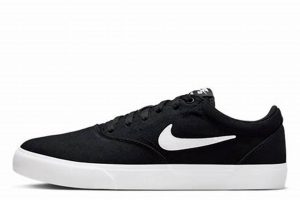
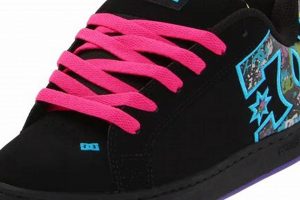
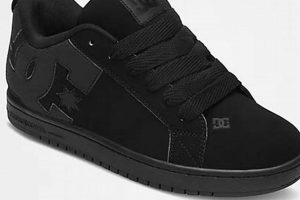
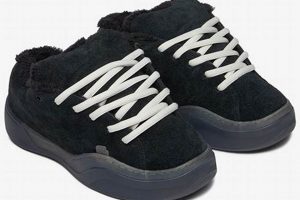
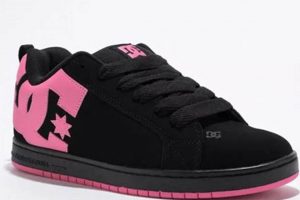
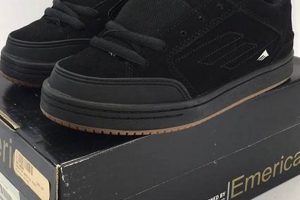
Footwear designed for skateboarding often incorporates features that enhance performance and durability. These specialized athletic shoes typically exhibit a flat, grippy sole for optimal board control and reinforced construction to withstand the wear and tear associated with skateboarding maneuvers. For instance, models may include suede or leather uppers for increased abrasion resistance and padded collars for ankle support.
The significance of this category of athletic footwear lies in its ability to improve a skater’s connection to the board, enhancing both safety and trick execution. Historically, these shoes have evolved from simple canvas sneakers to technologically advanced designs incorporating cushioning systems and specialized outsole patterns. The development has significantly impacted the progression of skateboarding, allowing for more complex tricks and longer skating sessions.
The following sections will delve into the specific materials used in construction, the technological advancements incorporated, and the cultural impact of these specialized athletic shoe designs. Examination will include key features, performance characteristics, and notable examples. Further discussion will address maintenance and considerations for selecting appropriate footwear based on individual skating styles and preferences.
Optimizing Skateboard Footwear Performance
The following tips offer guidance on selecting and maintaining skateboard-specific athletic footwear to maximize performance and longevity. Proper care and informed choices contribute significantly to a skater’s experience.
Tip 1: Prioritize Durability: Select models with reinforced stitching and durable materials, such as suede or leather uppers, to withstand the abrasive nature of skateboarding. Double-stitched areas around high-wear points, like the toe and ollie patch, offer increased resistance to tearing.
Tip 2: Evaluate Sole Construction: Examine the outsole material and tread pattern. Gum rubber soles generally provide superior grip on the skateboard. Cupsole construction offers increased durability and support, while vulcanized soles offer enhanced board feel and flexibility.
Tip 3: Consider Cushioning Technology: Assess the cushioning system within the shoe. Impact absorption is crucial for protecting joints during landings. Look for features like encapsulated air units or foam midsoles that provide adequate cushioning without sacrificing board feel.
Tip 4: Ensure Proper Fit: The shoe should fit snugly without being constricting. Ample toe room is essential to prevent discomfort during extended use. Consider trying on the footwear while wearing skateboarding socks to ensure an accurate fit.
Tip 5: Regularly Clean and Maintain: Remove dirt and debris from the shoe’s surface regularly. Use a soft brush and mild soap to clean soiled areas. Avoid prolonged exposure to moisture, as this can degrade materials and weaken the shoe’s construction.
Tip 6: Rotate Footwear Regularly: If skateboarding frequently, consider rotating between multiple pairs of shoes. This allows each pair to rest and dry completely, extending their lifespan and preventing excessive wear in localized areas.
Tip 7: Repair Damage Promptly: Address any tears, loose stitching, or sole separation promptly. Small repairs can prevent minor damage from escalating into significant structural issues, preserving the shoe’s integrity.
By adhering to these guidelines, skaters can optimize the performance and longevity of their footwear, leading to an improved and safer skateboarding experience. The subsequent sections will delve into specific shoe models and their suitability for various skateboarding disciplines.
1. Durability

Durability is a paramount consideration in the design and selection of skateboarding footwear, including models produced by Nike. The demands placed on these shoes necessitate robust construction and resilient materials to withstand the abrasive nature of the sport and prevent premature failure.
- Material Selection
The choice of materials significantly impacts the overall durability of skating footwear. Suede and leather are commonly employed for uppers due to their abrasion resistance. Canvas, while lighter, generally exhibits lower durability compared to leather or suede. The strategic application of these materials in high-wear areas, such as the toe and ollie patch, can enhance longevity. For example, thicker suede panels can withstand more friction.
- Reinforced Stitching
Stitching plays a critical role in maintaining the structural integrity of the shoe. Reinforced stitching, particularly in high-stress areas like the sole attachment and around the ollie patch, prevents seams from separating under repeated impact and abrasion. Double or even triple stitching is frequently utilized to enhance resistance to tearing and unraveling.
- Sole Construction
The construction of the sole directly influences its durability and resistance to wear. Cupsole designs, where the upper is stitched and glued to a pre-molded sole, generally offer greater durability compared to vulcanized soles, which are bonded through a heat-curing process. The type of rubber used in the outsole also affects its abrasion resistance; harder compounds tend to last longer but may sacrifice some grip.
- Internal Reinforcement
Hidden reinforcements, such as internal layers of durable fabric or strategically placed rubber underlays, can significantly enhance the shoe’s ability to withstand the stresses of skateboarding. These reinforcements provide additional support and protection in areas prone to tearing or abrasion, extending the overall lifespan of the footwear. This internal support complements the external material choices, increasing resistance without compromising flexibility or comfort.
These elements work in concert to determine the overall lifespan of skateboarding footwear. Selecting models with attention to these details can significantly prolong the usability of the shoes, representing a cost-effective solution for skaters who subject their footwear to considerable stress. Nike often incorporates these features into its SB line, designing models specifically with the demands of skateboarding in mind, offering an increased lifespan to the skater.
2. Board Feel

Board feel, in the context of skateboarding footwear, represents the tactile sensitivity between the skater’s foot and the skateboard deck. It’s a critical attribute, directly influencing control, responsiveness, and the ability to execute technical maneuvers. Specialized athletic shoes, including Nike’s skateboarding-specific offerings, often prioritize board feel through particular design and construction elements. A thinner sole, for example, reduces the distance between the foot and the board, allowing for increased perception of the board’s angle and movement. Vulcanized soles, common in skateboarding shoes, contribute to enhanced board feel due to their flexibility and direct connection to the upper. Conversely, thicker, heavily cushioned soles, while providing increased impact protection, tend to diminish board feel, potentially hindering precise board control.
The importance of board feel manifests in various skateboarding disciplines. Street skating, characterized by intricate technical tricks performed on urban terrain, necessitates precise board control facilitated by heightened board feel. Skaters in this discipline often prefer shoes with minimal cushioning and flexible soles to maximize their ability to feel the board and react accordingly. Transition skaters, who navigate curved surfaces like ramps and bowls, may prioritize impact protection and cushioning over board feel, although a balance remains essential for maintaining control during complex aerial maneuvers. The Nike SB Bruin React, for example, attempts to strike a balance with a React foam midsole offering some impact protection without sacrificing too much board feel. Likewise, the Nike SB Janoski features a relatively thin sole designed to maximize board feel while still providing some level of cushioning.
Understanding the relationship between shoe design and board feel is paramount for selecting appropriate footwear. The compromise between cushioning and board feel must be considered based on individual skating style and the terrain encountered. While enhanced board feel allows for greater control and responsiveness, adequate cushioning is essential for absorbing impact and preventing injuries. Ultimately, the optimal shoe choice represents a balance of these factors tailored to individual needs, ensuring both performance and safety. Recognizing that design features have functional consequences aids in selecting footwear that complements a skater’s preferred style and reduces the risk of injury.
3. Impact Cushioning
Impact cushioning is a critical component of specialized athletic footwear designed for skateboarding. The repetitive stress and high-impact landings inherent in skateboarding maneuvers necessitate effective shock absorption to mitigate the risk of injuries to joints and soft tissues. In models offered by Nike within its SB (Skateboarding) line, impact cushioning is strategically integrated through various technologies and material choices. Examples include the utilization of encapsulated air units, foam midsoles, and proprietary cushioning systems like Zoom Air. The specific placement and density of these materials are carefully calibrated to provide optimal protection in areas subjected to the greatest impact forces, such as the heel and forefoot. For instance, the Nike SB Janoski often incorporates a Zoom Air unit in the heel to absorb the shock from landing ollies and other tricks, reducing stress on the ankle, knee, and hip joints.
The effectiveness of impact cushioning directly correlates with a skater’s ability to perform more challenging tricks and sustain longer skateboarding sessions. Insufficient cushioning can lead to premature fatigue, joint pain, and an increased susceptibility to acute injuries like sprains and fractures. Conversely, excessive cushioning may compromise board feel and reduce the skater’s ability to precisely control the board. Nike’s design philosophy often involves a balance between impact protection and board feel, seeking to optimize both performance and safety. This is achieved through iterative design processes, feedback from professional skaters, and biomechanical testing to assess the efficacy of different cushioning configurations. Real-world examples of Nike SB models demonstrate the practical application of these principles, with specific shoes tailored to different skateboarding styles and preferences. A street skater might prefer a lower-profile shoe with responsive cushioning, while a transition skater may opt for a more cushioned model to absorb the impact of vert skating.
Ultimately, understanding the principles of impact cushioning and its integration into skateboarding footwear is essential for informed shoe selection. The specific cushioning technology, material properties, and overall shoe design should align with the skater’s individual needs and skating style. While advanced cushioning systems offer significant benefits in terms of impact protection and injury prevention, they represent only one aspect of overall shoe performance. The interplay between cushioning, board feel, durability, and fit determines the overall suitability of a skateboarding shoe. Challenges remain in developing cushioning systems that simultaneously maximize impact absorption, maintain board feel, and withstand the rigors of skateboarding. Continued research and development efforts are focused on refining these technologies and creating more effective and versatile skateboarding footwear options.
4. Grip

The efficacy of skateboarding footwear hinges significantly on its grip properties. The interface between the shoe’s outsole and the skateboard deck dictates the degree of control and stability a skater can achieve. Without adequate grip, executing maneuvers becomes precarious, increasing the risk of slippage and injury. Consequently, the selection of materials and the design of the outsole are critical considerations in the development of skater Nike shoes.
- Outsole Material Composition
The type of rubber compound used in the outsole is a primary determinant of grip. Gum rubber, known for its high coefficient of friction, is frequently employed in skater Nike shoes due to its superior adhesion to the griptape surface of the skateboard. Other rubber compounds may be utilized, but their formulation must prioritize grip properties to meet the demands of skateboarding. Variations in compound durometer (hardness) also influence grip, with softer compounds generally providing better traction but potentially sacrificing durability.
- Tread Pattern Design
The tread pattern on the outsole contributes significantly to grip performance. A well-designed pattern maximizes the surface area in contact with the griptape, enhancing friction. Common tread patterns in skater Nike shoes include herringbone, geometric shapes, and variations thereof. The depth and spacing of the tread elements also play a role; deeper patterns can provide better grip on rougher surfaces, while shallower patterns may optimize grip on smooth surfaces. The placement of pivot points within the tread pattern facilitates foot movement and board control.
- Surface Texture
The micro-texture of the outsole surface further contributes to grip. A rough or slightly textured surface increases the frictional force between the shoe and the griptape. This can be achieved through various manufacturing processes, such as texturing the mold used to create the outsole. Some skater Nike shoes incorporate specific surface treatments to enhance grip, although the effectiveness of these treatments may vary depending on the conditions and the type of griptape used.
- Sole Flexibility
While not directly related to the coefficient of friction, sole flexibility influences grip indirectly by allowing the foot to conform more closely to the concave shape of the skateboard deck. Increased flexibility enhances board feel and provides a more secure connection, which contributes to overall control and stability. Skater Nike shoes often incorporate flexible sole designs to optimize board feel and control.
The interplay of outsole material, tread pattern, surface texture, and sole flexibility determines the overall grip performance of skater Nike shoes. Skaters often prioritize grip as a key factor in their shoe selection, recognizing its direct impact on their ability to execute maneuvers and maintain control. Manufacturers such as Nike continually refine their outsole designs and material choices to meet the evolving demands of skateboarding and provide skaters with the grip they need to perform at their best.
5. Ankle Support

Ankle support in skateboarding footwear, particularly within the skater Nike shoes category, plays a crucial role in mitigating the risk of injury. The biomechanics of skateboarding involve repetitive and high-impact maneuvers that place significant stress on the ankle joint. Inadequate ankle support can lead to sprains, strains, and even fractures, impacting a skater’s ability to participate in the sport. Skater Nike shoes designed with enhanced ankle support features often incorporate padded collars, reinforced heel counters, and mid- or high-top designs. The padded collar cushions the ankle, reducing friction and preventing abrasions. The reinforced heel counter stabilizes the rearfoot, limiting excessive pronation or supination. The higher cut designs offer increased lateral stability, reducing the likelihood of ankle rollover during landings and board control.
Examples of skater Nike shoes with specific ankle support features illustrate the practical application of these design elements. The Nike SB Dunk High, for instance, features a high-top design and a padded collar that provides substantial ankle support. This model is frequently chosen by skaters who prioritize stability and protection, particularly those engaging in vert skating or performing tricks that involve significant impact. Conversely, low-top models, while offering greater flexibility and board feel, provide less ankle support, making them more suitable for skaters who prioritize agility and technical flatland maneuvers. The cause-and-effect relationship between ankle support and injury prevention is a key consideration in the selection of skateboarding footwear. Skaters with a history of ankle injuries or those who engage in high-risk maneuvers often benefit from shoes with increased ankle support features. Its a tradeoff between ankle mobility versus protection for some, while other skaters see no difference.
In summary, ankle support is a critical component of skater Nike shoes, directly influencing a skater’s safety and performance. The specific design features that enhance ankle support padded collars, reinforced heel counters, and higher cut designs work to stabilize the ankle joint and reduce the risk of injury. Understanding the relationship between these features and their impact on ankle stability allows skaters to make informed decisions when selecting footwear, choosing models that align with their individual needs and skateboarding style. Challenges remain in balancing ankle support with other crucial factors such as board feel and flexibility, requiring continuous innovation in footwear design to optimize both protection and performance. Ultimately, the goal is to create skater Nike shoes that enable skaters to push their limits safely and confidently.
6. Style
Style serves as an inextricable component of skater Nike shoes, extending beyond mere aesthetics to embody cultural identity and individual expression within the skateboarding community. The design choices incorporated into these shoes, ranging from color palettes and graphic elements to silhouette and material selection, contribute significantly to their visual appeal and marketability. The adoption of specific models by influential skaters further amplifies their stylistic impact, establishing trends and shaping perceptions of what constitutes “skate style.” The Nike SB Dunk, for example, has transcended its functional purpose to become a coveted fashion item, often released in limited-edition collaborations with artists and skate shops, further cementing its stylistic significance.
The stylistic elements of skater Nike shoes influence purchasing decisions and reflect the evolving trends within skateboarding culture. The aesthetic preferences of skaters, often driven by a desire to emulate their idols or align with specific subcultures within the skateboarding community, dictate the popularity of certain models and colorways. The practical application of this understanding lies in the ability of Nike to anticipate and cater to these stylistic preferences through targeted marketing campaigns and product development strategies. Analyzing past trends and identifying emerging aesthetic cues allows Nike to maintain its relevance and solidify its position as a leading brand in the skateboarding market. The success of collaborations, often driven by stylistic innovation, demonstrates the tangible impact of style on sales and brand recognition.
In conclusion, style is not a superficial addendum to skater Nike shoes but a fundamental characteristic that shapes their cultural resonance and commercial viability. The interplay between design, cultural influence, and individual expression defines the stylistic landscape of skateboarding footwear. Challenges lie in balancing stylistic innovation with functional performance and maintaining authenticity within a community that values individuality and self-expression. Understanding and responding to the evolving stylistic preferences of skaters is crucial for ensuring the continued success and relevance of skater Nike shoes within the broader context of skateboarding culture.
Frequently Asked Questions
The following addresses common inquiries regarding the selection, performance, and maintenance of skateboarding-specific athletic shoes manufactured by Nike. The information provided aims to clarify key considerations for both novice and experienced skaters.
Question 1: What distinguishes skater Nike shoes from regular athletic shoes?
Skater Nike shoes are specifically engineered to withstand the rigors of skateboarding. Distinguishing features often include reinforced stitching, durable materials (such as suede or leather), specialized outsole patterns for enhanced grip, and impact cushioning technologies designed to protect joints during high-impact landings. These features are typically absent or less pronounced in general-purpose athletic shoes.
Question 2: How does sole construction affect the performance of skater Nike shoes?
The sole construction directly impacts board feel, durability, and grip. Vulcanized soles offer enhanced board feel and flexibility, while cupsole constructions provide increased durability and support. Outsole patterns are designed to maximize surface contact with the skateboard deck, enhancing traction. The choice between vulcanized and cupsole construction depends on individual skating style and preferences.
Question 3: What role does impact cushioning play in skater Nike shoes?
Impact cushioning is crucial for absorbing the shock from landings and preventing injuries to joints and soft tissues. Skater Nike shoes often incorporate cushioning technologies such as Zoom Air, React foam, or encapsulated air units to mitigate impact forces. The effectiveness of cushioning is dependent on the skater’s weight, skating style, and the specific terrain encountered.
Question 4: How should skater Nike shoes be properly maintained to prolong their lifespan?
Regular cleaning with a soft brush and mild soap helps remove dirt and debris. Prompt repair of any tears or loose stitching prevents minor damage from escalating. Rotating between multiple pairs of shoes allows each pair to dry completely, extending their lifespan. Avoiding prolonged exposure to moisture is essential to prevent material degradation.
Question 5: Are specific skater Nike shoe models better suited for certain skateboarding styles?
Yes. Low-profile models with vulcanized soles are often preferred by street skaters who prioritize board feel and flexibility. High-top models with enhanced ankle support and cushioning are favored by transition skaters who require more protection and stability. The choice depends on the skater’s individual needs and the demands of their chosen discipline.
Question 6: How frequently should skater Nike shoes be replaced?
The lifespan of skater Nike shoes is dependent on the frequency and intensity of use. Signs of wear and tear, such as significant sole separation, excessive abrasion, or compromised cushioning, indicate the need for replacement. A skater who skates daily may need to replace their shoes more frequently than someone who skates less often.
These FAQs provide a foundational understanding of skater Nike shoes. Careful consideration of these factors will aid in selecting appropriate footwear that maximizes performance, safety, and longevity.
The following section will offer comparative analysis of various skater Nike shoe models, highlighting their strengths and weaknesses based on the criteria discussed above.
Conclusion
The preceding analysis has explored various facets of specialized skateboarding footwear manufactured by Nike. Elements such as durability, board feel, impact cushioning, grip, ankle support, and style have been examined in detail, revealing the complex interplay between design choices and functional performance. Understanding these factors is crucial for selecting appropriate footwear that aligns with individual skateboarding styles and preferences.
Ultimately, the informed selection and proper maintenance of “skater nike shoes” contributes directly to both enhanced performance and a reduction in the risk of injury. Continued innovation in materials, construction techniques, and biomechanical design holds the potential for further advancements in skateboarding footwear, improving the experience and safety of skaters worldwide. The pursuit of optimal footwear remains an ongoing process within the skateboarding community and the athletic shoe industry.