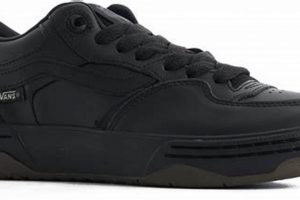
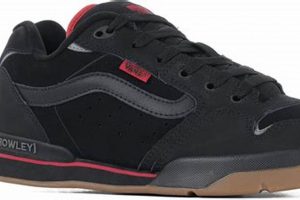
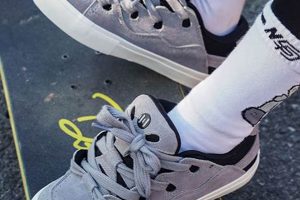
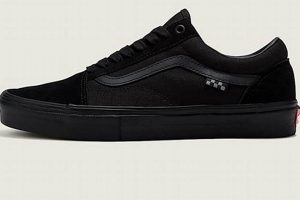
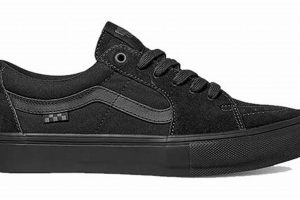
Footwear designed for skateboarding, specifically those produced by the DC Shoes company, serves as a critical component of a skater’s equipment. These products are engineered to withstand the unique demands of the sport, including repetitive impact, abrasive surfaces, and the need for board feel. One may observe variations in design tailored for different skating styles and preferences.
The value of specialized skateboarding footwear lies in its durability, performance enhancement, and protective features. Historically, skaters often adapted generic shoes, leading to rapid wear and tear and increased risk of injury. Brands dedicated to skateboarding, such as DC Shoes, address these issues by incorporating reinforced materials, cushioned insoles, and specialized outsoles, improving the skater’s control and longevity of the product.
This discussion will now delve into the specific design characteristics, material innovations, and the broader impact of specialized footwear within the skateboarding community. This analysis aims to provide a comprehensive understanding of how these elements contribute to the overall skateboarding experience.
Guidance for Optimal Selection and Use
The following guidelines aim to enhance the selection and utilization of specialized footwear for skateboarding, thereby optimizing performance and longevity.
Tip 1: Assess Intended Use: Prioritize models based on skateboarding style (e.g., street, park, vert). Different disciplines necessitate variations in cushioning, board feel, and ankle support.
Tip 2: Evaluate Material Durability: Opt for footwear constructed from reinforced materials such as suede, leather, or synthetics designed to resist abrasion and impact forces inherent in skateboarding.
Tip 3: Inspect Sole Construction: Consider the outsole pattern and material. Vulcanized soles offer superior board feel and flexibility, while cupsole constructions provide increased impact protection and support.
Tip 4: Prioritize Fit and Comfort: Proper fit is crucial for performance and injury prevention. Ensure adequate toe room and secure heel hold to minimize slippage within the shoe.
Tip 5: Examine Cushioning Technology: Select models incorporating impact-absorbing cushioning systems (e.g., EVA midsoles, gel inserts) to mitigate stress on joints during landings.
Tip 6: Reinforce High-Wear Areas: Look for reinforced stitching and overlays in areas prone to wear, such as the toe cap and ollie area, to extend the product’s lifespan.
Tip 7: Maintain Footwear Integrity: Regularly clean and inspect the footwear for damage. Promptly address any tears, loose stitching, or sole separation to prevent further deterioration.
Tip 8: Rotate Footwear: Alternating between multiple pairs of skateboarding footwear allows materials to recover and reduces the accumulation of moisture, thus prolonging the life of each pair.
Adhering to these recommendations will contribute to enhanced performance, improved comfort, and increased longevity of specialized skateboarding footwear.
The subsequent sections will explore specific models and technological advancements that further enhance the skateboarding experience.
1. Durability

The correlation between durability and skateboarding footwear, particularly those manufactured by DC Shoes, is foundational. Skateboarding subjects shoes to extreme stress: repeated abrasion against grip tape, forceful impacts during landings, and constant flexing. Lack of durability directly translates to premature wear and tear, necessitating frequent replacements. For instance, a skater performing daily street skating may find that a shoe lacking reinforced stitching and a robust outsole deteriorates within weeks, whereas a more durable model might last several months under similar conditions. Therefore, the lifespan of skateboarding footwear is a crucial determinant of its overall value.
DC Shoes addresses the durability challenge through several design and material choices. Reinforcements are often added to high-wear areas such as the toe cap and ollie area. The utilization of premium materials like suede and leather, coupled with durable synthetics, further contributes to a shoe’s ability to withstand the rigors of skateboarding. For example, double stitching along seams and the integration of abrasion-resistant rubber compounds in the outsole significantly extend the lifespan of a shoe. Failures in these areas result in compromised performance, reduced support, and increased risk of injury.
Ultimately, durability in skateboarding footwear represents a direct cost-benefit analysis for the skater. While potentially commanding a higher initial price point, more durable models offer a reduced long-term cost due to their extended lifespan. Understanding the factors contributing to durability allows skaters to make informed purchasing decisions, prioritizing longevity and performance over short-term savings. The investment in durable footwear translates to increased hours of skating, enhanced performance, and a reduced need for frequent replacements, providing a more sustainable and cost-effective approach to the sport.
2. Board Feel

Board feel, the sensitivity and connection a skater experiences between their feet and the skateboard, is a critical determinant of control and precision. Footwear directly mediates this connection. The soles of skate shoes, including those manufactured by DC Shoes, are engineered to provide a balance between cushioning and tactile feedback. Thicker soles attenuate vibrations and absorb impact, but can simultaneously reduce board feel. Conversely, thinner soles enhance sensitivity but may compromise impact protection. The material composition and construction methods employed in the sole directly impact the transfer of subtle movements and pressure changes from the skater’s feet to the board. For example, a skater attempting a kickflip requires precise feedback from the board to gauge rotation and landing position. Insufficient board feel hinders this process, leading to missed tricks and reduced consistency.
DC Shoes addresses the board feel requirement through variations in sole design across its product line. Some models utilize vulcanized soles, known for their flexibility and direct contact with the board. Vulcanization involves bonding the sole to the upper using heat and pressure, resulting in a pliable and responsive construction. Other models incorporate cupsole designs, which offer increased impact protection but may slightly reduce board feel. These models often utilize strategically placed flex grooves to enhance flexibility and maintain some level of sensitivity. The selection of materials, such as specific rubber compounds, also plays a role. Softer rubber compounds tend to offer greater grip and board feel, while harder compounds prioritize durability. A skater who prefers technical street skating may opt for a vulcanized sole with a thin profile, prioritizing board feel for nuanced control. A skater focusing on vert or park skating, where larger impacts are common, might choose a cupsole model with enhanced cushioning.
Ultimately, the ideal board feel is subjective and depends on individual skating style and preferences. However, the ability of skateboarding footwear to provide a clear and responsive connection to the board remains paramount. Understanding the interplay between sole construction, material selection, and the skater’s needs allows for informed purchasing decisions, optimizing performance and enhancing the overall skateboarding experience. The challenge lies in balancing the need for impact protection and durability with the essential requirement of precise board feel, a compromise that DC Shoes and other skateboarding footwear manufacturers continually strive to perfect.
3. Impact Protection

Impact protection is a critical design element in skateboarding footwear. Landing aerial maneuvers and navigating uneven terrain generate substantial forces that propagate through the skater’s feet and ankles. Insufficient impact protection can lead to acute injuries, such as sprains and fractures, as well as chronic conditions resulting from repetitive stress. Skateboarding footwear, particularly models from brands like DC Shoes, integrates cushioning systems to mitigate these forces. For instance, a skater attempting a stair set ollie experiences a significant impact upon landing. The presence of a well-designed midsole and insole can absorb a substantial portion of this force, reducing the stress on the joints and soft tissues.
DC Shoes employs various technologies to enhance impact protection in its skateboarding footwear. These may include encapsulated air units, gel inserts, or specialized foam compounds strategically placed within the midsole. The effectiveness of these systems is directly related to the materials used and the distribution of cushioning within the shoe. For example, a cupsole construction offers greater stability and impact absorption compared to a vulcanized sole, but may compromise board feel. Therefore, the selection of a shoe must consider the skater’s individual needs and the type of skateboarding they engage in. Skaters who primarily perform street skating may prioritize board feel over maximum impact protection, while those who focus on vert or park skating may prioritize cushioning due to the higher impact forces involved.
In summary, impact protection is a fundamental attribute of skateboarding footwear that directly influences skater safety and performance. DC Shoes and other manufacturers incorporate cushioning systems and design elements to mitigate the forces generated during skateboarding activities. The optimal level of impact protection is dependent on individual skating style and the type of terrain encountered. Understanding the relationship between impact forces, cushioning technologies, and shoe construction allows skaters to make informed choices that minimize the risk of injury and enhance their overall skateboarding experience. The advancements in material science and shoe design continuously push the boundaries of impact protection, improving the safety and performance of skateboarding footwear.
4. Ankle Support

Ankle support in skateboarding footwear, particularly those produced by DC Shoes, is a critical factor in mitigating injury risk and enhancing performance. The repetitive and high-impact nature of skateboarding places considerable stress on the ankle joint. Adequate support structures within the shoe are essential for stability and injury prevention.
- High-Top vs. Low-Top Design
The height of the shoe collar significantly influences ankle support. High-top designs extend above the ankle joint, providing greater stabilization and limiting range of motion, thereby reducing the likelihood of sprains. Low-top models, while offering increased flexibility and freedom of movement, provide less inherent ankle support. DC Shoes offers both high-top and low-top options to cater to varying skater preferences and needs. The choice between the two depends largely on the skater’s style, skill level, and prior injury history. Example: A skater with a history of ankle instability may benefit from the added support of a high-top model, while a more experienced skater may prefer the increased board feel of a low-top design.
- Collar Padding and Internal Structure
The padding and internal structure of the shoe collar contribute significantly to ankle support. Dense padding around the ankle can provide cushioning and help to fill the space between the foot and the shoe, creating a more secure fit and reducing movement within the shoe. Internal heel counters and supportive materials in the collar further enhance stability. DC Shoes often incorporates specialized foams and reinforced structures within the collar to provide enhanced support without sacrificing comfort. Example: A poorly padded collar can lead to excessive movement and friction, increasing the risk of blisters and ankle instability, while a well-designed collar provides a secure and comfortable fit that promotes stability.
- Lacing Systems and Fit
The lacing system plays a crucial role in achieving a secure and supportive fit around the ankle. A well-designed lacing system allows the skater to customize the tightness and support provided by the shoe. Features such as reinforced eyelets and strategically placed lace loops can further enhance the effectiveness of the lacing system. DC Shoes often utilizes innovative lacing systems that provide a secure and customizable fit. Example: A lacing system that extends higher up the ankle can provide greater support and stability, particularly for skaters who prefer a tighter fit. Conversely, a lacing system that is too restrictive can limit range of motion and hinder performance.
- Material Stiffness and Responsiveness
The overall stiffness of the shoe material impacts how the ankle is supported during various movements. Stiffer materials, particularly around the heel and ankle, offer more rigid support, limiting excessive motion. However, too much stiffness can reduce board feel and responsiveness. DC Shoes balances stiffness with flexibility, using materials that provide adequate support while allowing for natural ankle movement. Example: Materials like reinforced suede or strategically placed synthetic overlays can add structure and support without sacrificing the shoe’s overall flexibility. Finding the right balance is crucial for providing both protection and optimal performance on the board.
In conclusion, ankle support is a multifaceted attribute of skateboarding footwear. High-top versus low-top designs, collar padding, lacing systems, and material stiffness all contribute to the overall level of support provided. DC Shoes addresses these factors through a variety of design and material choices, offering skaters a range of options to suit their individual needs and preferences. The selection of skateboarding footwear with adequate ankle support is crucial for mitigating injury risk and enhancing performance.
5. Grip
Grip, as it pertains to skateboarding footwear, is a fundamental characteristic dictating the skater’s connection to the board. Effective grip minimizes slippage, maximizing control during various maneuvers. The design and materials employed in the outsole construction of skateboarding shoes, including those manufactured by DC Shoes, are crucial in determining the level of grip achieved.
- Outsole Rubber Compound
The specific rubber compound used in the outsole construction directly influences grip. Softer rubber compounds generally offer superior grip due to increased friction. Harder compounds, while more durable, tend to exhibit reduced grip capabilities. DC Shoes utilizes various rubber formulations, often incorporating proprietary blends, to achieve an optimal balance between grip and longevity. For instance, a shoe designed for street skating may feature a softer compound in high-contact areas to enhance board feel and control, while the remaining outsole utilizes a harder compound for increased durability. Failure to select an appropriate rubber compound can result in compromised performance and increased risk of slippage, particularly in wet or dusty conditions.
- Tread Pattern Design
The tread pattern on the outsole further enhances grip. Intricate patterns with deep grooves and sipes provide increased surface area for contact with the grip tape on the skateboard. Patterns that incorporate geometric shapes or directional elements can improve grip in specific directions, such as forward propulsion or lateral stability. DC Shoes employs a variety of tread patterns, tailored to different skateboarding styles and terrain. A shallow, uniform pattern may prioritize board feel, while a deeper, more aggressive pattern may offer superior grip in demanding conditions. Inadequate tread depth or a poorly designed pattern can lead to reduced grip and compromised control, especially during technical maneuvers.
- Vulcanization Process
The vulcanization process, used to bond the outsole to the upper, significantly impacts the overall grip performance of the shoe. Vulcanization creates a flexible and responsive bond, allowing the outsole to conform to the contours of the skateboard deck. This enhanced contact area maximizes grip and board feel. Improper vulcanization can result in a stiff or inflexible sole, reducing grip and hindering the skater’s ability to feel the board. DC Shoes utilizes precise vulcanization techniques to ensure a consistent and reliable bond, optimizing grip and performance. A poorly vulcanized sole can delaminate or separate from the upper, compromising grip and rendering the shoe unusable.
- Surface Texture and Cleanliness
The surface texture of the outsole and the degree of cleanliness influence the coefficient of friction between the shoe and the skateboard. A clean, textured outsole provides optimal grip. Dirt, debris, and wear can reduce the effectiveness of the grip. Regularly cleaning the outsole with a brush or damp cloth can help to maintain grip performance. DC Shoes utilizes textured rubber compounds to enhance grip, even in slightly dirty conditions. A smooth or worn outsole can significantly reduce grip, increasing the risk of slippage and injury. Proper maintenance is essential for preserving the grip performance of skateboarding footwear.
In essence, grip is a complex attribute of skateboarding footwear, influenced by a combination of rubber compound, tread pattern design, vulcanization process, and surface texture. DC Shoes addresses these factors through careful material selection, innovative design, and stringent manufacturing processes. Understanding the interplay of these elements allows skaters to make informed choices, optimizing grip and enhancing their overall skateboarding experience. The importance of grip cannot be overstated, as it directly translates to increased control, confidence, and safety on the board.
6. Style
The aesthetic design of skateboarding footwear, particularly that produced under the DC Shoes brand, functions as a significant expression of individual and subcultural identity within the skateboarding community. Visual elements contribute to brand recognition and convey a sense of belonging to a specific group or aesthetic sensibility. The style is not merely ornamental; it serves as a form of communication, signaling alignment with particular skating styles, musical tastes, or broader cultural values. For example, skaters favoring a minimalist aesthetic may choose models with clean lines and subdued color palettes, while those embracing a more expressive style might opt for shoes featuring bold graphics, vibrant colors, or collaborative designs with artists and musicians. The selection of a particular shoe style directly reflects a conscious decision to project a specific image within the skateboarding subculture.
The practical significance of style within the context of skateboarding footwear extends beyond mere aesthetics. Design choices often influence performance characteristics. A shoe with a streamlined silhouette may offer enhanced board feel and maneuverability, while a bulkier model may prioritize impact protection and ankle support. Color palettes and material choices can impact visibility and durability. Moreover, the enduring popularity of certain styles, such as classic silhouettes and collaborations with influential skaters, underscores the functional value of designs that have proven their worth over time. Brands such as DC Shoes recognize this interplay between aesthetics and functionality, striving to create footwear that meets the performance demands of skateboarding while simultaneously resonating with the stylistic preferences of the target audience.
In summary, style is an integral component of skateboarding footwear, serving as a visual language that communicates individual and subcultural identity, while also influencing performance characteristics. The selection of a specific style represents a conscious decision to align with particular aesthetic values and functional needs. The enduring popularity of certain designs underscores the importance of balancing aesthetics with performance in the creation of skateboarding footwear. Understanding the connection between style and function allows skaters to make informed purchasing decisions that reflect their individual needs and preferences.
Frequently Asked Questions
The following questions address common inquiries regarding skateboarding footwear, specifically those manufactured by DC Shoes. These responses aim to provide clarity and assist in informed purchasing decisions.
Question 1: What distinguishes skate DC Shoes from general athletic footwear?
Skate DC Shoes are engineered with reinforced construction, durable materials (e.g., suede, leather), and specialized outsole patterns to withstand the abrasive nature of skateboarding. General athletic shoes lack these features, leading to premature wear and compromised performance.
Question 2: How does outsole composition impact the performance of skate DC Shoes?
The outsole material, typically rubber compounds, influences grip, board feel, and durability. Softer compounds enhance grip but may wear faster. Harder compounds offer increased longevity but can reduce board feel. DC Shoes employs various formulations to balance these characteristics.
Question 3: Does the height of the shoe (high-top vs. low-top) affect ankle support in skate DC Shoes?
High-top skate DC Shoes generally provide greater ankle support due to increased coverage and stabilization. Low-top models offer enhanced freedom of movement but less inherent support. The choice depends on individual skater preference and injury history.
Question 4: How frequently should skate DC Shoes be replaced?
The lifespan of skate DC Shoes depends on usage frequency and intensity. Regular skaters should anticipate replacing their shoes every few weeks to several months. Inspecting for wear patterns (e.g., sole separation, fabric tears) can help determine replacement timing.
Question 5: Are all models of skate DC Shoes suitable for all types of skateboarding?
No. Specific models are designed for different skateboarding disciplines. Street skating shoes often prioritize board feel and flexibility, while park or vert models emphasize impact protection and ankle support. Consider intended use when selecting a model.
Question 6: How should skate DC Shoes be cleaned and maintained?
Remove loose dirt and debris with a brush. Use a mild detergent and damp cloth to clean soiled areas. Avoid immersing the shoes in water. Allow to air dry away from direct sunlight or heat. Regular cleaning can prolong the lifespan of the shoes.
These responses highlight key factors to consider when selecting and maintaining skateboarding footwear. Proper understanding can lead to improved performance and extended product lifespan.
The subsequent section will explore advancements in materials and technologies within the skateboarding footwear industry.
Conclusion
This exploration has detailed the critical elements defining the quality and performance of skateboarding footwear, particularly that offered under the skate DC Shoes brand. The analysis has underscored the importance of durability, board feel, impact protection, ankle support, grip, and style as interconnected attributes that significantly influence a skater’s experience. Furthermore, specific design choices and material innovations employed in skate DC Shoes have been examined to illustrate their impact on these key characteristics.
In summation, understanding the technical specifications and intended use of skate DC Shoes empowers skaters to make informed decisions, optimizing performance and minimizing the risk of injury. Continued advancements in materials and construction techniques promise further enhancements in skateboarding footwear, reinforcing its vital role in the sport’s evolution.