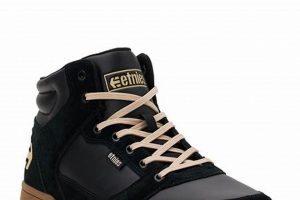
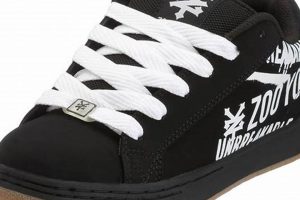
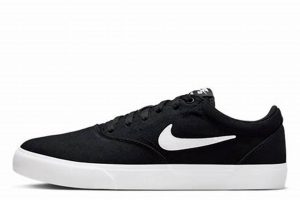
Footwear designed for skateboarding endures substantial abrasion and impact. Construction methods, material selection, and design features contribute significantly to a product’s lifespan under the demanding conditions of skating. Durable options withstand repeated ollies, grinds, and slides better than standard athletic shoes.
The selection of robust skateboarding footwear offers several advantages. Increased longevity reduces the frequency of replacement, resulting in cost savings over time. Furthermore, dependable shoes provide consistent performance and protection, enhancing the skater’s confidence and minimizing the risk of injury. Historically, modifications and advancements in shoe technology have continuously aimed to improve the resilience of skate shoes.
The following discussion will delve into specific materials recognized for their abrasion resistance, construction techniques that enhance durability, and particular brands and models noted for their longevity within the skateboarding community. This exploration provides a foundation for informed purchasing decisions based on the need for enduring performance.
Optimizing Footwear Lifespan for Skateboarding
Extending the service life of skateboarding shoes requires proactive measures during selection and maintenance. The following guidelines present strategies to maximize durability and performance.
Tip 1: Select Durable Materials: Prioritize shoes constructed with suede or leather uppers. These materials exhibit greater resistance to abrasion compared to canvas or synthetic alternatives. Reinforcements in high-wear areas, such as the ollie patch, further enhance longevity.
Tip 2: Evaluate Sole Construction: Vulcanized soles and cup soles offer distinct advantages. Vulcanized soles provide flexibility and board feel, while cup soles offer enhanced impact protection. Examine the stitching and adhesive bonding the sole to the upper, ensuring robust construction.
Tip 3: Reinforce Weak Points: Apply shoe goo or similar adhesives to areas prone to wear, such as the toe and side panels. This preventative measure shields against abrasion and delays the onset of damage.
Tip 4: Utilize Protective Gear: Employing grip tape with a less aggressive texture reduces the rate of wear on shoe surfaces. Furthermore, consider using ollie pads to further protect the side of the shoe.
Tip 5: Rotate Footwear: Alternating between multiple pairs of skate shoes allows each pair to rest and recover, extending their overall lifespan. Moisture and pressure contribute to degradation; rotation mitigates these effects.
Tip 6: Maintain Cleanliness: Regularly cleaning skateboarding shoes prevents the accumulation of dirt and debris, which can accelerate wear. Use a brush and mild soap to remove grime from the upper and sole.
Tip 7: Tighten Laces Properly: Snug lacing prevents excessive movement inside the shoe, minimizing internal friction and abrasion. Consider using reinforced laces for increased durability.
Implementing these strategies can significantly prolong the usability of skateboarding footwear, yielding cost savings and consistent performance. Proactive maintenance and informed selection processes contribute directly to achieving maximum value from the product.
The next section explores specific brands and models known for their resilience, providing further guidance for selecting enduring skateboarding footwear.
1. Material Abrasion Resistance

Material abrasion resistance is a primary determinant in the longevity of skateboarding footwear. The capacity of a material to withstand frictional wear directly correlates with the overall lifespan of the shoe, especially when subjected to the abrasive surfaces encountered during skateboarding maneuvers.
- Suede as a Protective Barrier
Suede, derived from the inner layer of animal hides, provides enhanced abrasion resistance compared to canvas or synthetic textiles. Its fibrous structure allows for energy absorption and dissipation during contact with rough surfaces like asphalt or concrete, minimizing material degradation. For example, high-quality suede effectively delays the onset of wear in the ollie area, a common point of failure in skate shoes.
- Leather’s Structural Integrity
Full-grain leather offers significant resistance to tearing and puncture, crucial for withstanding the impact forces inherent in skateboarding. Its dense fiber network provides a robust barrier against abrasion. Shoes constructed with leather uppers maintain their structural integrity for extended periods, resisting the deformities and failures observed in less durable materials.
- Reinforcement Technologies: Ollie Patches and Toe Caps
Supplementary reinforcement, such as ollie patches and toe caps composed of durable synthetic materials or additional layers of leather/suede, augments the abrasion resistance in high-wear zones. These reinforcements deflect abrasive forces, preventing direct contact with the primary upper material and prolonging the shoe’s functional life. The presence and quality of these features are key indicators of a skate shoe’s potential longevity.
- The Role of Stitching and Adhesives
While not materials themselves, the integrity of stitching and adhesives plays a crucial role in maintaining the abrasion resistance of a skate shoe. Robust stitching prevents seams from separating under stress, while high-quality adhesives ensure that reinforcements and overlays remain firmly bonded to the upper. Failure in these areas can compromise the overall structure and accelerate wear, even in shoes utilizing highly abrasion-resistant materials.
In summary, the selection of materials possessing inherent abrasion resistance, coupled with strategic reinforcement and robust construction techniques, is fundamental to the creation of skateboarding footwear characterized by exceptional longevity. The interplay between material properties and design considerations ultimately dictates the shoe’s ability to withstand the abrasive demands of skateboarding, leading to increased durability and reduced replacement frequency.
2. Reinforced Construction Methods

Reinforced construction methods represent a critical factor in extending the lifespan of skateboarding footwear. The ability of a shoe to withstand the high-impact and abrasive forces inherent in skateboarding is directly proportional to the strength and integrity of its construction.
- Double Stitching and Seam Reinforcement
Double stitching along critical seams, particularly in areas subject to high stress such as the ollie patch and sole attachment points, significantly increases the shoe’s resistance to tearing and separation. By distributing stress across multiple stitch lines, the likelihood of seam failure is reduced. This reinforcement method is commonly observed in durable skate shoe models and is a key indicator of long-term reliability.
- Internal Reinforcements and Layering
The incorporation of internal reinforcements, often constructed from durable textiles or polymers, provides an additional layer of structural support within the shoe. These reinforcements are strategically placed to protect vulnerable areas and enhance the shoe’s resistance to deformation under load. Layering of materials in high-wear zones, such as the toe cap, further contributes to abrasion resistance and overall durability. For example, extra layers of suede or rubber are often added to the toe area, a common point of wear during skating.
- Cupsole vs. Vulcanized Sole Construction
The method by which the sole is attached to the upper significantly impacts the shoe’s durability. Cupsole construction, where the sole is molded into a cup shape that encapsulates the upper, generally offers greater impact protection and structural integrity compared to vulcanized construction. Vulcanized construction, characterized by a flexible bond between the sole and upper achieved through heat and pressure, provides enhanced board feel but may be more susceptible to delamination under extreme stress. The choice between these construction methods often depends on the skater’s preference for board feel versus impact protection, but cupsole construction is often associated with increased longevity.
- Reinforced Lacing Systems
The lacing system plays a crucial role in maintaining a secure and stable fit, which indirectly contributes to shoe durability. Reinforced lace eyelets, constructed from metal or durable polymers, prevent tearing and elongation, ensuring that the laces remain securely fastened. Recessed or strategically placed eyelets also minimize abrasion on the laces themselves. A robust lacing system minimizes internal movement and friction, reducing wear on the shoe’s upper and enhancing overall longevity. Some models incorporate lace protection systems, such as hidden or recessed laces, further minimizing abrasion and extending lace life.
In conclusion, reinforced construction methods represent a multifaceted approach to enhancing the durability of skateboarding footwear. By incorporating robust stitching, internal reinforcements, strategically designed sole attachments, and durable lacing systems, manufacturers can significantly extend the lifespan of skate shoes, providing skaters with reliable and long-lasting equipment.
3. Sole Durability
The durability of a skateboard shoe’s sole is a paramount factor directly influencing its overall lifespan. The sole undergoes constant abrasion and impact forces during skateboarding, making its resistance to wear and tear critical for the shoe’s longevity and the skater’s performance.
- Material Composition and Abrasion Resistance
The specific rubber compound used in the sole’s construction significantly impacts its abrasion resistance. Higher-quality rubber formulations exhibit greater resistance to wear, extending the sole’s lifespan. For example, natural rubber or synthetic blends engineered for high abrasion resistance are common in skate shoe soles designed for durability. The Shore hardness rating of the rubber is an indicator of its resistance to indentation and, consequently, its ability to withstand abrasion over time.
- Tread Pattern and Contact Area
The tread pattern of the sole influences the distribution of pressure and wear. A deeper, more aggressive tread pattern provides greater initial grip and distributes the load across a larger surface area, reducing localized wear. However, these patterns can wear down faster than smoother designs. Conversely, a flatter sole with minimal tread offers less initial grip but may exhibit greater resistance to overall wear due to the larger, more uniform contact area. The optimal tread pattern balances grip and durability based on the skater’s style and preferences.
- Sole-to-Upper Attachment Method
The method by which the sole is attached to the upper contributes significantly to the overall durability of the skate shoe. Vulcanized soles, bonded to the upper through heat and pressure, offer excellent board feel and flexibility but may be more susceptible to separation under extreme stress. Cupsole construction, where the upper is stitched or glued into a pre-molded sole, provides enhanced impact protection and structural integrity but can be less flexible. A robust and well-executed attachment method, regardless of the specific technique, is essential for preventing sole delamination and extending the shoe’s lifespan.
- Midsole Integration and Cushioning
The inclusion of a midsole, typically constructed from cushioning materials like EVA foam, can enhance comfort and impact absorption. However, the midsole’s durability also influences the shoe’s overall lifespan. A high-density midsole provides greater support and resists compression over time, maintaining cushioning and preventing the sole from collapsing. The integration of the midsole with the outsole and upper must be seamless to prevent separation and ensure a cohesive and durable unit. Some skate shoes utilize drop-in midsoles that are replaceable, which can prolong the usable life of the overall shoe, even if the outsole wears out.
In summary, sole durability is a complex interplay of material composition, tread design, attachment method, and midsole integration. Each of these facets contributes to the sole’s ability to withstand the constant abrasion and impact forces inherent in skateboarding, ultimately determining the longevity of the shoe. Selecting skate shoes with soles engineered for durability is crucial for skaters seeking long-lasting and reliable footwear.
4. Stitching Integrity
Stitching integrity constitutes a foundational element in the construction of durable skateboarding footwear. The ability of seams to withstand repetitive stress, abrasion, and impact directly influences the lifespan of the shoe. Compromised stitching leads to material separation, accelerated wear, and ultimately, premature failure. Therefore, robust stitching methods and high-quality thread are indispensable components of footwear intended for skateboarding’s demanding conditions. For example, a double-stitched ollie patch provides significantly enhanced resistance to abrasion compared to a single-stitched alternative, preventing the fabric from tearing away from the sole during tricks involving board contact.
The choice of stitching pattern and thread material both contribute to the overall strength of the seam. Closely spaced stitches distribute stress more evenly, reducing the likelihood of individual stitch failure. Furthermore, synthetic threads, such as nylon or polyester, exhibit greater tensile strength and resistance to abrasion compared to natural fibers like cotton. Reinforcements such as bar tacks at stress points like lace eyelets and seam intersections further enhance the durability of the stitching. The absence of these features can result in rapid deterioration of the shoe’s structural integrity. An example is the failure of seams around the toe cap, leading to delamination and reduced protection.
In conclusion, stitching integrity is not merely an aesthetic detail but a critical factor determining the longevity of skateboarding footwear. Prioritizing shoes with reinforced seams, durable thread, and robust stitching patterns translates directly to increased resistance to wear and tear, resulting in extended product lifespan and improved performance. Deficiencies in stitching compromise the shoe’s structural integrity, accelerating degradation and diminishing its value for the user.
5. Strategic Design Elements

Strategic design elements, consciously integrated into skateboarding footwear, directly contribute to enhanced durability and prolonged lifespan. These design choices address specific wear patterns and stress points inherent in skateboarding, optimizing the shoe’s resistance to damage.
- Reinforced Ollie Patch Placement
The ollie patch, strategically positioned on the lateral side of the shoe, provides crucial protection against abrasion from the skateboard’s grip tape during ollies and other flip tricks. Its precise placement, covering the area most frequently subjected to friction, effectively minimizes wear on the underlying material. High-quality ollie patches are constructed from durable materials like reinforced suede or rubber, further enhancing their protective capabilities. Deviations from optimal placement or use of substandard materials compromise the patch’s effectiveness and reduce the shoe’s lifespan. Example: A poorly positioned or thin ollie patch will wear through quickly, exposing the shoe’s upper to damage.
- Extended Toe Cap Construction
An extended toe cap, encompassing a larger area of the forefoot, safeguards against abrasion and impact during various skateboarding maneuvers. Its design provides increased coverage and protection, particularly during tricks involving foot dragging or contact with the ground. Toe caps are typically constructed from durable materials like rubber or reinforced leather. A well-designed extended toe cap integrates seamlessly with the shoe’s upper, minimizing potential weak points and maximizing overall durability. Example: A short or poorly adhered toe cap will peel away, leaving the shoe vulnerable to damage.
- Recessed or Protected Lacing Systems
Laces are frequently exposed to abrasion from the skateboard’s grip tape, leading to premature fraying and breakage. Recessed or protected lacing systems mitigate this wear by shielding the laces from direct contact. Design elements such as lace loops, hidden lacing systems, or reinforced eyelets offer protection and extend the lifespan of the laces. Robust laces constructed from durable materials, such as nylon or Kevlar, further enhance their resistance to abrasion. Example: Laces that are not protected are susceptible to breakage, leading to a less secure fit and potential damage to the shoe’s tongue.
- Internal Heel Support Structures
Internal heel support structures, such as molded heel counters or reinforced heel cups, provide stability and prevent heel slippage, contributing to overall shoe durability. A secure heel fit minimizes internal movement and friction, reducing wear on the shoe’s lining and upper. These support structures are typically constructed from rigid materials like plastic or reinforced polymers. A well-designed heel support structure maintains its shape and integrity over time, ensuring consistent support and preventing premature wear. Example: A weak heel counter will collapse, leading to heel slippage, increased friction, and reduced shoe stability.
These strategic design elements, implemented with careful consideration of skateboarding’s specific demands, directly influence the longevity of skateboarding footwear. By addressing common wear patterns and stress points, these design choices optimize the shoe’s resistance to damage, extending its lifespan and providing enhanced value to the skater. The integration of these elements reflects a commitment to durability and performance, key attributes of high-quality skateboarding shoes.
Frequently Asked Questions
The following section addresses common inquiries regarding the factors influencing the lifespan of skateboarding footwear. The information presented aims to provide clarity and guide informed purchasing decisions.
Question 1: What materials contribute most significantly to skate shoe durability?
Suede and leather uppers offer superior abrasion resistance compared to canvas or synthetic alternatives. Reinforced rubber outsoles formulated for high abrasion resistance also extend shoe life. Stitching with nylon or polyester thread provides durability too.
Question 2: How does sole construction impact a skate shoe’s longevity?
Cupsole construction generally provides greater impact protection and structural integrity, often resulting in increased durability compared to vulcanized soles. Sole patterns influence longevity too. More rubber material mean longer shoe lifespan.
Question 3: What design features enhance the lifespan of skate shoes?
Reinforced ollie patches, double-stitched seams, and extended toe caps provide crucial protection against abrasion and impact. Internal heel counters and secure lacing systems also contribute to structural integrity.
Question 4: Can preventative maintenance extend the life of skate shoes?
Applying shoe goo to high-wear areas, regularly cleaning debris, and rotating between multiple pairs of shoes can significantly prolong their usability. Laces that are protected also contributes the longevity of shoes.
Question 5: Do more expensive skate shoes necessarily last longer?
Price does not guarantee increased durability. Examine material quality, construction methods, and design features, regardless of price point, to assess potential longevity. Do research about the materials.
Question 6: How does skateboarding style affect shoe lifespan?
Skaters who perform frequent ollies and flip tricks tend to experience accelerated wear on the ollie patch and toe area. Grinding and sliding can rapidly damage the sole and side panels. Shoe goo can help for this style of skateboarding.
In summary, the lifespan of skateboarding footwear depends on a combination of material quality, construction techniques, design features, and skateboarding style. Consider these factors carefully when selecting shoes for optimal durability.
The subsequent section will provide a concluding overview of the key considerations for choosing resilient skateboarding footwear.
Longest Lasting Skate Shoes
This exploration has detailed the critical factors determining the resilience of skateboarding footwear. Material selection, construction techniques, strategic design elements, and maintenance practices all contribute to a product’s enduring performance under the demanding conditions of skateboarding. Suede and leather uppers, reinforced stitching, durable soles, and thoughtful design choices demonstrably extend the lifespan of skate shoes.
Selecting skateboarding footwear engineered for longevity represents a sound investment. Skaters are encouraged to prioritize these key elements to minimize replacement frequency and maximize performance consistency. By understanding the factors contributing to durability, informed decisions can lead to prolonged product lifespan and enhanced skateboarding experiences. Skaters can also prolong the shoe span by using shoe goo in high wear areas of the shoes.