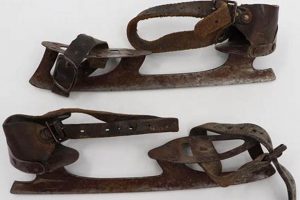
Affordable ice skates represent a category of recreational equipment intended for use on ice surfaces, primarily for activities such as ice skating and ice hockey. These skates are characterized by their lower price point compared to professional or high-performance models. They typically feature simpler construction, less advanced materials, and may prioritize functionality over specialized features or durability.
The availability of less expensive ice skates broadens accessibility to the sport, allowing individuals with limited budgets to participate in recreational skating. This can contribute to increased physical activity, social engagement, and the development of skating skills within the community. Historically, the introduction of mass-produced skates at lower price points has been instrumental in popularizing ice skating as a leisure activity.
The subsequent sections will explore the different types of entry-level skates available, factors to consider when purchasing them, potential compromises in quality, and strategies for maintaining them to extend their lifespan. Furthermore, the discussion will address safety considerations and alternative options for individuals seeking budget-friendly skating opportunities.
Tips for Selecting Economical Ice Skates
This section provides practical advice for individuals seeking to acquire ice skates without incurring significant expense. Prudent decision-making during the selection process can mitigate potential drawbacks associated with lower-priced equipment.
Tip 1: Assess Usage Frequency: Before purchasing, consider how often the skates will be used. Infrequent recreational use may justify opting for a more basic, less costly model. Conversely, regular or intensive use necessitates a more durable option, potentially requiring a slightly higher investment.
Tip 2: Prioritize Proper Fit: Regardless of price, the fit of the skates is paramount. Ill-fitting skates can lead to discomfort, blisters, and potential injuries. It is recommended to try on skates with socks appropriate for skating and ensure a snug but not restrictive fit, with minimal heel lift.
Tip 3: Inspect Blade Quality: Examine the blades for any obvious defects, such as nicks, rust, or uneven edges. While blades on inexpensive skates may not be of the highest quality steel, they should still be properly aligned and free from significant flaws that could compromise performance or safety.
Tip 4: Research Available Options: Before committing to a purchase, research different brands and models within the budget. Online reviews and comparison websites can provide valuable insights into the performance, durability, and overall value of various skates.
Tip 5: Consider Used Skates: Explore the possibility of purchasing used skates from reputable sources. Used skates, particularly those from reputable brands, can offer better value for the money compared to new, low-end models. However, thoroughly inspect used skates for signs of wear and tear before purchasing.
Tip 6: Factor in Maintenance Costs: Recognize that even low-priced skates require regular maintenance, such as sharpening the blades. Factor in these ongoing costs when budgeting for the purchase.
Tip 7: Check Return Policies: Before making a purchase, ensure that the retailer offers a reasonable return policy in case the skates do not fit properly or are found to be defective. This provides a safety net and allows for exchange or refund if necessary.
By carefully considering these tips, individuals can increase their chances of finding economical ice skates that meet their needs without sacrificing safety or performance. Prioritizing fit, conducting thorough research, and considering maintenance costs are key factors in making an informed purchasing decision.
The subsequent section will explore potential safety concerns and maintenance guidelines for these affordable options.
1. Entry-level construction

Entry-level construction, when applied to economical ice skates, signifies a deliberate simplification of design and material selection intended to minimize production costs. This approach directly impacts the performance, durability, and overall suitability of the skates for various skating activities.
- Material Selection
Entry-level ice skates frequently employ synthetic materials for the boot, such as molded plastics or lower-grade synthetic leathers. These materials are less expensive than higher-quality leather or composite materials found in professional skates. Consequently, they offer reduced support, breathability, and resistance to wear and tear. For example, a plastic boot may crack under stress or become brittle in cold temperatures, diminishing its protective function and longevity.
- Blade Composition
The blades on low-cost ice skates are typically made from carbon steel or lower-grade stainless steel, which are less resistant to corrosion and require more frequent sharpening compared to higher-end blades crafted from hardened, high-carbon steel. This necessitates more frequent maintenance to retain optimal edge sharpness, impacting both performance and safety on the ice. A dull blade reduces the skater’s ability to maintain control and execute maneuvers effectively.
- Ankle Support System
Entry-level skates often feature a simplified ankle support system, utilizing thinner padding and less rigid materials. This provides less stability and support compared to higher-end models, which incorporate reinforced ankle supports and custom-moldable padding. Inadequate ankle support increases the risk of ankle sprains and other injuries, particularly for beginner skaters who are still developing their balance and control.
- Manufacturing Processes
To reduce production costs, entry-level skates often involve less precise manufacturing processes and simpler assembly techniques. This can result in inconsistencies in fit, reduced durability, and a higher likelihood of manufacturing defects. For instance, improperly secured rivets or seams can lead to premature failure of the boot, rendering the skates unusable.
These compromises inherent in entry-level construction directly influence the suitability of economical ice skates for different levels of skating proficiency and usage frequency. While sufficient for occasional recreational use by beginners, these skates may prove inadequate for more demanding activities, such as figure skating, ice hockey, or frequent use, where higher levels of performance, support, and durability are essential. The prioritization of affordability necessitates a corresponding acceptance of potential limitations in the skate’s construction and overall performance characteristics.
2. Affordability Implications
Affordability implications, in the context of “cheap ice skates,” encompass a spectrum of trade-offs and constraints that directly influence the accessibility, performance, and longevity of the equipment. These implications must be carefully considered to balance cost-effectiveness with user needs and safety.
- Accessibility and Market Reach
The primary impact of affordability is broadened accessibility to ice skating as a recreational activity. Lower prices enable a larger segment of the population to participate, particularly those with limited disposable income. This expands the market for ice skate manufacturers and retailers, fostering greater participation in winter sports. However, this increased accessibility often comes at the expense of material quality and construction techniques.
- Compromises in Material Quality
Achieving a lower price point typically necessitates the use of less expensive materials, such as synthetic plastics, low-grade steel, and simplified padding systems. These materials are less durable and offer reduced performance compared to the higher-quality components found in professional or performance-oriented skates. For instance, a plastic boot may offer less support than a leather boot, increasing the risk of ankle injuries. Similarly, low-carbon steel blades require more frequent sharpening and are more prone to corrosion.
- Reduced Durability and Lifespan
The use of lower-quality materials and simplified construction techniques directly impacts the durability and lifespan of inexpensive ice skates. These skates are more susceptible to wear and tear, and may require more frequent replacement compared to more expensive models. This presents a long-term cost consideration, as frequent replacements may ultimately negate the initial cost savings. For example, a recreational skater who uses inexpensive skates weekly may need to replace them annually, while a more durable pair could last several seasons.
- Performance Limitations and Safety Concerns
The affordability-driven design choices in budget ice skates can limit their performance capabilities and potentially raise safety concerns. Reduced ankle support can make it more difficult for beginners to maintain balance and control. Inferior blade materials may not hold an edge as well, impacting the ability to execute turns and maneuvers safely. Furthermore, poorly fitted skates can cause blisters, chafing, and other discomforts that detract from the skating experience. Prioritizing safety necessitates careful consideration of these limitations and potential risks.
In summation, the affordability implications of “cheap ice skates” extend beyond the initial purchase price, encompassing trade-offs in material quality, durability, performance, and safety. While lower prices increase accessibility, consumers must be aware of the potential limitations and make informed decisions to ensure a safe and enjoyable skating experience. A balance must be struck between cost-effectiveness and the functional requirements of the intended usage scenario.
3. Limited durability
The limited durability of inexpensive ice skates is a direct consequence of the materials and manufacturing processes employed to achieve a lower price point. The desire for affordability necessitates compromises in the quality and robustness of the components, resulting in a reduced lifespan and increased susceptibility to damage. This connection between cost and durability is a defining characteristic of this category of recreational equipment.
The impact of limited durability manifests in several ways. The use of lower-grade plastics for the boot makes it prone to cracking or deformation under stress or in cold temperatures. Blades constructed from softer metals lose their edge more quickly and are more susceptible to rust. Stitching or adhesives used in the construction may fail prematurely, leading to separation of the boot components. For example, a skater using economical skates for recreational ice hockey may find that the boot begins to tear at the seams after only a few months of use, while the blade requires frequent sharpening to maintain adequate performance. The practical significance of understanding this limitation lies in the need for users to manage expectations and adjust their usage patterns accordingly. Overly aggressive use, exposure to harsh conditions, or infrequent maintenance can accelerate the degradation process and shorten the lifespan of the skates.
Consequently, the consideration of limited durability is essential when evaluating the overall value proposition of economical ice skates. While the initial cost savings may be appealing, the potential for frequent replacements or repairs should be factored into the long-term cost assessment. Furthermore, the understanding of this limitation underscores the importance of proper maintenance, including regular cleaning, drying, and blade sharpening, to mitigate the effects of lower-quality materials and extend the lifespan of the skates. The selection of economical ice skates should therefore be a deliberate decision, informed by a clear understanding of the trade-offs between affordability and longevity, and a commitment to responsible usage and maintenance practices.
4. Recreational suitability

Recreational suitability, when discussing economical ice skates, refers to the extent to which these skates meet the demands and expectations of casual, non-competitive ice skating activities. It is a critical factor in determining whether these skates are a practical choice for individuals engaging in ice skating for leisure, exercise, or social enjoyment.
- Frequency of Use
Economical skates are generally best suited for infrequent or occasional use. Their construction and materials may not withstand the rigors of daily or near-daily skating. For individuals who only skate a few times a year, these skates can provide adequate performance at a lower cost. However, for more frequent skaters, the limited durability may result in premature wear and the need for more frequent replacements.
- Skill Level
These skates are typically designed for beginner or novice skaters. The level of support and control they offer is often sufficient for basic skating skills, such as forward skating, backward skating, and simple turns. However, as skaters progress and attempt more advanced maneuvers, such as jumps or spins, the limitations of the skate’s design may become apparent, hindering their progress and potentially increasing the risk of injury.
- Type of Skating
Economical ice skates are generally intended for general recreational skating on indoor or outdoor rinks. They may not be suitable for specialized forms of skating, such as figure skating or ice hockey, which require skates with specific features and construction. For example, figure skates require a toe pick for performing jumps, while hockey skates are designed for greater agility and protection.
- Surface Conditions
The quality of the ice surface can also influence the recreational suitability of economical skates. On well-maintained, smooth ice surfaces, these skates can perform adequately. However, on rough or uneven ice, the limitations of their construction may become more pronounced, making skating more challenging and less enjoyable. The blades may struggle to maintain an edge on uneven surfaces, leading to a loss of control.
In conclusion, the recreational suitability of economical ice skates is contingent upon several factors, including the frequency of use, skill level of the skater, type of skating activity, and surface conditions. While these skates offer an accessible and affordable entry point to the sport of ice skating, their limitations should be carefully considered to ensure a safe and enjoyable experience. Individuals who plan to skate frequently, pursue more advanced skills, or engage in specialized forms of skating may need to invest in higher-quality skates that are better suited to their needs.
5. Essential maintenance
The correlation between essential maintenance and economical ice skates is particularly pronounced due to the inherent material and construction limitations associated with these lower-priced items. These limitations accelerate wear and degradation, making consistent and appropriate maintenance practices crucial for preserving functionality, safety, and extending the lifespan of the skates. Without diligent upkeep, the performance and safety of the skates will degrade rapidly, potentially negating any initial cost savings.
One critical aspect of maintenance is the regular sharpening of the blades. Blades on inexpensive skates often utilize softer steel, which dulls more quickly than higher-grade steel. Dull blades compromise the skater’s ability to maintain control and execute maneuvers safely. For instance, a recreational skater using dull blades might experience difficulty maintaining balance during turns or stopping effectively. Sharpening should be performed by a qualified professional to ensure the correct edge and angle are maintained. Another essential maintenance practice is thorough drying after each use. Moisture can accelerate corrosion of the blades and promote the growth of mold and mildew within the boot. Failure to dry the skates properly can result in rust formation on the blades, further degrading their performance and lifespan. Furthermore, regular cleaning of the boot exterior is necessary to remove dirt, debris, and salt, which can damage the material over time. The hardware, such as rivets and laces, should also be inspected regularly for signs of wear or damage. Replacing worn laces or tightening loose rivets can prevent further degradation and maintain the structural integrity of the skate.
In conclusion, the effectiveness and longevity of economical ice skates are directly contingent upon the consistent application of essential maintenance procedures. These procedures, including regular blade sharpening, thorough drying after each use, and careful cleaning, mitigate the inherent vulnerabilities of these lower-priced skates. Ignoring essential maintenance not only compromises performance and safety but also diminishes the value proposition, potentially leading to premature failure and the need for more frequent replacements. Understanding and adhering to a proactive maintenance regimen is therefore critical for maximizing the utility and safety of economical ice skates.
6. Fit is Crucial

Achieving a proper fit is paramount when selecting ice skates, particularly within the realm of economical options. While the allure of affordability may be strong, neglecting the importance of fit can undermine both performance and safety, potentially negating any cost savings.
- Injury Prevention
Ill-fitting skates can lead to a range of injuries, including blisters, chafing, ankle sprains, and stress fractures. Inexpensive skates often lack the sophisticated support and cushioning found in higher-end models, making proper fit even more critical to compensate for these deficiencies. A skate that is too large allows the foot to move excessively, increasing the risk of ankle instability, while a skate that is too small can cause painful pressure points and circulation problems. For example, a beginner skater using improperly fitted economical skates is more likely to experience ankle strain or develop blisters, hindering their progress and discouraging further participation.
- Performance Optimization
Proper fit directly influences skating performance. Skates that fit snugly and securely allow for efficient transfer of power from the skater’s legs to the ice. Conversely, loose-fitting skates can reduce control and responsiveness, making it difficult to execute turns, stops, and other maneuvers effectively. Inexpensive skates, which may lack advanced features such as heat-moldable liners, rely heavily on accurate sizing to provide adequate support and responsiveness. A skater wearing properly fitted economical skates will experience greater stability and control, enabling them to develop their skills more quickly and confidently.
- Compensating for Material Deficiencies
Economical ice skates frequently employ less-expensive materials that may not conform to the foot as well as those used in higher-end models. Achieving a precise fit is therefore essential to compensate for these material limitations. A well-fitted skate can provide adequate support and comfort even when constructed from less supple materials. Careful attention to sizing and lacing techniques can help to mold the skate to the individual’s foot, maximizing comfort and performance. For example, strategically tightening the laces around the ankle can provide additional support and prevent heel slippage in skates with less-rigid ankle support.
- Long-Term Comfort and Enjoyment
Long-term comfort is directly linked to proper fit. Skates that are uncomfortable or cause pain will quickly detract from the enjoyment of ice skating. Economical skates, which may lack advanced cushioning and support features, require a particularly meticulous fitting process to ensure comfort over extended periods of use. A skater who takes the time to find the correct size and adjust the lacing properly is more likely to experience a comfortable and enjoyable skating session, encouraging them to continue skating and develop their skills. This contributes to a positive overall experience, reinforcing the value of even inexpensive equipment.
The emphasis on fit when purchasing economical ice skates transcends mere comfort; it is a crucial determinant of safety, performance, and long-term enjoyment. By prioritizing fit and carefully considering individual needs and preferences, skaters can mitigate the limitations of inexpensive equipment and maximize their skating experience.
Frequently Asked Questions
The following addresses common inquiries regarding lower-priced ice skates, aiming to provide clear and concise information for prospective buyers.
Question 1: What level of performance should be expected from inexpensive ice skates?
Economical ice skates are designed primarily for recreational use and basic skating skills. Advanced maneuvers or high-performance skating activities may be limited by the construction and materials.
Question 2: How does the durability of affordable ice skates compare to higher-priced options?
Reduced durability is a common characteristic of lower-priced ice skates. The materials and construction techniques employed often result in a shorter lifespan compared to more expensive models.
Question 3: What are the essential maintenance requirements for budget ice skates?
Regular blade sharpening, thorough drying after each use, and routine cleaning are critical for maintaining the performance and extending the lifespan of economical ice skates.
Question 4: Are budget ice skates suitable for all types of ice skating activities?
Economical ice skates are generally intended for general recreational skating. Specialized activities such as figure skating or ice hockey typically require skates with specific features and construction not found in lower-priced options.
Question 5: What safety considerations are paramount when using inexpensive ice skates?
Proper fit is the most crucial safety consideration. Ill-fitting skates can lead to injuries and reduce control. Additionally, regular inspection of the blades and hardware is essential to ensure safe operation.
Question 6: Is it possible to upgrade components of economical ice skates to improve performance?
While some components, such as laces, can be easily upgraded, significant modifications to the boot or blade may not be cost-effective or practical, potentially exceeding the value of the original skates.
In summary, the selection of economical ice skates requires a balanced assessment of cost, intended usage, and maintenance requirements. Understanding the inherent limitations and prioritizing safety are crucial for a positive skating experience.
The following sections will provide information about where to buy these items safely.
Concluding Remarks on Economical Ice Skates
This exploration of cheap ice skates has illuminated the multifaceted considerations inherent in selecting this type of recreational equipment. The discussion encompassed aspects ranging from construction compromises and limitations to the imperative of proper fit and maintenance. Accessibility and affordability are key drivers in the market for such skates, but these benefits must be weighed against potential trade-offs in durability and performance. The intended use case, whether infrequent recreational skating or more demanding activities, heavily influences the suitability of these skates.
The acquisition and utilization of economical ice skates demand a degree of informed consumer awareness. Prudent decision-making, encompassing careful evaluation of fit, diligent maintenance practices, and realistic performance expectations, is essential for maximizing the value and ensuring a safe skating experience. The informed approach outlined throughout this discussion is critical to deriving benefit from budget-conscious skating options.