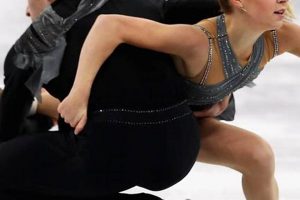
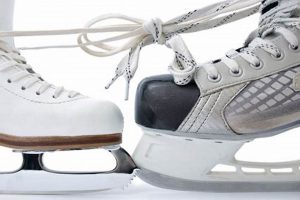
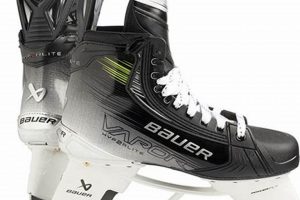
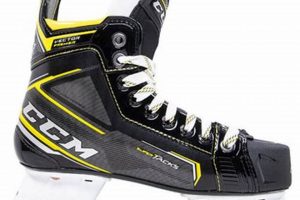
Specialized footwear designed for figure skating routines requiring complex jumps, spins, and footwork, these implements provide the necessary support and flexibility for athletes to execute advanced maneuvers on the ice. A skater might select a particular boot and blade combination tailored to their skill level and the demands of their competitive program.
Proper equipment significantly contributes to a skater’s performance and safety. The rigidity of the boot provides ankle support, essential for landing jumps cleanly and preventing injuries. Blade design facilitates precise edge control, a crucial element in executing spins and turns with accuracy. Historically, advancements in materials and construction have led to improvements in both comfort and performance, allowing skaters to push the boundaries of athletic achievement on the ice.
The selection process involves considering various factors, including the skater’s skill level, body weight, and the specific elements included in their routines. Proper fitting and professional guidance are vital to ensure the footwear meets the skater’s individual needs and contributes to optimal performance. Subsequent sections will delve into specific aspects of fitting, blade selection, and maintenance.
Guidance on Equipment Selection and Maintenance
The following points offer focused guidance on optimizing equipment selection and upkeep for demanding routines.
Tip 1: Boot Stiffness Assessment: Assess boot stiffness in relation to skill level. Beginners generally require softer boots allowing for greater flexibility, whereas advanced skaters necessitate stiffer boots for enhanced support during complex jumps.
Tip 2: Professional Fitting: Obtain professional fitting services. A properly fitted boot minimizes the risk of blisters, pressure points, and ankle instability, ultimately improving performance and comfort.
Tip 3: Blade Mounting Precision: Ensure accurate blade mounting by a qualified technician. Incorrect alignment can negatively impact balance, edge control, and jump landings.
Tip 4: Regular Sharpening: Implement a routine blade sharpening schedule. Sharp blades are crucial for maintaining edge control, ensuring clean turns and secure jump landings.
Tip 5: Proper Storage Practices: Store equipment in a dry environment, utilizing blade guards to prevent rust and protect blade edges. Improper storage degrades both boot and blade integrity.
Tip 6: Consistent Lacing Technique: Employ a consistent lacing technique. Correct lacing distributes pressure evenly, optimizing ankle support and preventing discomfort during extended training sessions.
Tip 7: Routine Boot Maintenance: Perform routine boot maintenance, including wiping down the exterior after each use and addressing any signs of wear or damage promptly. Neglecting maintenance reduces the equipment’s lifespan.
Adhering to these recommendations promotes optimal performance, extends the equipment’s lifespan, and minimizes the risk of injury during rigorous training and competition.
Subsequent sections will address more specific considerations pertaining to advanced techniques and specialized equipment modifications.
1. Ankle Support
Ankle support within figure skating footwear is a critical determinant of a skater’s ability to perform complex elements safely and effectively. Inadequate support increases the risk of ankle sprains and other injuries, particularly during high-impact landings from jumps. The stiffness of the boot, primarily in the ankle region, directly correlates with the stability provided. A boot too flexible offers insufficient resistance against the forces generated during jumps and spins, potentially leading to uncontrolled movements and subsequent injury. Conversely, excessive stiffness may restrict the skater’s range of motion, hindering the execution of certain artistic elements and potentially causing strain in other areas.
The level of ankle support required varies depending on the skater’s skill level and the difficulty of their routines. Beginning skaters typically benefit from moderately flexible boots that allow for greater ankle mobility, facilitating the development of fundamental skills. As skaters progress to more advanced techniques, such as double and triple jumps, the need for increased ankle support becomes paramount. The construction materials, lacing system, and overall design of the boot all contribute to the level of support provided. For instance, advanced boots often incorporate reinforced ankle areas and utilize intricate lacing patterns to distribute pressure evenly, maximizing stability.
Ultimately, the appropriate degree of ankle support represents a balance between stability and flexibility, tailored to the individual skater’s needs and skill level. Professional fitting and careful consideration of the boot’s characteristics are essential to ensure optimal performance and minimize the risk of injury. A skater’s ability to confidently execute challenging elements hinges directly on the adequate and appropriate support provided by their skating equipment.
2. Blade Curvature

Blade curvature is a fundamental design element of figure skating blades, profoundly impacting a skater’s ability to perform various maneuvers, particularly within demanding programs. The geometry of the blade dictates the skater’s edge control, glide efficiency, and rotational capabilities. Therefore, understanding blade curvature is essential for optimal performance.
- Rocker Profile
The rocker refers to the curvature along the length of the blade. A pronounced rocker allows for quicker turns and tighter spins due to the reduced contact area with the ice. Conversely, a flatter rocker provides greater stability and extended glide, beneficial for gliding across the ice surface. The selection of an appropriate rocker profile is dictated by a skaters style and the demands of their routines. For example, a skater specializing in intricate footwork and rapid spins might prefer a blade with a more aggressive rocker.
- Radius of Hollow (ROH)
The Radius of Hollow (ROH) refers to the concave curve ground into the bottom of the blade, creating two distinct edges. A deeper ROH provides enhanced edge grip, facilitating powerful turns and precise control. A shallower ROH offers a smoother glide and reduced resistance. A figure skater might adjust the ROH based on ice conditions or personal preference to optimize edge control and gliding efficiency.
- Sweet Spot Location
The “sweet spot” is the area on the blade where the skater predominantly applies pressure. Its location, influenced by the overall blade curvature, dictates the balance and responsiveness of the skate. A forward sweet spot encourages quicker turns, while a more centered sweet spot promotes stability. Advanced skaters learn to manipulate the sweet spot to control their movements and execute intricate transitions. Adjustments to blade mounting can influence sweet spot location.
- Blade Length and Taper
Blade length affects stability and maneuverability. A longer blade offers greater stability but can reduce agility, while a shorter blade enhances agility but reduces stability. The taper, or reduction in blade width from heel to toe, also influences edge control and responsiveness. Taper and blade length are typically selected based on foot size and skating style. Experienced skaters may experiment with varying blade lengths and tapers to fine-tune their performance.
Collectively, these facets of blade curvature represent critical considerations in optimizing equipment selection. The geometry of the blade significantly affects a skater’s performance. Understanding how these features interact allows skaters and coaches to fine-tune their equipment setup and enhance execution of demanding routines.
3. Boot Stiffness

Boot stiffness is a primary characteristic influencing performance in figure skating, particularly concerning equipment designed for advanced freestyle routines. This attribute dictates the degree of support provided to the skater’s ankle and lower leg, impacting stability, jump execution, and overall control on the ice.
- Ankle Stability and Injury Prevention
Increased stiffness provides enhanced ankle stability, reducing the risk of sprains and other injuries during landings from high-impact jumps. Softer boots may lack the necessary support for advanced elements like triple or quadruple jumps, increasing the likelihood of injury. For example, a skater attempting a quad toe loop in boots with insufficient stiffness risks ankle instability upon landing, potentially resulting in a fall and injury. Proper boot stiffness acts as a safeguard against such occurrences.
- Power Transfer and Jump Height
Stiffer boots facilitate more efficient power transfer from the skater’s legs to the ice, contributing to increased jump height and distance. When a skater initiates a jump, the boot must resist deformation to effectively channel energy into the takeoff. A less stiff boot absorbs some of this energy, reducing the skater’s ability to achieve maximum height. This is particularly crucial for complex multi-rotational jumps where every fraction of an inch can determine success.
- Edge Control and Precision
Stiffness enhances edge control, enabling skaters to execute precise turns, spins, and footwork sequences. A more rigid boot allows for finer adjustments in blade angle and pressure distribution, improving the skater’s ability to maintain balance and control. For instance, executing a clean edge during a spin requires precise control over the blade’s angle, which is facilitated by the stiffness of the boot. Insufficient stiffness compromises edge control and can result in wobbling or loss of balance.
- Flexibility and Artistic Expression
While stiffness is essential for support, a degree of flexibility remains necessary for artistic expression and freedom of movement. Overly stiff boots can restrict the skater’s range of motion, hindering the execution of certain dance-like elements and limiting their ability to express artistry through movement. Finding the appropriate balance between stiffness and flexibility is critical for optimizing both performance and artistic expression. Skilled technicians can customize boot stiffness in certain areas to achieve this balance.
These facets of boot stiffness demonstrate its crucial role in specialized figure skating equipment. By understanding the relationship between boot stiffness and these key aspects of performance, skaters and coaches can make informed decisions regarding equipment selection and customization, leading to enhanced performance, reduced risk of injury, and improved artistic expression.
4. Edge Control
Edge control constitutes a fundamental skill in figure skating, particularly critical in freestyle disciplines where complex maneuvers and demanding routines necessitate precise blade work. Equipment selection directly impacts a skater’s ability to achieve and maintain the requisite level of edge control. This analysis will focus on the connection between edge control and specialist equipment.
- Blade Sharpening and Edge Integrity
The sharpness and integrity of the blade edges directly influence a skater’s ability to grip the ice and execute controlled turns and jumps. Dull or damaged edges compromise edge control, leading to instability and reduced precision. A skater relying on equipment with poorly maintained blade edges may struggle to perform clean landings or execute tight turns, negatively impacting performance and increasing the risk of falls. The quality of the steel and precision of the sharpening process are therefore paramount.
- Boot Stiffness and Ankle Support
The stiffness of the boot and the level of ankle support it provides are integral to effective edge control. Insufficient ankle support can lead to ankle instability, making it difficult for the skater to maintain a consistent edge angle. A skater attempting a complex jump with inadequate ankle support might find it challenging to control their edges during takeoff and landing, resulting in a loss of balance or an uncontrolled rotation. Proper boot selection, tailored to the skater’s skill level and routine complexity, is therefore crucial.
- Blade Curvature and Rocker Profile
The curvature of the blade, specifically the rocker profile, dictates the skater’s ability to transition between edges and execute turns with agility. A blade with an inappropriate rocker profile can hinder edge control, making it difficult for the skater to perform intricate footwork sequences or achieve the desired speed and angle during turns. A skater using a blade with an unsuitable rocker profile might struggle to maintain a clean edge during a bracket turn, resulting in a loss of flow and precision. Proper blade selection, aligning with the skater’s style and technical requirements, is essential for optimized edge control.
- Blade Mounting and Alignment
The accuracy of blade mounting and alignment significantly affects the skater’s ability to maintain consistent edge control. Misaligned blades can disrupt the skater’s balance and make it difficult to maintain a level edge, leading to uneven pressure distribution and compromised performance. A skater with improperly mounted blades may experience difficulty maintaining a consistent edge during a long edge glide, resulting in a wobble or drift. Professional blade mounting and precise alignment are therefore critical to ensure optimal edge control and stability.
Collectively, these factors demonstrate the intricate relationship between equipment and edge control. Careful consideration of blade sharpness, boot stiffness, blade curvature, and blade mounting is essential for skaters aiming to maximize their edge control and achieve peak performance. Proper equipment, meticulously selected and maintained, forms the foundation for confident and precise execution of demanding routines.
5. Heat Molding

Heat molding is a customization technique utilized in figure skating equipment to enhance comfort and performance by conforming the boot to the unique contours of the skater’s foot. This process is particularly relevant within the realm of specialized equipment where precision and individualized fit are paramount for executing complex freestyle routines.
- Customized Fit and Pressure Point Reduction
Heat molding allows for a customized fit by softening the boot’s internal materials, enabling them to mold around the skater’s foot. This reduces pressure points and eliminates areas of discomfort that can impede performance. For example, a skater with bunions or other foot irregularities may experience significant pain and restricted movement in a standard boot. Heat molding addresses these issues by creating a personalized fit that accommodates these anatomical variations. Such customized adaptation enhances comfort and reduces the risk of blisters and other foot-related injuries.
- Enhanced Ankle Support and Stability
The heat molding process contributes to improved ankle support and stability by creating a snugger fit around the ankle area. This enhanced support is particularly beneficial for skaters performing complex jumps and spins, where ankle stability is critical. By conforming the boot to the precise shape of the ankle, heat molding minimizes ankle movement within the boot, improving control and reducing the risk of ankle sprains. Therefore, the process contributes directly to the skater’s ability to confidently execute demanding maneuvers.
- Optimized Power Transfer and Responsiveness
A well-molded boot optimizes power transfer from the skater’s foot to the blade, enhancing responsiveness and control. When the boot conforms closely to the foot, there is less energy lost due to movement within the boot. This more direct connection between the skater and the blade improves the skater’s ability to initiate turns, control edges, and generate power during jumps. Therefore, heat molding allows for more efficient and precise execution of complex freestyle elements.
- Long-Term Comfort and Performance Maintenance
While the initial benefits of heat molding are immediately apparent, the process also contributes to long-term comfort and performance maintenance. A properly molded boot retains its shape over time, providing consistent support and reducing the likelihood of the boot becoming misshapen or uncomfortable. This helps to maintain the skater’s performance level and prevents the development of new pressure points or areas of discomfort. Furthermore, the heat molding process can be repeated as needed to readjust the fit of the boot as the skater’s foot changes over time.
Heat molding represents a valuable customization technique within the context of specialized figure skating equipment, allowing skaters to achieve a more comfortable, supportive, and responsive fit. This process optimizes performance, reduces the risk of injury, and enhances the skater’s overall experience. The benefits derived from heat molding align directly with the requirements of complex freestyle routines, where precision, control, and comfort are paramount.
6. Blade Material
The composition of figure skating blades is a critical factor influencing performance, particularly within the realm of specialized freestyle routines where precision and responsiveness are paramount. The material properties directly impact edge control, glide efficiency, and durability, thereby affecting a skater’s ability to execute complex elements.
- Carbon Steel: Traditional Performance and Affordability
Carbon steel, a common material for figure skating blades, offers a balance of hardness and affordability. This material provides adequate edge retention for intermediate skaters and is relatively easy to sharpen. However, carbon steel is susceptible to corrosion and may require more frequent sharpening compared to higher-end materials. Its affordability makes it a popular choice for recreational skaters and those beginning freestyle training. Carbon steel blades offer a reliable entry point into the world of figure skating, providing acceptable performance for the initial stages of skill development.
- Stainless Steel: Enhanced Corrosion Resistance and Durability
Stainless steel blades offer improved corrosion resistance and enhanced durability compared to carbon steel. The addition of chromium in stainless steel alloys protects against rust and extends the blade’s lifespan. Stainless steel blades typically maintain a sharper edge for a longer period, reducing the frequency of sharpening required. These qualities make stainless steel a practical choice for skaters who train regularly and require reliable performance in varying ice conditions. The increased resistance to corrosion and wear translates to a longer-lasting and more dependable blade, justifying the higher cost.
- High-End Alloys: Optimized Performance for Advanced Techniques
Advanced skaters often opt for blades constructed from specialized high-end alloys. These alloys may incorporate elements like tungsten or molybdenum to further enhance hardness, edge retention, and vibration dampening. Blades made from these materials offer superior performance characteristics, enabling skaters to execute complex jumps, spins, and footwork sequences with greater precision and control. The increased cost associated with high-end alloy blades reflects their specialized properties and the performance benefits they provide. Such blades are specifically designed to meet the demanding needs of competitive freestyle skaters.
- Titanium Coating: Surface Hardness and Reduced Friction
Titanium coating is sometimes applied to figure skating blades to increase surface hardness and reduce friction. This coating can improve glide efficiency and enhance edge control. The hard titanium layer protects the blade’s surface from scratches and wear, extending its lifespan and maintaining its performance characteristics over time. Titanium-coated blades offer a potential advantage for skaters seeking to optimize their glide and edge control. The reduced friction and enhanced durability can contribute to improved speed and precision on the ice.
The selection of blade material represents a critical decision for figure skaters, influencing performance, durability, and maintenance requirements. Carbon steel provides an affordable entry point, while stainless steel offers enhanced corrosion resistance and durability. Advanced skaters may benefit from high-end alloys that optimize performance characteristics, while titanium coatings can further enhance surface hardness and reduce friction. Ultimately, the optimal choice of blade material depends on the skater’s skill level, training frequency, and budget, aligning equipment with specific needs and performance goals.
7. Proper Fit
Proper fit is a foundational element directly influencing the performance and safety of freestyle figure skaters. Equipment ill-suited to the skater’s foot can lead to compromised technique, reduced control, and increased risk of injury. The intricacies of freestyle elements, such as complex jumps and spins, demand a secure and responsive connection between the skater and the ice. Footwear that does not conform precisely to the skater’s foot disrupts this connection, hindering the skater’s ability to execute maneuvers with precision. For instance, a boot that is too large allows the foot to move within, compromising ankle stability during landing and increasing the likelihood of a sprain. Conversely, a boot that is too tight restricts blood flow and causes discomfort, hindering performance and potentially leading to long-term foot problems.
The heat molding process is a valuable technique for achieving optimal fit, especially within the specialized context of advanced freestyle routines. This process allows the boot to conform precisely to the skater’s foot, eliminating pressure points and enhancing comfort. Professional fitting services are essential to ensure proper boot size, shape, and stiffness. A qualified technician can assess the skater’s foot and recommend the most suitable boot model. Furthermore, the technician can fine-tune the fit through heat molding and other adjustments, optimizing performance and reducing the risk of injury. The proper sock selection also plays a crucial role in ensuring proper fit. Thin, moisture-wicking socks are recommended to minimize bulk and maximize sensitivity, enabling a more responsive connection between the foot and the skate.
Achieving proper fit presents challenges, requiring careful assessment, professional guidance, and ongoing maintenance. The consequences of improper fit range from discomfort and impaired performance to severe injuries that can sideline a skater. Therefore, prioritizing proper fit is not merely a matter of comfort but a fundamental component of safe and effective freestyle figure skating. Recognizing the significance of proper fit is crucial for skaters, coaches, and parents alike, contributing to a culture of safety and optimized performance within the sport. Subsequent equipment decisions, such as blade selection and mounting, build upon this foundation of proper fit, further influencing the skater’s ability to excel in their chosen discipline.
Frequently Asked Questions
The following questions address common inquiries regarding specialized equipment and its impact on performance. These points offer guidance for skaters, coaches, and parents seeking to make informed decisions.
Question 1: How frequently should figure skating blades be sharpened?
Sharpening frequency depends on ice conditions, training intensity, and individual skating style. Blades should be sharpened when edge control diminishes, typically every 10-20 hours of ice time. A qualified technician should perform sharpening to maintain proper blade geometry.
Question 2: What is the purpose of heat molding figure skating boots?
Heat molding customizes the fit of figure skating boots by conforming the boot’s internal materials to the skater’s foot. This process reduces pressure points, enhances comfort, and optimizes power transfer, contributing to improved performance.
Question 3: How does boot stiffness affect jump execution?
Boot stiffness provides ankle support, essential for landing jumps cleanly and preventing injuries. Stiffer boots facilitate more efficient power transfer during jump takeoffs, contributing to increased jump height and distance.
Question 4: What factors should be considered when selecting blade material?
Blade material selection should consider skating level, training frequency, and budget. Stainless steel offers enhanced corrosion resistance, while high-end alloys optimize edge retention and vibration dampening for advanced skaters.
Question 5: How critical is proper blade mounting and alignment?
Accurate blade mounting and alignment are crucial for maintaining balance and edge control. Misaligned blades disrupt stability and make it difficult to maintain a level edge, leading to uneven pressure distribution and compromised performance. Professional blade mounting is recommended.
Question 6: What role does ankle support play in injury prevention?
Ankle support reduces the risk of ankle sprains and other injuries, particularly during high-impact landings from jumps. Adequate ankle support minimizes ankle movement within the boot, improving control and reducing the likelihood of instability.
The above FAQs emphasize the key role specialized equipment plays in optimizing performance. The insights provide information necessary for skaters, coaches, and parents to make informed equipment choices.
Subsequent sections will delve into more specialized considerations related to customized equipment modifications.
Concluding Remarks
This exploration has underscored the crucial relationship between specialized equipment and the demanding discipline of figure skating. From blade material and curvature to boot stiffness and customized fit, each element of “jackson ice skates freestyle” significantly impacts a skater’s ability to execute complex maneuvers, enhance performance, and minimize the risk of injury. A comprehensive understanding of these factors is paramount for skaters, coaches, and parents aiming to achieve peak athletic potential.
The pursuit of excellence in figure skating demands a meticulous approach to equipment selection and maintenance. Continuous advancements in materials and design necessitate ongoing research and adaptation. Skaters are encouraged to seek expert guidance, prioritize proper fit, and maintain their equipment diligently. The ongoing commitment to optimized equipment will ensure that athletes can safely and confidently pursue their athletic aspirations, pushing the boundaries of what is possible on the ice.