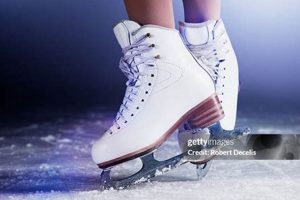
These ice skates represent an entry-level option frequently chosen by individuals beginning their figure skating journey. Designed to provide support and comfort for novice skaters, they facilitate the development of fundamental skills. This equipment is often characterized by a softer boot and a blade suitable for basic maneuvers.
The appeal lies in their balance of affordability and functionality. They allow new skaters to experience the sport without a significant initial investment. Historically, they have served as a common starting point for many aspiring figure skaters, providing the necessary tools to learn essential techniques and assess long-term interest in the discipline.
The subsequent sections will delve into the specific features, appropriate usage, maintenance requirements, and considerations for selecting the correct size and fit of beginner figure skates. These factors will contribute to a well-informed decision-making process for prospective buyers and users.
Tips for Optimal Use
The following suggestions aim to maximize performance and longevity when utilizing entry-level figure skates. Proper care and usage contribute significantly to a skater’s development and equipment lifespan.
Tip 1: Blade Maintenance: Regularly wipe down the blades with a soft cloth after each use to prevent rust. Accumulated moisture accelerates corrosion, diminishing blade sharpness and overall performance.
Tip 2: Proper Drying: Allow the skates to air dry completely after each skating session. Removing the insoles aids in ventilation and prevents moisture build-up, reducing the risk of bacterial growth and unpleasant odors.
Tip 3: Blade Guards: Always use hard blade guards when walking on surfaces other than ice. Hard guards protect the blades from nicks and scratches, maintaining their integrity and reducing the frequency of sharpening.
Tip 4: Soft Blade Covers: Utilize soft blade covers (soakers) for storage and transportation. These covers absorb residual moisture, further preventing rust and corrosion during periods of inactivity.
Tip 5: Consistent Sharpening: Schedule regular blade sharpening sessions. The frequency depends on usage, but dull blades hinder performance and increase the risk of falls. Consult a qualified skate technician for appropriate sharpening intervals.
Tip 6: Correct Lacing: Lace the skates firmly but not excessively tight. Proper lacing provides necessary ankle support without restricting circulation, enhancing comfort and control.
Tip 7: Proper Storage: Store the skates in a dry, well-ventilated area, away from direct sunlight and extreme temperatures. This prevents material degradation and prolongs the skates’ lifespan.
Adhering to these guidelines promotes safety, enhances skating performance, and extends the usability of the equipment. Consistent application of these practices directly benefits the skater’s progress and the value of the investment.
The subsequent section provides information on selecting the appropriate size and fit, ensuring comfort and optimal performance on the ice.
1. Entry-Level Support

Entry-level support, in the context of figure skates, directly correlates to the rigidity and construction of the boot. Lower-priced models, designed for novice skaters, prioritize flexibility and comfort over advanced support. This design philosophy acknowledges the skater’s developing musculature and technique, allowing for a greater range of motion while learning fundamental skills. Excessively rigid boots can impede the acquisition of proper form and contribute to discomfort, potentially hindering the learning process. For example, the boot of a skate intended for a double axel requires far more support than is necessary, or even desirable, for a beginner learning basic edges. Consequently, the amount of support offered must align with the skaters current skill level and physical development to prevent injury and promote efficient learning.
The selection of materials and manufacturing techniques directly influences the level of support provided. Entry-level skates often utilize softer synthetic materials in the boot construction, allowing for greater flexibility and ease of movement. The blades are typically attached to the boot in a manner that promotes stability without excessively restricting ankle articulation. This design strikes a balance between providing adequate support for basic maneuvers and allowing the skater to develop the necessary ankle strength and control for more advanced techniques. Skates built for entry-level support are more lenient to novice skater, and gives more room to develop and learn the techniques. Also, it helps reduce risk of ankle injures since the skater dont have the required ankle control to support for a more advance skate.
In summary, entry-level support in figure skates is a deliberate design choice intended to facilitate the learning process for beginner skaters. This focus on flexibility and comfort allows for the development of fundamental skills without the restrictions or potential discomfort associated with more rigid, high-performance skates. However, it is crucial to recognize that as a skater progresses, the need for increased support will eventually necessitate an upgrade to a more advanced skate model. The initial choice provides foundation and easy to learn, but as the skater level increase, the support of skates will eventually need to be changed.
2. Blade Quality

Blade quality in relation to entry-level figure skates directly impacts the skater’s ability to execute fundamental skills. Lower blade quality compromises edge control, glide efficiency, and overall stability on the ice. For instance, a blade constructed with lower-grade steel may dull quickly, requiring frequent sharpening and increasing maintenance costs. The blade’s profile, including the rocker and the presence of a defined sweet spot, further influences performance. Poorly defined profiles make it challenging for beginners to find their balance point and execute basic turns and edges. The materials and manufacturing techniques employed in blade production are critical determinants of its durability and responsiveness. Blades intended for entry-level use are not designed for the intense stresses of advanced jumps and spins, limiting their long-term applicability as skaters progress.
The connection between blade quality and skating performance can be illustrated through direct observation of novice skaters. Skaters using skates with inadequate blades frequently struggle with edge control, exhibiting wobbly lines and difficulty maintaining consistent speed. This is because the blade’s inability to hold a clean edge necessitates constant adjustments, diverting attention from proper technique. Conversely, even a basic blade with proper sharpness and a reasonable profile will allow a beginner to establish a solid foundation of fundamental skills. The blade is a key component of the skate. and poor blade quality can lead to safety concerns, increase risk of falls, and reduces the skater ability to learn and improve.
In summary, blade quality, though perhaps less emphasized in entry-level models, remains a crucial factor influencing the skater’s initial experience and skill development. While high-end blades are not necessary for beginners, neglecting blade quality altogether can significantly impede progress and foster frustration. Selecting skates with blades that offer a balance of durability, edge control, and appropriate profile contributes to a more positive and productive learning environment. The blade’s characteristics are of the upmost importance, and it can impact the skater significantly to consider the different types of blades to learn.
3. Comfort Padding

Comfort padding, as integrated into entry-level figure skates such as those exemplified by the “Jackson Excel” line, serves a primary function: mitigating discomfort during initial use. New skaters often experience foot fatigue and pressure points due to the unyielding nature of the skate boot. Padding strategically positioned within the boot reduces friction and distributes pressure, promoting a more tolerable skating experience. Insufficient padding can lead to blisters, chafing, and general discomfort, potentially deterring beginners from continuing the sport. The quality and placement of comfort padding directly influence the skater’s ability to focus on technique development rather than managing pain. A skater that is uncomfortable will feel less motivated to pursue the techniques, and has a more prominent change to cause injury to themselves.
The specific composition of comfort padding varies, but common materials include foam, gel, and synthetic fabrics. The effectiveness of these materials depends on their density, compression characteristics, and ability to wick away moisture. For instance, padding that compresses excessively under pressure provides minimal cushioning, while padding that retains moisture can create a breeding ground for bacteria and exacerbate discomfort. Furthermore, the strategic placement of padding is crucial. Areas prone to pressure, such as the ankles, ball of the foot, and tongue of the boot, require enhanced cushioning to prevent irritation. If the ankle area of the foot is prone to blisters, proper padding can reduce the changes of the skater from developing them and keeps the focus on the task at hand.
In summary, comfort padding constitutes a vital component of entry-level figure skates, directly affecting the skater’s experience and likelihood of continued participation. The selection of appropriate padding materials, combined with strategic placement within the boot, minimizes discomfort and promotes a more enjoyable and productive learning environment. While comfort padding alone does not guarantee success in figure skating, its absence can significantly impede progress and increase the risk of injury. This is why it is important to consider how comfort will play a factor when participating in figure skating, as it can either increase or decrease the quality of the performance.
4. Ankle Stability

Ankle stability, within the context of “Jackson Excel” figure skates, represents a crucial factor impacting a skater’s control and safety, particularly during the initial learning stages. The design of these skates must provide adequate support to prevent excessive ankle pronation or supination, which can lead to instability and increase the risk of falls. Insufficient ankle support hinders the development of proper skating technique and can contribute to long-term biomechanical imbalances. For example, if the skate’s upper does not adequately restrain lateral movement, the skater may compensate by over-tightening the laces, potentially restricting circulation and exacerbating pressure points. Therefore, the structural design of “Jackson Excel” figure skates significantly influences the skater’s ability to maintain balance and execute basic maneuvers safely.
The construction materials and the height of the boot contribute directly to ankle stability. Stiffer materials in the ankle region offer greater resistance to unwanted movement, while a higher boot provides increased surface area for support. However, excessive rigidity can impede ankle flexibility, hindering the development of necessary skating skills. “Jackson Excel” figure skates often employ a balance between these factors, utilizing materials that offer moderate support while allowing for some degree of ankle articulation. This design approach aims to provide stability for novice skaters without overly restricting their movement. Consider a scenario where a skater attempts a basic forward crossover. Adequate ankle support allows for a controlled transfer of weight, preventing the ankle from collapsing inward, which could result in a fall. A controlled weight transfer is critical for the safety of all skaters, but even more so, for beginners.
In summary, ankle stability is an indispensable element in the design and functionality of “Jackson Excel” figure skates. Achieving the appropriate level of support, without sacrificing necessary flexibility, is paramount for novice skaters. This balance promotes safety, facilitates the development of fundamental skills, and contributes to a positive initial skating experience. The interplay between material selection, boot height, and overall structural design directly determines the effectiveness of “Jackson Excel” figure skates in providing adequate ankle stability for developing skaters. The appropriate selection of materials and features also allows the skates to be more customizable for the skater in question.
5. Sizing Accuracy
Sizing accuracy directly influences the performance, comfort, and safety experienced while utilizing “Jackson Excel” figure skates. An improperly sized skate compromises ankle support, blade control, and overall stability on the ice. The correlation between correct sizing and skate performance is a direct one; a skate that is too large allows excessive foot movement, hindering precise edge work and increasing the risk of blisters. Conversely, a skate that is too small restricts circulation, causing discomfort and potential long-term foot problems. “Jackson Excel” figure skates, being an entry-level option, are often fitted to young and developing skaters, making accurate sizing particularly crucial to prevent injury and encourage proper technique development. For example, a young skater wearing skates that are a full size too large may struggle to maintain balance, leading to frustration and potentially dangerous falls. Sizing should be considered as a primary component of “jackson excel figure skates”.
Further compounding the issue is the variability in sizing standards across different skate manufacturers. What constitutes a size four in one brand may not equate to a size four in “Jackson Excel” skates. Therefore, relying solely on prior shoe sizes or general assumptions can lead to inaccurate fitting. A practical application of this understanding involves professional skate fitting. A trained skate technician can accurately measure the skater’s foot length and width, assess their arch type, and consider any existing foot conditions to recommend the appropriate “Jackson Excel” skate size and model. Furthermore, heat molding, a feature available in some “Jackson Excel” skates, can further refine the fit by conforming the boot to the individual’s foot contours. This process optimizes comfort and enhances control.
In conclusion, sizing accuracy is not merely a superficial consideration but rather a fundamental aspect of ensuring a positive and safe skating experience with “Jackson Excel” figure skates. The challenges associated with inconsistent sizing standards necessitate professional fitting and careful attention to detail. By prioritizing accurate sizing, skaters can maximize their performance potential, minimize the risk of injury, and fully realize the benefits offered by “Jackson Excel” figure skates. Neglecting this aspect can lead to discomfort, compromised performance, and potentially long-term foot problems, underscoring the practical significance of understanding and addressing sizing accuracy. In order to fully unlock the skates potential, proper fit is necessary.
6. Heat Moldability

Heat moldability, in the context of “jackson excel figure skates,” represents a significant feature enhancing customization and comfort. This property allows the skate boot’s materials to become pliable when subjected to heat, enabling it to conform more closely to the unique contours of an individual’s foot. The application of heat, typically through specialized ovens or heat guns, softens the boot’s internal structure, allowing it to mold to bony prominences, pressure points, and other anatomical irregularities. This process aims to eliminate gaps and reduce friction, contributing to a more secure and comfortable fit. Heat moldability directly addresses the challenge of fitting a mass-produced skate boot to a diverse range of foot shapes, improving overall performance and reducing the risk of discomfort or injury. For example, a skater with bunions or wide feet might experience significant relief and improved fit through heat molding, as the boot can be specifically shaped to accommodate these features.
The practical significance of heat moldability extends to enhanced control and responsiveness on the ice. A well-molded skate boot provides a more secure and consistent interface between the skater’s foot and the blade, translating movements more efficiently. This increased responsiveness allows for more precise edge control, sharper turns, and improved overall skating technique. Furthermore, heat molding can reduce the break-in period typically associated with new skates. By conforming the boot to the foot’s shape from the outset, the skater experiences immediate comfort and improved performance, minimizing the discomfort and potential blisters that can arise during the initial stages of use. Consider a scenario where two skaters, one with heat-molded skates and one without, attempt the same complex maneuver. The skater with heat-molded skates likely experiences greater stability and control, leading to a more successful execution of the maneuver.
In conclusion, heat moldability is a valuable attribute in “jackson excel figure skates,” contributing to improved comfort, performance, and customization. This feature addresses the inherent limitations of mass-produced footwear by allowing for a more personalized fit, accommodating individual foot shapes and reducing pressure points. The benefits of heat moldability extend beyond mere comfort, translating into enhanced control, responsiveness, and a reduced break-in period. While not all “jackson excel figure skates” models offer heat moldability, its presence significantly enhances the overall value and suitability of the skate for skaters seeking a customized and comfortable fit. When considering entry-level skates, the presence of this technology can increase the value of the skates significantly.
7. Affordability
Affordability constitutes a primary consideration for prospective figure skaters, particularly those entering the sport. “Jackson Excel” figure skates frequently serve as a point of entry due to their price point relative to higher-end models. This accessibility allows a broader range of individuals to participate in figure skating, removing a significant financial barrier.
- Initial Investment Reduction
The lower cost of “Jackson Excel” figure skates reduces the initial financial burden associated with starting figure skating. This allows individuals to explore the sport without committing to a substantial investment in equipment, especially beneficial for assessing long-term interest and aptitude. The expense of high-end skates can be prohibitive, potentially deterring individuals from even trying the sport. Choosing “Jackson Excel” enables access to figure skating without overspending, enabling exploration and growth.
- Reduced Replacement Costs
As developing skaters outgrow their equipment or require upgrades, the lower cost of “Jackson Excel” figure skates translates to reduced replacement costs. This can be especially important for rapidly growing children or individuals who are still developing their skating skills and may not yet require high-performance equipment. More expensive figure skates are built for experts that are able to perform advance maneuvers, which would be over the requirements for beginners.
- Accessibility for Recreational Skating
The affordability of “Jackson Excel” figure skates extends beyond competitive figure skating, making the sport more accessible for recreational purposes. Individuals who skate occasionally for enjoyment can benefit from the cost-effectiveness of these skates without sacrificing a reasonable level of performance and comfort. The reduced cost allows more people to access skating, which allows for the increased accessibility to a physical activity.
- Balancing Cost and Quality
Jackson Excel figure skates strike a balance between price and performance. While they may not possess all the advanced features of higher-end models, they still provide adequate support and functionality for beginner and intermediate skaters. The ability to acquire functional equipment at a reasonable price point makes figure skating more accessible without forcing skaters to compromise entirely on quality. This allows the skater to perform at a quality level, but at a lower investment cost.
The multifaceted nature of affordability underscores its importance in the context of “Jackson Excel” figure skates. By lowering the financial barrier to entry, these skates facilitate participation, encourage exploration, and support the development of a broader base of figure skaters. The availability of affordable equipment allows more individuals to enjoy the benefits of figure skating, both recreationally and competitively.
Frequently Asked Questions
The subsequent queries address common concerns and provide essential information regarding “Jackson Excel” figure skates. The intention is to clarify key aspects of these skates for prospective buyers and users.
Question 1: Are “Jackson Excel” figure skates suitable for advanced jumps and spins?
Generally, “Jackson Excel” figure skates are designed for beginner to intermediate level skaters. The boot and blade construction typically provide adequate support for basic jumps and spins but may not withstand the forces generated by advanced maneuvers such as double or triple jumps. As skating skills progress, upgrading to a skate with a stiffer boot and a more robust blade is advisable.
Question 2: How frequently should the blades on “Jackson Excel” figure skates be sharpened?
The sharpening frequency depends on the usage and skating surface. Under typical conditions, sharpening is recommended every 20-40 hours of skating. However, inspecting the blades regularly for nicks or dullness is crucial. If the blades feel slippery or lack edge control, immediate sharpening is necessary to ensure safety and performance.
Question 3: What is the proper method for cleaning and storing “Jackson Excel” figure skates?
After each skating session, the blades should be thoroughly dried with a soft cloth to prevent rust. Hard blade guards should be used when walking on surfaces other than ice, and soft blade covers (soakers) should be used for storage to absorb residual moisture. Storing the skates in a well-ventilated area away from direct sunlight prevents material degradation.
Question 4: How should “Jackson Excel” figure skates be laced to ensure proper support?
Lacing should be firm enough to provide adequate ankle support but not so tight as to restrict circulation. The laces should be tighter around the ankle and looser across the foot. Using a lacing hook can assist in achieving consistent tension. Ensure that the tongue of the skate is centered to prevent pressure points.
Question 5: Can “Jackson Excel” figure skates be heat molded for a customized fit?
Some models of “Jackson Excel” figure skates offer heat moldability. If the skates are heat moldable, a specialized oven or heat gun can be used to soften the boot’s materials, allowing it to conform more closely to the skater’s foot. Consulting a qualified skate technician for this process is highly recommended to avoid damaging the skates.
Question 6: What are the key indicators that “Jackson Excel” figure skates need to be replaced?
Several factors indicate the need for replacement. These include significant wear and tear on the boot, such as cracks or loss of support; blades that are excessively worn or difficult to sharpen; and consistent discomfort despite proper fitting and lacing. Additionally, if the skater’s skill level has progressed significantly, a more advanced skate may be necessary to provide adequate support and performance.
The information provided aims to address common inquiries and promote informed decisions regarding “Jackson Excel” figure skates. Understanding these aspects contributes to a safer and more enjoyable skating experience.
The subsequent section delves into comparative analysis with other entry-level figure skate brands, enabling a comprehensive understanding of market options.
Conclusion
The preceding analysis has illuminated several crucial facets of “Jackson Excel” figure skates, focusing on the design considerations, performance characteristics, and suitability for novice skaters. Discussions regarding blade quality, ankle support, and sizing accuracy have underscored the need for informed decision-making. Affordability, coupled with the potential for heat molding in certain models, presents a value proposition for individuals commencing their figure skating journey. These elements collectively determine the overall utility and efficacy of the equipment. It has been established that each characteristic has an impact on the skater and their development.
The acquisition of appropriate figure skating equipment represents a pivotal step in a skater’s progression. Careful consideration of the discussed factors, including professional fitting and ongoing maintenance, is essential for optimizing performance and mitigating the risk of injury. While “Jackson Excel” figure skates serve as a viable entry point, continuous self-assessment and consultation with experienced coaches will guide the eventual transition to more advanced equipment as skills develop. Continuing to learn and explore figure skating will allow skaters to achieve new heights and goals that they set.