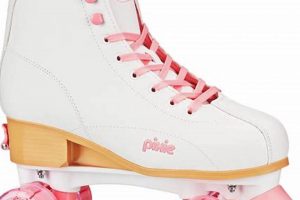
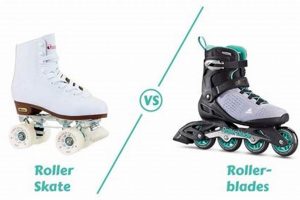
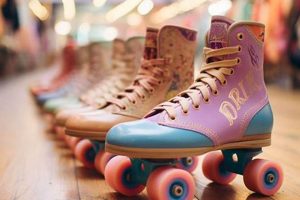
The wheeled boot with two pairs of wheels, one in the front and one in the back, allows for controlled movement and balance. This type of equipment is commonly used for recreational skating, artistic routines, and roller derby. The arrangement of the wheels provides inherent stability, making it a popular choice for beginners and those seeking a more grounded feel.
These devices offer a versatile and enjoyable form of exercise and recreation. Their design allows for a unique blend of maneuverability and stability, contributing to their widespread appeal across various age groups and skill levels. Historically, they represent an early iteration of wheeled footwear, paving the way for more modern skating technologies and contributing significantly to the development of roller sports.
The following sections will delve into the specifics of choosing the right equipment, maintaining it properly, and exploring the diverse activities one can engage in with this classic piece of sporting gear.
Tips for Optimal Use
This section provides essential guidelines for maximizing the performance and longevity of the equipment. Adherence to these tips will enhance the user experience and promote safety.
Tip 1: Select the Appropriate Size: Ensuring a snug, but not constricting, fit is paramount. Incorrect sizing can lead to discomfort, reduced control, and potential injury. Consult sizing charts and consider professional fitting when possible.
Tip 2: Inspect Wheel Tightness Regularly: Loose wheels compromise stability and can lead to accidents. Before each use, verify that all wheels are securely fastened. Use a skate tool to tighten as needed.
Tip 3: Maintain Wheel Rotation: Rotating the wheels periodically ensures even wear and prolongs their lifespan. A common rotation pattern is crisscrossing the front and rear wheels on each device.
Tip 4: Clean Bearings Periodically: Debris accumulation within the bearings reduces rolling efficiency. Regular cleaning, using appropriate solvents and lubrication, will maintain smooth operation.
Tip 5: Secure Laces Properly: Lacing should be firm and consistent throughout the boot. Loose laces can impede ankle support and increase the risk of falls. Double-knotting is recommended.
Tip 6: Utilize Protective Gear: Helmets, wrist guards, knee pads, and elbow pads are essential for minimizing injury in the event of a fall. Prioritize safety by consistently wearing appropriate protective equipment.
Tip 7: Practice in a Controlled Environment: Beginners should start in a flat, smooth, and obstacle-free area. Gradually progress to more challenging surfaces as skill and confidence increase.
By implementing these suggestions, users can significantly enhance their experience, extend the lifespan of the equipment, and minimize the risk of injury.
The following section will address troubleshooting common issues and providing solutions for optimal performance.
1. Stability

Stability is a primary consideration in the design and utilization of the wheeled boot. The inherent stability of the device contributes significantly to user confidence, particularly for beginners, and influences its suitability for various applications.
- Wheelbase Geometry
The rectangular wheelbase formed by the two pairs of wheels creates a broad and stable platform. This geometry resists tipping forces more effectively than inline arrangements, resulting in a more balanced and controlled experience. The wider stance distributes weight more evenly, minimizing the likelihood of instability during forward motion and directional changes.
- Center of Gravity
The placement of the boot and skater’s weight above the relatively wide wheelbase lowers the overall center of gravity. This lower center of gravity enhances resistance to external forces that could cause the skater to lose balance. Deliberate shifts in the center of gravity, however, remain crucial for executing turns and maneuvers.
- Wheel Contact Patch
The surface area of each wheel in contact with the ground, known as the contact patch, affects grip and stability. These devices typically have a larger combined contact patch compared to inline skates, providing enhanced traction and reducing the probability of slippage, especially on uneven surfaces. The wheel durometer (hardness) also influences the size and characteristics of the contact patch.
- Boot and Frame Rigidity
The stiffness of the boot and the frame connecting the boot to the wheels contributes to overall stability. A rigid boot provides increased ankle support, limiting excessive pronation or supination and preventing ankle strain. A sturdy frame minimizes flexing, ensuring that the wheels maintain their intended alignment and preventing unwanted wobbling.
These integrated factors demonstrate how design inherently fosters stability. The geometric arrangement of the wheels, along with considerations for center of gravity, contact patch, and structural rigidity, creates a piece of equipment favored for its ease of use and controlled movement. This stability makes it applicable in diverse environments ranging from recreational skating to specialized disciplines like roller derby.
2. Maneuverability
Maneuverability represents a critical performance attribute, directly influencing the user’s ability to navigate various terrains and execute specialized movements. It is fundamentally linked to the design and construction of the device, impacting agility, responsiveness, and overall control.
- Wheelbase Length and Turning Radius
A shorter wheelbase generally facilitates tighter turning radii, enhancing agility in confined spaces. Conversely, a longer wheelbase tends to increase stability at higher speeds but may compromise maneuverability in tight turns. The length must be optimized for the intended application, balancing stability and agility to meet the demands of specific skating styles or environments.
- Wheel Durometer and Surface Adhesion
The durometer, or hardness, of the wheels significantly affects maneuverability by influencing the degree of grip between the wheel and skating surface. Softer wheels offer enhanced grip, enabling sharper turns and more precise control, particularly on slick surfaces. Harder wheels reduce rolling resistance, facilitating higher speeds but potentially sacrificing maneuverability in situations requiring rapid directional changes.
- Truck Adjustment and Pivot Point Geometry
The trucks, which connect the wheels to the boot, are adjustable to alter the responsiveness of the equipment. Loosening the trucks allows for greater lean and tighter turns, while tightening them increases stability and straight-line tracking. The pivot point geometry of the trucks also plays a crucial role, influencing the smoothness and predictability of turning maneuvers.
- Boot Height and Ankle Flexibility
The height of the boot and the degree of ankle flexibility influence the skater’s ability to apply body weight and initiate turns effectively. Lower-cut boots allow for a greater range of ankle motion, facilitating more aggressive maneuvers. Higher-cut boots provide enhanced ankle support, which can be advantageous for beginners or skaters who prioritize stability over extreme agility.
These elements collectively define the maneuverability characteristics of the equipment, allowing skilled users to perform complex maneuvers, navigate obstacles effectively, and maintain control in diverse skating environments. The interplay between wheelbase, wheel durometer, truck adjustment, and boot design determines its suitability for specific skating disciplines and user preferences.
3. Wheel Configuration
The distinguishing characteristic lies in its unique wheel configuration, a primary determinant of its performance attributes. The arrangement of two pairs of wheels, positioned at the front and rear of the boot, fundamentally influences stability, maneuverability, and the intended use. This configuration contrasts sharply with inline designs, wherein wheels are aligned linearly. The cause-and-effect relationship between the wheel arrangement and skating dynamics is paramount to understanding its distinct functionalities.
The importance of this arrangement stems from its provision of a wide, stable base. This base offers inherent balance, making the equipment more accessible to novice skaters. Furthermore, the wheel configuration allows for specific maneuvers, such as controlled spins and rhythmic movements, which are commonly employed in artistic skating disciplines. A practical example is the roller derby, where skaters require both agility and stability to navigate the track and engage in physical contact. The wheel configuration facilitates quick changes in direction and the ability to withstand lateral forces.
In conclusion, the two-by-two wheel configuration is central to the identity and practical application. Its design directly dictates its stability profile and potential applications. While challenges exist in achieving high speeds compared to inline designs, its unique balance of stability and maneuverability ensures its continued relevance in diverse skating contexts. The understanding of this configuration is vital for both users and manufacturers, guiding equipment selection and design modifications to optimize performance for specific purposes.
4. Boot Construction
The construction of the boot significantly influences the performance, comfort, and durability of the wheeled boot. Material selection, design, and manufacturing techniques collectively determine the overall skating experience. The subsequent details outline critical facets of boot construction.
- Material Composition and Ankle Support
Boot materials range from traditional leather to modern synthetic composites. Leather offers durability and molds to the foot over time, providing a custom fit. Synthetics offer lighter weight and enhanced breathability. Ankle support is crucial, influencing stability and control. Stiff boots provide maximum support but may restrict movement, while flexible boots allow for greater agility but offer less support. The choice of materials and ankle support design must align with the intended skating style and user preferences.
- Closure Systems and Fit Adjustment
Closure systems, including laces, buckles, and hook-and-loop straps, secure the foot within the boot. Laces offer precise adjustability throughout the foot, while buckles provide quick and easy fastening. A well-designed closure system ensures a snug and secure fit, preventing foot slippage and enhancing control. Proper fit is paramount to prevent blisters, discomfort, and potential injury.
- Padding and Internal Linings
Padding and internal linings enhance comfort and reduce friction. Foam padding cushions the foot and absorbs impact, while moisture-wicking linings promote breathability and prevent excessive sweating. The quality and placement of padding and linings significantly impact the overall comfort and enjoyment of skating.
- Sole and Heel Construction
The construction of the sole and heel provides a stable platform for the foot. The sole often incorporates a rigid plate that connects to the frame, transferring energy efficiently. The heel design influences balance and stability. A well-constructed sole and heel contribute to efficient power transfer and overall skating performance.
These elements collectively define the boot’s functionality. Whether prioritizing performance, comfort, or durability, an understanding of these facets informs purchasing decisions. Manufacturers continually innovate in boot construction, striving to enhance the skating experience.
5. Braking System
The braking system on the wheeled boot is a critical safety component, directly impacting the user’s ability to control speed and prevent collisions. Its design and functionality are integral to the overall performance and safety profile of the equipment.
- Toe Stop Design and Adjustment
The toe stop, typically made of rubber or a similar material, is the most common braking mechanism. Its effectiveness depends on the material composition, shape, and adjustability. Lowering the toe stop closer to the ground provides quicker braking response, while raising it allows for greater clearance during certain maneuvers. Proper adjustment is crucial for both effective braking and preventing accidental contact with the skating surface.
- Braking Technique and Skill
Effective braking requires specific techniques and practice. Applying pressure to the toe stop while shifting weight backward initiates the braking process. Mastering this technique requires developing muscle memory and coordination. Incorrect technique can lead to instability and ineffective braking, increasing the risk of accidents.
- Alternative Braking Methods
While the toe stop is the primary braking mechanism, alternative methods exist. Some skaters utilize a “T-stop,” dragging one foot perpendicularly behind the other to create friction. This method requires significant skill and control and may be less effective than the toe stop in emergency situations. Heel brakes, though less common, are also available on some models.
- Maintenance and Replacement
Regular maintenance of the braking system is essential for ensuring its continued effectiveness. Toe stops wear down over time and require periodic replacement. Inspecting the toe stop for signs of wear, such as cracking or excessive thinning, is crucial. Replacing worn toe stops promptly maintains braking performance and minimizes safety risks.
The braking system, with its toe stop mechanism, technique requirements, and maintenance considerations, forms an essential aspect of safe and controlled use. Understanding the nuances of this system enables skaters to confidently manage their speed and avoid potential hazards. The effectiveness of the system relies on both the design of the components and the skater’s proficiency in utilizing the appropriate braking techniques.
Frequently Asked Questions
The following questions address common inquiries regarding the selection, use, and maintenance of the equipment.
Question 1: What factors dictate the appropriate wheel durometer for diverse skating surfaces?
Wheel durometer, measured on the A scale, indicates hardness. Softer wheels (lower durometer) offer enhanced grip on slick surfaces, while harder wheels (higher durometer) provide increased speed on smooth surfaces. Surface texture and skating style should inform selection. A balance must be struck based on typical skating conditions.
Question 2: How frequently should bearings be cleaned and lubricated to maintain optimal performance?
Bearing cleaning frequency depends on usage intensity and environmental conditions. For regular recreational use, cleaning every 1-3 months suffices. In dusty or wet conditions, more frequent cleaning is necessary. Use appropriate solvents and lubricants specifically designed for skate bearings to avoid damage.
Question 3: What constitutes a properly fitted boot, and how does fit impact skating performance and safety?
A properly fitted boot provides a snug yet comfortable fit without restricting circulation. The heel should be securely locked in place, and toes should have minimal forward movement. An ill-fitting boot compromises control, increases the risk of blisters, and may lead to ankle instability.
Question 4: What are the key indicators that a toe stop requires replacement?
Toe stop replacement is necessary when the material exhibits significant wear, such as thinning, cracking, or loss of grip. Reduced braking effectiveness and increased stopping distance are also indicators. Regularly inspect the toe stops and replace them promptly when wear is evident.
Question 5: How does truck adjustment affect the turning radius and stability?
Truck tightness influences turning responsiveness. Looser trucks allow for greater lean and tighter turns but may reduce stability at higher speeds. Tighter trucks enhance stability and straight-line tracking but limit turning agility. Experimentation is required to find the optimal balance for individual preferences and skating style.
Question 6: What safety equipment is essential for minimizing injury risk?
A helmet is paramount for head protection. Wrist guards protect against wrist fractures. Knee and elbow pads minimize abrasions and joint injuries. Protective gear significantly reduces the severity of injuries in the event of a fall.
Appropriate maintenance and informed equipment selection contribute to a safer and more enjoyable skating experience. Addressing these concerns enhances understanding and promotes responsible skating practices.
The following section explores advanced skating techniques.
Concluding Remarks
This exploration has elucidated the multifaceted aspects of the wheeled boot, encompassing its historical context, design attributes, usage guidelines, and maintenance protocols. The discussion has underscored the equipment’s inherent stability, maneuverability characteristics, and the crucial role of proper fit and safety precautions.
The significance of the wheeled boot extends beyond recreational enjoyment, impacting fitness, athletic pursuits, and artistic expression. Continued advancements in materials and design may further refine its performance and broaden its applicability. It remains incumbent upon users to prioritize safety and adhere to recommended practices to ensure a rewarding and secure skating experience.