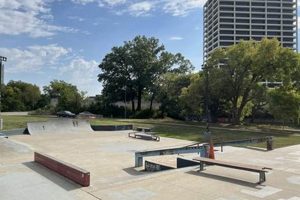
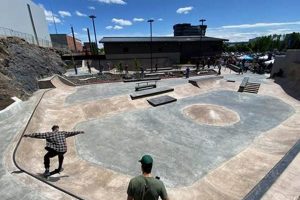
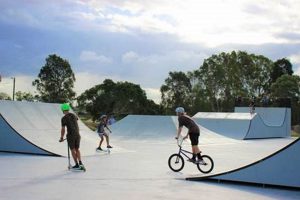
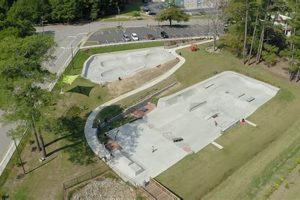
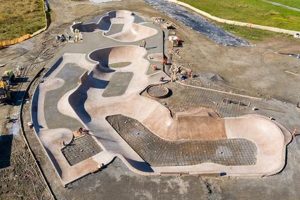
Designated recreational areas engineered for skateboarders, BMX riders, and inline skaters to practice and improve their skills. These spaces commonly feature ramps, rails, bowls, and other obstacles designed to challenge and accommodate various skill levels. These facilities can range from simple concrete pads with a few basic elements to elaborate complexes with diverse terrain features.
These community assets provide numerous advantages, including promoting physical activity, fostering social interaction, and offering a safe and controlled environment for practicing extreme sports. Historically, the development of these spaces has mirrored the growth of skateboarding culture, evolving from makeshift locations to formally planned and managed facilities. Their existence offers a dedicated space for individuals to express creativity, build confidence, and develop athletic abilities while minimizing risks associated with street skating.
Understanding the features, benefits, and proper usage of these spaces is crucial for both participants and community stakeholders. Further discussion will delve into design considerations, safety protocols, community impact, and the role of these environments in fostering a healthy and active lifestyle. The exploration will continue with an examination of different types of park elements, strategies for risk mitigation, and the economic impact of such recreational venues.
Guidance for Utilizing Local Skate Parks
Proper etiquette and safety awareness are paramount when using community skateboarding facilities. The following guidelines promote a positive and secure environment for all users.
Tip 1: Assess Skill Level Appropriately: Individuals should utilize features commensurate with their demonstrated abilities. Attempting maneuvers beyond one’s capabilities increases the risk of injury and can disrupt the flow of the park for other users.
Tip 2: Prioritize Protective Gear: Helmets are universally recommended; knee and elbow pads are advisable, especially for beginners or when attempting more complex maneuvers. Wrist guards can further mitigate potential injuries.
Tip 3: Respect Right-of-Way: Users executing a line or approaching an obstacle have priority. Awareness of surroundings and clear communication, such as verbal cues, helps prevent collisions.
Tip 4: Avoid Obstruction: Refrain from standing or congregating in areas where others are actively skating. Observe from designated viewing areas to minimize interference.
Tip 5: Maintain Equipment: Ensure skateboards, scooters, or BMX bikes are in good working order. Regularly inspect wheels, bearings, and brakes to prevent equipment failure.
Tip 6: Be Mindful of Peak Hours: During busy periods, be particularly aware of surrounding users. Consider visiting during off-peak hours to avoid overcrowding.
Tip 7: Adhere to Posted Rules: Parks typically have posted regulations regarding hours of operation, prohibited activities, and specific safety guidelines. Familiarize yourself with these rules before use.
Following these guidelines ensures a safer and more enjoyable experience for all who utilize community skateboarding areas. Respect, awareness, and proper preparation are crucial for minimizing risk and maximizing the benefits of these facilities.
The final section will address community involvement, park maintenance, and the long-term sustainability of these recreational spaces.
1. Accessibility

The geographical accessibility of a skateboarding facility is a primary determinant of its utilization and community impact. The proximity to residential areas, particularly those with a high population of youth, significantly affects the frequency of use. Parks located within walking or biking distance are demonstrably more accessible than those requiring vehicular transport. Furthermore, access via public transportation routes expands the potential user base, particularly for individuals without personal vehicles. For example, a skate park situated adjacent to a bus stop will invariably serve a broader demographic than one located in a more isolated industrial zone.
Beyond geographical location, considerations of universal accessibility are paramount. Design features such as ramps with gradual inclines, smooth transitions, and appropriate surface materials can enable participation by individuals with physical disabilities. Providing accessible restrooms and viewing areas ensures inclusivity for spectators and users with mobility challenges. The absence of these features can inadvertently exclude significant portions of the community, limiting the park’s value as a public resource. A skate park featuring exclusively steep inclines and challenging obstacles, while appealing to experienced skaters, may deter beginners and individuals with physical limitations, thus reducing its overall accessibility.
In summary, accessibility, both geographical and physical, is a critical factor in maximizing the benefits of a local skateboarding venue. Strategic placement within a community, combined with design considerations that promote inclusivity, ensures that these facilities serve a diverse range of users. Overlooking accessibility hinders the park’s potential, limiting its reach and impact on the community it is intended to serve. The long-term success of a skateboarding facility is inextricably linked to its ability to be easily and safely accessed by all members of the community.
2. Safety Regulations

The establishment and enforcement of safety regulations within community skateboarding environments are paramount for mitigating risk and fostering a secure recreational atmosphere. These regulations serve as a framework for responsible conduct, equipment usage, and facility maintenance, ultimately contributing to the well-being of participants and the sustainability of the park itself.
- Mandatory Protective Gear
The requirement for specific protective equipment, such as helmets, knee pads, and elbow pads, is a foundational safety measure. These items are designed to absorb impact and reduce the severity of injuries resulting from falls or collisions. For instance, many municipalities mandate helmet usage within skate parks, citing statistical evidence of reduced head trauma. Failure to enforce these regulations can lead to increased injury rates and potential legal liabilities for the park operators.
- Age Restrictions and Supervision
Implementing age-based restrictions and requiring adult supervision for younger participants can mitigate risks associated with inexperience and limited cognitive abilities. Younger individuals may not possess the judgment or physical skills necessary to navigate the challenges presented by certain park features. Designating specific hours for younger users or providing supervised sessions can help create a safer environment. Neglecting these measures can result in injuries stemming from collisions or misuse of equipment.
- Park Usage Guidelines
Establishing clear guidelines regarding acceptable conduct within the park is crucial for maintaining order and preventing accidents. These guidelines typically address issues such as right-of-way, prohibited activities (e.g., glass containers, alcohol consumption), and appropriate use of specific park features. For example, a rule prohibiting skating against the designated flow of traffic in a bowl can prevent head-on collisions. The absence of such guidelines can lead to chaotic conditions and increased risk of injury.
- Equipment Inspection and Maintenance
Regular inspection and maintenance of park equipment are essential for identifying and addressing potential hazards. Ramps, rails, and other features must be routinely checked for structural integrity, loose hardware, and surface defects. Prompt repair or replacement of damaged equipment minimizes the risk of accidents caused by faulty infrastructure. Deferring maintenance can lead to catastrophic failures and severe injuries, underscoring the importance of proactive safety protocols.
These interconnected facets of safety regulations collectively contribute to a safer and more enjoyable experience within local skateboarding environments. Adherence to these regulations not only protects individual users but also fosters a culture of responsibility and respect within the skateboarding community. The consistent enforcement of these measures is a critical indicator of a well-managed and community-focused skateboarding space.
3. Design Elements

The configuration of a skateboarding facility, encapsulated within its design elements, directly influences user engagement, skill development, and safety. The selection and arrangement of ramps, rails, bowls, and other obstacles determine the range of maneuvers possible, catering to different skill levels and styles. A well-designed space fosters a sense of progression, allowing beginners to gradually develop competence while challenging experienced skaters. For example, a park featuring a gentle bank ramp alongside a more challenging quarter pipe provides opportunities for both novices and advanced users. The presence of diverse elements, such as ledges, manual pads, and stairs, accommodates street-style skating, while bowls and vert ramps cater to transition-style skating. The deliberate integration of these elements creates a dynamic environment conducive to learning and progression. Design elements, therefore, are not merely aesthetic features but rather fundamental components that define the functionality and appeal of a community skateboarding venue.
Practical application of design principles extends beyond the mere selection of obstacles. Careful consideration must be given to the spatial arrangement of these elements to ensure smooth flow and minimize potential collision points. The orientation of ramps relative to each other, the spacing between obstacles, and the provision of adequate run-up areas are critical factors in preventing accidents and maximizing user enjoyment. For instance, a park with closely spaced obstacles and limited run-up areas may become congested and dangerous, particularly during peak hours. Conversely, a park with well-defined flow patterns and ample spacing promotes a safer and more enjoyable experience. Real-world examples of successful skate park designs demonstrate the importance of incorporating these principles, resulting in facilities that are both aesthetically pleasing and functionally sound. These parks often feature clearly delineated zones for different skill levels, minimizing the risk of collisions between beginners and advanced skaters.
In conclusion, the design elements of a skateboarding facility are inextricably linked to its success as a community recreational space. The careful selection, arrangement, and maintenance of these elements directly impact user safety, skill development, and overall engagement. While aesthetic considerations are important, the primary focus should be on creating a functional and accessible environment that caters to a diverse range of users. Challenges in skate park design often involve balancing the needs of different user groups, managing spatial constraints, and ensuring compliance with safety regulations. A thorough understanding of these challenges, coupled with a commitment to sound design principles, is essential for creating successful and sustainable skateboarding facilities that serve as valuable assets to the community.
4. Community Integration

The successful incorporation of skateboarding facilities into the local community is pivotal for their long-term viability and positive impact. Community integration extends beyond mere physical presence, encompassing active engagement, mutual benefit, and shared responsibility. This integration is essential for fostering a sense of ownership and ensuring that the skateboarding facility serves as a valuable asset for all residents.
- Community Consultation in Planning
Involving local residents, skateboarding enthusiasts, and community leaders in the planning process ensures that the facility meets the needs and preferences of its intended users. Public forums, surveys, and workshops provide opportunities for diverse stakeholders to voice their opinions and contribute to the design. This collaborative approach fosters a sense of ownership and reduces the likelihood of community opposition. For instance, a skate park planned in consultation with local youth may incorporate features that are specifically tailored to their skill levels and interests, increasing its appeal and utilization.
- Partnerships with Local Organizations
Establishing partnerships with local schools, youth groups, and community centers can enhance the programming and outreach of the skateboarding facility. These partnerships can facilitate skateboarding lessons, safety clinics, and community events, promoting participation and fostering a positive image. A collaboration with a local school, for example, could involve incorporating skateboarding into physical education programs or offering after-school skateboarding clubs. These initiatives not only promote physical activity but also provide opportunities for social interaction and skill development.
- Addressing Concerns and Mitigating Negative Impacts
Open communication and proactive measures are essential for addressing potential concerns regarding noise, traffic, and loitering associated with skateboarding facilities. Implementing noise mitigation strategies, such as sound barriers or restricted hours of operation, can minimize disturbances to nearby residents. Collaborating with local law enforcement to address issues of vandalism or illegal activity can enhance safety and security. Addressing these concerns proactively builds trust and demonstrates a commitment to being a responsible member of the community.
- Promoting Community Events and Engagement
Hosting community events, such as skateboarding competitions, demonstrations, and workshops, can showcase the positive aspects of the sport and foster a sense of community pride. These events provide opportunities for residents to interact with skateboarders, learn about the sport, and appreciate the skill and athleticism involved. A well-organized skateboarding competition, for example, can attract visitors from outside the community, boosting local tourism and generating economic activity. These events also serve as a platform for promoting positive messaging and dispelling negative stereotypes associated with skateboarding.
The multifaceted nature of community integration underscores its importance in ensuring the long-term success and positive impact of skateboarding facilities. By actively engaging with the local community, addressing concerns, and fostering a sense of shared ownership, these facilities can become valuable assets that contribute to the health, well-being, and vibrancy of the community as a whole. Effective community integration is not a one-time effort but rather an ongoing process of collaboration, communication, and mutual respect.
5. Maintenance Schedule
A structured maintenance schedule is intrinsically linked to the longevity, safety, and overall appeal of community skateboarding facilities. The absence of a proactive maintenance plan directly correlates with accelerated deterioration of park elements, increased risk of injuries, and a decline in user satisfaction. Regular inspections and repairs are crucial for identifying and addressing potential hazards, such as cracks in concrete surfaces, loose hardware on ramps, and deteriorated transitions. For instance, a small crack left unattended in a concrete bowl can quickly expand due to weather exposure and usage, creating a significant tripping hazard and potentially causing serious injury. Similarly, loose bolts on metal railings can compromise structural integrity, leading to collapses and accidents. Therefore, a detailed maintenance schedule serves as a preventative measure, mitigating risks and preserving the usability of the park.
Effective maintenance extends beyond reactive repairs, encompassing proactive measures to prolong the lifespan of park features. Pressure washing concrete surfaces removes dirt and debris, preventing the accumulation of contaminants that can accelerate wear and tear. Applying protective coatings to metal surfaces inhibits rust and corrosion, preserving structural integrity. Trimming vegetation around the park perimeter prevents encroachment and maintains visibility, enhancing safety and security. These routine maintenance tasks, when performed according to a predetermined schedule, minimize the need for costly repairs and replacements in the long run. Consider, for example, a skate park located in a coastal environment with high levels of salt spray. Without regular cleaning and protective coatings, metal components will rapidly corrode, requiring premature replacement. A well-executed maintenance schedule, in this case, is not merely an operational expense but rather an investment in the long-term sustainability of the facility.
In summary, a comprehensive maintenance schedule is an indispensable component of a thriving community skateboarding venue. Proactive inspections, timely repairs, and preventative measures collectively ensure user safety, extend the lifespan of park elements, and maintain the aesthetic appeal of the facility. Challenges associated with maintenance often involve securing adequate funding, training personnel, and coordinating repairs around park usage. However, the benefits of a well-executed maintenance schedule far outweigh the costs, contributing to a positive community image and ensuring that these valuable recreational spaces remain accessible and enjoyable for generations to come. Ultimately, the commitment to regular maintenance reflects a dedication to the safety, well-being, and long-term sustainability of the skateboarding community.
Frequently Asked Questions
This section addresses common inquiries regarding community skateboarding facilities, providing clarity on their usage, safety, and community impact.
Question 1: What constitutes acceptable protective gear within these spaces?
Acceptable protective gear typically includes a helmet, knee pads, and elbow pads. Wrist guards are also advisable. Specific requirements may vary depending on local regulations and park policies. Adherence to these guidelines minimizes the risk of injury.
Question 2: Are there age restrictions for using community skateboarding venues?
Age restrictions may exist, particularly for unsupervised use. Some facilities designate specific hours for younger users or require adult supervision for children below a certain age. Consult posted signage or park management for clarification.
Question 3: What are the established rules of etiquette for sharing these recreational areas?
Established etiquette includes respecting right-of-way, avoiding obstruction of other users, and refraining from disruptive behavior. Awareness of surroundings and clear communication are essential for preventing collisions and maintaining a positive environment.
Question 4: How frequently are safety inspections conducted at these facilities?
Safety inspections should be conducted regularly by qualified personnel. The frequency may vary depending on the facility’s usage and the condition of its equipment. Prompt reporting of any identified hazards is crucial for ensuring user safety.
Question 5: What measures are in place to address noise concerns stemming from these recreational spaces?
Noise mitigation measures may include sound barriers, restricted hours of operation, and designated areas for amplified music. Adherence to these measures minimizes disturbances to nearby residents.
Question 6: How can community members contribute to the maintenance and upkeep of these spaces?
Community members can contribute through volunteer efforts, reporting maintenance issues, and participating in community clean-up events. Active engagement in these activities fosters a sense of ownership and promotes the long-term sustainability of the facility.
In essence, community engagement, adherence to safety protocols, and respect for established guidelines are fundamental for ensuring the responsible and beneficial utilization of community skateboarding areas.
The subsequent segment of this article will delve into case studies of successful skateboarding facilities, highlighting their unique features and community impact.
Local Skate Parks
This exploration has underscored the multifaceted significance of local skate parks, extending beyond mere recreational outlets. The analysis encompasses design considerations, safety protocols, community integration strategies, and the critical role of consistent maintenance. Each element contributes to the overall functionality and long-term sustainability of these community spaces, shaping user experiences and fostering a sense of collective ownership.
The ongoing development and responsible management of local skate parks represent a vital investment in community well-being. Prioritizing safety, fostering inclusivity, and promoting community engagement are essential for maximizing the benefits these facilities offer. Continued support and strategic planning are necessary to ensure that local skate parks remain valuable resources for recreation, skill development, and community building.