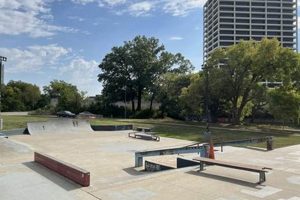
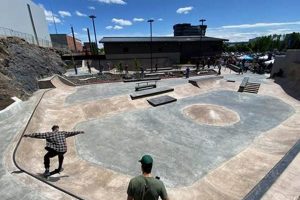
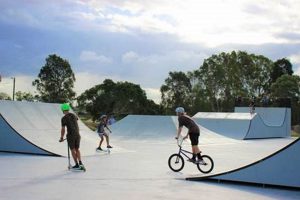
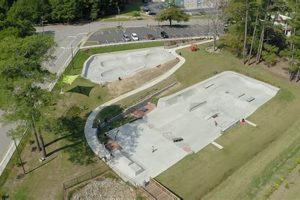
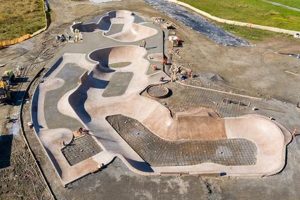
These constructed features within designated recreational spaces are designed to propel skateboards and other wheeled sports equipment into the air, allowing for the execution of tricks and maneuvers. Examples range from simple inclined ramps to more complex combinations of quarter pipes, spines, and gap jumps.
They provide designated areas for practitioners to develop skills in a controlled environment, reducing the risk of injury associated with street skateboarding. Furthermore, these areas foster community and provide a constructive outlet for physical activity, contributing to both individual well-being and social cohesion. The evolution of these structures reflects the increasing popularity and sophistication of skateboarding over the past several decades.
The following sections will delve into the physics behind aerial maneuvers, optimal designs for different skill levels, safety considerations, and the impact of these structures on the skateboarding community.
Mastering Skate Park Jumps
Achieving proficiency in executing maneuvers involving designed launch points requires a combination of understanding fundamental principles, consistent practice, and adherence to safety protocols. The following guidelines provide insights into enhancing performance and mitigating potential risks.
Tip 1: Maintain a Balanced Stance: A centered body position over the skateboard is crucial for stability. Distribute weight evenly between both feet, keeping knees bent and core engaged. This provides a solid foundation for launching and landing.
Tip 2: Approach with Controlled Speed: Manage velocity based on the size and configuration of the ramp or obstacle. Excessive speed can lead to loss of control, while insufficient speed may result in an incomplete maneuver.
Tip 3: Utilize Proper Foot Placement: Position feet strategically on the skateboard’s deck. Placement varies depending on the type of feature and intended trick. Generally, placing feet closer to the bolts provides greater stability and control.
Tip 4: Generate Lift with Leg Drive: Employ a controlled “pop” by pushing down with the back foot and simultaneously lifting the front foot. This action generates the necessary upward momentum for effective execution.
Tip 5: Focus on Visual Spotting: Maintain visual contact with the landing area throughout the maneuver. This allows for adjustments in body position and ensures a smoother transition upon impact.
Tip 6: Commit Fully to the Maneuver: Hesitation can lead to instability and increased risk of falls. Once the approach is initiated, commit to the desired action with confidence and controlled aggression.
Tip 7: Practice Consistently: Repetition is key to developing muscle memory and refining technique. Begin with smaller ramps and gradually progress to more challenging features as skill and confidence improve.
Mastering maneuvers requires understanding of equipment, physics, consistent practice, and dedication. Skill enhancement allows individual to execute increasingly complex tricks, and contribute positively to community.
The following portion will cover design features that allows different skill level, safety, and their role in skateboarding.
1. Ramp Geometry and Aerial Maneuvers

Ramp geometry is a foundational element in the design and functionality of facilities intended for aerial maneuvers. The angles, radii, and transitions of these structures directly influence the trajectory, airtime, and landing characteristics of wheeled sports equipment. Consequently, understanding these geometric principles is crucial for both designers aiming to create effective and safe facilities and practitioners seeking to execute advanced techniques.
Variations in ramp geometry dictate the types of maneuvers that can be performed. For instance, a quarter pipe with a steep transition and ample vertical height facilitates greater airtime, enabling more complex tricks. Conversely, a smaller bank ramp with a gentler incline is better suited for beginners learning fundamental maneuvers. The radius of the transition, the angle of the coping, and the overall height of the ramp are all variables that directly affect the rider’s experience and the potential for trick execution. Consider the difference between a mini ramp, which often features mellow transitions and is ideal for flowing lines and learning basic skills, and a vert ramp, characterized by near-vertical walls demanding significant speed and skill for successful negotiation. The geometry of each dictates its purpose and the range of possible actions.
In summary, ramp geometry serves as a critical determinant in shaping the possibilities and limitations of aerial maneuvers. The skillful manipulation of these geometric variables enables the creation of facilities that cater to a diverse range of skill levels, from novice to expert, and ultimately contributes to the progression and safety of wheeled sports. Understanding ramp geometry is not merely an academic exercise but a practical necessity for creating and utilizing these structures effectively and safely.
2. Momentum control

Momentum control is paramount when performing aerial maneuvers within designated recreational facilities. Precise management of speed and direction directly influences the success and safety of transitions from inclined surfaces to free space and subsequent landings. Inadequate or excessive momentum can lead to instability, failed tricks, or injury.
- Approach Speed Regulation
The velocity at which an individual approaches a ramp dictates the height and distance achievable. Too little speed results in insufficient lift, leading to a failed attempt. Excessive speed can cause overshooting the landing area or loss of control upon impact. Skilled individuals adjust their approach based on ramp geometry and the intended maneuver.
- Directional Trajectory Adjustment
Subtle shifts in body weight and board orientation during the approach phase affect the trajectory in the air. By leaning slightly or adjusting foot placement, practitioners can alter their course to ensure a proper landing. This control is especially crucial for executing rotational tricks.
- Angular Momentum Management
Generating and controlling rotation during aerial maneuvers requires precise coordination and timing. Applying force to specific points on the board initiates spin, while adjusting body position regulates the rate and axis of rotation. Mastery of angular momentum allows for complex trick combinations.
- Impact Absorption Techniques
Upon landing, the force of impact must be effectively dissipated to prevent injury. Bending the knees, distributing weight evenly, and using the board’s flex to absorb energy are essential techniques. Controlled deceleration is as important as controlled acceleration in achieving successful aerial maneuvers.
The interplay of these elements underscores the significance of momentum control in achieving consistent and safe execution of aerial maneuvers. Refinement of these skills contributes directly to overall competency and reduces the potential for adverse outcomes within the context of skate park jump activities.
3. Airborne Stability
Airborne stability, a critical factor in successful execution and safety, relies on several interconnected elements. At the point of launch, a balanced stance and a controlled trajectory initiation set the stage for maintaining equilibrium during the aerial phase. Muscular engagement throughout the core and lower extremities facilitates necessary adjustments to counteract external forces such as wind resistance or subtle shifts in body weight. Visual focus on the intended landing spot provides a reference point for spatial orientation, enabling minor corrections to maintain the planned course. Disruptions to any of these components can lead to instability, increasing the risk of uncontrolled landings or falls.
Consider the practical example of executing a 180-degree rotation. During the airborne phase, imbalances can manifest as unintended deviations from the rotational axis, causing the practitioner to veer off course and potentially miss the landing. More complex maneuvers, such as kickflips or heelflips, demand even greater precision in maintaining equilibrium due to the added complexity of manipulating the board’s rotation. Failure to maintain stability in these scenarios can result in incomplete rotations or destabilization of the landing, heightening the probability of injury.
In conclusion, airborne stability is an indispensable component of successful and safe activity in environments. A holistic understanding of its contributing factors, coupled with consistent practice and attention to detail, allows for the progressive development of skill while mitigating the inherent risks associated with aerial maneuvers.
4. Landing Technique

Successful negotiation of constructed elevated surfaces culminates in the landing, a phase that dictates the practitioner’s ability to maintain control and mitigate potential injury. Landing technique directly influences the distribution of impact forces, the maintenance of balance, and the transition back to a stable riding position. Improper landings frequently result in acute injuries, such as sprains and fractures, or chronic issues arising from repetitive stress. Therefore, a thorough understanding and consistent application of proper technique are paramount.
The effectiveness of a landing is determined by several factors. Knee flexion serves as a primary shock absorber, dissipating the energy of impact across a larger area and reducing stress on joints. Alignment of the body’s center of gravity over the board is essential for maintaining balance and preventing falls. Distributing weight evenly between both feet promotes stability and prevents undue strain on a single limb. Furthermore, timing the landing to coincide with the board’s orientation minimizes friction and ensures a smooth transition. For example, attempting to land a rotational trick before the board has fully aligned with the direction of travel will likely result in a loss of control and a potentially hazardous fall. Failure to adequately flex the knees during impact can transmit excessive force to the ankles, knees, and hips, increasing the risk of injury.
Mastery of landing technique represents a critical component of skill progression. Consistent practice and attention to detail cultivate the necessary proprioception and muscle memory required to execute landings effectively under varying conditions. The adoption of proper landing techniques not only enhances safety but also enables individuals to progress to more complex maneuvers, contributing to the overall development of skill and confidence.
5. Risk Mitigation in Recreational Environments

Risk mitigation is paramount within recreational environments designed for aerial maneuvers, particularly those involving wheeled sports equipment. Effective strategies minimize potential hazards and promote participant safety. Comprehensive planning, diligent implementation, and continuous evaluation are essential components of a robust risk mitigation framework.
- Facility Design and Maintenance
Proper design minimizes inherent risks. Considerations include appropriate ramp angles, smooth transitions, adequate run-off areas, and impact-absorbing surfaces. Regular inspections and prompt repairs address potential hazards arising from wear and tear. For example, cracked or uneven surfaces can significantly increase the risk of falls and injuries. Consistent maintenance is critical for preserving structural integrity and ensuring a safe environment.
- Protective Equipment Utilization
Helmets are essential for mitigating head injuries, while pads for elbows, knees, and wrists reduce the severity of abrasions, contusions, and fractures. Equipment must fit properly and meet established safety standards. Encouraging and enforcing the use of protective gear is a fundamental aspect of risk reduction. Educational programs can promote awareness of the benefits of protective equipment and proper usage techniques.
- Skill Level Segregation and Progression
Separating participants based on skill level reduces the likelihood of collisions and promotes a safer learning environment. Designated areas for beginners, intermediate, and advanced individuals allow practitioners to develop skills progressively without undue risk. Formal instruction and supervised practice can further enhance skill development and reinforce safe practices.
- Rule Enforcement and Supervision
Clearly defined rules and consistent enforcement are necessary for maintaining order and preventing reckless behavior. Prohibiting dangerous maneuvers, limiting the number of individuals on a ramp at any given time, and addressing violations promptly are essential elements of supervision. Trained staff can monitor activities, provide guidance, and intervene when necessary to prevent incidents.
The collective implementation of these facets creates a safer environment for practitioners. Vigilance in adhering to safety protocols, combined with proactive measures to identify and address potential hazards, contributes to a culture of safety within the context of recreational facilities. Continuous improvement through ongoing evaluation and adaptation is vital for ensuring sustained effectiveness of risk mitigation efforts.
Frequently Asked Questions
This section addresses common inquiries regarding the nature, safety, and proper utilization of constructed recreational environments. The responses provided aim to offer clarity and promote responsible engagement.
Question 1: What constitutes a designed elevated surface?
A designed elevated surface is a constructed feature within a designated recreational space, typically made of concrete, wood, or metal. The primary purpose is to allow practitioners of wheeled sports, such as skateboarding and BMX, to gain air and execute maneuvers.
Question 2: What are the primary safety concerns associated with these structures?
The primary safety concerns include the risk of falls, collisions, and injuries resulting from improper technique or equipment failure. Adherence to safety guidelines, including the use of protective gear and awareness of one’s skill level, is crucial for mitigating these risks.
Question 3: What types of protective equipment are recommended?
Helmets are universally recommended to prevent head injuries. Additional protective equipment may include knee pads, elbow pads, wrist guards, and mouthguards. The specific gear required may vary depending on the type of activity and the skill level of the individual.
Question 4: How should a beginner approach the use of recreational environments?
Beginners should start with smaller, less challenging ramps and gradually progress to more complex features as their skill and confidence improve. Formal instruction from a qualified instructor can provide valuable guidance on proper technique and safety practices.
Question 5: What role does ramp geometry play in the execution of aerial maneuvers?
Ramp geometry significantly influences the trajectory, airtime, and landing characteristics of aerial maneuvers. The angles, radii, and transitions of these structures determine the difficulty and feasibility of various tricks.
Question 6: What measures can be taken to minimize the risk of injury?
Several measures can minimize the risk of injury, including proper warm-up and stretching, use of appropriate protective equipment, adherence to safety rules, and awareness of environmental conditions. It is also important to assess one’s own physical condition and skill level before attempting complex maneuvers.
The key takeaways from this FAQ section is understanding of the dynamics involved in aerial activities, safety guidelines, and the importance of responsible participation.
The following segment focuses on the history and evolution of these specialized areas.
Conclusion
The preceding exploration of skate park jumps underscores their multifaceted nature. Beyond their surface-level function as launching points for aerial maneuvers, these features represent carefully engineered structures demanding a nuanced understanding of physics, safety, and skill progression. A comprehensive grasp of ramp geometry, momentum control, airborne stability, and landing technique is paramount for both practitioners and designers.
Continued research and refinement of design principles, coupled with a sustained emphasis on safety education, are essential for fostering a responsible and progressive environment. Further examination of the sociological impact and potential for community building within these spaces warrants ongoing investigation, ensuring their sustained relevance and positive contribution to the sporting landscape.