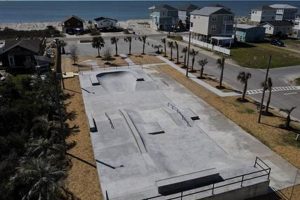
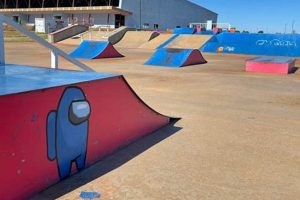
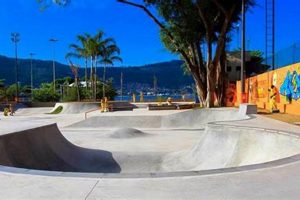
Park skateboarding at the Olympic Games features female athletes demonstrating complex aerial maneuvers and technical skills within a specially designed skatepark environment. This discipline demands creativity, precision, and athleticism as competitors navigate bowls, ramps, and other obstacles, aiming to impress judges with the difficulty and execution of their routines. Scores reflect the overall performance, considering factors such as amplitude, variety, and style.
The inclusion of women’s skateboarding in the Olympic program signifies a growing recognition of the sport’s global appeal and the talent within the female skateboarding community. Participation in the Games provides significant exposure, potentially inspiring future generations of skateboarders and contributing to increased funding and support for the sport at grassroots levels. The historical context of the event highlights its evolution from a subculture activity to a prominent feature on the international sporting stage.
This article will explore various aspects of this event, including an overview of notable athletes, the judging criteria used in competition, the design and features of Olympic-standard skateparks, and the broader impact of Olympic inclusion on women’s skateboarding.
Essential Considerations for Olympic Park Skateboarding
The following provides insight into critical aspects related to achieving success in women’s park skateboarding at the Olympic Games. Athletes, coaches, and stakeholders should prioritize these elements for optimal preparation and performance.
Tip 1: Skill Diversification: A comprehensive repertoire of tricks is paramount. Competitors should master variations of aerials, grinds, and lip tricks to maximize scoring potential. Example: Combining a backside 540 with a technical grab demonstrates a high level of skill diversification.
Tip 2: Park Familiarization: Extensive practice on similar park layouts is crucial. Athletes need to adapt to different transitions, coping materials, and obstacle placements. Example: Simulating Olympic park designs during training sessions enhances adaptability.
Tip 3: Consistent Execution Under Pressure: Maintaining consistency during high-pressure situations differentiates medalists from other competitors. Mental fortitude and practiced routines are essential. Example: Implementing visualization techniques to prepare for the competitive environment is advised.
Tip 4: Strategic Line Selection: The sequence of tricks and transitions within a run significantly impacts the overall score. A well-planned line maximizes flow and showcases skill progression. Example: Designing a run that progressively increases in difficulty demonstrates strategic planning.
Tip 5: Height and Amplitude: Reaching significant height on transitions and aerials demonstrates courage and control. Amplitude is a key factor in impressing judges. Example: Consistently exceeding the coping on vert walls indicates superior aerial ability.
Tip 6: Style and Originality: Infusing personal style into tricks and line selection distinguishes competitors and contributes to overall presentation. Example: Incorporating unique grabs or variations on common tricks showcases originality.
Tip 7: Injury Prevention and Management: The high-impact nature of park skateboarding necessitates a strong focus on injury prevention. Proper warm-up routines, protective gear, and professional medical support are essential. Example: Regularly engaging in strength and conditioning exercises reduces the risk of injuries.
Mastering these considerations, encompassing technical skill, strategic planning, and physical preparedness, is vital for aspiring Olympic park skateboarders. A holistic approach to training and competition yields the best opportunity for success on the Olympic stage.
The subsequent sections will delve into the specific rules, judging criteria, and profiles of prominent athletes in the world of women’s Olympic park skateboarding.
1. Technical Execution

Technical execution serves as a foundational pillar for success in women’s park skateboarding at the Olympic Games. It encompasses the precision, control, and consistency with which athletes perform tricks and maneuvers within the skatepark environment. The level of technical mastery directly impacts scoring potential and overall competitiveness.
- Trick Repertoire
A comprehensive repertoire of tricks is essential. This includes a wide variety of aerial maneuvers, grinds, and lip tricks performed on different features of the park. Each trick must be executed with a high degree of accuracy. The greater the difficulty and diversity of the tricks performed, the higher the potential score. For example, an athlete consistently landing a backside 540, frontside 360, and a variety of lip tricks demonstrates a strong foundation in trick repertoire.
- Clean Landings
Clean landings are critical for maximizing scores. A clean landing indicates complete control and stability upon completion of a trick. Any wobble, stumble, or hand placement on the ground results in deductions from the judges. Demonstrating the ability to stick landings consistently across a variety of tricks is paramount. Sakura Yosozumi’s performance at the Tokyo Olympics, characterized by near-flawless landings, serves as a prime example.
- Control and Flow
Maintaining control throughout the run is as important as the tricks themselves. Athletes must smoothly transition between tricks and features of the park, demonstrating fluidity and flow. Any hesitation, abrupt stops, or loss of momentum negatively impacts the overall impression and score. Sky Browns ability to maintain momentum and flow between tricks, even after minor missteps, shows high levels of control.
- Consistency Under Pressure
The ability to maintain technical execution under the immense pressure of the Olympic Games distinguishes top competitors. Performing complex tricks consistently during practice is insufficient; athletes must replicate this performance in the competitive environment. Psychological preparation and practiced routines help to mitigate the effects of pressure. Competitors like Misugu Okamoto have demonstrated an ability to maintain a high level of technical execution even in high-pressure situations.
The various facets of technical execution are intrinsically linked in women’s park skateboarding. A diverse trick repertoire executed with clean landings, control, and consistency under pressure significantly enhances an athlete’s chances of success at the Olympic Games. The judging panel heavily weighs the technical skill displayed, making it a crucial determinant of medal contention. Developing and refining these technical skills requires dedicated training, strategic planning, and unwavering focus.
2. Strategic Line Choice

Strategic line choice in women’s park skateboarding at the Olympic Games is a crucial element that transcends mere trick execution. It represents the deliberate sequencing of maneuvers within a timed run, significantly influencing the overall impression conveyed to the judges and ultimately determining the score. The optimal line maximizes both technical difficulty and aesthetic appeal.
- Flow and Momentum Management
Effective strategic line choice prioritizes maintaining continuous flow and momentum throughout the park. A well-designed line leverages the park’s features to generate speed and smoothly transition between obstacles. For example, a skater might utilize a series of quarterpipes to build momentum leading into a more complex aerial trick. Failure to maintain flow results in lost time and diminished opportunities for trick execution, directly impacting the overall score.
- Difficulty Progression
A compelling line exhibits a progressive increase in trick difficulty and complexity. Starting with foundational maneuvers, skaters gradually introduce more challenging tricks as the run progresses. This demonstrates control, confidence, and strategic planning. A sudden shift to a significantly easier trick midway through a run may signal a lack of planned progression, resulting in a lower score than a more consistent or escalating display of difficulty.
- Park Feature Utilization
Strategic lines effectively incorporate a diverse range of park features, demonstrating versatility and adaptability. Skaters should utilize quarterpipes, bowls, spines, and other obstacles to maximize their potential. Limiting the run to a single section of the park or neglecting certain features signals a lack of comprehensive park understanding and limits the opportunity to showcase a wide range of skills. Utilizing a less common feature, such as a bank-to-wall, to set up a known trick may also allow an athlete to differentiate her performance.
- Risk-Reward Assessment
Strategic line choice necessitates a careful assessment of risk versus reward. Attempting extremely difficult tricks offers the potential for high scores but also carries a greater risk of falling. A well-crafted line balances these risks, incorporating challenging maneuvers strategically while also including more reliable tricks to ensure a consistent performance. Successfully landing a risky trick within a run that is otherwise smooth elevates the overall impression and contributes to a higher score, while repeatedly attempting and failing on high-risk maneuvers demonstrates poor strategic planning.
In conclusion, strategic line choice is not merely a sequence of tricks but a calculated plan that maximizes flow, demonstrates progression, utilizes the park’s features, and balances risk. Athletes competing in women’s park skateboarding at the Olympics must develop their strategic line choice alongside their technical skills to create compelling and high-scoring performances. The ability to adapt a planned line based on the flow of the run is also critical for success.
3. Amplitude and Style

Amplitude and style are integral components in judging criteria for women’s park skateboarding at the Olympic Games. While technical proficiency is paramount, the aesthetic qualities of a performance, particularly the height achieved on maneuvers (amplitude) and the skater’s individual expression (style), significantly influence the overall score and contribute to a compelling spectator experience.
- Vertical Extension and Difficulty
Amplitude, referring to the height a skater achieves above the coping or other features of the park, demonstrates both technical skill and courage. Greater height provides more time in the air, allowing for the execution of more complex and visually impressive tricks. For instance, a backside air extended well above the coping of a quarterpipe showcases mastery of board control and generates significant momentum for subsequent maneuvers. Increased amplitude often correlates with increased trick difficulty and is rewarded accordingly by the judging panel. The pursuit of greater amplitude in competition necessitates rigorous training and calculated risk-taking.
- Originality and Personal Expression
Style encompasses a skater’s unique approach to trick execution, stance, and overall presence within the park. It reflects individuality and creative interpretation of skateboarding techniques. Originality in trick selection, variations on established maneuvers, or a distinctive flow between park features can significantly enhance a skater’s presentation. An example is the incorporation of unconventional grabs or a unique foot placement during aerial maneuvers that distinguishes a skater from their competitors. Judges assess style based on the authenticity and expressiveness of the performance, recognizing skaters who push the boundaries of conventional skateboarding.
- Effortless Execution and Fluidity
Style is not merely about performing tricks; it’s about how effortlessly and fluidly those tricks are executed. A skater with exceptional style makes challenging maneuvers appear seamless and controlled. This fluidity is achieved through years of practice, precise body positioning, and a deep understanding of board mechanics. Consider a skater who flawlessly links a series of tricks with smooth transitions, maintaining momentum and control throughout the park. This seamless execution enhances the overall aesthetic appeal of the performance and demonstrates a mastery of skateboarding technique that transcends individual tricks.
- Presence and Audience Engagement
A skater’s presence and ability to engage the audience contribute to their overall style score. Confidence, charisma, and a connection with the spectators can elevate a performance beyond technical competence. A skater who actively engages with the crowd, demonstrating excitement and passion for the sport, creates a more memorable and impactful impression. This connection can be achieved through subtle gestures, consistent eye contact, or simply conveying a sense of enjoyment and enthusiasm while performing. While subjective, this element of style contributes to the overall narrative of the performance and resonates with both the judges and the audience.
The interplay between amplitude and style in women’s park skateboarding at the Olympics creates a compelling spectacle that showcases both athleticism and artistic expression. While amplitude demonstrates technical prowess and risk-taking, style injects personality and individuality into the performance. The skaters who excel in this discipline are those who can seamlessly blend technical difficulty with a unique and captivating aesthetic, pushing the boundaries of the sport while captivating the audience and the judging panel. Consider the legacy of skaters like Lizzie Armanto, whose style and amplitude changed the landscape for women in skateboarding.
4. Physical Conditioning

Optimal physical conditioning is a non-negotiable prerequisite for female athletes competing in park skateboarding at the Olympic Games. The dynamic nature of the sport, characterized by explosive movements, repetitive impacts, and aerial maneuvers, demands a high degree of athleticism. Insufficient physical preparation directly correlates with diminished performance, increased risk of injury, and reduced competitiveness. For instance, a skater lacking sufficient lower body strength may struggle to generate the necessary power for high-amplitude tricks, while inadequate core stability can compromise balance and control during complex aerial rotations. The absence of targeted conditioning can limit an athlete’s ability to execute a full run with the required intensity and precision, ultimately impacting their overall score.
Effective conditioning programs for Olympic park skateboarding emphasize several key areas. Strength training, particularly targeting lower body and core musculature, enhances power output and stability. Plyometric exercises improve explosive power and reactive strength, crucial for executing aerial tricks and absorbing impacts. Cardiovascular training builds endurance, enabling athletes to maintain intensity throughout the duration of a competitive run. Flexibility and mobility exercises optimize range of motion and reduce the risk of muscle strains and joint injuries. Furthermore, targeted prehabilitation programs address specific weaknesses and imbalances to prevent common skateboarding-related injuries. Skaters such as Sky Brown exemplify the benefits of holistic physical conditioning, demonstrating exceptional strength, endurance, and agility in their performances.
Therefore, physical conditioning is not merely a supplementary aspect of training but a fundamental component that underpins success in women’s park skateboarding at the Olympic Games. The challenges associated with the physical demands of the sport necessitate a comprehensive and individualized conditioning program tailored to each athlete’s specific needs and goals. Failure to prioritize physical preparation compromises performance and increases the risk of injury, potentially hindering an athlete’s Olympic aspirations. The integration of robust conditioning protocols is essential for maximizing athletic potential and achieving peak performance on the Olympic stage.
5. Mental Resilience
Mental resilience represents a critical attribute for athletes competing in women’s park skateboarding at the Olympic Games. The high-stakes environment, combined with the inherent risk and complexity of the sport, demands a robust psychological framework to effectively manage pressure, overcome setbacks, and maintain peak performance.
- Coping with Competitive Pressure
The Olympic Games amplify competitive pressures significantly. Athletes face intense scrutiny, media attention, and the weight of national expectations. Mental resilience enables skaters to compartmentalize these external pressures, maintaining focus on their performance rather than succumbing to anxiety. For example, an athlete employing mindfulness techniques to center themselves before a run demonstrates proactive pressure management. The absence of this skill can lead to compromised execution and diminished scoring.
- Overcoming Setbacks and Falls
Park skateboarding inevitably involves falls and missed tricks. Mental resilience allows athletes to quickly recover from these setbacks, preventing them from spiraling into negative self-talk or loss of confidence. An athlete who immediately refocuses and adjusts their strategy after a fall showcases this resilience. Conversely, dwelling on mistakes can disrupt the flow of a run and negatively impact subsequent attempts. The capacity to view falls as learning opportunities is crucial.
- Maintaining Focus and Concentration
Olympic-level competition demands unwavering focus and concentration. Distractions, unexpected events, and the sheer intensity of the environment can easily disrupt an athlete’s mental state. Mental resilience allows skaters to maintain a singular focus on their performance, blocking out external interference. Visualization techniques and pre-performance routines aid in maintaining concentration. Loss of focus can result in errors in execution and a diminished ability to adapt to changing circumstances within the park.
- Sustaining Confidence and Self-Belief
Confidence and self-belief are essential for success. Doubts and insecurities can undermine an athlete’s ability to perform at their best. Mental resilience fosters a strong sense of self-efficacy, enabling skaters to believe in their abilities even when facing adversity. Maintaining a positive internal dialogue and focusing on past successes reinforce confidence. Conversely, succumbing to self-doubt can lead to hesitation and a diminished willingness to take risks, ultimately affecting performance.
These aspects of mental resilience are interconnected and contribute to an athlete’s ability to thrive under the demanding conditions of women’s park skateboarding at the Olympic Games. Athletes who cultivate mental fortitude through targeted training and psychological support are better equipped to navigate the challenges of competition and achieve their full potential. The cultivation of mental resilience should be considered an investment, not just during the competition time but also during training as these elements could work in harmony.
6. Equipment Optimization
In women’s park skateboarding at the Olympic Games, equipment optimization represents a critical, yet often understated, factor influencing competitive performance. The connection between carefully selected and meticulously maintained equipment and success in this discipline is direct and profound. Suboptimal equipment choices can demonstrably impede an athlete’s ability to execute complex maneuvers and effectively navigate the skatepark. For instance, a skateboard with improperly adjusted trucks may compromise stability and control, increasing the risk of falls. Similarly, ill-fitting or inadequate protective gear can restrict movement and detract from overall performance. Equipment optimization, therefore, is not merely a matter of preference but a strategic imperative with tangible consequences on the Olympic stage.
The principles of equipment optimization extend beyond simply purchasing high-end products. It involves a thorough understanding of the interplay between individual components and their combined effect on the athlete’s performance. Skateboard decks, trucks, wheels, bearings, and grip tape each contribute to the overall feel and responsiveness of the board. Athletes often experiment extensively with different combinations to identify the optimal setup that complements their riding style and the specific characteristics of the Olympic skatepark. Furthermore, the importance of meticulous maintenance cannot be overstated. Regularly inspecting and replacing worn components, adjusting truck tightness, and ensuring smooth bearing function are essential for preserving optimal performance. Professional skateboarders, including those competing in the Olympics, frequently collaborate with equipment manufacturers to develop and refine products that meet their specific needs.
The practical significance of understanding and implementing equipment optimization strategies is evident in the competitive results of women’s park skateboarding at the Olympic Games. Athletes who prioritize this aspect of their preparation gain a demonstrable advantage, enhancing their ability to execute challenging tricks with precision and consistency. While technical skill, physical conditioning, and mental fortitude remain paramount, optimized equipment serves as a critical enabler, maximizing the athlete’s potential and contributing to their overall competitiveness. The continuous refinement of equipment, driven by innovation and athlete feedback, represents an ongoing evolution in the sport, ultimately raising the standard of performance on the Olympic stage. Furthermore, the evolution of the park conditions might also lead to equipment updates, from wheels to the boards, optimizing its usage is important.
7. Competitive Experience
Competitive experience is a crucial determinant of success in women’s park skateboarding at the Olympic Games. It encompasses the accumulation of knowledge, skills, and psychological resilience derived from participation in sanctioned competitions, contributing significantly to an athlete’s preparedness for the unique pressures and demands of the Olympic environment.
- Familiarity with Judging Criteria
Repeated exposure to judging panels and scoring systems in various competitions allows athletes to develop an intuitive understanding of the criteria used to evaluate performance. This familiarity enables them to strategically construct their runs to maximize scoring potential, emphasizing tricks and maneuvers that align with the judges’ preferences. For example, participation in World Skate sanctioned events provides valuable insight into the specific scoring nuances employed at the Olympic Games.
- Pressure Management and Performance Consistency
Competing in high-stakes events cultivates the ability to manage pressure and maintain consistent performance under scrutiny. Athletes learn to regulate their emotions, focus on execution, and minimize the impact of external factors on their mental state. The experience gained from participating in events such as the X Games or Dew Tour provides athletes with opportunities to refine their coping mechanisms and develop strategies for performing optimally in stressful situations. Consistent participation, even without medal placement, trains mental fortitude and performance resilience.
- Adaptability to Diverse Park Designs
Each skatepark presents unique challenges and opportunities, requiring athletes to adapt their riding style and line selection accordingly. Frequent competition in diverse park designs fosters adaptability and creativity, enabling athletes to quickly assess and exploit the features of unfamiliar environments. Competing at international events exposes skaters to different park configurations, broadening their skill set and enhancing their ability to improvise and innovate during their Olympic runs.
- Strategic Run Construction and Risk Assessment
Competitive experience informs strategic decision-making regarding run construction and risk assessment. Athletes learn to balance the pursuit of high-scoring tricks with the need for consistency and flow, carefully weighing the potential rewards against the risks of attempting complex maneuvers. Previous competitions provide valuable data on the success rates of different tricks and the effectiveness of various line choices, informing the athlete’s strategic planning for the Olympic Games. The ability to modify a run on-the-fly, based on performance and the strategies of other competitors, is honed through competitive practice.
In essence, competitive experience serves as a comprehensive preparation program for women’s park skateboarding at the Olympics. It provides the practical knowledge, psychological resilience, and strategic acumen necessary to navigate the complexities of the Olympic environment and maximize the potential for success. Without a foundation of consistent competitive participation, even the most talented athletes may struggle to perform at their best on the world’s biggest stage.
Frequently Asked Questions
The following addresses common inquiries regarding women’s park skateboarding at the Olympic Games, offering concise and informative responses to enhance understanding of this increasingly prominent discipline.
Question 1: What constitutes ‘park’ skateboarding in the Olympic context?
Park skateboarding, within the Olympic framework, refers to a discipline performed on a purpose-built skatepark featuring bowls, ramps, walls, and other contoured surfaces. Competitors execute a series of tricks and maneuvers within the park, judged on their technical skill, creativity, and overall flow.
Question 2: How is women’s park skateboarding judged at the Olympics?
Judging criteria for women’s park skateboarding at the Olympic Games typically encompass difficulty of tricks, amplitude (height), speed, originality, style, and overall composition of the run. Judges evaluate the performance holistically, considering both technical execution and artistic impression.
Question 3: What safety measures are in place for women’s park skateboarding at the Olympics?
Safety protocols include mandatory helmet use, on-site medical personnel, pre-competition park inspections, and stringent adherence to established skateboarding safety guidelines. The Olympic organizing committee prioritizes athlete safety through rigorous risk management procedures.
Question 4: What are the physical demands of Olympic women’s park skateboarding?
The discipline requires exceptional lower body strength, core stability, cardiovascular endurance, and balance. Athletes must possess the physical capacity to execute explosive movements, withstand repetitive impacts, and maintain focus throughout their runs. A rigorous training regimen is essential to meet these physical demands.
Question 5: How does Olympic inclusion impact women’s skateboarding globally?
Olympic inclusion provides significant exposure and legitimacy to women’s skateboarding, inspiring participation at grassroots levels, attracting increased sponsorship and funding, and fostering greater recognition of female athletes within the sport.
Question 6: What distinguishes Olympic-level park skateboarding from other competitions?
The Olympic Games represent the pinnacle of competition, characterized by intense pressure, heightened media attention, and the participation of the world’s most elite athletes. The scrutiny and intensity of the Olympic environment elevate the stakes significantly compared to other skateboarding events.
In summation, women’s park skateboarding at the Olympic Games involves a complex interplay of athleticism, skill, and artistry. A comprehensive understanding of the discipline, its judging criteria, and the demands it places on competitors is essential for appreciating its significance on the global sporting stage.
The following article sections will explore emerging trends and future directions for women’s park skateboarding within the Olympic movement.
Conclusion
This article has provided a detailed examination of women’s park skate Olympics, from the foundational skills required to the complexities of competition strategy and the significant impact of Olympic inclusion. Key aspects explored include technical execution, strategic line choice, the importance of amplitude and style, the demands of physical conditioning and mental resilience, the optimization of equipment, and the critical role of competitive experience. These elements collectively determine an athlete’s potential for success on the Olympic stage.
As women’s park skate Olympics continues to evolve, ongoing dedication to training, innovation in technique, and strategic adaptation will be essential for sustained competitiveness. The future of this discipline promises continued growth and increased global participation, further solidifying its place as a prominent and inspiring feature of the Olympic Games. Its rising popularity will undoubtedly open doors to aspiring athletes, and its inclusion will continue to generate more opportunities for current skateboarders. The future holds growth and potential, emphasizing the need for sustained investment and advancement in the sport.