![Why Three Wheel Roller Skates? [Pros & Cons]](data:image/svg+xml;base64,PHN2ZyB4bWxucz0iaHR0cDovL3d3dy53My5vcmcvMjAwMC9zdmciIHdpZHRoPSI0NzQiIGhlaWdodD0iMTA2IiB2aWV3Qm94PSIwIDAgNDc0IDEwNiI+PHJlY3Qgd2lkdGg9IjEwMCUiIGhlaWdodD0iMTAwJSIgc3R5bGU9ImZpbGw6I2NmZDRkYjtmaWxsLW9wYWNpdHk6IDAuMTsiLz48L3N2Zz4= "Why Three Wheel Roller Skates? [Pros & Cons] Learn to Surf & Skate: A Beginner's Step-by-Step Guide")
These skates, characterized by a configuration of three wheels in line, represent a departure from the traditional four-wheel setup. As an example, one might observe a skater utilizing these skates for enhanced speed and maneuverability on paved surfaces.
The significance of this design lies in its potential to offer improved speed, agility, and shock absorption compared to some conventional roller skates. Historically, the introduction of inline skates with varying wheel configurations aimed to enhance performance and cater to specific skating styles.
The subsequent sections will delve into the specific advantages, considerations for choosing, and the applications of this particular skate design, providing a detailed examination of its features and suitability for various users.
Guidance for Three-Wheel Inline Skates
The following offers insights into the selection, maintenance, and utilization of inline skates featuring a three-wheel configuration to optimize performance and longevity.
Tip 1: Wheel Diameter Selection: The diameter of the wheels significantly influences speed and maneuverability. Larger wheels generally offer higher speeds but may reduce agility. Consider the intended skating environment and personal preferences when selecting wheel size. For instance, skaters prioritizing speed on open roads may prefer larger wheels, while those requiring greater maneuverability in urban settings might opt for smaller diameters.
Tip 2: Frame Material Assessment: The frame material impacts weight, stiffness, and power transfer. Aluminum frames generally offer superior stiffness and responsiveness compared to composite frames. Assess the skater’s weight, skill level, and intended skating intensity to determine the appropriate frame material. A heavier skater or one engaging in aggressive skating may benefit from the increased rigidity of an aluminum frame.
Tip 3: Bearing Maintenance: Consistent maintenance of wheel bearings ensures smooth and efficient rolling. Regularly clean and lubricate bearings to remove dirt and debris that can impede performance. A decrease in rolling efficiency or unusual noises emanating from the wheels may indicate the need for bearing maintenance.
Tip 4: Boot Fit and Support: A properly fitted boot is crucial for comfort, control, and injury prevention. Ensure the boot provides adequate ankle support and a secure fit without constricting circulation. Ill-fitting boots can lead to blisters, discomfort, and decreased control. Consider trying on skates with socks that are similar to those worn during skating to ensure the best possible fit.
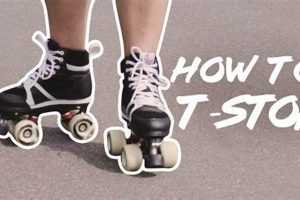
Tip 5: Braking Technique Proficiency: Mastering effective braking techniques is essential for safety. Practice different braking methods, such as the heel brake or T-stop, in a controlled environment before venturing onto public roads. Inadequate braking skills can lead to accidents and injuries.
Tip 6: Protective Gear Prioritization: Wearing appropriate protective gear, including a helmet, knee pads, elbow pads, and wrist guards, is paramount for minimizing the risk of injury. These items provide crucial protection in the event of a fall or collision. Prioritizing safety demonstrates a responsible approach to skating.
Tip 7: Regular Inspection: Periodically inspect the skates for signs of wear and tear. Check the wheels for uneven wear, examine the frame for cracks or damage, and ensure all bolts and fasteners are securely tightened. Addressing minor issues promptly can prevent more significant problems and extend the lifespan of the skates.
Adhering to these guidelines can contribute to a safer, more enjoyable, and more efficient skating experience when using three-wheel inline skates.
The following sections will further explore specific aspects of three-wheel inline skate selection, usage, and maintenance to provide a more comprehensive understanding.
1. Speed Potential

The speed potential of three-wheel roller skates is a primary attribute influencing user choice and application. The design characteristics of these skates directly contribute to their capacity for achieving higher velocities compared to traditional inline or quad skate configurations.
- Reduced Rolling Resistance
The fewer wheels in contact with the skating surface inherently decrease rolling resistance. This reduction in friction allows for greater efficiency in each stride, translating to higher speeds. Examples of this principle are evident in competitive speed skating, where minimal resistance is paramount. The implication is that less energy is required to maintain or increase speed, benefiting both endurance and acceleration.
- Larger Wheel Diameters
Three-wheel skates often accommodate larger wheel diameters than traditional inline skates. Larger wheels cover more ground with each rotation, contributing to increased speed. This is analogous to the gearing principle in cycling. Consequently, these skates are frequently favored in environments demanding high speeds, such as long-distance skating and racing events.
- Enhanced Power Transfer
The frame design, often shorter and more rigid, associated with three-wheel skates facilitates improved power transfer from the skater’s leg to the wheels. This direct transfer minimizes energy loss, optimizing propulsion. The benefit of efficient power transfer is evident in the quick acceleration achievable with these skates.
- Aerodynamic Profile
Although less prominent than other factors, the streamlined design of certain three-wheel skate models can marginally reduce aerodynamic drag. While the impact is subtle at lower speeds, it becomes more noticeable at higher velocities, contributing to sustained speed maintenance. This aspect is relevant in competitive skating scenarios where even minor advantages are significant.
These interconnected factors significantly enhance the speed capabilities of three-wheel roller skates. The combined effect of reduced rolling resistance, larger wheel options, improved power transfer, and, to a lesser extent, aerodynamics, positions these skates as a viable option for individuals prioritizing speed and efficiency on paved surfaces.
2. Maneuverability Enhancement

The maneuverability enhancement afforded by three-wheel roller skates constitutes a significant factor in their adoption across diverse skating disciplines. This characteristic arises from specific design features that optimize responsiveness and agility.
- Shorter Wheelbase
A reduced wheelbase, achieved through the three-wheel configuration, diminishes the turning radius. This allows for quicker directional changes and tighter turns. Consider slalom skating, where rapid transitions between cones necessitate exceptional maneuverability. The shorter wheelbase facilitates the execution of complex maneuvers in confined spaces.
- Enhanced Responsiveness
The minimized contact area with the ground contributes to heightened responsiveness. The skater can initiate turns with less effort, as the reduced friction allows for quicker adjustments. This responsiveness is beneficial in urban environments, where navigating obstacles and pedestrian traffic requires immediate reactions.
- Increased Agility
The combination of a shorter wheelbase and enhanced responsiveness results in increased overall agility. Skaters can execute intricate maneuvers and navigate complex terrains with greater ease. Consider roller hockey, where agility is essential for dodging opponents and maintaining puck control. The three-wheel design provides an advantage in quick, dynamic movements.
- Weight Distribution
The wheel arrangement influences weight distribution, potentially leading to improved balance and control during maneuvers. The skater’s center of gravity can be more readily adjusted to accommodate turns and transitions. This is particularly advantageous for beginners learning fundamental skating skills, as it promotes stability and confidence.
The integration of these facets underscores the enhanced maneuverability inherent in three-wheel roller skates. This attribute contributes to their appeal across various skating applications, from recreational use to specialized disciplines demanding agility and responsiveness.
3. Frame Rigidity

Frame rigidity is a critical determinant of performance characteristics in inline skates, particularly in the context of three-wheel configurations. The frame serves as the structural foundation, influencing power transfer, stability, and overall responsiveness. A rigid frame minimizes energy loss during propulsion, ensuring that a greater percentage of the skater’s effort translates into forward momentum. The following details the interplay between frame rigidity and three-wheel skate performance.
- Power Transfer Efficiency
A highly rigid frame reduces flex during the push-off phase, preventing energy dissipation. This efficient power transfer is essential for maximizing speed and acceleration. For instance, skaters engaged in speed skating benefit significantly from rigid frames, as each stride propels them forward with greater force. The implications include enhanced speed and reduced fatigue over long distances.
- Stability at High Speeds
Frame rigidity contributes to stability, especially at higher velocities. A flexible frame can introduce unwanted vibrations and oscillations, compromising control and increasing the risk of instability. Downhill skaters, for example, require rigid frames to maintain a stable platform and confidently navigate at high speeds. Maintaining stability ensures skater safety and control.
- Responsiveness and Control
A rigid frame enhances the skate’s responsiveness to the skater’s movements. This direct connection between the skater and the wheels allows for precise control and maneuverability. Aggressive skaters, executing intricate tricks and jumps, rely on frame rigidity to maintain precise control over the skates. Improved control enables a confident skating style.
- Material Composition and Design
Frame rigidity is directly influenced by material composition and structural design. Aluminum frames generally offer greater rigidity compared to composite frames. Furthermore, frame designs incorporating reinforcing elements or strategically placed supports can further enhance stiffness. Manufacturers often employ advanced engineering techniques to optimize frame rigidity while minimizing weight. Material selection plays a pivotal role in overall performance.
In summary, frame rigidity profoundly impacts the performance of three-wheel roller skates. Its influence on power transfer, stability, responsiveness, and control is undeniable. Skaters should carefully consider frame material and design to align with their specific skating style and performance objectives, taking into account these are the primary elements which directly influence skate performance, and skate satisfaction.
4. Wheel Diameter
Wheel diameter significantly influences the performance characteristics of three-wheel roller skates. The diameter directly affects speed, maneuverability, and the ability to navigate various terrains. Larger diameter wheels, for instance, reduce rolling resistance and cover more ground per rotation, translating into higher top speeds. Conversely, smaller diameter wheels enhance maneuverability and responsiveness, proving advantageous in environments requiring frequent directional changes. A speed skater, for example, would typically opt for larger wheels to maximize velocity on straightaways, whereas a recreational skater in an urban setting might favor smaller wheels for better control amidst pedestrian traffic and obstacles. Therefore, understanding the implications of wheel diameter is crucial for selecting skates appropriate for the intended use case.
The selection of an appropriate wheel diameter also impacts the skate’s stability and shock absorption capabilities. Larger wheels tend to provide a smoother ride over uneven surfaces due to their increased capacity to absorb vibrations. This is particularly relevant for skaters traversing rough terrain. However, they may also raise the skater’s center of gravity, potentially affecting balance. Smaller wheels offer greater stability due to the lower center of gravity, but transmit more vibrations to the skater. The trade-offs between speed, maneuverability, stability, and comfort must be carefully considered. Skaters engaging in longer distances may prioritize comfort and vibration absorption, while those focused on agility might sacrifice some ride smoothness for enhanced control.
In summary, wheel diameter represents a pivotal parameter in the design and application of three-wheel roller skates. The diameter directly impacts speed, maneuverability, stability, and comfort, demanding a careful balancing act based on the skater’s specific needs and the intended skating environment. Understanding these relationships is essential for optimizing performance and ensuring a satisfying skating experience. Challenges remain in developing wheel technologies that maximize all desirable attributes simultaneously, driving ongoing innovation in skate design and material science.
5. Bearing Quality
Bearing quality significantly influences the performance of three-wheel roller skates, primarily affecting speed, rolling efficiency, and overall durability. Bearings, housed within the wheels, facilitate smooth rotation around the axle. Substandard bearings introduce friction, impeding wheel rotation and diminishing skating speed. Higher-quality bearings, manufactured with precision and employing superior materials, minimize friction, resulting in enhanced speed and a more efficient skating experience. For example, competitive speed skaters typically invest in high-grade bearings to optimize their performance, directly correlating bearing quality with race times. A consequence of neglecting bearing quality is a reduction in skate efficiency, leading to increased exertion by the skater to maintain a given speed.
The influence of bearing quality extends beyond speed to impact the lifespan of both the bearings and the wheels themselves. Low-quality bearings may contain imperfections or be constructed from materials susceptible to rapid degradation. This can lead to premature bearing failure and uneven wear on the wheels, requiring more frequent replacements. Conversely, high-quality bearings, often sealed to prevent contaminant ingress, maintain consistent performance over extended periods, reducing maintenance requirements and prolonging the life of other skate components. As an illustration, consider a recreational skater who regularly cleans and lubricates high-quality bearings; their skates will likely exhibit smoother rolling and require fewer repairs compared to an individual using inexpensive, poorly maintained bearings.
In summary, bearing quality represents a critical, often underestimated, factor in the overall performance and longevity of three-wheel roller skates. Investing in high-quality bearings translates to enhanced speed, improved efficiency, reduced maintenance, and prolonged equipment life. While seemingly a minor component, bearing selection plays a pivotal role in maximizing the potential of these skates and optimizing the skater’s experience. The challenge lies in educating consumers about the long-term benefits of quality bearings and encouraging them to consider this aspect when selecting or maintaining their skates.
6. Boot Support
Boot support in three-wheel roller skates is a crucial element influencing stability, control, and injury prevention. The skate boot provides the interface between the skater’s foot and the frame, and its design significantly impacts the transmission of force and the skater’s ability to maintain balance. Inadequate boot support can lead to ankle instability, compromising control during maneuvers and increasing the risk of sprains or other injuries. Consider, for example, a skater attempting a sharp turn at high speed; without sufficient lateral support from the boot, the ankle may roll inward, resulting in a loss of control and potential for a fall. Therefore, the boot’s ability to provide firm and consistent support is paramount.
Different skating styles and skill levels necessitate varying degrees of boot support. Recreational skaters may prioritize comfort and flexibility, requiring a boot that allows for a greater range of motion, even if it compromises some degree of support. Conversely, aggressive skaters or those engaging in high-speed skating demand a stiffer, more supportive boot to withstand the forces generated during jumps, slides, and rapid directional changes. The material composition and construction of the boot directly affect its level of support; for example, boots constructed from carbon fiber or reinforced polymers generally offer greater stiffness and support than those made from softer materials like nylon. Furthermore, features such as adjustable buckles, power straps, and lacing systems allow skaters to customize the fit and level of support according to their individual needs and preferences.
In summary, boot support is an indispensable component of three-wheel roller skates, affecting safety, performance, and comfort. The appropriate level of boot support depends on the skater’s skill level, skating style, and the intended use of the skates. Compromising on boot support to prioritize comfort or cost can have detrimental consequences, potentially leading to injury and a diminished skating experience. Skaters should carefully evaluate the boot’s design, materials, and adjustability to ensure adequate support for their specific needs. Ongoing research and development in boot technology continue to improve support mechanisms and optimize the interface between the skater and the skate, aiming to enhance both performance and safety.
7. Surface Compatibility

Surface compatibility is a key consideration for three-wheel roller skate users. The interaction between the skate wheels and the skating surface directly influences speed, control, and wear on both the skates and the surface. Different surfaces offer varying degrees of friction, which impacts a skater’s ability to accelerate, brake, and maintain stability.
- Smooth Pavement
Smooth asphalt or concrete surfaces provide minimal rolling resistance, allowing for higher speeds and efficient gliding. These surfaces are ideal for three-wheel roller skates, maximizing their speed potential and maneuverability. Examples include dedicated skating paths, smooth bike lanes, and well-maintained parking lots. However, extended use on such surfaces can lead to accelerated wheel wear if the wheel material is not appropriately durable.
- Rough Asphalt
Rougher asphalt increases rolling resistance, reducing speed and requiring more effort to maintain momentum. The vibrations transmitted through the skates also increase, potentially causing discomfort over longer distances. Three-wheel skates may be less efficient on these surfaces compared to smoother alternatives. Examples include older roads with cracked or uneven pavement. Selecting wheels with higher durometer ratings (harder wheels) can mitigate some of the performance loss on these surfaces, albeit at the expense of comfort.
- Concrete Surfaces
Concrete surfaces vary in texture and smoothness. Polished concrete offers excellent rolling characteristics similar to smooth asphalt, while rougher concrete can present challenges. Examples include skate parks, which often feature a variety of concrete surfaces designed for different skating styles. The abrasiveness of some concrete can cause rapid wheel wear, necessitating the use of more durable wheel compounds.
- Indoor Surfaces
Indoor surfaces, such as wooden floors in skating rinks or smooth concrete in warehouses, offer consistent grip and rolling characteristics. These environments are well-suited for three-wheel skates, particularly for specialized disciplines like roller derby or artistic skating. Specific wheel compounds are often designed for indoor use to maximize grip and minimize wear on the flooring.
The surface on which three-wheel roller skates are used directly influences their performance and longevity. Skaters should carefully consider the typical surfaces they will encounter and select wheels and bearings that are appropriate for those conditions. Regular maintenance and wheel rotation are also essential to ensure even wear and optimal performance, regardless of the surface type.
Frequently Asked Questions
The following addresses common inquiries regarding the features, selection, and maintenance of inline skates featuring a three-wheel configuration. This information aims to provide clarity and guidance for informed decision-making.
Question 1: Are Three Wheel Roller Skates suitable for beginners?
The suitability of these skates for beginners depends on individual factors. While the three-wheel design can offer enhanced maneuverability, it may also present a greater challenge for maintaining balance compared to traditional four-wheel skates. Beginners are advised to prioritize stability and consider starting with four-wheel skates before transitioning to the three-wheel configuration. Proper instruction and protective gear are essential regardless of skate type.
Question 2: What are the primary advantages of Three Wheel Roller Skates compared to four-wheel models?
The primary advantages typically include increased speed, enhanced maneuverability, and potentially improved shock absorption due to the larger wheel size. The reduced rolling resistance and shorter wheelbase contribute to these performance enhancements. However, the specific benefits can vary depending on wheel diameter, frame material, and individual skating style.
Question 3: How does wheel size impact the performance of Three Wheel Roller Skates?
Wheel diameter significantly influences speed and agility. Larger wheels generally offer higher top speeds but may reduce maneuverability. Smaller wheels provide greater agility but may sacrifice some speed. The optimal wheel size depends on the intended skating environment and the skater’s priorities. Consider the trade-offs between speed and maneuverability when selecting wheel size.
Question 4: What type of maintenance is required for Three Wheel Roller Skates?
Routine maintenance includes cleaning and lubricating the bearings, inspecting wheels for wear, and ensuring all bolts and fasteners are securely tightened. Regular maintenance prolongs the lifespan of the skates and maintains optimal performance. Neglecting maintenance can lead to reduced speed, increased friction, and potential component failure.
Question 5: Are Three Wheel Roller Skates appropriate for all types of skating surfaces?
These skates perform best on smooth, paved surfaces. Rough or uneven surfaces can reduce speed and increase vibration, potentially compromising comfort and control. While some models may be designed for more varied terrains, they are generally optimized for smooth skating conditions. Consider the intended skating environment when selecting skate models.
Question 6: How does frame material affect the performance of Three Wheel Roller Skates?
Frame material influences weight, stiffness, and power transfer. Aluminum frames generally offer greater stiffness and responsiveness compared to composite frames. A stiffer frame enhances power transfer, contributing to increased speed and efficiency. Consider the skater’s weight, skill level, and intended skating intensity when choosing frame material.
In summary, careful consideration of wheel size, frame material, and maintenance practices is crucial for maximizing the performance and longevity of these skates. Prioritize safety and select equipment appropriate for individual skill level and intended use.
The subsequent section will delve into specific considerations for selecting the appropriate three-wheel roller skates based on individual needs and preferences.
Conclusion
This exploration of three wheel roller skates has illuminated key aspects of their design, performance characteristics, and suitability for various skating disciplines. The analysis has highlighted the importance of wheel diameter, frame rigidity, bearing quality, boot support, and surface compatibility in determining the overall skating experience. Careful consideration of these factors is essential for both novice and experienced skaters seeking to optimize their performance and safety.
The continued development of three wheel roller skates promises further advancements in speed, maneuverability, and comfort. Prospective users should remain informed about evolving technologies and select equipment that aligns with their specific needs and skating goals. A thorough understanding of the principles outlined herein will empower informed decision-making and contribute to a safer, more enjoyable skating experience.
![Best Roller Skate: Get Rolling Faster [2024 Guide] | Learn to Surf & Skate: A Beginner's Step-by-Step Guide](https://universitysurfandskate.com/wp-content/uploads/2026/04/th-452-300x200.jpg "Best Roller Skate: Get Rolling Faster [2024 Guide] Learn to Surf & Skate: A Beginner's Step-by-Step Guide")