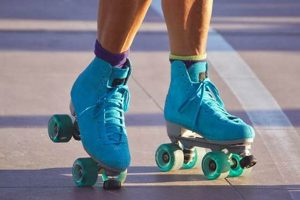
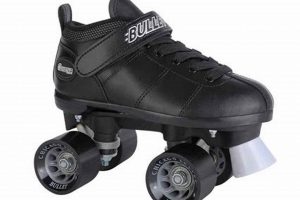
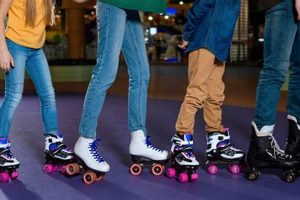
The ability to decelerate and halt movement while using wheeled boots is a fundamental skill. Mastering this proficiency allows users to control their speed and avoid collisions. Specific techniques are employed to achieve controlled deceleration and complete cessation of motion. For instance, a controlled drag of a designated brake pad or a strategic shift in body weight can effectively reduce momentum.
Proficiency in halting techniques enhances safety and confidence. It permits participation in various skating activities with a reduced risk of injury. Historically, methods for controlled deceleration have evolved alongside the development of skating equipment. Improved braking mechanisms and refined body positioning strategies have contributed to more effective and safer deceleration methods.
Therefore, understanding various techniques is essential for safe and enjoyable participation. Further sections will detail these techniques, exploring weight distribution, brake engagement, and other critical factors influencing controlled speed reduction and complete stops.
Roller Skating Deceleration Techniques
The following tips outline fundamental strategies for controlled deceleration and complete stops while roller skating. Adherence to these principles enhances safety and skill development.
Tip 1: Maintain a Balanced Stance: A stable posture, with knees slightly bent and weight centered, is crucial. This provides a lower center of gravity and improves balance, facilitating controlled movements during deceleration maneuvers.
Tip 2: Utilize the Toe Stop: If equipped, the toe stop is a primary braking mechanism. Apply pressure gradually, beginning with a light touch and increasing as needed. Avoid abrupt application, which can cause instability.
Tip 3: Execute the T-Stop: Position one skate perpendicular behind the other, forming a “T” shape. Apply gentle pressure to the rear skate, using it as a drag brake. Control the angle and pressure to regulate the rate of deceleration.
Tip 4: Practice the Plow Stop: Angle both skates inward, forming a “V” shape. Push the heels outward while maintaining contact with the ground. This creates friction, slowing forward momentum. Coordinate leg movements to maintain balance and control.
Tip 5: Manage Body Weight: During deceleration, shift body weight slightly towards the rear. This increases pressure on the braking mechanism, enhancing its effectiveness. Avoid leaning too far back, as this can compromise balance.
Tip 6: Choose Appropriate Surfaces: Practice on smooth, even surfaces free from obstacles. Avoid uneven terrain or areas with excessive debris, which can interfere with braking and increase the risk of falls.
Tip 7: Gradual Application is Key: Regardless of the chosen technique, apply braking force gradually. Avoid sudden, forceful movements, which can lead to loss of control. Smooth, controlled application promotes stability and effectiveness.
Mastering these techniques through consistent practice is essential for safe and confident skating. Proficiency allows skaters to navigate diverse environments and respond effectively to unexpected situations.
The subsequent section will address common challenges and troubleshooting strategies related to braking and control.
1. Balance and Posture

Balance and posture are fundamental prerequisites for effective deceleration. A stable stance facilitates controlled movements, minimizing the risk of imbalance during braking maneuvers. Correct posture, characterized by a slight bend in the knees and a centered weight distribution, lowers the center of gravity, thereby increasing stability. Ineffective posture, such as leaning too far forward or backward, compromises balance and reduces the efficiency of braking techniques. For instance, when executing a toe-stop, a centered posture allows for a controlled application of pressure, whereas an imbalanced stance may lead to a loss of control and a potential fall.
The relationship between balance, posture, and braking extends to various techniques. The T-stop, for example, necessitates shifting weight onto one leg while simultaneously controlling the dragging skate. This requires precise postural adjustments to maintain equilibrium and regulate the deceleration rate. Similarly, the plow stop relies on a balanced stance to distribute braking force evenly across both skates. Skaters often improve their proficiency by practicing stationary balance exercises, reinforcing core stability and improving their ability to maintain a neutral spinal alignment. These drills translate directly into improved control during dynamic movements and deceleration.
Mastery of balance and posture are not merely theoretical concepts; they are critical determinants of safety. A skater lacking these core skills is significantly more vulnerable to falls and injuries during braking. Consistently practicing balance exercises, combined with mindful attention to body positioning, fosters a deeper understanding of these principles. This, in turn, leads to improved control and confidence when executing various braking techniques, ensuring a safer and more enjoyable skating experience.The connection between balance and posture will be tested by skating without using a toe stop during practice.
2. Brake Mechanism Engagement

Effective deceleration in roller skating is fundamentally linked to the appropriate and controlled engagement of the available braking mechanism. The method by which a skater interacts with the braking system directly dictates the efficiency and safety of the stopping process.
- Toe Stop Application
The toe stop, a common feature on many roller skate models, requires a precise downward force application. The skater must lift the front of the skate slightly while simultaneously applying pressure to the toe stop. Incorrect application, such as applying excessive force abruptly, can result in a sudden stop and potential loss of balance. Controlled, gradual pressure is paramount for a smooth deceleration. For example, beginners often struggle with lifting the skate high enough, causing the toe stop to drag prematurely and impede forward momentum without providing effective braking.
- Heel Brake Activation
Some skate designs incorporate a heel brake. Engagement necessitates shifting weight backward, leveraging the heel brake against the skating surface. Similar to the toe stop, gradual application is essential. Over-reliance on the heel brake can cause the skater to lose balance and potentially fall backwards. Successful heel brake engagement often requires developing a strong sense of proprioception to accurately gauge the necessary force and angle. Furthermore, varying heel brake designs may necessitate differing application techniques.
- Edging and Friction Techniques
Beyond dedicated braking mechanisms, skaters can employ edging techniques to generate friction and reduce speed. This involves angling the skates to create resistance against the skating surface. Techniques such as the plow stop or T-stop rely heavily on this principle. The effectiveness of these methods depends on surface conditions and the skater’s ability to control the angle and pressure applied. For instance, attempting a plow stop on a slippery surface may prove ineffective or even hazardous due to reduced friction.
- Maintenance and Condition of the Brake
The performance of any braking mechanism is directly related to its condition and maintenance. Worn or damaged toe stops or heel brakes will exhibit reduced effectiveness. Regular inspection and replacement of worn components are critical for ensuring reliable stopping power. Additionally, cleanliness of the braking surface is important; debris such as dirt or small stones can impede friction and diminish braking efficiency. Skaters must prioritize maintenance as an integral aspect of safe skating practices.
Proficient engagement with any of these braking mechanisms, coupled with proper maintenance, directly enhances a skater’s ability to decelerate and halt safely. The specific technique and mechanism employed should be selected based on the skater’s skill level, the skating environment, and the desired rate of deceleration.
3. Weight Distribution Control
Weight distribution control constitutes a critical element in achieving effective deceleration while roller skating. The skater’s ability to manipulate the center of gravity directly influences braking efficiency and stability. Shifting weight appropriately enhances the application of braking force and minimizes the risk of losing balance, making it an indispensable skill for safe skating.
Consider the T-stop maneuver: successful execution hinges on a precise transfer of body weight to the supporting leg. By placing the majority of the weight over the forward leg, the skater maintains balance and allows the rear skate to act as a controlled drag brake. Conversely, if weight is distributed unevenly or too far back, the skater risks instability and may lose control. Similarly, during a toe-stop maneuver, a slight shift of weight towards the heel allows for controlled pressure on the toe stop, facilitating smooth deceleration. A failure to manage weight effectively during this maneuver can result in an abrupt stop and potential forward fall. The practical significance of understanding weight distribution becomes evident in emergency situations. When faced with an unexpected obstacle, a skater who can instinctively adjust weight distribution can react more effectively, either to brake quickly or to maneuver around the hazard.
Mastering weight distribution control requires consistent practice and conscious awareness. Exercises that focus on balance and core strength contribute to improved control. The skater benefits from understanding how subtle shifts in body position affect momentum and stability. Challenges arise when encountering varied terrain or attempting more advanced braking techniques. The ability to adapt weight distribution strategies to changing conditions distinguishes skilled skaters from novices, underscoring its enduring relevance in the realm of roller skating safety and skill development.
4. Surface Condition Awareness
Surface condition awareness is paramount for effective and safe deceleration. The properties of the skating surface directly influence the friction available for braking, thereby impacting the efficacy of any stopping technique. Understanding and adapting to varying surface conditions are thus essential skills for roller skaters.
- Dry Pavement
Dry pavement typically offers high friction, facilitating effective braking. Techniques such as the toe stop, T-stop, and plow stop are generally more effective on this surface. However, skaters must remain vigilant for loose debris such as gravel or sand, which can reduce friction even on otherwise suitable pavement. The presence of even a small amount of loose material can significantly increase stopping distance.
- Wet Surfaces
Wet surfaces present a significant challenge due to reduced friction. Water acts as a lubricant, diminishing the grip between the skate wheels and the ground. Braking distances are substantially increased on wet pavement, necessitating adjustments to technique and increased caution. Skaters must apply braking force more gradually to avoid skidding, which can lead to loss of control. The T-stop may be less effective on wet surfaces, requiring a greater emphasis on weight distribution and a more controlled application of pressure.
- Uneven Terrain
Uneven terrain, characterized by cracks, potholes, or variations in surface texture, can disrupt balance and impede braking. Such conditions necessitate a lower center of gravity and a more cautious approach to deceleration. Skaters must anticipate changes in surface conditions and adjust their technique accordingly. Attempting a sudden stop on uneven terrain can be hazardous, potentially leading to a fall. Smooth, consistent pressure is critical for maintaining control and stability.
- Indoor Surfaces
Indoor surfaces, such as those found in skating rinks, generally offer consistent and predictable friction. However, skaters should still be mindful of potential hazards such as spilled liquids or areas with wax buildup. These conditions can reduce friction and increase the risk of slipping. Furthermore, indoor surfaces may be more susceptible to wear and tear, resulting in localized areas with reduced grip. Awareness of these subtle variations is essential for maintaining control and executing braking techniques effectively.
The interrelation between surface conditions and braking competence is undeniable. Consistent adaptation to the environment, employing modified techniques as needed, enhances safety and extends the skater’s ability to control their movement effectively. Failure to account for surface variations increases the likelihood of accidents, highlighting the critical role of environmental awareness in roller skating proficiency.
5. Gradual Force Application
Gradual force application is integral to controlled deceleration and complete cessation of motion while roller skating. The principle dictates that braking force should be increased incrementally, rather than applied abruptly. This approach minimizes the risk of instability and loss of control, which are common consequences of sudden braking. For instance, initiating a T-stop requires a gentle application of pressure from the dragging skate, progressively increasing the force until the desired deceleration rate is achieved. Abruptly slamming the rear skate onto the ground can induce a skid, compromising balance and potentially causing a fall.
The significance of gradual force application extends beyond basic braking maneuvers. It is crucial in more advanced techniques, such as controlled slides or transitions. In these contexts, the skater must modulate the braking force with precision to maintain balance and execute the desired movement. Failure to apply force gradually can lead to jerky, unpredictable movements, increasing the risk of errors and accidents. Real-world examples highlight the importance of this principle. Skaters navigating crowded areas must be able to adjust their speed and direction smoothly, relying on gradual force application to avoid collisions. Similarly, skaters descending a slope need to regulate their speed consistently, using controlled braking to prevent runaway acceleration.
Challenges to implementing gradual force application often stem from a lack of experience or a tendency to panic in emergency situations. Overcoming these challenges requires consistent practice and a conscious effort to develop muscle memory. Skaters can benefit from practicing braking techniques in controlled environments, gradually increasing the difficulty as their skill level improves. Ultimately, the ability to apply force gradually is a fundamental skill that distinguishes skilled skaters from novices, contributing to both safety and performance. This is often the solution of How to Stop in Roller Skates. The development of braking techniques, therefore, relies significantly on the capacity to modulate force in a measured, controlled manner.
Frequently Asked Questions
This section addresses common inquiries regarding methods for safely decelerating and halting while using roller skates. Clarification of these points enhances understanding and promotes safer skating practices.
Question 1: What is the most basic method for achieving a complete stop on roller skates?
The toe stop, present on many skate models, serves as a fundamental braking mechanism. Controlled application of pressure, achieved by lifting the front of the skate slightly and pressing the toe stop against the ground, initiates deceleration. The braking force is directly proportional to the applied pressure. However, inexperienced skaters should practice this maneuver cautiously to avoid sudden stops and potential loss of balance.
Question 2: How does surface condition influence braking effectiveness?
Surface conditions significantly impact the available friction between the skate wheels and the ground. Smooth, dry surfaces provide optimal braking conditions. Wet or uneven surfaces reduce friction, increasing stopping distances and potentially compromising control. Skaters must adjust their technique and increase their vigilance when encountering suboptimal surface conditions.
Question 3: Is the T-stop a reliable braking method for all skill levels?
The T-stop, involving positioning one skate perpendicular behind the other, requires a degree of skill and coordination. While effective for experienced skaters, it may pose challenges for beginners. Mastering weight distribution and maintaining balance are essential prerequisites for successfully executing the T-stop. Novices should practice this technique gradually, starting with slow speeds and controlled movements.
Question 4: What is the role of body weight in controlling deceleration?
Body weight distribution plays a crucial role in regulating braking force. Shifting weight appropriately enhances the contact between the braking mechanism (e.g., toe stop or heel brake) and the ground, thereby improving braking efficiency. Conversely, improper weight distribution can lead to instability and reduced braking effectiveness. Skaters should consciously manage their center of gravity to optimize control during deceleration.
Question 5: What maintenance practices are essential for ensuring optimal braking performance?
Regular maintenance of braking components is crucial for ensuring reliable performance. Toe stops and heel brakes should be inspected periodically for wear and tear and replaced as needed. Cleanliness is also important; debris such as dirt or gravel can impede friction and diminish braking effectiveness. Skaters should prioritize maintenance as an integral aspect of safe skating practices.
Question 6: How does speed influence the techniques required to decelerate effectively?
Higher speeds necessitate greater precision and control when applying braking techniques. At increased velocities, even minor errors in technique can have significant consequences. Skaters must anticipate potential hazards and initiate braking maneuvers well in advance. Furthermore, they should consider utilizing a combination of techniques to achieve optimal deceleration, such as combining edging with controlled use of the toe stop.
Understanding and applying these principles are crucial for ensuring safe and controlled skating experiences. Mastery of these methods contributes to reduced risk of injury and enhances enjoyment.
The subsequent section will address advanced techniques and strategies for navigating complex skating environments.
Conclusion
This exploration of how to stop in roller skates has detailed fundamental techniques essential for safe and controlled movement. Balance, posture, brake mechanism engagement, weight distribution, surface awareness, and gradual force application form the cornerstones of effective deceleration. Proficiency in these areas directly mitigates risk and enhances confidence during skating activities.
Continued practice and mindful application of these principles remain paramount. As skill increases, skaters are encouraged to explore more advanced maneuvers and adapt their techniques to diverse environments. Prioritizing safety through informed practice will invariably yield enhanced enjoyment and prolonged participation in roller skating.