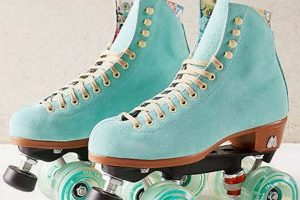
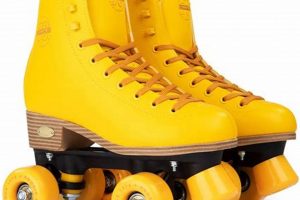
Items essential for the activity of roller skating constitute a distinct category of merchandise. This encompasses a wide array of products from the foundational elements required to build or maintain the skates themselves to protective measures ensuring user safety. For instance, wheels, bearings, and axles are integral for the functionality of the skates, while helmets, pads, and guards minimize the risk of injury.
The availability of such goods is paramount to the continued participation and safety within the roller skating community. Access to quality replacement parts extends the lifespan of skates, reducing waste and promoting sustainability. Concurrently, effective protective gear directly mitigates the potential for harm, encouraging wider participation across age groups and skill levels. Historically, the development and accessibility of these resources have significantly influenced the popularity and evolution of the sport and recreational activity.
Subsequent sections will detail the specific components and accessories vital to roller skating, including a thorough examination of wheel types, bearing specifications, protective equipment standards, and maintenance tools designed for optimal performance and longevity.
Guidance Regarding Essential Components for Roller Skating
The following guidelines are intended to provide information regarding the selection, maintenance, and utilization of items integral to the practice of roller skating, ensuring both safety and performance.
Tip 1: Wheel Selection. The durometer, or hardness, of the wheel should correspond with the skating surface. Softer wheels (lower durometer) are suitable for rougher outdoor surfaces, providing better grip and shock absorption. Harder wheels (higher durometer) are more appropriate for smooth indoor surfaces, enabling greater speed and maneuverability.
Tip 2: Bearing Maintenance. Regular cleaning and lubrication of bearings are crucial for optimal performance. Contaminants such as dirt and debris can impede the smooth rotation of the wheels. A dedicated bearing cleaning solution and lubricant should be used to maintain consistent speed and efficiency.
Tip 3: Protective Gear Assessment. Protective equipment, including helmets, wrist guards, elbow pads, and knee pads, should meet established safety standards. Ensure that the equipment fits properly and is securely fastened to provide adequate protection in the event of a fall.
Tip 4: Axle Integrity. Periodically inspect the axles for signs of wear or damage. Bent or weakened axles can compromise the stability of the skates and increase the risk of accidents. Replace axles as needed with components of appropriate specifications.
Tip 5: Boot and Plate Security. The connection between the boot and the plate should be regularly checked. Loose mounting hardware can lead to instability and control issues. Tighten screws and bolts as necessary, following the manufacturer’s recommendations.
Tip 6: Toe Stop or Plug Condition. Examine the toe stop or plug for wear. Worn toe stops or plugs can reduce braking effectiveness and increase the risk of tripping. Replace them when the material is significantly diminished.
The conscientious application of these recommendations will contribute to a safer and more enjoyable roller skating experience, while also prolonging the lifespan of the associated equipment.
The concluding section will synthesize the information presented, offering a comprehensive overview of the key factors to consider when engaging with roller skating.
1. Wheels (durometer, size)

The characteristics of wheels, specifically their durometer and size, represent a critical subset within the broader category of skating resources. These attributes directly influence the skating experience, impacting speed, grip, and maneuverability, thereby making them an indispensable consideration.
- Durometer and Surface Interaction
The durometer rating of a wheel indicates its hardness. Lower durometer wheels, being softer, offer enhanced grip and shock absorption on rough surfaces such as asphalt. Higher durometer wheels, being harder, provide minimal friction, permitting faster speeds on smooth surfaces like polished concrete or wood. The selection of an appropriate durometer based on the intended skating surface is paramount for both performance and safety. For example, recreational skaters on outdoor trails often prefer softer wheels, whereas speed skaters in indoor rinks favor harder compounds.
- Wheel Size and Rolling Efficiency
Wheel size, typically measured in millimeters, also significantly contributes to skating dynamics. Larger diameter wheels generally maintain momentum more effectively, allowing for greater speed and covering distance more efficiently. Smaller diameter wheels offer increased maneuverability and acceleration, making them suitable for activities such as rink skating or roller derby. The selection of wheel size is often a trade-off between speed and agility, dictated by the skater’s preference and style.
- Material Composition and Wear Resistance
The material composition of wheels, frequently polyurethane or its variations, affects their durability and wear resistance. Higher-quality materials are less prone to abrasion and degradation, extending the lifespan of the wheel and ensuring consistent performance over time. Inferior materials may exhibit premature wear, resulting in diminished grip, increased vibration, and ultimately, the need for more frequent replacement. The selection of materials should reflect the intended frequency and intensity of use.
- Hub Design and Bearing Compatibility
The hub design of a wheel impacts its structural integrity and compatibility with bearings. A well-designed hub provides a secure and stable platform for the bearings, ensuring smooth and efficient rotation. Incompatible or poorly constructed hubs can lead to bearing misalignment, increased friction, and ultimately, wheel failure. Ensuring compatibility between the hub and bearing specifications is essential for maintaining optimal performance and preventing equipment damage.
The interplay between wheel durometer, size, material composition, and hub design highlights the complexity involved in selecting appropriate equipment. Careful consideration of these factors ensures that the chosen items align with the skater’s specific needs and preferences, contributing to both an enhanced and safer skating experience.
2. Bearings (ABEC rating)

The performance of roller skates is significantly influenced by the quality and specifications of their bearings. ABEC ratings, a standardized system for rating bearing tolerances, represent a key factor in assessing the suitability of bearings for skating applications. Their inclusion in skating provisions directly impacts speed, smoothness, and overall user experience.
- ABEC Rating and Precision Manufacturing
The Annular Bearing Engineering Committee (ABEC) rating system assigns numerical values (e.g., ABEC 1, 3, 5, 7, 9) to bearings based on their manufacturing precision. Higher ABEC ratings indicate tighter tolerances and greater accuracy in bearing construction. Bearings with higher ABEC ratings generally exhibit reduced friction and increased rotational efficiency. In the context of skating, this translates to faster speeds and smoother rides. Lower ABEC rated bearings, while less precise, may be more durable and suitable for recreational skating where extreme speed is not a primary concern.
- Material Composition and Durability
The materials used in bearing construction significantly impact their durability and performance. Chrome steel is a common material due to its balance of hardness and corrosion resistance. Ceramic bearings, while more expensive, offer superior performance characteristics including reduced friction, lower heat generation, and increased lifespan. The choice of material depends on the intended application and the skater’s priorities. High-performance skaters often prefer ceramic bearings, while recreational skaters may find steel bearings sufficient.
- Seals and Lubrication
Bearing seals protect the internal components from contaminants such as dirt, dust, and moisture. Seals can be either shielded (metal) or sealed (rubber or plastic). Shielded bearings offer less protection but lower friction, while sealed bearings provide greater protection but slightly higher friction. Proper lubrication is essential for minimizing friction and preventing wear. Grease and oil are common lubricants, each offering different performance characteristics. Oil is typically used in high-speed applications, while grease is preferred for its longevity and ability to withstand higher loads.
- Impact on Skating Performance and Safety
The selection of appropriate bearings, considering their ABEC rating, material, seals, and lubrication, directly influences skating performance and safety. High-quality bearings provide a smoother, faster ride, allowing skaters to maintain momentum with less effort. Worn or damaged bearings can cause increased friction, instability, and potentially lead to accidents. Regular inspection and maintenance of bearings are essential for ensuring safe and enjoyable skating experiences. Skaters should choose bearings that match their skill level, skating style, and the conditions in which they skate.
In summary, the bearings, particularly as defined by their ABEC rating, represent a crucial, albeit often overlooked, component of skate equipment. The interplay between precision, materials, sealing, and lubrication dictates the level of performance and safety attainable. By making informed choices aligned with skating requirements, skaters can optimize their equipment for enhanced enjoyment and minimized risk.
3. Protective Gear

Protective equipment constitutes a fundamental and non-negotiable subset within roller skate provisions. The intrinsic connection between the act of roller skating and the potential for injury necessitates the consistent and proper utilization of safety devices. Helmets, wrist guards, elbow pads, and knee pads mitigate the risk of severe injury resulting from falls, collisions, or loss of control, thus underscoring their essential role. A failure to incorporate these elements significantly elevates the probability of physical harm, transforming a recreational activity into a hazardous undertaking. For instance, a skater neglecting to wear a helmet is disproportionately vulnerable to head trauma in the event of a fall, potentially leading to severe, long-term neurological consequences. Similarly, absent wrist guards, a fall can easily result in fractures or sprains of the wrist, impeding functionality and requiring medical intervention.
The availability of high-quality, appropriately sized protective equipment is paramount for fostering participation across various age groups and skill levels. The assurance of safety encourages individuals to engage in roller skating without undue apprehension. Consider organized roller derby leagues, where the enforcement of stringent protective gear regulations demonstrably reduces the incidence and severity of injuries among participants. Likewise, skating instructors emphasize the importance of protective measures from the outset, instilling safe practices from the earliest stages of learning. These proactive measures not only safeguard individuals but also contribute to a more positive perception of the activity, promoting its long-term viability and acceptance within communities.
In conclusion, protective equipment is not merely an optional add-on but rather an indispensable component of roller skate provisions. Its consistent use directly mitigates the risk of injury, encourages broader participation, and fosters a safer skating environment. The integration of robust protective gear regulations and educational initiatives is crucial for ensuring that roller skating remains a safe and enjoyable activity for all participants.
4. Maintenance tools
Maintenance tools represent a critical, albeit often overlooked, subset of skating equipment. Their role extends beyond mere accessories; they directly influence the longevity, performance, and safety of roller skates. The omission or inadequate use of these implements inevitably leads to equipment degradation, performance decline, and an increased risk of accidents. For instance, neglecting to regularly clean and lubricate bearings using appropriate solvents and lubricants results in increased friction, reduced speed, and potential bearing failure. Similarly, failing to tighten axle nuts and kingpin nuts with the correct wrenches compromises skate stability and maneuverability. The inverse is also true: consistent and proper maintenance prolongs the lifespan of the skates and ensures optimal performance.
The specific composition of a maintenance toolkit varies depending on the type and design of the roller skates. However, certain tools are universally applicable. These include: wrenches (for axle nuts, kingpin nuts, and truck adjustments), bearing pullers/presses (for bearing removal and installation), cleaning solvents (for removing dirt and grime from bearings and other components), lubricants (for reducing friction and wear), and screwdrivers (for mounting plates and adjusting toe stops). The absence of any of these tools hinders the ability to perform essential maintenance tasks. A practical example is the inability to replace worn-out toe stops without the appropriate screwdriver, rendering the skates unusable until the repair is completed. Another example is adjusting the trucks, which allows each skater to dial in the tightness of the wheels based on preference and skill. Not having the correct wrench will prevent this adjustment.
In conclusion, maintenance tools are indispensable for maintaining the integrity and performance of skating resources. Their inclusion within the broader category of equipment is not merely a convenience but a necessity. Regular maintenance, facilitated by the appropriate tools, translates to safer skating experiences, extended equipment lifespan, and enhanced overall performance. Neglecting maintenance ultimately results in increased costs, decreased performance, and elevated safety risks. Therefore, skaters should prioritize the acquisition and proper utilization of maintenance tools as an integral component of their skating practices.
5. Replacement parts
The availability of replacement parts is intrinsic to the comprehensive ecosystem of roller skate provisions. Without accessible replacement components, the lifespan and usability of skates are significantly curtailed. Therefore, an understanding of common replacements and their impact on skate performance is essential.
- Wheel Replacements
Wheels, due to constant contact with skating surfaces, are subject to wear and tear. The frequency of replacement depends on usage intensity, surface type, and wheel durometer. Providing a selection of replacement wheels, differing in durometer and size, allows skaters to adapt to various skating environments and maintain optimal performance. For example, skaters transitioning from outdoor to indoor skating may require a switch from softer, grippier wheels to harder, faster wheels.
- Bearing Replacements
Bearings are susceptible to contamination and wear, affecting the smoothness and speed of the skates. Replacement bearings, often categorized by ABEC rating, are critical for maintaining optimal performance. Skaters experiencing reduced speed or rough rolling should consider bearing replacement. Access to a variety of bearing types enables skaters to select bearings that match their specific needs and skating style.
- Toe Stop Replacements
Toe stops serve as braking mechanisms and points of stability. They experience significant wear and require periodic replacement. Worn toe stops compromise braking effectiveness and increase the risk of accidents. Supplying a range of toe stop sizes and materials allows skaters to customize their braking system for enhanced control and safety.
- Axle and Hardware Replacements
Axles, nuts, and bolts are structural components that can be damaged or lost over time. Damaged axles compromise wheel alignment and skate stability. Lost or stripped nuts and bolts can render skates unusable. Replacement axles and hardware are essential for maintaining the structural integrity and functionality of the skates.
The accessibility of these replacement parts directly impacts the sustainability and cost-effectiveness of roller skating. By providing a comprehensive selection of replacement components, the overall value proposition of roller skate supplies is enhanced, ensuring that skaters can maintain their equipment in optimal condition for extended periods. A full service skate shop often will offer repair services utilizing these replacement parts, allowing customers to bring in equipment and rely on skilled labor for fixes.
Frequently Asked Questions
The subsequent questions and answers address common inquiries regarding components and accessories essential for roller skating.
Question 1: What constitutes “roller skate supplies” in its entirety?
The term encompasses all items necessary for the operation, maintenance, and safety of roller skates. This includes, but is not limited to, wheels, bearings, protective gear, replacement parts, and maintenance tools.
Question 2: How frequently should wheels be replaced on roller skates?
Wheel replacement frequency depends on several factors, including the skater’s weight, skating surface, skating style, and wheel durometer. Regular inspection for wear is recommended; replacement is advised when wheels exhibit significant wear or diminished performance.
Question 3: What is the significance of the ABEC rating for roller skate bearings?
The ABEC rating is an industry standard for measuring bearing tolerances. Higher ABEC ratings indicate tighter tolerances and potentially smoother, faster performance. However, the ABEC rating is not the sole determinant of bearing quality; material and construction also play crucial roles.
Question 4: What protective equipment is deemed essential for roller skating?
At a minimum, a helmet, wrist guards, elbow pads, and knee pads are considered essential. These items mitigate the risk of injury in the event of a fall or collision. The specific type and quality of protective gear should align with the skater’s skill level and skating environment.
Question 5: What maintenance tools are necessary for routine roller skate upkeep?
Essential maintenance tools include wrenches (for axle nuts and kingpin adjustments), bearing pullers/presses (for bearing removal and installation), cleaning solvents (for bearing cleaning), and lubricants (for reducing friction). Regular maintenance prolongs the lifespan of roller skates and ensures optimal performance.
Question 6: Where can reliable resources for skating needs be obtained?
Reputable roller skate shops, both online and brick-and-mortar, are generally reliable sources. It is advisable to research the reputation and expertise of the supplier before making a purchase.
In essence, informed selection, proper maintenance, and consistent utilization of key equipment contributes to safer and more enjoyable skating experiences. Prioritizing the quality of each component is crucial for long-term satisfaction.
The concluding section will offer a concise summary of the core principles discussed herein.
Conclusion
This exposition has detailed the integral role played by roller skate supplies in facilitating the activity of roller skating. From the fundamental components of wheels and bearings to the critical safety elements of protective gear and the essential maintenance tools, each category contributes directly to the skater’s experience and the longevity of the equipment. Replacement parts, often overlooked, ensure continued usability and represent a sustainable approach to skate ownership.
The selection of appropriate materials and understanding of maintenance requirements are crucial to mitigating risk and maximizing performance. Individuals involved in roller skating should consider this information to ensure both safety and optimized performance. Prioritizing quality components will increase the lifespan and usability of equipment.
![Best Places Where to Roller Skate? [Guide + Tips] | Learn to Surf & Skate: A Beginner's Step-by-Step Guide](https://universitysurfandskate.com/wp-content/uploads/2026/04/th-366-300x200.jpg "Best Places Where to Roller Skate? [Guide + Tips] Learn to Surf & Skate: A Beginner's Step-by-Step Guide")