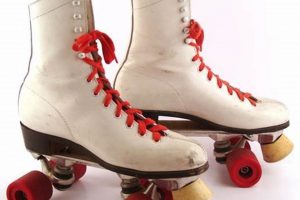
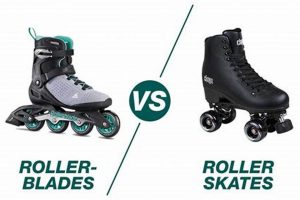
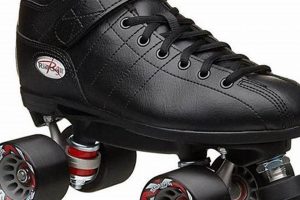
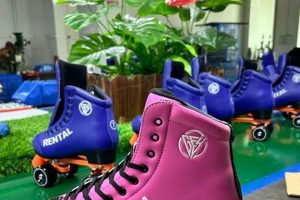
Roller skates offering a high degree of personalization represent a significant development in recreational and competitive skating. These products allow individuals to select specific components like boots, plates, wheels, bearings, and stoppers to match their individual skating style, foot shape, and performance goals. An example includes selecting a carbon fiber boot for increased responsiveness in speed skating or choosing softer wheels for enhanced grip in rink skating.
The capacity to tailor equipment improves performance, comfort, and safety. Historically, skaters were limited to standardized equipment which often compromised fit and function. The shift toward personalization addresses these limitations, allowing for optimized control and reduced risk of injury. This adaptability is crucial for both novice skaters seeking a comfortable learning experience and experienced athletes aiming for peak performance. The benefits extend to increased enjoyment and participation in skating activities.
The following sections will delve into the specific components available for personalization, the process of selecting appropriate parts, and the considerations involved in assembling personalized skating equipment. Furthermore, the discussion will examine the impact of this trend on the roller skating industry and the future of skating technology.
Customizable Roller Skates
The following guidelines provide essential considerations for those seeking to assemble or modify skating equipment for optimal performance and safety.
Tip 1: Assess Skill Level and Skating Style: Determine the intended use (recreational, artistic, speed, etc.) and the skater’s proficiency. A beginner requires a stable, forgiving setup, while an advanced skater might prioritize responsiveness and specialized components.
Tip 2: Prioritize Boot Fit: The boot should provide a snug, secure fit without restricting circulation. Ill-fitting boots can cause discomfort, blisters, and reduced control. Consider heat-moldable options for a truly custom fit.
Tip 3: Choose the Correct Plate Material: Plate material influences responsiveness and durability. Aluminum plates offer stiffness and strength for advanced maneuvers, while nylon plates provide more flex, which is suitable for beginners or recreational skating.
Tip 4: Consider Wheel Durometer and Size: Wheel durometer (hardness) affects grip and roll. Softer wheels (lower durometer) provide more grip, while harder wheels roll faster on smooth surfaces. Wheel size impacts speed and maneuverability; smaller wheels offer greater agility.
Tip 5: Select Bearings Based on Precision: Bearing ABEC rating indicates manufacturing precision. Higher ABEC ratings generally result in smoother, faster rolling but are not necessarily more durable. Consider the bearing material and construction for longevity.
Tip 6: Regularly Inspect and Maintain Equipment: Check for loose hardware, worn wheels, and damaged bearings. Routine maintenance ensures optimal performance and prevents accidents.
Tip 7: Consult with Experienced Skaters or Professionals: Seek advice from knowledgeable individuals at skate shops or online communities. They can provide tailored recommendations based on specific needs and preferences.
Optimal equipment selection, meticulous fitting, and consistent maintenance are crucial to achieving performance goals and ensuring a safe and enjoyable skating experience.
The subsequent sections will address potential challenges related to assembly and troubleshooting, as well as exploring advanced modifications and emerging technologies.
1. Boot Materials and Customizable Roller Skates
Boot materials are a critical determinant of the overall performance and comfort within the realm of adaptable skating equipment. The selection of a specific boot material directly impacts the skate’s responsiveness, support, and durability. For example, leather boots, traditionally favored for their durability and ability to mold to the skater’s foot over time, provide a firm and supportive structure. This translates to increased stability and control, especially beneficial for skaters engaging in demanding maneuvers. Alternatively, synthetic materials, such as carbon fiber or microfiber, offer a lighter weight option. This can lead to enhanced agility and reduced fatigue, particularly advantageous for speed skating or aggressive styles where quick movements are paramount.
The composition of the boot also influences thermal management and breathability. Leather, while durable, can retain moisture, leading to discomfort. Synthetic materials often incorporate ventilation features to improve airflow and wick away moisture, contributing to a more comfortable skating experience. Heat-moldable materials represent a further advancement, allowing skaters to achieve a truly customized fit by shaping the boot to the specific contours of their feet. This level of personalization minimizes pressure points and maximizes energy transfer, optimizing both comfort and performance. The choice of boot material must, therefore, align with the skater’s specific needs, considering factors such as skating style, frequency of use, and environmental conditions.
The interplay between boot materials and adaptability highlights the interconnectedness of components within a comprehensive skating system. Understanding the properties of different materials is paramount for making informed decisions that enhance both performance and safety. While material selection offers significant advantages, potential drawbacks, such as higher costs for advanced materials or reduced durability in certain synthetics, must be carefully evaluated. Continued innovation in material science promises to further refine the capabilities and lifespan of adaptable skating equipment, reinforcing its significance in modern skating disciplines.
2. Plate Stiffness
Plate stiffness, a critical factor in the context of adaptable skating equipment, significantly influences energy transfer and control. A stiffer plate, typically constructed from materials such as aluminum alloys, minimizes energy loss during push-off and turning. This characteristic is particularly beneficial for speed skating and aggressive disciplines where maximum power output and precise responsiveness are paramount. The rigidity of the plate allows for a more direct translation of force from the skater’s foot to the wheels, resulting in enhanced acceleration and agility. For instance, a competitive speed skater will often opt for a high-stiffness plate to optimize their stride efficiency, enabling them to maintain higher speeds over longer distances. In contrast, artistic skaters might favor a plate with more flex, as it provides greater sensitivity and allows for more nuanced movements during complex routines.
The impact of plate stiffness extends beyond performance enhancement to also affect comfort and fatigue levels. A plate that is too stiff can transmit excessive vibrations to the skater’s foot, leading to discomfort and premature fatigue. Conversely, a plate that is too flexible might feel unstable and unresponsive, reducing control and increasing the risk of injury. Therefore, selecting an appropriate plate stiffness requires careful consideration of the skater’s weight, skill level, and intended use. For example, a heavier skater might require a stiffer plate to prevent excessive flexing and maintain stability, while a lighter skater might find a more flexible plate to be more comfortable and responsive. Real-world examples also illustrate that improperly matched plate stiffness can lead to performance limitations or even injuries. A skater using a plate that is too flexible for their weight and skating style may experience reduced power transfer and increased risk of ankle strain.
In summary, plate stiffness constitutes a key element in the process of customizing skating equipment. Understanding the relationship between plate material properties, skating style, and skater characteristics allows for informed decisions that optimize both performance and comfort. Challenges remain in accurately quantifying plate stiffness and predicting its impact on skater biomechanics. However, ongoing research and development efforts are aimed at refining plate design and materials, furthering the potential for personalized skating setups that cater to the specific needs of individual skaters.
3. Wheel durometer
Wheel durometer represents a critical specification governing the performance characteristics of wheels employed in adaptable skating equipment. Measured on the A scale, durometer quantifies the hardness of the wheel material, directly influencing grip, roll speed, and durability.
- Grip and Surface Interaction
Lower durometer wheels (e.g., 78A-85A) exhibit greater deformation upon contact with the skating surface, resulting in increased friction and enhanced grip. This attribute is beneficial on less-than-ideal surfaces or for skating styles demanding precise control, such as artistic or recreational skating. Conversely, harder wheels (e.g., 88A-101A) offer reduced grip but increased roll speed. The selection of wheel durometer, therefore, represents a trade-off between maneuverability and velocity, dependent on the intended skating environment and style.
- Roll Speed and Energy Efficiency
Harder wheels minimize energy dissipation due to deformation, allowing for faster roll speeds. This characteristic is desirable for speed skating and competitive environments where minimizing friction is paramount. However, the reduced grip of harder wheels may compromise control on uneven or slippery surfaces. The relationship between wheel durometer and roll speed is governed by principles of friction and energy conservation, with harder wheels exhibiting greater efficiency on smooth, consistent surfaces.
- Durability and Wear Resistance
Wheel durometer also affects wear resistance and lifespan. Softer wheels, due to their increased deformation, tend to wear down more rapidly than harder wheels. This is particularly noticeable on abrasive surfaces or with aggressive skating styles. Harder wheels, while offering greater durability, may transmit more vibration and impact forces to the skater, potentially leading to discomfort or fatigue. The choice of wheel durometer must, therefore, consider the balance between performance requirements and expected wheel lifespan.
- Skating Style and Application
The selection of wheel durometer should align with the specific demands of the skating discipline. Artistic skaters often favor softer wheels for enhanced grip and control during intricate maneuvers. Speed skaters prioritize harder wheels for maximum roll speed and efficiency. Recreational skaters may opt for a compromise between grip and speed, selecting a mid-range durometer suitable for various surface conditions. The specific needs of each skating style dictate the optimal durometer range for achieving desired performance outcomes.
The strategic manipulation of wheel durometer allows skaters to fine-tune their equipment to optimize performance and comfort. This adaptability underscores the value of adaptable skating equipment, allowing users to tailor their setup to meet specific requirements and preferences. Furthermore, experimentation with different durometer wheels can provide valuable insights into the interaction between equipment and skating technique, fostering a deeper understanding of performance optimization.
4. Bearing precision
Bearing precision, a key element in customizable roller skates, directly influences roll efficiency and overall performance. The dimensional accuracy and manufacturing tolerances of bearings determine the smoothness and speed of wheel rotation. Consequently, the selection of bearings with appropriate precision is crucial for optimizing the skating experience.
- ABEC Rating and Manufacturing Tolerances
The Annular Bearing Engineers’ Committee (ABEC) rating system is a common standard for classifying bearing precision. Higher ABEC ratings (e.g., ABEC 7, ABEC 9) indicate tighter manufacturing tolerances and reduced internal friction. For instance, bearings with an ABEC 7 rating exhibit greater dimensional accuracy compared to ABEC 3 bearings, resulting in smoother and faster rolling. In the context of customizable roller skates, skaters seeking enhanced speed and efficiency often opt for bearings with higher ABEC ratings.
- Bearing Materials and Lubrication
Bearing materials, such as steel, ceramic, or hybrid combinations, impact durability and friction characteristics. Ceramic bearings, for example, offer reduced friction and increased heat resistance compared to steel bearings, resulting in improved roll efficiency and longer lifespan. The type of lubricant used also affects bearing performance. Low-viscosity lubricants minimize friction, while high-viscosity lubricants provide greater protection against wear. Skaters can tailor their bearing selection based on their skating style and environmental conditions.
- Impact on Skating Performance
Bearing precision directly affects skating speed, acceleration, and energy expenditure. High-precision bearings minimize energy loss due to friction, allowing skaters to maintain higher speeds with less effort. This is particularly relevant in speed skating or long-distance skating, where minimizing energy expenditure is crucial. In contrast, skaters prioritizing durability or affordability may choose bearings with lower precision ratings. The trade-off between performance and cost is a key consideration in bearing selection.
- Maintenance and Longevity
Proper maintenance, including cleaning and lubrication, is essential for preserving bearing precision and extending lifespan. Contaminants such as dirt and moisture can degrade bearing performance and accelerate wear. Regular cleaning and lubrication help to remove contaminants and maintain optimal lubrication, ensuring smooth and efficient rolling. The frequency of maintenance depends on skating conditions and usage intensity. Skaters who frequently skate in dirty or wet environments may need to perform maintenance more often.
The relationship between bearing precision and customizable roller skates underscores the importance of component selection in achieving desired performance characteristics. While higher-precision bearings offer performance advantages, they also come with increased costs and may require more frequent maintenance. The informed selection of bearings, considering factors such as ABEC rating, materials, lubrication, and maintenance, allows skaters to optimize their equipment for their specific needs and preferences.
5. Toe stop style

The selection of toe stop style is a significant aspect of adaptable roller skating equipment, influencing braking efficiency, stability, and maneuverability. Toe stops, typically constructed from rubber or composite materials, provide a point of contact with the skating surface for stopping, executing specific dance moves, and maintaining balance. The style, size, and adjustability of the toe stop directly correlate with the skater’s intended use and skill level. For instance, adjustable toe stops allow skaters to alter the height and angle, optimizing the contact point for different skating styles or surface conditions. In artistic skating, smaller, more rounded toe stops are favored for precise footwork and control during intricate routines. Alternatively, larger, flat toe stops provide greater stopping power and stability for recreational or jam skating. The impact of toe stop style is particularly evident in competitive settings where rapid stops and precise movements are crucial for achieving optimal performance. An improper toe stop style can negatively impact a skater’s ability to execute maneuvers safely and effectively.
The relationship between toe stop style and adaptable skating equipment underscores the importance of considering individual needs and preferences. Customization options extend beyond simple replacement to include specialized toe stop designs, such as those with angled surfaces or adjustable stems. These advanced toe stops cater to specific skating styles, providing enhanced grip, stability, or maneuverability. Real-world examples illustrate the practical significance of this customization. A speed skater might opt for a minimal toe stop or eliminate it entirely to reduce weight and improve aerodynamics, while a roller derby skater requires durable and reliable toe stops for frequent and forceful stops. The ability to tailor the toe stop to the skater’s specific requirements highlights the versatility and adaptability of modern roller skating equipment. Moreover, a growing emphasis on safety has led to the development of toe stops with improved grip and durability, further enhancing the overall skating experience.
In summary, the choice of toe stop style is a critical consideration in the realm of adaptable skating equipment. Understanding the influence of toe stop design on braking efficiency, stability, and maneuverability allows skaters to optimize their equipment for their specific needs and skill level. While challenges remain in standardizing toe stop sizing and attachment methods, continued innovation in materials and designs promises to further enhance the functionality and safety of this essential skating component. The strategic selection of a suitable toe stop represents a fundamental aspect of creating a personalized skating setup.
6. Truck adjustability

Truck adjustability is a foundational aspect of customizable roller skates, enabling skaters to fine-tune the handling characteristics of their equipment. This adjustability directly influences turning radius, stability, and overall responsiveness, catering to diverse skating styles and skill levels. Understanding the principles of truck adjustment is essential for skaters seeking to optimize their performance and comfort.
- Kingpin Tension and Turning Radius
The kingpin is a central bolt that holds the truck components together. Adjusting the kingpin nut alters the tension on the cushions (bushings), directly impacting the ease with which the skates turn. Loosening the kingpin allows for greater truck movement, resulting in a smaller turning radius and increased maneuverability. Conversely, tightening the kingpin restricts truck movement, leading to a larger turning radius and enhanced stability. For example, artistic skaters often prefer looser trucks for executing intricate turns, while speed skaters prioritize tighter trucks for maintaining straight-line stability.
- Cushion (Bushing) Material and Durometer
Cushions, also known as bushings, are elastomeric components that provide resistance to truck movement. The material and durometer (hardness) of the cushions influence the overall feel and responsiveness of the trucks. Softer cushions allow for easier turning and greater rebound, while harder cushions provide more resistance and stability. Polyurethane cushions are a common choice, with varying durometers available to cater to different skating styles. Skaters can experiment with different cushion durometers to find the optimal balance between maneuverability and stability.
- Axle Adjustability and Wheel Alignment
Some trucks offer adjustable axles, allowing skaters to fine-tune wheel alignment. Proper wheel alignment ensures that the wheels roll smoothly and efficiently, minimizing friction and maximizing speed. Misaligned wheels can cause uneven wear, reduced speed, and instability. Adjustable axles enable skaters to compensate for manufacturing tolerances and ensure optimal wheel alignment, enhancing both performance and longevity. For instance, if one wheel consistently wears down faster than the others, adjusting the axle can help correct the alignment and distribute wear more evenly.
- Truck Angle and Stability
The angle of the truck relative to the boot influences the skate’s stability. Lower truck angles generally provide greater stability, while higher truck angles offer increased maneuverability. This adjustment is typically fixed on most roller skate plates but can be modified on some advanced models. For example, a low truck angle is beneficial for beginners or skaters who prioritize stability, while a higher truck angle is favored by skaters who need greater agility for tricks or tight turns. Understanding the impact of truck angle allows skaters to select equipment that aligns with their skating style and skill level.
These adjustable elements, when harmonized, provide a customized skating experience. Further enhancements in truck technology are likely to focus on even finer levels of adjustment and improved materials, catering to the evolving demands of the skating community and solidifying truck adjustability as a cornerstone of customizable roller skates.
Frequently Asked Questions
The following questions address common inquiries regarding customizable roller skates. The information provided aims to clarify aspects related to component selection, performance optimization, and maintenance.
Question 1: What factors determine the appropriate boot size for customizable roller skates?
Accurate boot sizing is paramount. Foot length and width should be measured precisely, ideally using a Brannock device. The chosen boot should provide a snug, secure fit without restricting circulation or causing pressure points. Consider the sock thickness typically worn during skating. Heat-moldable boots offer a customized fit but require professional fitting.
Question 2: How does plate material influence skating performance?
Plate material affects responsiveness, durability, and weight. Aluminum plates offer superior stiffness and energy transfer, suitable for advanced maneuvers and competitive skating. Nylon plates provide more flexibility and shock absorption, advantageous for recreational skating or beginners. The selection depends on skating style, skill level, and intended use.
Question 3: What considerations apply when selecting wheel durometer?
Wheel durometer (hardness) impacts grip, roll speed, and wear resistance. Softer wheels (lower durometer) offer increased grip but reduced speed and durability. Harder wheels (higher durometer) provide faster roll speeds but less grip and shock absorption. Surface conditions, skating style, and skater weight should inform the selection process.
Question 4: What is the significance of ABEC ratings for roller skate bearings?
ABEC ratings (Annular Bearing Engineers’ Committee) indicate manufacturing precision and tolerances. Higher ABEC ratings generally correspond to smoother and faster rolling. However, ABEC ratings do not directly correlate with bearing durability or load-bearing capacity. Consider bearing material, lubrication, and maintenance practices for optimal performance and longevity.
Question 5: How often should roller skate bearings be cleaned and lubricated?
Bearing maintenance frequency depends on usage intensity and environmental conditions. Bearings should be cleaned and lubricated whenever performance degrades or after exposure to dirt, water, or abrasive surfaces. Use a solvent to remove old lubricant and debris, then apply a high-quality lubricant designed for roller skate bearings. Over-lubrication can attract contaminants and reduce efficiency.
Question 6: What safety precautions should be observed when using customizable roller skates?
Wearing appropriate protective gear, including a helmet, wrist guards, elbow pads, and knee pads, is essential. Inspect equipment regularly for wear or damage. Skate in designated areas that are free from obstacles and hazards. Be aware of surroundings and traffic conditions. Practice safe skating techniques and avoid reckless behavior.
In summary, informed decision-making regarding component selection, maintenance, and safety practices is crucial for optimizing the performance and longevity of customizable roller skates.
The following sections will explore advanced customization techniques and emerging trends in roller skating technology.
Conclusion
This exploration has underscored the multifaceted nature of customizable roller skates. The capacity to individually select and assemble components, from boots and plates to wheels and bearings, represents a paradigm shift from standardized equipment. This personalization allows for optimized performance, enhanced comfort, and a reduced risk of injury across a spectrum of skating disciplines. The informed selection of each element, aligned with individual needs and skill levels, is paramount to achieving desired outcomes.
As technology advances and materials science evolves, the potential for further refinement in customizable roller skates expands. Individuals are encouraged to engage with knowledgeable professionals and resources to navigate the available options and ensure proper assembly and maintenance. The continued pursuit of innovation in this field promises to further elevate the skating experience for both recreational and competitive participants.