The chronicle of wheeled footwear designed for gliding across surfaces is a narrative spanning centuries, reflecting innovation and adaptation driven by recreational pursuits and practical applications. Its development showcases human ingenuity in harnessing mechanics for enhanced mobility and entertainment.
The evolution from rudimentary inline designs to the diverse configurations observed today reflects advancements in materials science and engineering. This progression has provided opportunities for physical exercise, artistic expression through dance and acrobatics, and a practical means of transportation, demonstrating a broad impact on society.
The following discussion will explore key milestones in its development, examine prominent figures who contributed to its design and popularization, and highlight the cultural and technological influences that have shaped its trajectory.
Key Considerations in Understanding the Evolution of Wheeled Skates
Examining the progression of human-powered rolling footwear requires a nuanced approach to historical analysis. Several factors are crucial for a comprehensive understanding.
Tip 1: Trace Early Innovations: Understand the early patents and prototypes. The initial concepts, often clumsy and impractical, laid the groundwork for subsequent refinements. Identify figures like Joseph Merlin and their contributions, however rudimentary.
Tip 2: Analyze Material Advancements: Note the shift from wood and metal to composite materials and plastics. Material science significantly impacted performance, durability, and affordability. The introduction of polyurethane wheels marked a significant leap.
Tip 3: Differentiate Design Types: Distinguish between inline and quad designs and their respective advantages. Quad skates initially offered greater stability, while inline designs allowed for increased speed and maneuverability. Analyze the factors that influenced the popularity of each design at different times.
Tip 4: Consider Cultural Influences: Explore the role of roller skating in popular culture. Roller rinks, disco, and various subcultures contributed to its mainstream appeal. Evaluate the interplay between technological innovation and social trends.
Tip 5: Investigate the Impact of Manufacturing Processes: Acknowledge the impact of mass production techniques. Streamlined manufacturing processes made it more accessible to a broader consumer base. Examine how industrialization influenced design and distribution.
Tip 6: Explore Competitive Skating Disciplines: Investigate the development of various skating sports. Roller derby, figure skating, and speed skating have driven innovation in skate design and performance. Identify key athletes and their contributions.
A holistic appreciation of this topic necessitates a careful consideration of design evolution, material science, cultural phenomena, and manufacturing advancements. Acknowledging these elements provides a solid foundation for future research.
The subsequent sections will delve into specific historical periods, shedding light on the pivotal moments and individuals that have shaped the development of rolling skates.
1. Early Patents and Prototypes

The nascent stages in the narrative of wheeled skates are inextricably linked to early patents and prototypes. These initial endeavors, despite often lacking refinement, represent the genesis of a technology intended to mimic or augment human locomotion. The early patent filings, though not always resulting in commercially viable products, established precedence and documented inventive concepts critical to subsequent innovation.
Joseph Merlin’s 1760s creation, while more demonstration piece than practical device, serves as a foundational example. While not formally patented, its historical record illustrates an early attempt to achieve wheeled mobility. Similarly, subsequent patents in the 19th century, such as those for inline designs, demonstrate an iterative process of improvement. These patents, regardless of immediate market success, provided blueprints and conceptual frameworks for later inventors to build upon, contributing directly to the design, functionality, and utility of the device. The progression from rudimentary wood and metal constructions to more sophisticated mechanisms illustrates a cause-and-effect relationship: the limitations of early prototypes spurred the development of improved technologies.
Understanding the contributions of these early inventors, as documented in patent records and historical accounts, is essential for grasping the device’s evolution. Their attempts, failures, and incremental successes laid the foundation for the modern recreational and sporting equipment known today. Analyzing these early patents and prototypes reveals the core principles and challenges that have shaped the design and application of human-powered rolling footwear, contributing to a more complete understanding of its story.
2. Material Science Advancements

The history of the roller skate is inextricably linked to advancements in material science. The evolution of materials used in their construction directly influenced performance, durability, safety, and ultimately, the widespread adoption of this recreational device.
- The Transition from Wood and Metal to Polymers
Early roller skate designs relied heavily on wood and metal components. Wooden wheels, for example, offered limited grip and a rough ride. Metal frames, while durable, added significant weight. The introduction of polymer materials, specifically plastics like polyurethane, revolutionized the industry. Polyurethane wheels provided superior grip, a smoother ride, and increased durability compared to their predecessors. The shift to polymer-based materials enabled lighter, more efficient, and safer skate designs, fostering a surge in popularity.
- Development of Precision Bearings
The implementation of precision bearings significantly impacted performance. Early skates often used rudimentary bearing systems, leading to friction and reduced speed. The development of high-precision steel bearings minimized friction, allowing for faster and more efficient skating. Further advancements led to the use of ceramic bearings, which offered even lower friction and increased durability, particularly in high-performance skating applications.
- Composite Materials in Frame Construction
The frames of roller skates experienced significant material evolution. Early frames were primarily made of steel, which provided durability but added weight. The introduction of aluminum alloys offered a lighter and stronger alternative. Subsequently, composite materials like carbon fiber were incorporated into frame designs, resulting in extremely lightweight and rigid structures. These composite frames enhanced responsiveness and performance, especially in competitive skating disciplines.
- Advancements in Brake Pad Materials
Effective braking systems are critical for safety. Early brake designs often relied on simple rubber pads, which provided limited stopping power and durability. Material science advancements led to the development of more effective brake pad compounds, including specialized polymers and composite materials. These advanced brake pads offer improved stopping power, increased durability, and enhanced control, contributing to a safer skating experience.
These examples demonstrate the profound impact of material science on the development of human-powered rolling footwear. The continued exploration and application of innovative materials will undoubtedly shape the future of design and performance, leading to further improvements in speed, safety, and overall user experience.
3. Design Type Differentiations

The historical narrative of human-powered rolling footwear is punctuated by the evolution and divergence of design types. These differentiations are not merely aesthetic variations but represent distinct engineering solutions that have profoundly impacted the performance, application, and user experience throughout its existence.
- Inline vs. Quad Skates: The Fundamental Dichotomy
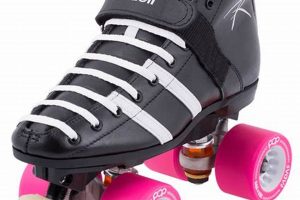
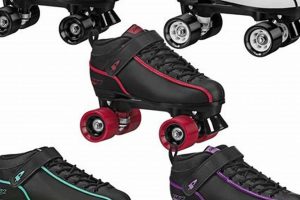
The division between inline and quad designs represents a foundational divergence. Quad skates, characterized by two pairs of wheels arranged laterally, initially offered enhanced stability and were prevalent in early recreational and roller derby contexts. Inline skates, with wheels arranged in a single line, prioritized speed and maneuverability, gaining prominence in figure skating and speed skating disciplines. This dichotomy reflects a trade-off between stability and agility, shaping the user’s approach to skating and influencing the development of specific skill sets.
- Wheel Configuration and its Impact on Performance
Beyond the basic inline/quad distinction, variations in wheel configuration within each type have played a crucial role. Inline skates, for instance, have seen the emergence of different wheel diameters and frame lengths, impacting speed, acceleration, and turning radius. Aggressive inline skates feature smaller wheels and reinforced frames for performing tricks, while speed skates utilize larger wheels for maximizing velocity. Similarly, quad skates have seen variations in wheel hardness and spacing, influencing grip and stability. These subtle alterations demonstrate how nuanced adjustments to wheel configuration can tailor skate performance to specific applications.
- Boot Design and Support Systems
The design of the boot and its support systems is another significant area of differentiation. Early skate boots were often simple leather constructions, offering minimal support. As skating became more specialized, boot designs evolved to provide enhanced ankle support, customized fitting options, and improved energy transfer. High-performance skates incorporate features like carbon fiber shells and adjustable closure systems to optimize responsiveness and control. These advancements in boot design reflect a growing understanding of biomechanics and the importance of providing adequate support and stability for various skating activities.
- Braking Mechanisms and Safety Features
The integration of braking mechanisms and other safety features represents a critical design differentiation. Early skates often lacked effective braking systems, contributing to accidents and injuries. The development of toe stops for quad skates and heel brakes for inline skates provided users with greater control over their speed and stopping ability. Furthermore, advancements in protective gear, such as helmets and pads, have significantly reduced the risk of injury. These design considerations highlight the importance of prioritizing user safety in the ongoing evolution.
In summary, design type differentiations constitute a vital element in understanding the chronicle of rolling footwear. The ongoing interplay between engineering innovation, user needs, and performance demands continues to shape the evolution of skates, resulting in a diverse array of designs tailored to specific activities and skill levels.
4. Cultural Phenomena Influences

Cultural phenomena have exerted a demonstrable influence on the development and popularization of human-powered rolling footwear. Examining the historical trajectory reveals a clear correlation between societal trends, entertainment fads, and the adoption and evolution of skating. Specific periods and subcultures have embraced skating, leading to surges in popularity, innovations in design, and the establishment of new skating disciplines. These cultural impacts are not merely tangential; they are integral to comprehending the historical narrative.
For instance, the rise of roller discos in the 1970s significantly amplified the appeal of quad skates. This cultural phenomenon transformed skating from a niche activity into a mainstream form of entertainment, driving demand and spurring manufacturers to improve skate design and production. Similarly, the emergence of aggressive inline skating as a subculture in the 1990s spurred the development of specialized skates designed for performing stunts and tricks, showcasing the direct impact of cultural trends on product innovation. Roller derby’s resurgence in the early 21st century, with its emphasis on athleticism and female empowerment, has contributed to the renewed popularity of quad skates and the development of specialized derby equipment. These examples illustrate how cultural movements can act as catalysts, shaping design and sustaining interest over decades.
In conclusion, recognizing the interconnection between cultural forces and the evolution is crucial for a holistic understanding. Cultural phenomena are not simply external factors; they are active agents that have shaped the industry, propelled innovation, and determined the periods of peak popularity. A complete historical analysis, therefore, requires careful consideration of the interplay between technological advancements and the ever-changing landscape of societal trends and cultural expression.
5. Competitive skating disciplines
The narrative of rolling footwear is profoundly intertwined with the development and evolution of competitive skating disciplines. These organized sports and performance activities have served as both a testing ground for technological innovation and a catalyst for the increased popularity and diversification of skate designs. The demands placed on equipment by competitive athletes have consistently driven advancements in materials, construction techniques, and performance characteristics.
Consider the historical impact of roller derby. Originating as a banked-track racing spectacle, it spurred the initial development of robust quad skates capable of withstanding the rigors of high-speed collisions and rapid maneuvers. As the sport evolved, so too did the equipment, with derby skaters continually seeking improvements in wheel durometer, plate construction, and boot design to enhance agility and control. Similarly, figure skating on roller skates has demanded precision and artistry, leading to specialized skate designs that prioritize edge control, stability, and responsiveness. The pursuit of excellence in competitive speed skating has driven the adoption of lightweight materials, aerodynamic profiles, and advanced bearing technology to minimize friction and maximize velocity. Even artistic disciplines, such as roller dance, demand specialized skates tailored to the unique needs of complex footwork and precise movements.
In summation, competitive skating disciplines represent a critical component of the broader history. The relentless pursuit of enhanced performance in these fields has consistently pushed the boundaries of design, driving innovation and contributing significantly to the wide array of designs available today. Understanding this relationship is essential for appreciating the multifaceted nature of rolling footwear development and its ongoing evolution.
Frequently Asked Questions
The following section addresses common inquiries regarding the development and evolution of rolling footwear, providing factual and historically grounded responses.
Question 1: What were the earliest documented attempts at creating wheeled skates?
Historical records indicate Joseph Merlin’s 1760s creation, although lacking formal patent documentation, serves as an early example. While not commercially viable, it demonstrated the conceptual feasibility of wheeled mobility for footwear.
Question 2: How did the transition from wood and metal to synthetic materials impact skate design?
The shift to synthetic materials, particularly polyurethane, revolutionized skate design. Polyurethane wheels provided superior grip, smoother rides, and increased durability compared to wood and metal, fostering greater adoption and improved performance.
Question 3: What are the primary differences between inline and quad skate designs, and why did these differences emerge?
Quad skates, with laterally arranged wheels, initially offered enhanced stability, favored in recreational and roller derby contexts. Inline skates, featuring in-line wheels, prioritized speed and maneuverability, gaining prominence in figure and speed skating. This divergence reflects a trade-off between stability and agility.
Question 4: In what ways have cultural trends influenced the popularity and design of rolling footwear?
Cultural phenomena, such as roller discos in the 1970s and the emergence of aggressive inline skating in the 1990s, have significantly impacted the demand for and design of skates. These trends drove innovation and shaped the evolution of skating disciplines.
Question 5: How have competitive skating disciplines contributed to advancements in skate technology?
Competitive sports, like roller derby and speed skating, have consistently pushed the boundaries of design. The demands placed on equipment by athletes have driven advancements in materials, construction, and performance characteristics, leading to specialized skate models.
Question 6: What role have patents played in the development of rolling footwear?
Patents have documented inventive concepts and established precedence, playing a crucial role in technological innovation. Early patent filings, regardless of immediate market success, provided blueprints for subsequent inventors to build upon.
In summary, the development of rolling footwear is a multifaceted chronicle shaped by technological innovation, cultural forces, and the demands of competitive sports. A thorough understanding necessitates considering these interrelated factors.
The following section will delve into specific case studies, highlighting pivotal moments and individuals who have significantly contributed to the narrative of wheeled footwear.
History of the Roller Skate
This exploration has revealed a dynamic progression, from rudimentary prototypes to sophisticated sporting equipment. The impact of material science, design evolution, cultural trends, and competitive disciplines each demonstrate distinct and essential contributions. Early patents laid the groundwork, while technological advancements fueled performance. Social movements propelled popular adoption, and the demands of competitive athletes relentlessly drove innovation. These factors are inextricably intertwined, forming a complex and compelling narrative.
The story of the wheeled skate serves as a testament to human ingenuity and the enduring pursuit of enhanced mobility and recreation. Further research into specific inventors, manufacturing processes, and the sociological impacts will undoubtedly yield a more comprehensive understanding. Its past provides a foundation for appreciating the future trajectory of wheeled locomotion and its potential contributions to transportation, fitness, and artistic expression.