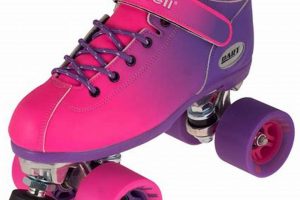
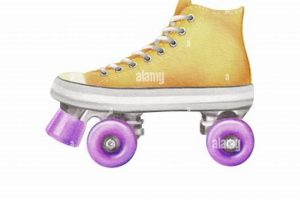
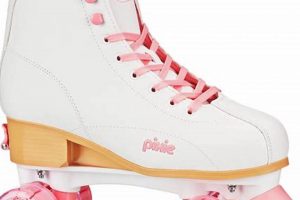
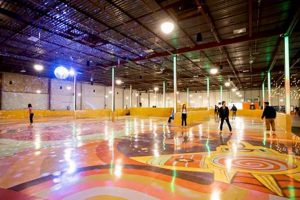
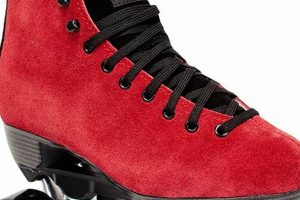
This specialized footwear is designed for the fast-paced, full-contact sport of roller derby. These particular skates differ significantly from recreational models, prioritizing agility, maneuverability, and durability to withstand the intense physical demands of the game. A typical example features low-cut boots for increased ankle mobility, sturdy plate construction for impact resistance, and specialized wheels optimized for the varying surfaces encountered in derby arenas.
The equipment’s crucial role lies in enabling athletes to perform complex maneuvers, maintain speed, and absorb the impacts inherent in the sport. The design allows for quick transitions between offense and defense. The rise of this particular equipment parallels the resurgence in popularity of the sport itself. Its constant evolution reflects the ongoing quest for improved performance and safety within the competitive arena.
Understanding the components and selection criteria for this equipment is essential for both novice and experienced players. Subsequent sections will explore the specific features that contribute to its performance, guide the user in selecting the appropriate model, and provide insights into maintenance best practices to ensure longevity and optimal functionality.
Derby Roller Skates
Proper selection and maintenance of roller derby equipment are paramount for performance and safety. The following tips provide guidance on optimizing the use of this specialized gear.
Tip 1: Boot Selection: Prioritize a snug, secure fit. A boot that allows excessive movement can lead to instability and potential injury. Consider heat-moldable options for a customized fit.
Tip 2: Plate Material: Aluminum plates offer superior durability and responsiveness compared to nylon. The plate’s angle influences turning radius; lower angles promote stability, while higher angles enhance agility.
Tip 3: Wheel Hardness: Durometer rating indicates wheel hardness. Softer wheels (lower durometer) provide greater grip on slick surfaces, while harder wheels (higher durometer) offer increased speed on smoother surfaces. Experiment with different durometers to find the optimal balance for the playing surface.
Tip 4: Bearing Maintenance: Regularly clean and lubricate bearings to ensure smooth rolling performance. Grit and debris accumulation significantly reduce speed and bearing lifespan. Use a specialized bearing cleaner and lubricant for optimal results.
Tip 5: Toe Stop Adjustment: Ensure the toe stops are properly adjusted to provide adequate stopping power and stability during starts and transitions. A worn or loose toe stop compromises safety and performance; replace as needed.
Tip 6: Plate Mounting: Incorrect plate mounting can negatively affect balance and maneuverability. Seek professional assistance to ensure the plate is properly aligned with the skater’s foot.
Tip 7: Protective Gear Integration: Ensure compatibility between skates and protective gear, particularly ankle supports. Restricting ankle movement excessively can hinder agility, while insufficient support increases injury risk.
Adhering to these guidelines will contribute to enhanced performance, improved safety, and extended equipment lifespan. Proper care and selection of this specialized gear are essential investments for serious athletes.
The subsequent sections will provide information on specific brands and models, offering a detailed comparison to aid in the selection process.
1. Agility

Agility, in the context of roller derby, is fundamentally linked to the design and capabilities of specialized equipment. Equipment optimized for agility allows skaters to execute rapid changes in direction and speed, which is critical for both offensive and defensive maneuvers. A direct correlation exists between the design features of the footwear and the skater’s ability to navigate the track effectively. For instance, a low-cut boot design, prevalent in agility-focused models, provides increased ankle mobility, enabling quicker turns and pivots than a high-cut boot. The plate angle also influences turning radius; a steeper angle enhances responsiveness, allowing for tighter turns. Consequently, equipment selection directly impacts the skater’s capacity for agile movement.
The choice of wheels also contributes significantly to agility. Smaller diameter wheels accelerate faster and enhance responsiveness, facilitating quick bursts of speed and directional shifts. Harder wheels provide greater roll speed on smoother surfaces, while softer wheels offer superior grip, especially on less-than-ideal track conditions. Skaters often customize wheel configurations, mixing durometers to achieve the desired balance of speed and grip that complements their skating style and the specific characteristics of the skating surface. Moreover, efficient bearing systems reduce friction, allowing for smoother and more controlled movements. Real-world examples can be observed in professional derby bouts, where skaters utilizing agility-focused equipment consistently demonstrate superior maneuvering capabilities when compared to skaters using gear prioritizing other attributes, like stability or power.
A thorough understanding of the relationship between agility and equipment is critical for skaters aiming to improve their performance. Skaters can optimize their equipment setup to maximize their agility on the track by carefully choosing boots, plates, wheels, and bearings that align with their playing style and the specific demands of the sport. However, agility-focused setups sometimes compromise stability or power, and individual skaters must weigh these trade-offs. Choosing the right gear helps skaters improve agility. It enables effective blocking and strategic jamming, which are essential for success. It equips them for precise, effective skating, thus highlighting the value of agility in the sport of roller derby.
2. Durability
Durability is a paramount attribute, inextricably linked to specialized equipment designed for roller derby. The sport’s inherent intensity and full-contact nature impose extreme stresses on skates, making resilience to physical impact and wear a necessity. The connection between durability and longevity directly impacts the skater’s ability to perform consistently and safely, mitigating the risk of equipment failure during critical moments. Failure to account for durability when choosing this gear can lead to frequent replacements, escalating costs, and potentially hazardous situations on the track. For example, boots constructed from inferior materials are prone to tearing or deformation under repeated stress, compromising ankle support and increasing the likelihood of injuries. Similarly, plates made of weaker alloys may crack or bend upon impact, rendering the skates unusable and potentially causing a loss of control. The selection of robust components and careful attention to construction methods are essential for ensuring the equipment can withstand the demands of roller derby.
The practical significance of durability extends beyond merely preventing equipment failure. Skates that maintain structural integrity throughout extended use provide a more consistent and predictable performance. This predictability allows skaters to develop a refined sense of control and confidence, enabling them to execute maneuvers with precision and react quickly to changing circumstances on the track. Conversely, equipment that degrades rapidly can lead to unpredictable responses and a decrease in performance. Real-world examples illustrate this point; skaters using higher-quality, more durable equipment are less likely to experience sudden shifts in balance or loss of control due to equipment malfunction, resulting in superior overall performance. Moreover, the choice of bearings, wheels, and toe stops influences durability; higher-quality components resist wear and tear, requiring less frequent maintenance and replacement, resulting in a significant long-term cost savings.
In summary, durability is an indispensable component of roller derby equipment, impacting not only the equipment’s lifespan but also the skater’s safety, performance, and overall cost of participation. Skaters must prioritize durability when selecting equipment, carefully considering the materials, construction, and maintenance requirements. Understanding the correlation between durability and equipment performance enables skaters to make informed decisions, optimizing their gear for the rigors of the sport. Compromising on durability can have significant and negative consequences, underscoring the need for a comprehensive understanding of this crucial attribute.
3. Maneuverability
Maneuverability is a critical performance characteristic in roller derby, directly influenced by the design and configuration of specialized skates. The ability to execute rapid turns, pivots, and changes in direction is essential for both offensive and defensive gameplay. The following details explore key factors that contribute to maneuverability.
- Boot Height and Flexibility
Lower boot heights provide greater ankle mobility, facilitating sharper turns and quicker transitions. Stiffer boots offer more support but can restrict movement, impacting agility. The optimal choice depends on the skater’s preferred style and the demands of their position.
- Plate Angle and Length
Plates with higher angles increase responsiveness, allowing for tighter turning radiuses. Shorter plates generally enhance agility but may sacrifice stability at higher speeds. Plate material also influences responsiveness, with aluminum plates typically providing more precise control compared to nylon plates.
- Wheel Durometer and Profile
Softer wheels offer greater grip, enabling controlled stops and quick changes in direction. Harder wheels prioritize speed and may reduce maneuverability on certain surfaces. Wheel profilethe shape of the wheel’s edgealso affects grip and roll; rounded profiles generally provide more predictable handling.
- Bearing Precision
High-precision bearings reduce friction, allowing for smoother and more efficient rolling. This, in turn, enhances responsiveness and control, contributing to improved maneuverability. Regular maintenance and lubrication of bearings are crucial for optimal performance.
The interplay between these elements determines the overall maneuverability of the equipment. Skaters often experiment with different configurations to find the optimal balance of agility, stability, and speed that complements their individual skating style and the specific demands of their position on the track. Understanding these design features allows skaters to make informed choices and optimize their gear for peak performance.
4. Impact resistance
Impact resistance is a primary design consideration in derby roller skates, given the sport’s inherent physicality and the potential for high-velocity collisions. The ability of skates to withstand forceful impacts directly affects skater safety and equipment longevity.
- Boot Construction and Material
The boot’s construction and the materials used play a crucial role in absorbing and dissipating impact forces. Reinforced leather or synthetic materials, often combined with internal padding, provide a protective barrier against blunt trauma. Examples include boots with strategically placed impact-absorbing foam around the ankle and heel, mitigating injuries during falls or collisions with other skaters. The implication is a reduction in the likelihood of contusions, sprains, and fractures.
- Plate Material and Design
The plate, which connects the boot to the wheels, must be capable of withstanding significant stress. Aluminum plates, known for their strength and durability, are commonly used in derby skates. The plate’s design also contributes to impact resistance. For instance, plates with reinforced stress points are less prone to bending or breaking under pressure. This feature ensures structural integrity and prevents catastrophic equipment failure during gameplay. A broken plate can result in immediate loss of control and potential injury.
- Wheel Durometer and Hub Design
While primarily affecting grip and roll, wheel durometer and hub design indirectly influence impact resistance. Softer wheels can absorb some impact forces, reducing the jarring effect on the skater’s joints. Similarly, wheel hubs made from durable materials, such as reinforced nylon, can withstand the stresses of hard landings and collisions. Failure of wheel hubs can lead to wheel separation and instability.
- Toe Stop Composition and Attachment
Toe stops, used for braking and controlled stops, are subjected to significant impact forces. Durable toe stop materials, such as natural or synthetic rubber compounds, are essential for withstanding repeated abrasion and impact. Secure attachment mechanisms prevent toe stops from detaching during use, which can cause loss of balance and potential injury. Furthermore, the toe stop mounting system also has to be durable enough to handle impact forces, transferring them to the plate and boot assembly.
The synergistic effect of these components determines the overall impact resistance of the skates. Skaters should carefully consider these factors when selecting equipment to prioritize safety and ensure that their skates can withstand the physical demands of roller derby. Failure to select adequate equipment can significantly increase the risk of injury. It also ensures that the skates do not suffer from premature failure from extreme impacts.
5. Wheel grip
Wheel grip is a critical attribute of roller derby skates, directly influencing a skater’s agility, control, and overall performance. The interaction between the wheel material and the skating surface determines the level of traction achievable, impacting the skater’s ability to execute precise maneuvers. Insufficient wheel grip results in slippage, hindering acceleration, braking, and directional changes. This limitation poses a significant impediment to effective gameplay. Conversely, excessive grip may impede speed and create instability during pivoting. The selection of appropriate wheel grip is therefore a crucial consideration for optimizing performance in roller derby. For example, a skater attempting a quick lateral movement on a slick surface with wheels lacking adequate grip will likely lose traction, potentially resulting in a fall or missed blocking opportunity.
Wheel durometer, a measure of wheel hardness, is a primary determinant of grip. Softer wheels (lower durometer values) provide greater grip, conforming more readily to surface irregularities. These are suitable for slick or uneven surfaces where enhanced traction is essential. Harder wheels (higher durometer values) offer reduced grip but facilitate greater speed on smooth, polished surfaces. They are often preferred for skaters prioritizing straight-line speed and long-distance rolling. Wheel profile, the shape of the wheel’s edge, also influences grip. Wheels with rounded profiles provide more predictable grip during turns, while wheels with flatter profiles maximize contact area for enhanced traction. The composition of the wheel material further contributes to grip characteristics. Polyurethane formulations are commonly used, with various additives and manufacturing techniques employed to tailor the grip properties to specific skating conditions.
In conclusion, wheel grip is an indispensable element of derby roller skates, dictating a skater’s ability to effectively maneuver and compete. Understanding the interplay between wheel durometer, profile, material composition, and skating surface conditions is essential for optimizing wheel selection. The challenges associated with wheel grip involve finding the optimal balance between traction, speed, and stability, requiring skaters to experiment with different wheel configurations to identify the most suitable setup for their individual skating style and the specific characteristics of the skating environment. Properly balancing those attributes maximizes performance and reduces risk of injuries due to slippage. Proper wheel grip also permits controlled agility. This enables efficient blocking, strategic jamming, and, ultimately, successful gameplay in roller derby.
6. Ankle support

Ankle support in derby roller skates is a critical design element directly impacting skater stability, injury prevention, and overall performance. The intensity of the sport, characterized by rapid directional changes and physical contact, places considerable stress on the ankle joint. Adequate support minimizes the risk of sprains, fractures, and other lower extremity injuries, while also enhancing a skater’s ability to execute complex maneuvers with confidence.
- Boot Height and Stiffness
The height of the boot and its degree of stiffness directly influence the level of ankle support provided. Higher boots extending above the ankle joint offer greater stability, limiting lateral movement and reducing the risk of inversion or eversion injuries. Stiffer materials, such as reinforced leather or synthetic composites, provide a more rigid structure, further restricting ankle motion. Conversely, lower-cut boots offer greater ankle mobility, potentially enhancing agility but sacrificing some degree of support. Skaters often choose boot height and stiffness based on their skating style, position, and individual risk tolerance.
- Internal Padding and Contouring
Internal padding and contoured designs contribute to ankle support by providing a snug and secure fit. Padding located around the ankle bones (malleoli) cushions against impacts and reduces friction, preventing blisters and skin irritation. Contoured designs that closely conform to the natural shape of the ankle provide enhanced stability and prevent excessive movement within the boot. Examples include boots with heat-moldable liners that can be customized to the individual skater’s foot, maximizing comfort and support.
- Lacing Systems and Straps
The lacing system plays a crucial role in securing the boot and providing adjustable ankle support. Lacing patterns that extend high up the ankle allow skaters to fine-tune the level of support based on their needs. Additional straps, such as power straps or Velcro closures, can further enhance ankle stability by providing supplementary compression and preventing heel lift. Skaters may use different lacing techniques or strap configurations to address specific ankle weaknesses or vulnerabilities.
- Integration with Protective Gear
The effectiveness of ankle support is often enhanced by the use of complementary protective gear, such as ankle braces or supports. These external devices provide additional stability and limit range of motion, reducing the risk of injury during high-impact activities. The integration of protective gear with derby roller skates requires careful consideration to ensure compatibility and prevent restriction of movement. Skaters often consult with medical professionals or experienced coaches to determine the appropriate level of external support based on their individual needs and injury history.
In conclusion, ankle support is a multi-faceted attribute of derby roller skates, encompassing boot height, stiffness, internal padding, lacing systems, and integration with protective gear. Skaters must carefully consider these factors when selecting equipment to prioritize safety and optimize performance. The appropriate level of ankle support depends on individual skating style, position, injury history, and personal preference, requiring a comprehensive understanding of the interplay between these design elements and the demands of the sport.
7. Plate Material
The plate material in derby roller skates is a foundational component, directly influencing the skate’s performance characteristics, including responsiveness, durability, and overall weight. The selection of plate material is a critical decision, affecting a skater’s agility, stability, and ability to withstand the rigors of the sport.
- Aluminum Alloys
Aluminum alloys are widely utilized due to their favorable strength-to-weight ratio. Plates crafted from aluminum offer a balance of responsiveness and durability, making them suitable for a range of skating styles and skill levels. For example, 7075 aluminum is frequently employed in high-end plates due to its enhanced tensile strength, providing exceptional impact resistance. The use of aluminum alloys contributes to a skate’s overall agility and control.
- Nylon Composites
Nylon composite plates provide a lighter-weight alternative to aluminum, offering increased flexibility and shock absorption. These plates are often preferred by beginner skaters or those seeking a more forgiving ride. However, nylon composites typically exhibit lower durability compared to aluminum, making them less suitable for high-impact skating or advanced maneuvers. An example is the use of glass-reinforced nylon, which improves stiffness but still does not match the strength of aluminum alloys.
- Magnesium Alloys
Magnesium alloys offer the potential for even lighter-weight plates compared to aluminum. They are generally more expensive and less common than aluminum. However, magnesium plates can provide excellent vibration damping and responsiveness. Magnesium’s lower density can lead to weight savings without significant strength sacrifices. However, careful alloy selection and design are crucial to mitigate potential corrosion and fatigue issues.
- Plate Design and Geometry
Beyond the material itself, the design and geometry of the plate significantly impact its performance. Factors such as the plate’s angle, wheelbase, and mounting system influence turning radius, stability, and energy transfer. For example, a plate with a steeper angle offers increased agility, while a longer wheelbase enhances stability at higher speeds. Furthermore, reinforced stress points and optimized weight distribution contribute to the plate’s overall durability and responsiveness.
The interplay between plate material, design, and geometry dictates the overall performance characteristics of derby roller skates. Skaters must carefully consider these factors when selecting equipment to optimize their agility, stability, and durability. The choice of plate material represents a compromise between weight, strength, responsiveness, and cost, requiring skaters to prioritize their specific needs and preferences.
Frequently Asked Questions
The following section addresses common inquiries regarding equipment designed for roller derby, providing clarity on key features, selection criteria, and maintenance practices.
Question 1: What distinguishes equipment for roller derby from recreational skates?
Roller derby equipment is specifically engineered to withstand the high-impact, full-contact nature of the sport. Distinguishing features include reinforced boots for ankle support, durable plates for impact resistance, and specialized wheels optimized for varied rink surfaces. Recreational skates lack the robust construction and performance-oriented design necessary for the demands of roller derby.
Question 2: What factors should be considered when selecting plate material?
Plate material selection hinges on a balance between weight, strength, and responsiveness. Aluminum plates offer a robust and responsive option suitable for various skill levels. Nylon plates provide a lighter, more flexible alternative, often favored by beginners. Magnesium plates prioritize weight reduction but require careful alloy selection to ensure durability.
Question 3: How does wheel durometer influence performance?
Wheel durometer, measured on the “A” scale, indicates wheel hardness. Lower durometer values (e.g., 88A) correspond to softer wheels, providing increased grip on slick surfaces. Higher durometer values (e.g., 97A) represent harder wheels, prioritizing speed on smooth surfaces. The optimal durometer depends on rink conditions and skating style.
Question 4: What are the key considerations for boot selection?
Boot selection requires careful attention to fit, support, and material. A snug, secure fit is paramount for stability and injury prevention. Adequate ankle support is essential for mitigating sprains and fractures. Durable materials, such as reinforced leather or synthetic composites, provide protection against impact and abrasion.
Question 5: How frequently should bearings be cleaned and lubricated?
Bearing maintenance frequency depends on usage and environmental conditions. Regular cleaning and lubrication, ideally every 10-20 hours of skating, are crucial for maintaining smooth rolling performance and extending bearing lifespan. Grit and debris accumulation can significantly reduce speed and increase wear.
Question 6: What is the recommended toe stop adjustment for optimal performance?
Toe stop adjustment should allow for controlled stops and stable starts. The toe stop should be positioned at a height that permits easy engagement without interfering with normal skating movements. Worn or loose toe stops compromise safety and should be replaced immediately.
In summary, informed equipment selection and diligent maintenance are critical for maximizing performance, ensuring safety, and extending the lifespan of roller derby equipment.
The subsequent sections will provide insights into specific brands and models, offering detailed comparisons to facilitate the selection process.
Conclusion
The preceding analysis has explored key facets of derby roller skates, outlining essential design features, performance considerations, and maintenance requirements. Emphasis has been placed on the importance of selecting equipment that balances agility, durability, and impact resistance. The understanding of components such as boot materials, plate construction, wheel durometer, and bearing precision is crucial for skaters seeking to optimize their performance and ensure their safety.
Continued advancements in materials science and engineering promise further refinements in the design and capabilities of this specialized athletic equipment. The commitment to informed decision-making and rigorous maintenance practices remains paramount for all participants in roller derby. Careful attention to these details ensures the longevity and effectiveness of equipment, contributing to the continued growth and evolution of the sport.