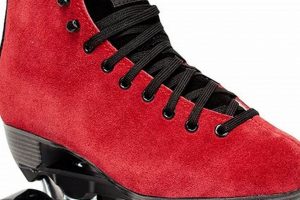
The measure of a roller skate wheel’s resistance to indentation determines its characteristic of how much it will deform under pressure. This property is typically assessed using a durometer scale, most commonly the A scale for these wheels. A lower number indicates a softer material, deforming more easily, while a higher number signifies a harder material, resisting deformation to a greater extent. For example, a wheel rated 78A is softer than one rated 98A.
This material property significantly influences a skater’s experience. Wheels with lower durometer ratings offer enhanced grip, better shock absorption on rough surfaces, and a smoother ride, making them suitable for outdoor skating or recreational use. Conversely, wheels with higher durometer ratings provide greater speed, increased durability, and a more responsive feel, often preferred for indoor skating, aggressive skating, or speed skating. Historically, improvements in materials and manufacturing have allowed for increasingly precise control over this characteristic, leading to specialized wheels optimized for various skating disciplines.
Understanding this concept is fundamental to selecting the appropriate wheels for a specific skating style and environment. The subsequent discussion will delve into factors influencing wheel selection, explore different wheel types, and provide guidance on maintaining wheel performance.
Tips Regarding Wheel Selection
Optimizing skating performance necessitates careful consideration of wheel characteristics. The following tips provide guidance for selecting appropriate wheels based on specific needs and skating conditions.
Tip 1: Consider Skating Surface. Smooth, indoor surfaces benefit from harder wheels (95A and above) to maximize speed and roll. Rough, outdoor surfaces require softer wheels (78A-85A) for improved grip and shock absorption.
Tip 2: Evaluate Skating Style. Aggressive skating, involving jumps and tricks, demands harder, more durable wheels (90A-99A) to withstand impact and wear. Recreational skating typically benefits from softer wheels (78A-85A) for comfort and control.
Tip 3: Account for Skater Weight. Heavier skaters may prefer slightly harder wheels to prevent excessive compression and maintain speed. Lighter skaters may find softer wheels provide adequate grip and responsiveness.
Tip 4: Experiment with Durometer Ratings. Trial and error is often necessary to determine the optimal wheel characteristic for individual preferences and skating styles. Consider purchasing a variety of wheels to test different durometer levels.
Tip 5: Prioritize Quality. Invest in reputable wheel brands known for consistent durometer ratings and durable construction. Inconsistent quality can negatively impact performance and safety.
Tip 6: Rotate Wheels Regularly. Even wheel wear extends wheel lifespan and maintains consistent performance. Rotate wheels according to manufacturer recommendations, or when uneven wear becomes apparent.
Tip 7: Inspect Wheels for Damage. Regularly examine wheels for cracks, chips, or flat spots. Replace damaged wheels immediately to prevent performance degradation and potential hazards.
Selecting appropriate wheels based on their characteristic is crucial for maximizing performance, comfort, and safety in roller skating. Thoughtful consideration of these factors contributes to an enhanced skating experience.
The following sections will address wheel maintenance and storage to further extend wheel lifespan and ensure optimal performance.
1. Grip

Grip, in the context of roller skate wheels, denotes the wheel’s ability to adhere to the skating surface, enabling efficient force transfer and preventing slippage. The characteristic which is the wheel’s durometer, directly influences this property, dictating the amount of friction generated between the wheel and the ground.
- Durometer and Friction Coefficient
Softer wheels, characterized by lower durometer ratings, possess a higher coefficient of friction. This increased friction allows for greater adherence to the surface, enabling tighter turns, quicker stops, and enhanced control, particularly on slick or uneven surfaces. Conversely, harder wheels exhibit a lower coefficient of friction, reducing grip.
- Surface Contact Area
Softer wheels, due to their greater pliability, conform more readily to the contours of the skating surface, increasing the contact area. This larger contact patch distributes the skater’s weight over a wider area, enhancing grip and stability. Harder wheels maintain a more rigid shape, resulting in a smaller contact area and reduced grip.
- Surface Texture Interaction
Wheel grip is also affected by the surface the wheels are on. Softer wheels can deform and interlock with the microscopic irregularities of the skating surface, enhancing traction. This interlocking effect is less pronounced with harder wheels, which are less capable of conforming to surface imperfections.
- Environmental Conditions
Grip is significantly impacted by environmental factors such as temperature and moisture. Softer wheels tend to maintain their grip characteristics over a wider temperature range, while harder wheels may become more prone to slipping in cold or damp conditions. Moisture can reduce friction, diminishing grip regardless of wheel hardness.
Ultimately, grip is a critical performance parameter determined by the material’s characteristic which is the wheel’s durometer. Choosing the optimal wheel ensures efficient power transfer, stability, and control. Variations in durometer directly influence friction, contact area, and surface interaction, thereby impacting the skater’s ability to maneuver effectively across different skating environments.
2. Speed
The achievable velocity in roller skating is intrinsically linked to the wheel’s material characteristic: the measure of resistance to indentation. This relationship is governed by factors including rolling resistance, energy transfer efficiency, and the wheel’s ability to maintain its form under load. Harder wheels, characterized by higher durometer ratings, deform less under the skater’s weight, resulting in a smaller contact patch with the skating surface. This reduced contact area minimizes friction, allowing for greater speed and roll distance per push. Conversely, softer wheels deform more readily, creating a larger contact patch and increased friction, thus reducing speed.
Consider a speed skater employing wheels with a durometer of 98A on a smooth, polished indoor track. The minimal deformation of these high-durometer wheels allows for nearly frictionless rolling, enabling the skater to achieve maximum velocity with each stride. In contrast, a recreational skater using 78A wheels on a rough outdoor surface prioritizes grip and shock absorption. While the softer wheels provide a smoother ride and greater control, they inherently limit the skater’s top speed due to the increased friction and energy loss associated with the greater wheel deformation. The selection of a wheel with inappropriate “roller skate wheel hardness” will directly and negatively affect achieving high speed. Furthermore, aggressive skaters often use harder wheels to maintain momentum during tricks and transitions, while artistic skaters may utilize a range of durometers to balance speed and control for different elements of their routines.
In summary, a wheel’s material characteristic of resistance to indentation plays a crucial role in determining the potential velocity in roller skating. Harder wheels minimize friction and maximize speed, while softer wheels prioritize grip and shock absorption. Understanding this interplay is paramount for skaters seeking to optimize their performance across various disciplines and skating environments. The challenge lies in striking a balance between speed and other performance factors, such as grip and comfort, to best suit the individual skater’s needs and the specific demands of the skating surface.
3. Durability
The longevity of a roller skate wheel, quantified as its resistance to wear and degradation over time, is intrinsically linked to its material characteristic and the measure of its resistance to indentation. This endurance is crucial for cost-effectiveness and consistent performance, particularly in demanding skating disciplines.
- Material Composition and Abrasion Resistance
Wheels are typically constructed from polyurethane (PU) compounds, with varying formulations affecting abrasion resistance. Higher durometer wheels generally exhibit greater resistance to abrasion due to their increased density and reduced pliability. This translates to slower material loss during use, especially on abrasive surfaces. Conversely, softer wheels, while providing enhanced grip, tend to wear down more rapidly under similar conditions. For instance, aggressive skaters frequently employ high-durometer wheels to withstand the constant impact and friction encountered during grinds and slides.
- Deformation Under Load and Fatigue
Repeated stress from skating can induce fatigue in the wheel material, leading to micro-cracking and eventual failure. Harder wheels, with their greater rigidity, resist deformation under load more effectively than softer wheels. This reduced deformation minimizes stress concentration within the material, thereby extending fatigue life. A speed skater, for example, relies on the wheel’s ability to maintain its shape under high speeds and forces to prevent energy loss and maintain consistent performance. Softer wheels, while providing greater comfort on uneven surfaces, are more susceptible to deformation-related fatigue.
- Environmental Factors and Degradation
Exposure to environmental elements, such as ultraviolet (UV) radiation, extreme temperatures, and chemical contaminants, can accelerate wheel degradation. UV radiation can cause PU to become brittle and crack, while extreme temperatures can alter its mechanical properties. Harder wheels, due to their denser structure, may exhibit greater resistance to environmental degradation compared to softer wheels. However, all wheels are susceptible to damage, and proper storage in a cool, dark, and dry environment is crucial for maximizing lifespan.
- Skating Style and Wear Patterns
The specific skating style employed significantly influences wear patterns and overall wheel durability. Aggressive skating, characterized by frequent slides and jumps, places concentrated stress on specific areas of the wheel, leading to uneven wear and potential flat spots. Conversely, recreational skating typically results in more uniform wear across the wheel surface. Consistent rotation of wheels can help distribute wear evenly, prolonging their lifespan. However, even with proper rotation, the inherent characteristic will ultimately determine how long the wheel resists wear.
In conclusion, the correlation between “roller skate wheel hardness” and durability is multifaceted, encompassing material composition, deformation resistance, environmental factors, and skating style. Selecting a wheel with a durometer appropriate for the intended use and adhering to proper maintenance practices are essential for maximizing wheel lifespan and ensuring consistent skating performance.
4. Surface
The skating surface exerts a profound influence on the optimal characteristic of a roller skate wheel. The interaction between the wheel and the surface dictates grip, speed, and wear, ultimately affecting the skater’s control and overall experience. Smooth indoor surfaces, such as polished concrete or wood, benefit from harder wheels (90A durometer and higher). These surfaces provide minimal resistance, and harder wheels minimize deformation, maximizing speed and roll efficiency. Conversely, rough outdoor surfaces, characterized by asphalt, concrete, or uneven terrain, demand softer wheels (78A to 85A durometer). The increased pliability of softer wheels allows them to conform to surface irregularities, enhancing grip and shock absorption. For example, attempting to use high-durometer wheels on rough asphalt would result in a jarring ride with poor control, while low-durometer wheels on a polished surface would feel sluggish and inefficient.
The selection of wheel durometer must align with the intended skating environment to optimize performance. Indoor speed skaters often utilize wheels exceeding 95A durometer to achieve maximum velocity and minimize energy loss. Outdoor recreational skaters, on the other hand, typically opt for wheels in the 78A to 85A range to ensure a comfortable and controlled experience. Furthermore, the presence of debris, such as pebbles or cracks, necessitates softer wheels to navigate obstacles and maintain stability. A mismatch between the wheel hardness and the surface can compromise skater safety and reduce wheel lifespan. Consider a scenario where a skater using 99A wheels encounters a small pebble on an outdoor path; the lack of compliance in the hard wheel could lead to a sudden loss of control and potential injury.
In conclusion, the surface represents a critical factor in determining the appropriate resistance to indentation for roller skate wheels. Selecting a wheel characteristic that complements the skating surface optimizes grip, speed, and comfort, ensuring a safe and enjoyable skating experience. Ignoring the surface characteristics and using inappropriate wheels can lead to compromised performance, accelerated wheel wear, and increased risk of injury. The effective skater understands and appreciates this interplay, selecting wheels that best suit the demands of their chosen skating environment, and adjusts wheel selection with regard to “roller skate wheel hardness” as needed to enhance skating experience.
5. Control
The degree of command a skater possesses over their movements is inextricably linked to the selected material property represented by the wheel’s durometer. This measure of resistance to indentation directly influences responsiveness and stability, thereby dictating the ease with which a skater can execute maneuvers and maintain balance.
- Responsiveness and Edge Control
Harder wheels, characterized by higher durometer ratings, offer increased responsiveness due to their reduced deformation under load. This translates to quicker and more precise edge control, enabling tighter turns and sharper cuts. A skater performing figure skating elements, for instance, relies on the immediate feedback provided by harder wheels to execute complex movements with accuracy. Conversely, softer wheels provide a more forgiving feel but may compromise responsiveness, making precise edge control more challenging.
- Stability at Varying Speeds
The influence of material property of measure of resistance to indentation on stability varies with skating speed. At lower speeds, softer wheels offer greater stability due to their increased grip and contact area with the surface. This enhanced grip is particularly beneficial on uneven surfaces or during initial acceleration. As speed increases, however, harder wheels provide superior stability by minimizing wobble and maintaining a consistent contact patch. Speed skaters often prefer harder wheels to ensure a stable platform at high velocities.
- Maneuverability and Agility
The desired level of maneuverability dictates the optimal wheel choice. Softer wheels enhance agility by allowing for quicker changes in direction and tighter turns. This is particularly advantageous in disciplines such as roller derby, where rapid maneuvering is essential. Harder wheels, while offering less agility, provide greater stability and control at higher speeds, making them suitable for straight-line skating or long-distance cruising. The skater is able to easily manipulate the “roller skate wheel hardness” which allows maneuverability and agility
- Surface Adaptation and Obstacle Negotiation
The ability to maintain control on varied surfaces hinges on selecting an appropriate measure of resistance to indentation. Softer wheels excel at adapting to uneven surfaces, absorbing vibrations, and providing a more stable platform for obstacle negotiation. This is critical for outdoor skaters who encounter cracks, pebbles, and other irregularities. Harder wheels, while less adaptable, offer greater efficiency on smooth surfaces and may be preferred in controlled environments where surface consistency is ensured.
Therefore, the “roller skate wheel hardness” is not merely a performance metric but a crucial determinant of control. Skaters must carefully consider the interplay between the wheel’s characteristic, their skating style, and the intended skating environment to optimize responsiveness, stability, and maneuverability. A well-informed wheel selection enhances confidence and allows the skater to execute movements with precision and control, and the “roller skate wheel hardness” is the key factor to achieve this.
6. Comfort

The subjective experience of comfort during roller skating is significantly influenced by the material property represented by the wheel’s measure of resistance to indentation. This characteristic affects vibration absorption, impact dampening, and overall ride quality, directly impacting the skater’s physical well-being during use.
- Vibration Absorption and Surface Irregularities
Softer wheels, characterized by lower durometer ratings, possess enhanced vibration absorption capabilities. This is due to their greater pliability, which allows them to conform to surface irregularities and dampen vibrations transmitted to the skater’s feet and joints. Using softer wheels on rough outdoor surfaces minimizes discomfort and fatigue, enabling longer and more enjoyable skating sessions. Conversely, harder wheels transmit more vibration, potentially leading to discomfort on uneven terrain. For example, recreational skaters on asphalt paths typically benefit from softer wheels for increased comfort.
- Impact Dampening and Joint Stress
The force experienced when landing jumps or navigating obstacles is mitigated by the wheel’s measure of resistance to indentation. Softer wheels provide superior impact dampening, reducing stress on the skater’s ankles, knees, and hips. This is particularly important for aggressive skaters who frequently perform jumps and tricks. Harder wheels offer less impact protection, potentially increasing the risk of joint strain and injury. Selecting appropriate measures can reduce any impact on the physical well-being of the skater. For example, aggressive skaters landing aerial maneuvers often prefer softer wheels to absorb impact forces.
- Ride Quality and Fatigue Reduction
The smoothness of the ride is directly correlated to the material property represented by the wheel’s measure of resistance to indentation. Softer wheels provide a smoother and more forgiving ride, reducing muscle fatigue and enhancing overall comfort. This is especially beneficial for long-distance skaters or those skating for extended periods. Harder wheels transmit more road feedback, potentially leading to discomfort and fatigue over time. Consider a long-distance skater who chooses softer wheels to minimize muscle strain and improve endurance.
- Foot Support and Pressure Distribution
While not directly related to the wheel’s inherent property itself, the skater will indirectly experience the relation. The interplay between boot support and the property of the wheel’s measure of resistance to indentation influences foot comfort. Softer wheels, by conforming more readily to the surface, distribute pressure more evenly across the skater’s foot. This reduces pressure points and minimizes discomfort. Inadequate boot support paired with hard wheels can exacerbate pressure points and lead to foot fatigue. Proper boot fitting combined with appropriate roller skate wheel hardness maximizes foot comfort and support.
In summation, skater comfort is intricately linked to the measure of resistance to indentation. Selection of appropriate durometer is contingent upon skating surface and purpose. Proper wheel choice optimizes vibration absorption, impact dampening, and ride quality. Skaters prioritize comfort, which enhances the overall skating experience and reduces risk of injury. Recognizing the significance of material property of the measure of resistance to indentation in maximizing comfort ensures longer and more enjoyable skating sessions.
7. Wear

The degradation of roller skate wheels over time, known as wear, is inextricably linked to their characteristic of measure of resistance to indentation. This relationship manifests through several mechanisms, including abrasion, deformation, and material fatigue, each significantly influenced by the selected wheel’s property.
A harder wheel, possessing a higher durometer rating, generally exhibits greater resistance to abrasive wear on smooth, controlled surfaces. The rigid composition of the wheel minimizes material loss from friction against the skating surface. However, on rougher surfaces, harder wheels may experience chipping or cracking due to their inability to conform to surface irregularities. Conversely, softer wheels, with lower durometer ratings, offer improved grip on uneven surfaces but are inherently more susceptible to abrasive wear. The increased contact area and pliability of softer wheels result in a higher rate of material loss through friction. Skaters should select the degree of resistance to indentation that matches the intended skating surface to minimize wear. For example, a skater who uses softer wheels for trick skating will experience faster wear and tear on those wheels.
Beyond abrasive wear, both harder and softer wheels are vulnerable to deformation and fatigue. Harder wheels, while resistant to surface abrasion, may develop flat spots due to localized stress from abrupt stops or slides. Softer wheels, due to their greater elasticity, are less prone to flat spots but may experience deformation over time due to constant compression under load. Understanding the interrelation between wear and characteristic allows skaters to make informed decisions regarding wheel selection and maintenance, optimizing performance and extending wheel lifespan. Regular inspection and rotation of wheels are essential to mitigate uneven wear patterns. Ignoring this relationship leads to diminished performance and increased replacement costs. Therefore, understanding the degree of wheels resistance to indentation’s impact on wheel wear will assist the skater in selecting the appropriate wheel.
Frequently Asked Questions
The following addresses common inquiries regarding the properties of roller skate wheels. Understanding these facets aids in selecting suitable equipment.
Question 1: What constitutes roller skate wheel characteristic?
Wheel characteristic refers to its measure of resistance to indentation, which influences friction and surface interaction.
Question 2: How is roller skate wheel characteristic measured?
It is measured using a durometer scale, typically the A scale, with higher numbers indicating greater hardness.
Question 3: How does roller skate wheel characteristic impact speed?
Harder wheels (higher durometer) generally provide greater speed due to reduced rolling resistance.
Question 4: How does roller skate wheel characteristic affect grip?
Softer wheels (lower durometer) offer enhanced grip, especially on uneven or slick surfaces.
Question 5: Are harder or softer wheels more durable?
While material composition also plays a role, harder wheels typically exhibit greater resistance to abrasive wear on smooth surfaces.
Question 6: Is there an optimal wheel characteristic for all skating styles?
No single characteristic is universally ideal. The optimal choice depends on skating style, surface conditions, and individual preferences.
The selection of wheel characteristic requires careful consideration. Matching wheel hardness to the intended use optimizes performance, comfort, and safety.
Subsequent sections address additional considerations for wheel maintenance and replacement.
Conclusion
The preceding discussion has explored the multifaceted implications of roller skate wheel hardness. From grip and speed to durability and comfort, the measure of resistance to indentation directly influences skating performance and user experience. Selection of appropriate durometer necessitates careful consideration of skating style, surface conditions, and individual preferences. A nuanced understanding of these interdependencies empowers skaters to optimize their equipment and maximize their potential.
Continued research and development in material science promise further advancements in wheel technology. Future innovations may yield materials that offer improved performance characteristics across a broader range of durometer values. Ultimately, a well-informed approach to wheel selection, grounded in an understanding of the wheels measure of resistance to indentation, contributes to both enhanced skating experiences and a higher level of safety.