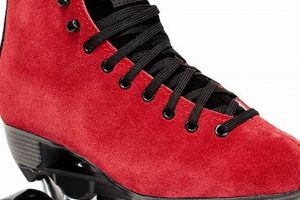
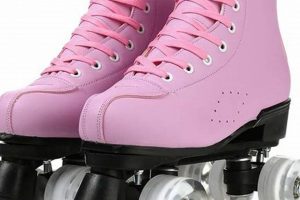
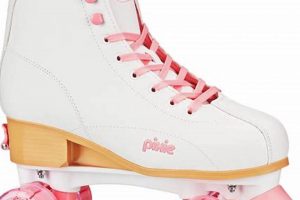
These wheeled boots or shoes enable individuals to traverse paved surfaces, providing a recreational and transportation alternative. They consist of a boot or shoe attached to a frame with wheels, allowing users to glide across the ground. Examples include inline models designed for speed and agility, and quad types offering stability and maneuverability.
The utility of such equipment extends beyond mere amusement. They provide a low-impact cardiovascular workout, enhance balance and coordination, and offer an environmentally friendly method of short-distance travel. Historically, they have evolved from simple in-line configurations to more sophisticated designs incorporating improved materials and braking systems. The ongoing development reflects a continuous effort to enhance performance, safety, and user experience.
The following sections will explore crucial aspects relating to selecting appropriate equipment, maintenance procedures, safety considerations, and optimal techniques for navigating urban environments. Detailed information on wheel types, bearing systems, protective gear, and legal regulations pertaining to their use will be presented.
The subsequent advice is intended to improve the user’s experience and safety when utilizing wheeled footwear on paved surfaces. Adherence to these guidelines is crucial for both novice and experienced individuals.
Tip 1: Prioritize Protective Gear: Helmets, wrist guards, elbow pads, and knee pads are non-negotiable. Impact forces on pavement can result in significant injuries. Ensure a snug, secure fit for all protective equipment.
Tip 2: Select Appropriate Wheel Hardness: Wheel durometer (hardness) affects grip and speed. Softer wheels (lower durometer) provide better grip on rough surfaces, while harder wheels (higher durometer) offer greater speed on smooth pavement. Consider the typical surface conditions encountered.
Tip 3: Maintain Equipment Regularly: Inspect wheels, bearings, and braking systems before each use. Clean and lubricate bearings periodically to ensure smooth operation and prevent premature wear. Replace worn components promptly.
Tip 4: Practice Braking Techniques: Master various braking methods, including heel brakes, T-stops, and parallel slides. Develop proficiency in emergency stopping procedures to avoid collisions. Regular practice in a controlled environment is essential.
Tip 5: Adhere to Local Regulations: Be aware of and comply with local laws and ordinances pertaining to wheeled footwear usage. This may include restrictions on specific locations or requirements for safety equipment. Ignorance of the law is not an excuse.
Tip 6: Enhance Visibility: Wear brightly colored clothing and reflective materials, especially during periods of low light. Consider using lights or reflectors to increase visibility to motorists and pedestrians. Conspicuity is a crucial element of safety.
Tip 7: Scan The Surface Area: Check your route for obstruction from time to time to avoid any injury.
Mastering these techniques and practices enhances the safety and enjoyment. Diligence and adherence will significantly mitigate potential hazards.
The following section provides advice on the product selection for “roller skates for the street”.
1. Wheel Durometer
Wheel durometer, a crucial specification for wheeled footwear intended for street use, directly impacts performance, comfort, and longevity. It quantifies the wheel’s hardness, influencing grip, speed, and the absorption of vibrations encountered on varied urban surfaces.
- Grip and Control
Lower durometer wheels (e.g., 78A-85A) offer enhanced grip on rough or uneven surfaces. This improved traction is crucial for maintaining control and stability, especially when navigating obstacles or executing turns on the street. Reduced slippage translates to increased safety and confidence for the user.
- Speed and Roll
Higher durometer wheels (e.g., 86A-90A+) prioritize speed and roll. These harder wheels minimize friction, allowing for faster acceleration and sustained momentum on smooth pavement. While advantageous for speed, they may offer less grip on imperfect surfaces, requiring greater skill and caution.
- Vibration Absorption
Softer wheels, characterized by lower durometer ratings, excel at absorbing vibrations and dampening road noise. This property enhances comfort, reducing fatigue and minimizing the impact of irregularities in the pavement. The result is a smoother and more pleasant riding experience, particularly over longer distances.
- Wear and Durability
Wheel durometer affects wear resistance. Softer wheels tend to wear down more quickly, particularly on abrasive surfaces. Harder wheels offer greater durability but may transmit more vibrations to the user. The selection should balance wear resistance with the desired level of comfort and performance.
Selecting an appropriate wheel durometer for wheeled footwear requires careful consideration of the typical surfaces encountered and the intended riding style. Prioritizing grip and comfort on rough surfaces necessitates softer wheels, while maximizing speed on smooth pavement favors harder compounds. Compromises may be necessary to achieve a balanced combination of performance characteristics.
2. Bearing Precision
Bearing precision significantly impacts the performance of wheeled footwear used on paved surfaces. It directly affects rolling resistance, speed, and overall efficiency, thereby influencing the user’s experience and energy expenditure.
- ABEC Rating and Tolerances
The Annular Bearing Engineering Committee (ABEC) rating system (ABEC 1, 3, 5, 7, 9) defines the manufacturing tolerances of bearings. Higher ABEC ratings indicate tighter tolerances and greater precision, resulting in reduced friction and improved rolling efficiency. For street applications, bearings with ABEC 5 or ABEC 7 ratings offer a balance between performance and durability. Bearings with lower rating and higher rating is still valid for street conditions based on preferences of user.
- Material Composition and Hardness
Bearing components, including the inner and outer races, balls, and retainers, are typically constructed from hardened steel. The quality and hardness of the steel influence the bearing’s ability to withstand loads and resist wear. High-quality steel bearings contribute to smoother rolling and extended lifespan, crucial for the demanding conditions encountered on urban streets. Bearings can differ based on material. Ceramics bearings is one of many material example.
- Lubrication and Maintenance
Proper lubrication minimizes friction and protects bearings from corrosion and contamination. Applying a thin film of lubricant, such as synthetic oil or grease, reduces heat buildup and extends bearing life. Regular cleaning and re-lubrication are essential maintenance procedures for maintaining optimal performance on the street, where exposure to dirt and debris is unavoidable. Maintenance also can prolong performance and lifespan.
- Impact Resistance and Durability
Street environments subject bearings to significant impact forces from bumps, cracks, and other surface irregularities. Bearings must possess adequate impact resistance to withstand these forces without deformation or failure. The design and materials used in bearing construction influence their ability to absorb impacts and maintain their shape and function over time. In conclusion, durability helps increase bearing performance when “roller skates for the street”.
The interplay between ABEC rating, material composition, lubrication, and impact resistance determines the overall performance and reliability of bearings used in wheeled footwear for street applications. Selecting bearings with appropriate precision and durability characteristics ensures smooth rolling, efficient energy transfer, and long-term functionality, enhancing the user’s experience and mitigating the risk of equipment failure.
3. Boot Support
Boot support in wheeled footwear for street use is a critical determinant of stability, control, and injury prevention. Insufficient support can lead to ankle instability, muscle fatigue, and increased risk of falls or sprains. Conversely, adequate support facilitates proper alignment, enhances energy transfer, and promotes a safer and more efficient skating experience.
The connection between boot support and the demands of street skating is direct and consequential. Urban environments present varied surfaces, obstacles, and traffic conditions, requiring skaters to make frequent adjustments and maintain precise balance. Boots providing robust lateral and medial support help prevent ankle roll, which is particularly crucial when navigating uneven pavement or executing quick maneuvers. Hard shell boots, for example, offer maximum support for aggressive skating styles, while softer boots might prioritize comfort over stability for recreational use. Consider the case of a skater encountering a pothole; a boot with firm ankle support will help maintain balance and prevent a severe ankle injury, whereas a boot lacking such support could result in a fall.
Ultimately, boot support is not merely a comfort feature but an essential safety element. Choosing boots with appropriate support levels, based on skating style, skill level, and the typical challenges presented by street environments, mitigates risk and maximizes performance. The practical significance of this understanding lies in the ability to make informed purchasing decisions and prioritize equipment features that directly contribute to a safer, more enjoyable, and ultimately more successful skating experience. The selection of the boot is depending on preferences but consider safety first.
4. Frame Material

The frame material in wheeled footwear profoundly influences performance characteristics, including responsiveness, stability, and durability, particularly when used on paved surfaces. The frame connects the wheels to the boot, bearing the skater’s weight and transmitting forces generated during movement. Material properties dictate how effectively the frame performs these functions, thus affecting the skater’s control and efficiency. For instance, aluminum frames, known for their stiffness, offer superior energy transfer, enabling faster acceleration and more precise handling. Conversely, plastic frames, while more compliant, may lack the rigidity required for aggressive maneuvers or high-speed skating, potentially leading to decreased responsiveness and increased flex. In short, frame material is a pivotal component affecting the user’s interaction with the street.
Practical applications highlight the material-specific advantages and disadvantages. Consider a skater executing a jump; an aluminum frame will resist deformation upon landing, efficiently dissipating the impact and maintaining wheel alignment. Alternatively, a composite frame might absorb some of the impact energy, reducing stress on the skater’s joints, but at the expense of responsiveness. Similarly, when navigating rough pavement, a frame crafted from a vibration-damping material, such as carbon fiber, can improve comfort by reducing the transmission of shocks to the skater’s feet. The choice, therefore, depends on the skater’s intended use and the typical street conditions encountered. Street conditions can also affect frame condition from long period.
In summary, the frame material directly impacts the performance of wheeled footwear, affecting energy transfer, stability, and comfort. While stiff materials like aluminum enhance responsiveness and control, compliant materials offer improved vibration damping. The selection of appropriate frame material necessitates careful consideration of the skater’s skill level, intended use, and the characteristics of the skating environment. The frame affects the level of performance of user and the type of material also affects frame lifespan.
5. Braking System
The braking system on wheeled footwear intended for street use is an essential safety component. Its effectiveness directly impacts the user’s ability to control speed and avoid collisions in unpredictable urban environments. The functionality and reliability of this system are paramount for mitigating risk and ensuring safe operation.
- Heel Brake Mechanisms
Heel brake systems, commonly found on recreational models, utilize a brake pad attached to the rear of one boot. Activation involves tilting the foot forward, pressing the pad against the ground to generate friction and decelerate. This system provides a simple and intuitive braking method suitable for beginners and low-speed applications. However, its effectiveness diminishes at higher speeds or on steep inclines due to limited surface contact and potential for instability. The user should consider practicing this system for “roller skates for the street”.
- Inline Brake Systems
Inline brake systems, often incorporated into the frame design, utilize a brake pad positioned in front of the wheels. Activation requires shifting weight and extending one leg forward, applying pressure to the pad. This system offers greater stopping power compared to heel brakes, particularly at higher speeds. However, it demands more skill and practice to execute effectively, as improper technique can lead to loss of balance or wheel lockup. The material of the brake can be affect braking system based on street condition for “roller skates for the street”.
- T-Stop and Power Slide Techniques
T-stop and power slide braking techniques rely on friction generated by dragging one or both wheels perpendicularly across the pavement. These methods require considerable skill and control but provide powerful deceleration capabilities. T-stops involve positioning one foot behind the other in a “T” shape, while power slides involve intentionally sliding one or both wheels sideways. Mastery of these techniques is essential for advanced skaters navigating challenging street environments. The more user practice, the brake system becomes more perform.
- Maintenance and Inspection Procedures
Regular maintenance and inspection of the braking system are crucial for ensuring its proper function. Brake pads should be inspected for wear and replaced when necessary to maintain adequate stopping power. Cables and linkages should be checked for fraying or damage and lubricated to ensure smooth operation. Neglecting maintenance can compromise the braking system’s effectiveness and increase the risk of accidents. Always check brake before using “roller skates for the street”.
The braking system serves as a crucial element in enhancing safety for wheeled footwear users in street environments. Whether employing heel brakes, inline brake systems, or advanced techniques like T-stops and power slides, a functional and well-maintained braking mechanism enables skaters to manage speed, avoid obstacles, and mitigate risks effectively. Regular inspection and timely maintenance contribute significantly to the reliability and performance of this essential component.
6. Ankle Support

Ankle support within wheeled boots designed for street usage significantly influences stability, control, and the prevention of injuries. The degree of support directly affects the user’s ability to maintain balance and execute maneuvers on uneven or unpredictable surfaces. Insufficient ankle support can result in instability, leading to sprains, strains, or even fractures, while excessive restriction may limit mobility and hinder performance. Adequate ankle support, therefore, constitutes a critical safety feature. Consider the example of navigating a cobblestone street; a boot with insufficient ankle support may allow the ankle to roll excessively, increasing the risk of a fall, whereas a boot with proper support would provide the necessary stability to maintain balance and control. The practical significance of understanding this connection lies in making informed purchasing decisions that prioritize safety and performance.
Variations in ankle support are evident across different models and intended uses. Recreational models often feature softer boots with moderate ankle support, suitable for casual skating on smooth surfaces. Conversely, aggressive models designed for performing tricks and stunts typically incorporate rigid boots with substantial ankle support to withstand high-impact forces and provide maximum stability. Speed skates may prioritize a lower cut boot to enhance mobility and reduce weight, but this comes at the expense of ankle support, requiring greater skill and experience from the user. The choice of ankle support should align with the skater’s skill level, skating style, and the characteristics of the intended environment. Furthermore, custom fitting and aftermarket modifications can be employed to fine-tune ankle support for optimal performance and comfort. One of the important thing is the safety.
In conclusion, ankle support represents a pivotal element in the design of wheeled boots for street usage. The appropriate level of support balances stability with mobility, mitigating injury risk and enhancing performance. Selecting equipment with suitable ankle support, combined with proper technique and awareness of environmental conditions, promotes a safer and more enjoyable skating experience. Challenges remain in developing ankle support systems that adapt dynamically to varying terrain and user needs, representing an area for ongoing innovation and improvement within the industry.
7. Street Condition

The condition of the street directly impacts the performance, safety, and longevity of wheeled footwear. Pavement irregularities, such as cracks, potholes, and debris, present significant challenges. These conditions affect wheel grip, stability, and the potential for equipment damage. For example, traversing a rough asphalt surface necessitates softer wheel durometers to maintain traction and absorb vibrations, whereas smooth concrete allows for harder wheels optimized for speed. Failure to consider these factors can lead to reduced control, increased risk of falls, and accelerated wear on wheels, bearings, and frames. Understanding the interplay between street condition and equipment selection is, therefore, crucial for a safe and enjoyable experience.
Different street conditions necessitate adjustments in technique and equipment. On wet pavement, reduced friction demands increased caution and slower speeds. The presence of sand or gravel further diminishes grip and increases the likelihood of wheel slippage. Similarly, navigating inclines requires greater effort and control, particularly with worn or improperly maintained equipment. Consider the scenario of a skater encountering a sudden change in surface texture; an unprepared skater may lose balance and fall, while a skater aware of the conditions and equipped with appropriate gear can adapt and maintain control. The importance of assessing the environment before and during usage cannot be overstated.
In summary, street condition constitutes a primary determinant of wheeled footwear performance and safety. Adapting equipment selection and technique to suit the prevailing surface conditions is essential for mitigating risk and maximizing enjoyment. While advancements in wheel technology and frame design continue to improve performance across diverse surfaces, awareness and adaptation remain fundamental to responsible and effective use.
Frequently Asked Questions About Wheeled Footwear for Urban Environments
The following addresses common inquiries regarding the selection, maintenance, and safe operation of wheeled footwear on paved surfaces. The information provided is intended to enhance understanding and promote responsible use.
Question 1: What wheel durometer is best suited for rough pavement?
Softer wheels, typically ranging from 78A to 85A durometer, offer superior grip and vibration absorption on rough pavement. This reduces the risk of slippage and enhances comfort.
Question 2: How often should bearings be cleaned and lubricated?
Bearing cleaning and lubrication frequency depend on usage and environmental conditions. As a general guideline, bearings should be cleaned and lubricated every 20-40 hours of use, or more frequently if exposed to dirt, water, or abrasive materials.
Question 3: What type of ankle support is recommended for beginners?
Beginners benefit from boots offering moderate to high ankle support. This provides stability and reduces the risk of ankle sprains, particularly during the learning phase.
Question 4: Is it necessary to wear protective gear?
Wearing protective gear, including a helmet, wrist guards, elbow pads, and knee pads, is strongly recommended at all times. These items significantly reduce the severity of injuries in the event of a fall or collision.
Question 5: How does frame material affect performance?
Frame material influences responsiveness, stability, and durability. Aluminum frames offer superior energy transfer and stiffness, while composite frames may provide better vibration damping. The choice depends on skating style and preference.
Question 6: What braking techniques are most effective in emergency situations?
T-stops and parallel slides offer powerful deceleration capabilities in emergency situations. However, these techniques require practice and skill to execute safely.
Prioritizing safety, regular maintenance, and selecting appropriate equipment are essential for a positive experience with wheeled footwear in urban environments.
The following section provides a brief glossary of terms related to wheeled footwear.
Conclusion
This discourse has comprehensively examined “roller skates for the street”, covering selection criteria, maintenance protocols, safety considerations, and optimal usage techniques. Key elements discussed included wheel durometer, bearing precision, boot support, frame material, and braking systems. Understanding these factors is paramount for ensuring both performance and safety within the urban landscape.
Continued vigilance in equipment maintenance and adherence to safe practices will maximize the utility and minimize the risks associated with “roller skates for the street”. The information presented serves as a foundation for informed decision-making, promoting responsible engagement with this mode of transportation and recreation.