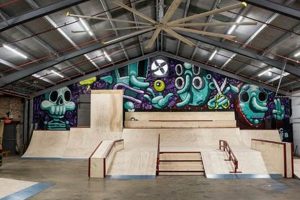
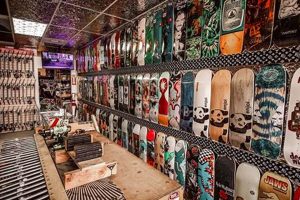
A retail establishment specializing in skateboarding equipment and apparel, a local hub often serves as a gathering place for skateboarding enthusiasts. Such a business typically stocks skateboards, components (decks, trucks, wheels, bearings), protective gear (helmets, pads), footwear, and clothing associated with the skateboarding lifestyle.
These establishments contribute to the local skateboarding community by providing essential resources, fostering a sense of belonging, and often supporting local skaters through sponsorships or events. They may also provide repair services, expert advice on equipment selection, and promote skateboarding culture. The history of such businesses mirrors the evolution of skateboarding itself, adapting to changing trends and technologies.
The following sections will delve into specific aspects related to these establishments, examining their role in the skateboarding industry, their impact on local economies, and their strategies for engaging with the skateboarding community.
Skateboarding Equipment Selection
Selecting the appropriate skateboarding equipment is crucial for both safety and performance. This section offers essential guidance from industry professionals to assist skaters in making informed decisions.
Tip 1: Deck Selection: Consider deck width and length based on the skater’s shoe size and preferred style. Wider decks generally offer more stability, while narrower decks are easier to flip. The concave (curvature of the deck) also affects board feel and control.
Tip 2: Truck Selection: Truck size should correspond with the deck width to ensure proper board control. Consider truck height based on wheel size; larger wheels typically require taller trucks to avoid wheel bite (wheel rubbing against the deck).
Tip 3: Wheel Selection: Wheel durometer (hardness) affects grip and slide. Softer wheels (lower durometer) provide more grip and are better for rough surfaces, while harder wheels (higher durometer) are faster and slide more easily on smooth surfaces. Wheel size should be appropriate for the skater’s skill level and terrain.
Tip 4: Bearing Selection: Bearings impact the speed and smoothness of the ride. ABEC ratings indicate bearing precision, but higher ratings do not necessarily equate to better performance in skateboarding applications. Consider durability and ease of maintenance when choosing bearings.
Tip 5: Protective Gear: Helmets are essential for preventing head injuries. Ensure the helmet fits properly and meets safety standards. Knee and elbow pads are recommended for protecting joints during falls. Wrist guards can help prevent wrist fractures.
Tip 6: Footwear Selection: Skate shoes should provide durability, grip, and board feel. Look for shoes with reinforced stitching, durable materials (such as suede or leather), and flat, grippy soles.
Tip 7: Hardware Selection: Use quality hardware (nuts, bolts) to securely attach trucks to the deck. Ensure hardware is tightened properly to prevent loosening during skating. Replace worn or damaged hardware promptly.
Choosing the right skateboarding equipment requires careful consideration of individual needs and preferences. Consulting with experienced skaters or shop staff is recommended to ensure optimal equipment selection.
The following section will examine equipment maintenance and care strategies to prolong the life of skateboarding equipment and ensure continued safe performance.
1. Core Skateboarding Products

The stock of core skateboarding products forms the foundation of any skateboarding retail establishment. The availability of decks, trucks, wheels, bearings, hardware, and grip tape directly determines a shop’s ability to serve the needs of skateboarders, from beginners to professionals. The absence of a comprehensive selection of these essential items would severely undermine the viability of the business, effectively preventing skateboarders from building or maintaining their equipment. Consider, for example, a skater needing a specific size truck to fit a new deck; the shop’s failure to stock that item would result in lost business and potential customer dissatisfaction.
The relationship between these items and a physical establishment involves not only availability but also expertise. Staff should possess in-depth knowledge of different brands, materials, and performance characteristics of each product category. This expertise allows them to guide customers in making informed decisions based on their skill level, skating style, and budget. The ability to offer tailored advice sets a skateboarding shop apart from general sporting goods stores, fostering trust and customer loyalty. For instance, a seasoned employee can advise a beginner on selecting a softer wheel for increased grip and stability or recommend a durable deck for a street skater.
In summary, the provision of core skateboarding products is inextricably linked to the function and success of skateboarding retail establishments. The breadth of selection, coupled with informed guidance, is critical for serving the skateboarding community and establishing a viable business. Without a focus on these fundamentals, a shop risks alienating its target audience and failing to meet the demands of the skateboarding market.
2. Community Engagement

The relationship between a skateboarding retail establishment and the local skateboarding community is a symbiotic one, where mutual support and interaction contribute to the vibrancy of both. Actively cultivating relationships with local skaters and organizations is not merely a marketing strategy; it’s a fundamental aspect of ensuring the longevity and relevance of the business.
- Sponsorship of Local Skaters
Providing financial or material support to promising local skaters fosters talent and creates a positive association between the individual and the business. This sponsorship can take various forms, including supplying equipment, covering competition entry fees, or offering travel assistance. For example, a shop might sponsor a skater who regularly competes in local contests, featuring them in promotional materials and benefiting from their visibility within the skateboarding scene. This creates a direct link between the shop and the skater’s success, enhancing the shop’s credibility and appeal.
- Hosting Skateboarding Events and Contests
Organizing events, such as skate jams, best trick contests, or film screenings, provides a platform for local skaters to showcase their skills, connect with peers, and engage with the business in a positive setting. These events generate excitement and attract both participants and spectators, creating a sense of community around the shop. A well-organized contest, for example, can draw a large crowd, increasing brand awareness and driving sales. Furthermore, these events often provide opportunities for the shop to collaborate with other local businesses, further strengthening its ties to the community.
- Providing a Gathering Place
A physical storefront serves as more than just a place to purchase goods; it can also function as a central hub for local skaters. Providing a comfortable and welcoming environment encourages skaters to congregate, share information, and build relationships. This can involve offering seating, displaying skate videos, or simply creating a space where skaters feel welcome to hang out. The presence of a gathering place fosters a sense of community and strengthens the shop’s role as an integral part of the local skateboarding scene.
- Collaboration with Local Skate Parks and Organizations
Partnering with local skate parks and skateboarding organizations allows a skateboarding establishment to extend its reach and support the broader skateboarding community. This can involve sponsoring skate park maintenance, offering workshops or clinics, or participating in community outreach programs. For instance, a shop might collaborate with a local skate park to organize a free skateboarding lesson for beginners, introducing new skaters to the sport and increasing the shop’s visibility. These collaborations demonstrate a commitment to the well-being of the skateboarding community and enhance the shop’s reputation as a trusted resource.
The multifaceted nature of community engagement highlights the importance of proactive involvement and genuine support for local skaters and organizations. By actively fostering a sense of community, a skateboarding retail establishment can cultivate customer loyalty, enhance its reputation, and ensure its continued success within the ever-evolving skateboarding landscape. The benefits of such engagement extend beyond mere financial gain, contributing to the overall health and vibrancy of the local skateboarding scene.
3. Expert Product Knowledge

A foundational component of a skateboarding retail establishment is expert product knowledge. This facet encompasses a deep understanding of skateboarding equipment, encompassing specifications, performance characteristics, and compatibility factors. For such an establishment, its staff’s ability to provide informed guidance directly impacts customer satisfaction, safety, and ultimately, sales. Consider a customer seeking advice on selecting trucks that complement their existing deck. An employee with expertise can assess the customer’s skating style, deck dimensions, and preferred turning radius to recommend suitable options. This personalized assistance not only ensures the customer purchases the right product but also fosters trust and establishes the business as a reliable resource.
The significance of expert product knowledge extends beyond individual transactions. It plays a crucial role in shaping the skateboarding community. Knowledgeable staff can educate customers on proper equipment maintenance, safe riding practices, and the historical context of skateboarding. This level of engagement elevates the establishment beyond a mere retailer, transforming it into a center for learning and skill development. For example, a shop could host workshops on board building, wheel maintenance, or even the evolution of skateboard design. These activities enhance the shop’s reputation and contribute to the overall growth of the skateboarding community.
In conclusion, expert product knowledge is not simply an added advantage but a necessity for a successful skateboarding retail establishment. It empowers customers to make informed decisions, promotes safety and skill development, and strengthens the shop’s connection to the skateboarding community. The continuous acquisition and dissemination of product knowledge are critical for maintaining relevance, building customer loyalty, and ensuring the long-term viability of the business. Challenges include keeping abreast of rapidly evolving technologies and training staff to effectively communicate complex information. Overcoming these challenges is essential for fulfilling the establishment’s role as a trusted source of expertise within the skateboarding landscape.
4. Skateboarding Culture
Skateboarding culture, encompassing its distinct aesthetics, values, and behaviors, is intrinsically linked to the identity and operations of a skateboarding retail establishment. The alignment of a shop’s offerings and ethos with this culture directly impacts its appeal and legitimacy within the skateboarding community.
- Authenticity and Core Values
Authenticity serves as a cornerstone of skateboarding culture. Shops that prioritize genuine engagement with skateboarding, as opposed to mere commercial exploitation, resonate more effectively with skaters. This authenticity is reflected in the selection of products, the shop’s design, and the staff’s demonstrated passion for skateboarding. Shops actively involved in supporting local skaters and events often gain credibility. Conversely, those perceived as lacking genuine connection to skateboarding culture risk alienating their target audience. For example, showcasing local skate photography or artwork within the shop reinforces its commitment to the local scene.
- Visual Aesthetics and Style
Skateboarding culture manifests through distinct visual aesthetics, including graphic design, fashion, and video production. Skate shops frequently adopt these aesthetics in their branding, interior design, and marketing materials. The use of iconic skateboarding imagery, such as skate deck graphics or vintage photography, can evoke a sense of nostalgia and connect with established skaters. Similarly, stocking apparel brands associated with skateboarding culture reinforces the shop’s identity. Conversely, neglecting these visual cues can result in a shop appearing generic and disconnected from the skateboarding community. Regularly updated displays that reflect current trends in skate fashion are crucial.
- Music and Media
Music and media, particularly skate videos, play a significant role in shaping skateboarding culture. Skate shops often incorporate these elements into their atmosphere by playing relevant music or showcasing skate videos on screens within the store. Sponsoring local video projects or hosting video premieres further strengthens their connection to skateboarding culture. The selective curation of music and video content can significantly influence the shop’s overall vibe and appeal to skaters. A carefully selected playlist reflecting the diverse range of music enjoyed within skateboarding culture is an important consideration.
- Language and Terminology
Skateboarding culture has its own lexicon, characterized by specific terms and phrases used to describe tricks, equipment, and locations. Staff who are fluent in this language can communicate more effectively with customers and demonstrate their understanding of skateboarding culture. This knowledge allows them to provide informed advice and recommendations, further establishing their credibility. The use of skateboarding terminology in marketing materials can also resonate with skaters, creating a sense of shared identity. Avoiding slang terms to communicate technical aspects of skateboarding.
These facets of skateboarding culture collectively influence the perception and success of a skateboarding retail establishment. By embracing authenticity, aligning with relevant aesthetics, incorporating music and media, and understanding skateboarding language, a shop can solidify its position within the skateboarding community. Conversely, neglecting these cultural nuances can lead to marginalization and a failure to connect with the target audience.
5. Reputation and Reviews
The sustained viability of a skateboarding retail establishment, exemplified here by the term “atlas skate shop,” is directly contingent upon its reputation and the aggregation of customer reviews. A positive reputation, built over time through consistent service quality and genuine engagement with the skateboarding community, serves as a powerful attractor for both new and returning customers. Conversely, negative reviews, whether disseminated through online platforms or word-of-mouth, can erode trust and significantly impact sales. For instance, an establishment consistently praised for its knowledgeable staff and curated product selection will invariably attract a larger clientele than one plagued by complaints regarding poor customer service or the sale of substandard equipment. The establishment’s reputation acts as a critical filter through which potential customers evaluate its worthiness, impacting their decision to patronize the business.
The advent of online review platforms has amplified the significance of reputation management. Prospective customers routinely consult these platforms to gauge the experiences of previous patrons. A high rating on platforms like Yelp or Google Reviews serves as a strong endorsement, while a preponderance of negative feedback acts as a deterrent. The establishment’s proactive engagement with these reviews, both positive and negative, is crucial. Responding to criticism with constructive solutions demonstrates a commitment to customer satisfaction and mitigates the potential damage caused by negative experiences. Failure to address customer concerns can exacerbate the negative impact and further erode the establishment’s reputation. A skate shop, for example, might address a negative review about a defective skateboard by offering a replacement or a refund, thereby demonstrating its commitment to customer satisfaction.
In summary, reputation and reviews represent a critical asset for skateboarding retail establishments. Proactive management of this asset, through consistent service quality, genuine community engagement, and responsive communication with customers, is essential for sustained success. Challenges include navigating the often-unpredictable nature of online reviews and maintaining a consistently high standard of service across all customer interactions. Effective management of reputation and reviews serves as a crucial differentiator in a competitive market and ensures the establishment’s long-term viability within the skateboarding community.
6. Accessibility and Location
The viability of “atlas skate shop” and similar retail establishments specializing in skateboarding equipment is significantly influenced by accessibility and location. These factors directly impact customer traffic, market reach, and overall business success. A location with high visibility and ease of access, whether through ample parking, proximity to public transportation, or pedestrian-friendly pathways, increases the likelihood of attracting both dedicated skateboarders and casual customers. Conversely, a location hampered by limited access or situated in a less-trafficked area reduces potential customer flow, necessitating more aggressive marketing strategies to compensate. Consider, for example, a shop located near a popular skate park or a high school; such proximity provides a readily available customer base. A shop tucked away in an industrial area, however, would face challenges in attracting spontaneous visits.
Accessibility extends beyond mere physical proximity. It also encompasses factors such as store hours, online presence, and the availability of services catering to diverse customer needs. A shop offering extended hours or operating on weekends may capture a larger segment of the market, accommodating customers with varying schedules. An effective online presence, including a user-friendly website and active social media engagement, enhances accessibility for customers who prefer to browse products or make purchases remotely. Furthermore, providing services such as equipment repair or custom board building caters to specific customer needs and fosters loyalty. A skate shop, for instance, might host online tutorials on skateboard maintenance, broadening its reach and establishing itself as a valuable resource for the skateboarding community.
In summary, accessibility and location constitute crucial determinants of success for “atlas skate shop.” Strategic selection of a location with high visibility and ease of access, coupled with proactive measures to enhance accessibility through expanded services and a strong online presence, is essential for maximizing customer traffic and ensuring long-term sustainability. The challenges associated with overcoming limitations in accessibility or location necessitate a well-defined marketing strategy and a commitment to providing exceptional customer service. Ultimately, a focus on optimizing these factors is paramount for thriving within the competitive landscape of skateboarding retail.
7. Local Skateboarding Events
Local skateboarding events serve as vital arteries for the circulation of skateboarding culture and economic activity within a community. Their relationship with a skateboarding retail establishment such as “atlas skate shop” is symbiotic, fostering mutual growth and strengthening the local skateboarding ecosystem. These events range from informal skate jams to organized competitions, each contributing uniquely to the community and the shop’s visibility.
- Brand Visibility and Awareness
Sponsoring or participating in local skateboarding events provides “atlas skate shop” with a platform to enhance brand visibility and awareness. Banners, product displays, and on-site booths at these events expose the shop’s name and offerings to a concentrated audience of potential customers. Furthermore, active participation in event organization and execution demonstrates a commitment to the local skateboarding scene, fostering a positive brand image. For example, a “Best Trick” contest sponsored by the shop directly associates the brand with skill and innovation within the community.
- Community Engagement and Relationship Building
Local skateboarding events facilitate direct engagement with the skateboarding community, allowing “atlas skate shop” to build relationships with skaters, parents, and other stakeholders. These events offer opportunities for shop employees to interact with customers in a relaxed and informal setting, providing personalized advice and fostering a sense of camaraderie. Furthermore, sponsoring local skaters and teams through event participation strengthens the shop’s connection to the community and promotes a sense of loyalty. Setting up a booth at a local skate park event gives the employees a chance to share expertise and connect with the skate community.
- Product Demonstration and Feedback
Local skateboarding events provide a valuable opportunity for “atlas skate shop” to showcase its products and gather direct feedback from customers. Demo days, where skaters can test out new equipment, allow the shop to highlight the features and benefits of its offerings while receiving valuable insights from users. This direct feedback can inform purchasing decisions and guide product development efforts. For instance, if customers consistently express interest in a particular type of wheel during a demo, the shop can prioritize stocking that item.
- Sales and Revenue Generation
Beyond brand building and community engagement, local skateboarding events can directly contribute to sales and revenue generation for “atlas skate shop”. On-site sales booths at events allow the shop to capitalize on the concentrated presence of potential customers. Furthermore, offering event-specific discounts or promotions can incentivize purchases and drive revenue. The increased foot traffic and exposure generated by the event often translate into increased sales at the shop in the days and weeks following the event. The revenue increases and promotes events for the coming month.
The multifaceted connection between local skateboarding events and “atlas skate shop” underscores the importance of active participation in the skateboarding community. By strategically leveraging these events for brand building, community engagement, product demonstration, and sales generation, the shop can strengthen its position within the local skateboarding ecosystem and ensure its long-term success. Failure to engage with these events represents a missed opportunity to connect with customers and contribute to the vitality of the local skateboarding scene.
Frequently Asked Questions
The following addresses common inquiries regarding skateboarding retail establishments. These questions aim to clarify operational aspects, product selection, and community involvement.
Question 1: What factors determine the appropriate skateboard deck size?
Deck width is primarily determined by the rider’s foot size and preferred skating style. Wider decks offer increased stability, generally favored for transition or vert skating, while narrower decks facilitate quicker rotations, often preferred for street skating. Deck length influences wheelbase and overall board responsiveness.
Question 2: How often should skateboard bearings be cleaned and lubricated?
Bearing maintenance frequency depends on usage conditions. Bearings exposed to dirt, water, or extreme temperatures require more frequent cleaning and lubrication. Under normal circumstances, cleaning and lubrication every one to three months is advisable.
Question 3: What are the key differences between various skateboard wheel durometers?
Durometer, measured on the A scale, indicates wheel hardness. Lower durometer wheels (e.g., 78A) offer increased grip and a smoother ride, suitable for rough surfaces. Higher durometer wheels (e.g., 99A) provide faster speed and greater slide capability, ideal for smooth surfaces and technical skating.
Question 4: What safety equipment is essential for skateboarding?
A properly fitted helmet that meets safety standards is paramount for preventing head injuries. Knee and elbow pads protect joints from impact during falls. Wrist guards mitigate the risk of wrist fractures. Mouthguards can reduce dental injuries.
Question 5: How does a skateboarding retail establishment support the local skateboarding community?
Support is manifested through various initiatives, including sponsoring local skaters, organizing skateboarding events, collaborating with skate parks, and providing a gathering place for skaters. These efforts foster community cohesion and promote the growth of skateboarding.
Question 6: What are the key considerations when choosing skateboard trucks?
Truck width should align with deck width to ensure proper stability and control. Truck height influences wheel clearance and turning radius. Kingpin angle affects turning responsiveness. Construction materials impact durability and weight.
Understanding these elements contributes to informed decision-making within the context of skateboarding equipment, maintenance, and community engagement.
The following section will explore emerging trends within skateboarding and their implications for the retail sector.
Atlas Skate Shop
This exploration has underscored the multifaceted role of “atlas skate shop” and similar establishments within the skateboarding ecosystem. The viability of these businesses hinges upon a confluence of factors, encompassing core product offerings, community engagement, expert knowledge, cultural alignment, positive reputation, strategic accessibility, and active participation in local events. Each of these elements contributes synergistically to the shop’s success, solidifying its position as a resource and hub for the skateboarding community.
The sustained prominence of such establishments necessitates an ongoing commitment to adapting to evolving trends, fostering genuine connections with skaters, and upholding the values of authenticity and community. As skateboarding continues to evolve, these establishments must embrace innovation and remain responsive to the needs of their clientele, thereby ensuring their continued relevance and contribution to the skateboarding landscape. A strategic approach is key to lasting influence in this sector.
![Your Guide: Hawaiian Skate Shops Near Me [Island Style!] | Learn to Surf & Skate: A Beginner's Step-by-Step Guide](https://universitysurfandskate.com/wp-content/uploads/2026/04/th-335-300x200.jpg "Your Guide: Hawaiian Skate Shops Near Me [Island Style!] Learn to Surf & Skate: A Beginner's Step-by-Step Guide")