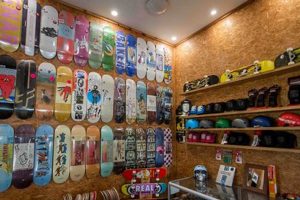
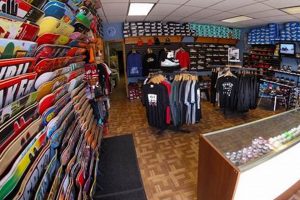
A retail establishment catering specifically to the skateboarding community, offering equipment, apparel, and accessories. Such a business serves as a resource for both novice and experienced skateboarders seeking quality products and expert advice. Examples include outlets providing decks, trucks, wheels, bearings, shoes designed for skateboarding, and protective gear like helmets and pads.
These specialized businesses provide essential support for the skateboarding subculture by offering curated selections of merchandise not readily available in general sporting goods stores. This allows individuals to acquire gear suited to their particular style and skill level. Historically, these establishments have been pivotal in fostering local skateboarding scenes by acting as community hubs and sponsoring events and teams.
The subsequent sections will delve into specific aspects of these skateboarding-focused businesses, examining product categories, service offerings, community engagement strategies, and the economic factors influencing their operation and success.
Guidance from a Skateboard Retailer
The following comprises insights geared toward optimizing the skateboarding experience through informed equipment selection and maintenance.
Tip 1: Deck Selection: Prioritize deck width based on shoe size and intended skating style. Smaller individuals or those focused on technical tricks may prefer narrower decks, while larger individuals or those focused on transition skating may benefit from wider decks.
Tip 2: Truck Considerations: Choose trucks that match the deck width. Mismatched truck and deck widths can compromise stability and control. Seek advice from experienced personnel regarding appropriate truck height relative to wheel size.
Tip 3: Wheel Hardness: Select wheel durometer appropriate for the skating environment. Softer wheels (78A-90A) are better suited for rough surfaces, providing increased grip and a smoother ride. Harder wheels (95A-101A+) are better suited for smooth surfaces like skateparks, offering greater speed and slide capabilities.
Tip 4: Bearing Maintenance: Regularly clean and lubricate bearings to ensure optimal performance. Contaminants such as dirt and debris can significantly reduce bearing speed and lifespan. Proper maintenance prolongs bearing life and maintains a consistent roll.
Tip 5: Footwear Selection: Invest in skateboarding-specific footwear. These shoes are designed with reinforced ollie patches and durable construction to withstand the rigors of skateboarding. The flat, vulcanized soles offer enhanced board feel and grip.
Tip 6: Protective Gear: Always utilize appropriate protective gear, including a helmet, knee pads, and elbow pads. Protective gear significantly reduces the risk of injury, particularly for beginners and those attempting advanced maneuvers.
Tip 7: Hardware Inspection: Routinely inspect all hardware, including bolts and kingpins, for signs of wear or damage. Loose or damaged hardware can compromise the integrity of the skateboard and lead to accidents. Replace worn components promptly.
Adherence to these recommendations will contribute to a safer and more enjoyable skateboarding experience, while simultaneously maximizing the lifespan of skateboarding equipment.
The subsequent section will address common questions and concerns encountered by individuals engaging with the skateboarding community.
1. Inventory Diversity

Inventory diversity is directly related to revenue generation and appeal. A establishment stocking a wide array of skateboarding products enhances its attractiveness to a broader segment of the skateboarding population. This ranges from beginner skateboarders seeking entry-level completes to seasoned professionals requiring specific, high-performance components. The establishment’s ability to cater to varied skill levels and preferences directly influences its market penetration and overall success. For example, if a store only carries a single brand of trucks, it excludes customers loyal to other brands, or those who require specific truck geometries for their style of skating.
The causes of limited inventory are varied, ranging from financial constraints affecting purchasing power to logistical challenges in sourcing diverse products. Effects include decreased customer traffic, reduced sales volume, and potential brand erosion if the establishment is perceived as outdated or not catering to current trends. Conversely, effects of a varied stock that includes decks from multiple manufacturers, a range of wheel durometers, and apparel from different brands creates a more compelling shopping experience. Furthermore, this practice can mitigate risk as fashion changes are rapid in the market.
In conclusion, a skate shop’s inventory directly impacts its attractiveness, customer reach, and overall economic viability. Maintaining breadth necessitates diligent market analysis, continuous product evaluation, and a keen understanding of the evolving needs and preferences of the skateboard community. Neglecting inventory diversity can lead to stagnation, while actively cultivating it can ensure long-term sustainability within the competitive skateboarding retail landscape.
2. Expert Staff Knowledge

The expertise of staff within a skateboarding retail environment directly influences customer satisfaction, purchasing decisions, and the overall credibility of the establishment. Knowledgeable personnel serve as a critical resource for skateboarders of all skill levels, providing guidance on equipment selection, maintenance, and safety.
- Technical Proficiency
Staff should possess a comprehensive understanding of skateboard components, including decks, trucks, wheels, bearings, and hardware. This proficiency enables them to accurately assess customer needs and recommend appropriate equipment based on skating style, skill level, and terrain preferences. For example, a staff member with technical proficiency can advise a customer on the optimal truck size and durometer for a specific deck width and riding style, ensuring a balanced and functional setup. A lack of this technical expertise can lead to misinformed purchasing decisions, resulting in dissatisfaction and potential safety concerns.
- Product Application and Compatibility
Understanding the compatibility of different skateboard components is essential. Mismatched parts can lead to performance issues or even equipment failure. Staff should be able to identify potential compatibility issues and recommend solutions. For instance, advising a customer on appropriate riser pad height to prevent wheel bite when using larger wheels demonstrates this knowledge. Conversely, neglecting to address these compatibility concerns can lead to compromised performance and potential injury.
- Maintenance and Repair Expertise
Proficiency in skateboard maintenance and repair is a valuable asset for staff. They should be able to diagnose common issues, perform basic repairs, and provide guidance on preventative maintenance. Offering services such as bearing cleaning, grip tape application, and hardware tightening enhances the customer experience and fosters loyalty. The ability to advise a customer on proper bearing lubrication techniques or how to identify a worn-out bearing directly contributes to the longevity and performance of their equipment.
- Skateboarding Culture and Trends
Beyond technical knowledge, an understanding of skateboarding culture and current trends is crucial. Staff should be aware of emerging brands, new product releases, and evolving skating styles. This awareness allows them to provide relevant recommendations and connect with customers on a deeper level. Recommending a recently released deck known for its innovative concave design or suggesting a specific wheel brand favored by professional skaters demonstrates an understanding of the skateboarding landscape and enhances the shop’s credibility. A lack of cultural awareness can result in the shop being perceived as out-of-touch with the current skateboarding scene.
The value of knowledgeable staff extends beyond individual transactions. It cultivates trust, fosters a sense of community, and positions the skateboarding retail environment as a valuable resource within the skateboarding ecosystem. By consistently providing accurate information and expert guidance, a skate shop establishes itself as a reliable source for all things skateboarding, contributing to its long-term success and relevance.
3. Community Engagement
Active participation within the local skateboarding community is an integral component of a specialized skateboarding retail environment’s long-term viability. This engagement fosters customer loyalty, builds brand recognition, and contributes to the overall growth of the skateboarding scene.
- Sponsorship of Local Skaters and Teams
Financial or material support for local skateboarders and teams can significantly raise the profile of both the athletes and the sponsoring retail establishment. Sponsoring skaters allows them to represent the shop at competitions, skate events, and within their local skateboarding circles, effectively acting as brand ambassadors. This can take the form of providing equipment, covering travel expenses, or offering stipends. For example, a shop might sponsor a local skate team by providing them with boards, shoes, and apparel, in exchange for the team wearing the shop’s logo and promoting the shop at local skateparks. The benefits include increased brand awareness and a closer connection to the core skateboarding demographic.
- Hosting Skateboarding Events and Competitions
Organizing events, such as skate jams, best trick contests, or demonstrations, creates opportunities for community members to gather, interact, and showcase their skills. These events can draw a diverse audience, including skateboarders, spectators, and potential customers. The retail establishment benefits from increased foot traffic, heightened visibility, and positive associations with the skateboarding community. Examples include hosting a “Go Skateboarding Day” event with free skate lessons, a best trick contest with prizes, and vendor booths, or sponsoring a local skate competition at a nearby skatepark.
- Collaboration with Local Skateparks and Organizations
Partnering with local skateparks and skateboarding organizations demonstrates a commitment to supporting the broader skateboarding infrastructure. This collaboration can involve sponsoring park improvements, hosting workshops and clinics, or participating in community outreach programs. By aligning with these organizations, the retail establishment strengthens its ties to the community and reinforces its position as a valuable resource. Examples include donating funds to a skatepark for new ramps or equipment, hosting skateboarding safety clinics in collaboration with a local skateboarding advocacy group, or partnering with a youth center to offer skateboarding lessons to underprivileged children.
- Social Media Engagement and Content Creation
Active engagement on social media platforms allows the retail establishment to connect with its audience, share relevant content, and promote its products and services. Regularly posting photos and videos of local skaters, events, and product demonstrations helps to build a strong online presence and fosters a sense of community. Responding to customer inquiries, running contests, and sharing user-generated content further enhances engagement and strengthens the relationship between the shop and its customers. Content examples include posting videos of local skaters performing tricks, sharing photos of newly stocked products, running contests for skateboard-related prizes, and highlighting community events and initiatives.
These interconnected engagement strategies contribute to a supportive ecosystem surrounding the shop. Each builds an environment of activity that builds the reputation of “people skate shop”. They serve as pillars, with each aspect working in cohesion to ensure the establishment’s integral role in the skateboarding scene.
4. Strategic Location

The geographical positioning of a skateboarding retail establishment significantly impacts its accessibility, customer base, and overall success. Selecting a location that aligns with the target demographic and maximizes visibility is a critical decision with far-reaching consequences.
- Proximity to Skateparks and Skate Spots
Locating a shop near skateparks or popular skateboarding areas offers immediate access to the target market. Skateboarders frequenting these areas represent a readily available customer base. The physical proximity allows for impulse purchases, easy access to replacement parts, and a convenient location for skateboarders to gather and discuss their needs. For example, a shop situated across the street from a well-known skatepark would benefit from the consistent flow of skateboarders seeking equipment and supplies. The implication is that increased foot traffic translates directly into increased sales and customer engagement.
- Visibility and Accessibility
A location with high visibility and ease of access is essential for attracting both existing and potential customers. A storefront situated on a busy street with clear signage and ample parking will be more likely to attract attention than a shop hidden in an obscure location. Easy access via public transportation also broadens the potential customer base. A shop located on a well-traveled thoroughfare with a bus stop directly in front of the store would exemplify this advantage. The implications include increased brand awareness and a greater likelihood of attracting new customers who might otherwise not be aware of the shop’s existence.
- Demographic Alignment
The surrounding demographic composition plays a crucial role in the success of a skateboarding retail establishment. Locating in an area with a significant population of young people, particularly those interested in skateboarding and action sports, is a key consideration. Analyzing demographic data, such as age, income levels, and participation in related activities, can inform location decisions. A shop located in a neighborhood with a high concentration of teenagers and young adults, coupled with a strong skateboarding culture, would be well-positioned for success. The implication is that aligning the shop’s location with its target demographic maximizes its potential customer base and ensures a steady stream of business.
- Competition and Complementary Businesses
Analyzing the competitive landscape is essential when selecting a location. While proximity to other skateboarding shops can create competition, it can also attract a higher concentration of skateboarders to the area. Additionally, locating near complementary businesses, such as coffee shops, music stores, or art supply stores, can create synergy and attract a broader audience. A shop located in a district with several other skateboarding shops, combined with a popular coffee shop and a music venue, could benefit from the combined drawing power of these establishments. The implication is that a careful assessment of the competitive environment and the potential for synergy with complementary businesses can significantly impact a shop’s long-term success.
These combined elements reinforce the symbiotic relationship between a “people skate shop” and its geographical context. Attracting customers and building community are dependent on the choice of an optimal position.
5. Competitive Pricing

The pricing strategy employed by a skateboarding retail establishment directly impacts its market share, profitability, and customer perception. In the context of a “people skate shop,” competitive pricing is not merely about offering the lowest prices; rather, it involves striking a balance between profitability, perceived value, and the prices offered by competitors, both local and online. Cause and effect are clearly linked: prices that are consistently too high will drive customers to seek alternatives, while prices that are unsustainably low will jeopardize the shop’s financial stability. The importance of competitive pricing stems from the increasingly transparent nature of the retail market, where customers can easily compare prices across multiple channels. A practical example is a shop that consistently marks up its decks 20% higher than online retailers; it will likely see a significant decline in deck sales, regardless of the quality of its other services. This understanding is crucial for ensuring the long-term health of the business.
Further analysis reveals that competitive pricing strategies often involve more than simply matching competitor prices. A “people skate shop” might implement tiered pricing, offering entry-level products at lower margins to attract new customers, while maintaining higher margins on premium or specialized items. Bundle deals, discounts for local skateboarders, and loyalty programs can also contribute to a perception of value that goes beyond simply having the lowest price on a single item. Another practical application involves carefully managing inventory costs. By securing favorable terms with suppliers and efficiently managing stock levels, a shop can lower its cost of goods sold, allowing it to offer more competitive prices without sacrificing profitability. A shop might also leverage its community connections to offer exclusive product collaborations or limited-edition items at a premium price, capitalizing on their unique value proposition.
In conclusion, competitive pricing is a multifaceted consideration that requires a deep understanding of the skateboarding market, the local customer base, and the shop’s own cost structure. The challenge lies in finding the optimal balance between profitability, perceived value, and competitive pressure. By carefully analyzing these factors and implementing a dynamic pricing strategy, a “people skate shop” can attract and retain customers, maintain a healthy profit margin, and establish itself as a valuable resource within the skateboarding community. Neglecting this aspect of the business can lead to a decline in sales, a loss of market share, and ultimately, the failure of the shop.
6. Online Presence

In the contemporary retail landscape, a discernible online presence is not merely an option, but a necessity for a skateboarding retail establishment. A well-cultivated online presence extends a “people skate shop’s” reach beyond its physical location, facilitating engagement with a broader audience and enabling various operational enhancements.
- E-commerce Functionality
The implementation of e-commerce functionality allows a “people skate shop” to sell products directly to customers regardless of geographical constraints. This expands the potential customer base significantly. A functional and well-designed online store allows customers to browse inventory, place orders, and manage their accounts. The integration of secure payment gateways and efficient shipping logistics are critical components of a successful e-commerce operation. For example, a customer in another region seeking a specific deck model can readily purchase it from the online store, thus expanding the shop’s sales beyond its immediate vicinity. The implications include increased revenue, enhanced brand visibility, and the ability to compete with larger online retailers.
- Social Media Engagement
Active participation on social media platforms facilitates direct interaction with the skateboarding community. Platforms such as Instagram, Facebook, and YouTube provide avenues for sharing product information, event announcements, and engaging content. A “people skate shop” can leverage social media to showcase its product offerings, highlight local skaters, and promote upcoming events. Posting videos of product demonstrations, sharing photos of local skate spots, and running contests are examples of effective social media engagement. This fosters a sense of community and enhances brand loyalty. The implications include increased brand awareness, improved customer engagement, and the ability to gather valuable customer feedback.
- Informational Website
A comprehensive website serves as a central hub for information about the “people skate shop.” It should include details such as the shop’s location, hours of operation, product categories, and contact information. The website can also feature blog posts, articles, and other content related to skateboarding, providing valuable information to customers. For instance, the site can include tutorials on basic skateboarding skills, reviews of new products, and interviews with local skaters. A well-designed website enhances the shop’s credibility, improves its search engine ranking, and serves as a valuable resource for the skateboarding community. The implication is increased customer trust, improved brand image, and enhanced search engine visibility.
- Online Customer Support
Providing online customer support channels ensures that customers can readily obtain assistance with their inquiries and concerns. Implementing features such as live chat, email support, and a frequently asked questions (FAQ) section allows the shop to address customer issues efficiently. Timely and effective customer support enhances customer satisfaction and fosters loyalty. For example, a customer with a question about a product’s specifications can quickly receive an answer via live chat, improving their purchasing experience. The implications include enhanced customer satisfaction, improved customer retention, and a reduction in customer service costs.
In summary, a strategic and well-executed online presence enables a “people skate shop” to transcend geographical limitations, foster community engagement, and enhance its overall operational effectiveness. Each of the factors contributes significantly in ensuring a stronger link between retail and consumer relations.
7. Customer Service

Customer service constitutes a critical component of a skateboarding retail environment, directly impacting customer loyalty, reputation, and overall financial success. In a “people skate shop,” this facet extends beyond simple transactions, encompassing expertise sharing, community building, and the provision of tailored solutions. Positive customer interactions foster trust and encourage repeat business, while negative experiences can lead to reputational damage and customer attrition. The specialized nature of skateboarding equipment necessitates knowledgeable staff capable of providing informed advice, particularly to novice skateboarders. Failure to provide adequate customer service can result in customers purchasing inappropriate or unsafe equipment, leading to dissatisfaction or potential injury. Consider a scenario where a beginner seeks a complete skateboard; informed assistance in selecting a suitable deck size, truck configuration, and wheel durometer is crucial. Absent such guidance, the customer may purchase an unsuitable product, leading to a negative experience and potentially deterring future engagement with the shop.
Beyond initial purchases, customer service extends to ongoing support, including maintenance advice, repair services, and warranty assistance. The provision of prompt and effective solutions to customer issues demonstrates a commitment to satisfaction and builds long-term relationships. For example, a shop offering bearing cleaning services or assisting with hardware replacements provides added value beyond the simple sale of products. Further, actively addressing customer complaints or concerns through various channels, such as online forums or in-store interactions, mitigates negative publicity and reinforces a commitment to customer satisfaction. Consider a situation where a customer experiences a manufacturing defect with a newly purchased deck; a prompt and hassle-free warranty replacement reinforces the shop’s commitment to quality and customer service.
In conclusion, customer service is inextricably linked to the success of a “people skate shop.” It transcends mere transactions, encompassing expertise sharing, community building, and the provision of tailored solutions. Prioritizing customer satisfaction through knowledgeable staff, responsive support, and proactive problem-solving fosters loyalty, enhances reputation, and ultimately contributes to the long-term sustainability of the business. Challenges include maintaining consistent service quality across all channels and adapting to evolving customer expectations. Addressing these challenges requires ongoing training, investment in customer service infrastructure, and a genuine commitment to exceeding customer expectations.
Frequently Asked Questions
The following addresses common inquiries regarding skateboarding equipment, maintenance, and safety, offering guidance for both novice and experienced skateboarders.
Question 1: What constitutes a “complete” skateboard, and is it suitable for beginners?
A complete skateboard refers to a pre-assembled skateboard encompassing all necessary components, including the deck, trucks, wheels, bearings, and hardware. Complete skateboards are typically appropriate for beginners, providing a cost-effective and convenient entry point to the sport. However, it is crucial to ensure the complete skateboard is of reasonable quality and appropriate for the individual’s size and intended use. Lower-quality completes may compromise safety and performance.
Question 2: How frequently should skateboard bearings be cleaned and lubricated?
The frequency of bearing maintenance depends on usage and environmental conditions. In general, bearings should be cleaned and lubricated every 1-3 months with regular use, or more frequently if exposed to dirt, water, or other contaminants. Neglecting bearing maintenance can significantly reduce bearing speed and lifespan.
Question 3: What is the significance of wheel durometer, and how does it impact skateboarding performance?
Wheel durometer refers to the hardness of the skateboard wheel, typically measured on the A scale. Softer wheels (78A-90A) provide greater grip and a smoother ride on rough surfaces, while harder wheels (95A-101A+) offer greater speed and slide capabilities on smooth surfaces. Wheel durometer selection should be based on the intended skating environment and preferred riding style.
Question 4: What protective gear is essential for skateboarding, and how should it be utilized?
Essential protective gear includes a helmet, knee pads, and elbow pads. A helmet is crucial for protecting the head from serious injury, while knee and elbow pads mitigate the risk of abrasions and fractures. Protective gear should be properly fitted and worn consistently, regardless of skill level.
Question 5: How does skateboard deck width impact stability and maneuverability?
Skateboard deck width influences stability and maneuverability. Wider decks generally offer greater stability, while narrower decks facilitate quicker turning and technical maneuvers. Deck width selection should be based on individual preference, shoe size, and intended skating style.
Question 6: What are common signs of skateboard wear and tear, and when should components be replaced?
Common signs of wear and tear include chipped or cracked decks, worn-down wheels, loose or damaged hardware, and noisy or slow bearings. Components should be replaced when they exhibit signs of significant wear or damage that compromises safety or performance. Regularly inspecting equipment is crucial for identifying potential issues.
These responses provide foundational knowledge for navigating the intricacies of skateboarding equipment and practices. Understanding these aspects contributes to a safer and more enjoyable skateboarding experience.
The subsequent section will explore advanced skateboarding techniques and equipment modifications.
Conclusion
This examination of skateboarding retail, utilizing people skate shop as a central concept, has elucidated the multifaceted nature of these establishments. Critical elements encompass inventory diversity, staff expertise, community engagement, strategic location, competitive pricing, online presence, and customer service. Each facet operates interdependently, influencing the shop’s viability and its role within the skateboarding ecosystem.
The future success of skateboarding-focused retail hinges on adapting to evolving market dynamics, fostering genuine connections with the skateboarding community, and providing knowledgeable guidance. Commitment to these principles ensures continued relevance and supports the ongoing growth of skateboarding culture.