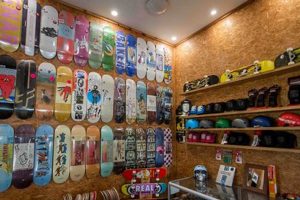
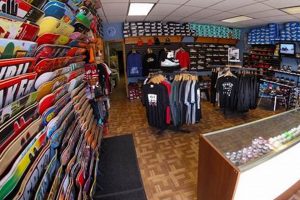
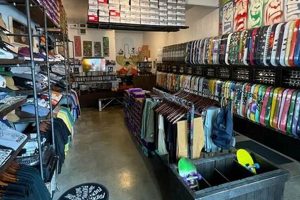
Establishments specializing in the retail of equipment related to skateboarding, including decks, trucks, wheels, bearings, and protective gear, as well as apparel and footwear designed for the activity. Such businesses provide a focused environment for skateboarders of all skill levels to acquire the necessary tools and accessories for participating in the sport. An example would be a local business offering a wide variety of skateboard brands and providing services such as deck assembly and skate maintenance.
These retailers play a critical role within the skateboarding community. They serve as a central hub for both experienced and novice skaters, providing expertise and guidance on product selection. Historically, these outlets have fostered a sense of community, often sponsoring local skateboarding events and supporting the growth of the sport within their respective regions. Access to quality equipment impacts safety, performance, and the overall enjoyment derived from skateboarding.
The following sections will delve into the different types of equipment available, explore the services typically offered, and examine the evolving role of these businesses in the modern retail landscape.
Guidance from Skateboarding Retailers
The following recommendations, derived from expertise commonly found in skateboarding retail environments, aim to optimize the skateboarding experience and promote safe practices.
Tip 1: Deck Selection: Choosing the appropriate deck size is paramount. A wider deck offers increased stability, beneficial for beginners. A narrower deck facilitates quicker turning, preferred by advanced skaters. Consult with experienced staff to determine the suitable width based on individual height and skill level.
Tip 2: Truck Compatibility: Ensure trucks are properly sized for the deck width. Overhang or insufficient width affects balance and control. A knowledgeable sales associate can provide guidance on selecting trucks that align perfectly with the chosen deck.
Tip 3: Wheel Durometer: Wheel durometer (hardness) significantly influences performance. Softer wheels (lower durometer) provide better grip and smoother rides on rough surfaces. Harder wheels (higher durometer) offer greater speed and are better suited for smooth skateparks. Evaluate the intended skating environment when selecting wheel hardness.
Tip 4: Bearing Maintenance: Regular cleaning and lubrication of bearings are crucial for maintaining optimal speed and performance. Dirt and debris hinder bearing rotation. Use bearing-specific cleaners and lubricants, and avoid over-lubrication, which can attract dirt.
Tip 5: Protective Gear: Prioritize safety by wearing appropriate protective gear, including a helmet, knee pads, and elbow pads. Falls are inevitable, especially when learning new tricks. Ensure gear fits properly and is in good condition. Replace damaged or worn-out gear immediately.
Tip 6: Footwear Considerations: Choose skateboarding-specific shoes designed for durability and grip. Reinforced ollie pads and vulcanized soles enhance board feel and prolong the life of the shoes. Avoid wearing running shoes or other footwear not designed for the demands of skateboarding.
Tip 7: Hardware Integrity: Regularly inspect all hardware, including bolts and nuts, for tightness and wear. Loose hardware can compromise stability and lead to accidents. Replace worn or damaged hardware immediately.
Adherence to these guidelines, informed by the expertise of skateboarding retailers, contributes to enhanced safety, improved performance, and a more enjoyable skateboarding experience.
The subsequent section will explore the economic impact of skateboarding retail and its role in supporting the skateboarding community.
1. Equipment Variety

The breadth of available equipment within skateboarding retail establishments directly addresses the diverse needs and preferences of skateboarders across skill levels and disciplines. The following details the role of this variety.
- Deck Selection
Decks, the foundational component, vary in size, shape, and material composition. Dimensions influence maneuverability and stability, while construction materials (e.g., maple plies) affect durability and flex. Establishments maintain a diverse inventory to accommodate street, park, and vert styles.
- Truck and Wheel Combinations
Trucks, which attach the wheels to the deck, are selected based on axle width and height. Wheels vary in diameter, durometer (hardness), and shape. Proper matching optimizes turning radius, grip, and speed, necessitating a range of options for different terrains and skater preferences.
- Bearing Specifications
Bearings, crucial for wheel rotation, are categorized by ABEC rating and material. Higher ABEC ratings indicate tighter tolerances and potentially higher speeds. Ceramic bearings offer reduced friction and increased durability. Retailers offer a selection catering to various performance requirements and budgets.
- Protective Gear Choices
Helmets, pads, and guards are essential for safety. Helmets vary in construction and impact resistance ratings. Pads come in different sizes and materials, providing protection for knees, elbows, and wrists. A comprehensive selection ensures skaters can prioritize safety without compromising comfort or mobility.
The availability of diverse equipment within skateboarding retail empowers skateboarders to customize their setups for optimal performance and personal preference. This selection reflects the commitment of these establishments to supporting the varied needs of the skateboarding community.
2. Expert Advice

Guidance provided by knowledgeable staff constitutes a crucial element within skateboarding retail environments, directly impacting customer satisfaction and overall skateboarding experience. This expertise extends beyond simple product knowledge to encompass an understanding of skateboarding techniques, equipment compatibility, and safety considerations.
- Equipment Compatibility Assessment
Advising customers on the proper sizing and compatibility of various components, such as decks, trucks, and wheels. Mismatched components can negatively affect performance and safety. For example, inappropriately sized trucks on a deck can compromise stability during turns.
- Skateboarding Style Recommendations
Offering tailored equipment suggestions based on individual skateboarding styles and skill levels. A beginner requires different equipment than an experienced skater engaging in advanced tricks. For example, recommending softer wheels to a novice for enhanced grip and stability on varied surfaces.
- Injury Prevention Strategies
Educating customers on the importance of protective gear and safe skateboarding practices. Providing guidance on proper helmet fit and the selection of appropriate pads for different activities. For example, advising skaters to use wrist guards when learning new tricks to mitigate the risk of wrist injuries.
- Troubleshooting and Maintenance Guidance
Providing assistance with equipment maintenance and troubleshooting common skateboarding issues. Offering advice on cleaning bearings, tightening hardware, and repairing minor damage. For example, instructing customers on how to properly lubricate bearings to maintain optimal wheel speed.
The presence of knowledgeable staff enhances the value proposition of skateboarding retail establishments, fostering customer loyalty and contributing to a safer, more enjoyable skateboarding experience for all.
3. Community Hub

Skateboarding retail locations often transcend the traditional retail model, functioning as integral community hubs for skateboarders. This transformation is a direct result of the specialized knowledge and focused product offerings, leading to a concentration of individuals sharing a common passion. This creates an environment conducive to interaction, knowledge sharing, and the development of social bonds within the skateboarding community. The physical presence of a business dedicated to the sport provides a tangible focal point for these activities.
The importance of the community hub component manifests in several ways. Local shops frequently sponsor skateboarding events, competitions, and demonstrations, directly contributing to the visibility and growth of the sport within their respective regions. These activities provide platforms for skateboarders to showcase their skills, network with peers, and receive recognition. Furthermore, shops often serve as meeting points for organized skate sessions, further solidifying their role as central gathering places. Consider the example of a shop organizing weekly group skates at designated locations, creating a structured environment for both experienced and novice skateboarders to connect and improve their skills.
Understanding the significance of the community hub aspect enables retailers to strategically foster engagement and loyalty. By cultivating relationships with local skateboarders and providing a supportive environment, these establishments can solidify their position within the community and ensure long-term sustainability. This recognition and support for the community are essential to their survival and overall vitality of the culture.
4. Product Quality
The correlation between product quality and the viability of businesses focused on skateboarding retail is demonstrably strong. Skateboarding, by its nature, places significant stress on equipment. Substandard materials and manufacturing processes lead directly to premature failure of crucial components such as decks, trucks, and wheels. This, in turn, results in compromised safety, diminished performance, and ultimately, customer dissatisfaction. Consider the example of a deck constructed with inferior wood plies: its susceptibility to breakage under normal use directly endangers the skateboarder and negatively impacts the shop’s reputation. Therefore, a commitment to offering high-quality products is not merely a matter of ethical practice, but a fundamental requirement for long-term success in this specialized retail sector.
The practical implications of prioritizing product quality extend beyond immediate customer satisfaction. Skateboarders often rely on the expertise of retail staff to guide their purchasing decisions. When shops consistently stock durable and reliable equipment, they cultivate trust within the skateboarding community. This trust translates into repeat business and positive word-of-mouth referrals. Conversely, offering low-quality items, even at reduced prices, can erode customer confidence and drive business to competitors. For instance, a shop known for carrying trucks manufactured with durable alloys and precise machining will attract discerning skateboarders seeking performance and longevity.
In conclusion, product quality serves as a cornerstone of successful skateboarding retail operations. The challenges associated with maintaining high standards require careful sourcing, thorough vetting of suppliers, and a deep understanding of skateboarding equipment. However, the rewards enhanced safety, increased customer loyalty, and a positive brand reputation significantly outweigh the costs. Failure to prioritize quality undermines the shop’s credibility and jeopardizes its long-term sustainability within a competitive market.
5. Custom Builds

The offering of custom-built skateboards within retail locations constitutes a significant value-added service, directly impacting customer satisfaction and perceived expertise. The ability to select individual components, such as decks, trucks, wheels, and bearings, allows for personalization tailored to specific riding styles and preferences. The absence of pre-assembled boards necessitates knowledgeable staff capable of providing guidance on component compatibility and performance characteristics. A customer, for instance, may seek a wider deck for increased stability during transition skating, coupled with specific truck geometry for enhanced turning capabilities. The retail establishment facilitates this customization process.
The implementation of custom build services requires investment in both inventory management and employee training. Maintaining a diverse selection of components, including various brands, sizes, and performance ratings, demands considerable capital. Furthermore, sales associates must possess a thorough understanding of skateboarding mechanics and equipment nuances to effectively advise customers. A practical application of this expertise involves assisting customers in selecting appropriate wheel durometer based on the intended riding surface; softer wheels are preferred for rough terrain, while harder wheels excel on smooth concrete. The effectiveness of this service hinges on the expertise of the staff.
Custom builds represent a key differentiator in a competitive retail landscape. By offering personalized solutions, skate board shops can cultivate customer loyalty and establish themselves as trusted authorities within the skateboarding community. The availability of custom options addresses the specialized needs of experienced skaters while providing a valuable learning opportunity for beginners seeking to optimize their equipment for specific purposes. These builds become essential, particularly in the context of individualized styles and personal performance goals.
6. Maintenance Services

Maintenance services offered by skateboarding retail locations are an integral component of their business model, providing significant value to customers and contributing to the long-term health of the skateboarding community. The consistent use of skateboards inevitably results in wear and tear on various components, including decks, trucks, wheels, and bearings. Damage or degradation of these parts can compromise performance, reduce safety, and ultimately require replacement. Retail locations offering maintenance services directly address this need, extending the lifespan of equipment and fostering a culture of responsible skateboarding. For example, a shop providing bearing cleaning and lubrication services allows skateboarders to maintain optimal wheel speed and smoothness, thereby improving performance and minimizing the risk of bearing failure.
The availability of maintenance services within skate board shops generates several beneficial outcomes. Repairing damaged components, such as chipped decks or bent axles, can be a more economical alternative to replacing entire setups, especially for skateboarders on a limited budget. Regular maintenance also prevents minor issues from escalating into more significant problems, reducing the need for costly repairs or replacements in the future. Furthermore, shops offering maintenance services often provide expert advice on proper care and maintenance techniques, empowering skateboarders to proactively maintain their equipment. One practical example is the provision of guidance on tightening truck bolts to prevent wobbling and maintain stability, or advice on recognizing early signs of deck delamination to prevent catastrophic failure.
In summary, maintenance services are not merely an ancillary offering but a critical function of skateboarding retail locations. By providing these services, skate board shops contribute to the longevity of skateboarding equipment, promote safe riding practices, and foster a sense of community among skateboarders. The consistent availability of expert maintenance and repair ensures the continual enjoyment and evolution of the sport.
Frequently Asked Questions
The following addresses prevalent inquiries concerning establishments specializing in skateboarding equipment and related services. These answers aim to clarify common misconceptions and provide definitive information.
Question 1: What distinguishes a skateboard shop from a general sporting goods store?
Skateboard shops specialize exclusively in skateboarding equipment and apparel. Sporting goods stores offer a wider range of products across various sports, lacking the focused expertise and specialized inventory found in dedicated skateboarding establishments. Product knowledge and specialized customer service are typical in the skate shops.
Question 2: Is purchasing a complete skateboard from a skate board shop a suitable option for beginners?
Complete skateboards offer a convenient and cost-effective entry point for beginners. These pre-assembled boards are typically designed for general use and provide a solid foundation for learning basic skills. Ensure the complete is appropriate for the skater’s size and intended use.
Question 3: What factors should be considered when selecting a skateboard deck?
Key considerations include deck width, length, concave, and material composition. Deck width influences stability and maneuverability; wider decks offer greater stability. Concave affects foot feel and responsiveness. Maple is the most common and durable material. Style and preference should play a role.
Question 4: How frequently should skateboard bearings be cleaned and lubricated?
Bearing maintenance frequency depends on usage and environmental conditions. Regular cleaning and lubrication, approximately every 1-3 months for average use, are recommended to maintain optimal performance and extend bearing lifespan. More frequent attention is crucial if skating in dirty/wet conditions.
Question 5: What safety gear is essential for skateboarding?
A helmet is paramount for head protection. Knee and elbow pads are highly recommended to mitigate injuries from falls. Wrist guards provide support and protection for wrists. Mouthguards may be considered for advanced maneuvers. Protection will aid in confidence.
Question 6: Do skate board shops offer repair services?
Many skate board shops provide repair services, including deck replacement, truck mounting, wheel changes, and bearing maintenance. Inquire directly with the establishment regarding specific services offered and associated costs. These services will help in the long run.
In conclusion, skate board shops represent a specialized retail sector providing essential equipment, expertise, and services to the skateboarding community. These FAQs clarify common inquiries and offer a foundation for informed decision-making.
The subsequent section will investigate the influence of online retailers on the traditional skateboarding retail market.
Conclusion
The preceding analysis elucidates the multifaceted role of skate board shops within the skateboarding ecosystem. Beyond mere retail outlets, these establishments function as crucial hubs for community engagement, expert guidance, and the provision of specialized equipment. Their commitment to quality, maintenance services, and custom builds directly impacts the safety, performance, and overall experience of skateboarders across all skill levels. The importance of product knowledge and community engagement are very vital.
The continued viability of skate board shops hinges on their ability to adapt to evolving market dynamics, including the increasing influence of online retailers. By reinforcing their commitment to personalized service, fostering a strong sense of community, and maintaining a steadfast focus on product quality, these businesses can ensure their continued relevance and contribution to the skateboarding landscape. It is an essential point to provide value-added resources for the consumer.