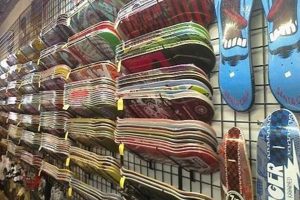
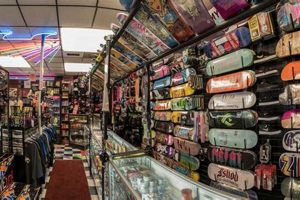
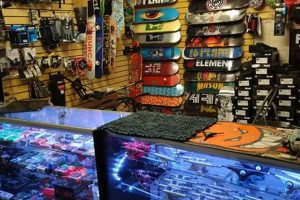
An establishment specializing in skateboarding equipment, apparel, and accessories caters to individuals engaged in the sport. These retail outlets typically offer a diverse selection of skateboards, ranging from complete boards to individual components such as decks, trucks, wheels, and bearings. Protective gear, including helmets, knee pads, and elbow pads, are also commonly available, along with clothing and footwear designed for skateboarding.
The existence of these specialized businesses supports the skateboarding community by providing access to quality products and expert advice. They often serve as hubs for local skaters, fostering a sense of community through events, competitions, and workshops. Historically, such shops have played a vital role in the growth and development of skateboarding culture, influencing trends and supporting emerging talent. The presence of a dedicated retailer simplifies the acquisition of necessary equipment and helps ensure skater safety and performance.
Understanding the dynamics of these specialized retailers is crucial for analyzing the broader skateboarding industry. Subsequent sections will delve into topics such as product selection criteria, the impact of online sales, strategies for community engagement, and the evolving landscape of skateboarding culture and retail.
Skateboarding Equipment Selection Guidance
The following guidelines are intended to assist individuals in making informed decisions when purchasing skateboarding equipment, promoting safety, performance, and longevity.
Tip 1: Deck Assessment: Evaluate deck construction material, typically maple wood, for durability and responsiveness. Consider deck width based on shoe size and riding style; wider decks offer greater stability.
Tip 2: Truck Evaluation: Select trucks that match the deck width to ensure proper balance and turning capabilities. Consider truck height based on wheel size and desired riding style; higher trucks accommodate larger wheels.
Tip 3: Wheel Selection: Choose wheels based on durometer (hardness) and size. Softer wheels (lower durometer) provide better grip on rough surfaces, while harder wheels are faster and more suitable for smooth surfaces. Larger wheels roll faster and more easily over obstacles.
Tip 4: Bearing Maintenance: Regularly clean and lubricate bearings to maintain optimal rolling speed and prevent premature wear. Damaged bearings should be replaced promptly to avoid compromising performance.
Tip 5: Protective Gear Emphasis: Prioritize the use of appropriate protective gear, including helmets, knee pads, and elbow pads. Ensure gear fits properly and meets relevant safety standards. Replace damaged or worn-out gear immediately.
Tip 6: Footwear Considerations: Opt for skateboarding-specific shoes designed with reinforced construction and flat, grippy soles for enhanced board feel and durability. Proper footwear contributes significantly to control and safety.
Tip 7: Assembly and Adjustment: Ensure all components are properly assembled and tightened. Adjust truck tightness to achieve the desired level of turning responsiveness. Regular inspection and maintenance are crucial for optimal performance and safety.
Adhering to these recommendations will facilitate the selection of appropriate skateboarding equipment, promoting a safer and more enjoyable skateboarding experience.
The subsequent sections will explore advanced topics related to skateboarding techniques, competition strategies, and the evolution of skateboarding culture.
1. Product Diversity

Product diversity is a critical determinant of success for any retail establishment specializing in skateboarding equipment. A limited product range restricts appeal, potentially alienating segments of the skateboarding community with specific needs or preferences. A shop that stocks only entry-level boards, for example, risks losing customers who progress to more advanced riding styles and require higher-performance equipment. Conversely, an establishment offering a comprehensive selection encompassing different deck sizes, truck types, wheel durometers, and bearing grades caters to a wider audience, including beginners, intermediate riders, and professionals. The availability of protective gear, clothing, and accessories further contributes to a shop’s ability to serve as a one-stop destination for skateboarding enthusiasts. This comprehensive approach not only increases sales potential but also solidifies the shop’s position as a valuable resource within the community.
The correlation between product diversity and a shop’s profitability is evident in numerous real-world examples. Stores that carefully curate their inventory to reflect current trends and cater to local riding styles consistently outperform those with static or limited offerings. A store near a skate park known for its street obstacles, for instance, will likely stock a wider selection of durable decks and responsive trucks suited for technical maneuvers. Conversely, a shop located near a vert ramp may emphasize larger wheels and stable boards designed for high-speed transitions. Furthermore, offering a range of brands, from established industry leaders to smaller, independent manufacturers, appeals to diverse customer tastes and provides opportunities to support emerging talent within the skateboarding community. This strategic approach to product diversification fosters customer loyalty and strengthens the shop’s reputation.
In conclusion, product diversity is not merely an aesthetic choice but a fundamental business imperative for establishments serving the skateboarding community. Failure to offer a sufficiently diverse product range limits market reach, reduces customer satisfaction, and ultimately jeopardizes the long-term viability of the enterprise. Effective management of product inventory, informed by a deep understanding of local skateboarding trends and customer preferences, is essential for navigating the competitive retail landscape and ensuring sustained success.
2. Community Engagement

Community engagement constitutes a critical operational element for any retail establishment specializing in skateboarding equipment. The correlation between active community involvement and the prosperity of such a business is demonstrable, often manifesting as increased customer loyalty, enhanced brand reputation, and sustained revenue generation. The causation stems from the establishments role as a facilitator of the skateboarding lifestyle, rather than merely a vendor of goods. Community involvement transforms a retail space into a local hub, providing resources, support, and a sense of belonging for skaters of all skill levels. These engagement strategies create a positive feedback loop, where the shop’s reputation spreads through word-of-mouth, attracting new customers and solidifying its position within the local skateboarding scene.
Real-world examples illustrate the practical significance of this connection. Consider a retail shop that sponsors local skateboarding events or competitions. Such sponsorships increase visibility and demonstrate a commitment to the local skateboarding culture. Alternatively, a shop might host workshops or clinics, offering instruction to beginner skaters or advanced coaching for experienced riders. These activities directly contribute to the development of skateboarding skills within the community, simultaneously fostering a sense of goodwill towards the shop. Additionally, retail spaces often function as meeting points for local skaters, providing a location to share experiences, plan sessions, or simply connect with like-minded individuals. This informal community building is invaluable, creating a welcoming atmosphere that distinguishes the shop from impersonal online retailers. Shops can provide a place for local artists to display work.
Effective community engagement requires a consistent and genuine effort. Sporadic events or insincere gestures are unlikely to produce lasting positive effects. Instead, sustained involvement, coupled with a deep understanding of the local skateboarding community’s needs and preferences, is essential. Although challenges may arise, such as limited resources or competing priorities, the long-term benefits of community engagement far outweigh the costs. The practical significance of this understanding lies in its ability to transform a transactional business into a dynamic and integral component of the skateboarding community. This, in turn, contributes to the sustained success and relevance of the retail establishment.
3. Expert staff

The presence of expert staff constitutes a critical success factor for retail establishments specializing in skateboarding equipment. The knowledgeable personnel within such a setting directly influence customer purchasing decisions, contribute to enhanced safety, and foster community trust. The absence of informed guidance increases the likelihood of inappropriate equipment selection, potentially leading to injury or decreased performance. The expertise of the staff, therefore, directly correlates with customer satisfaction and the perceived value of the establishment. The resulting benefits extend beyond mere sales, fostering a sense of loyalty and establishing the shop as a reliable resource for skateboarding-related information and assistance.
Consider, for example, a novice skater entering a shop with limited knowledge of deck sizes or wheel durometers. An expert staff member can assess the skater’s skill level, riding style, and physical attributes to recommend appropriate equipment. This personalized guidance not only ensures a more enjoyable skateboarding experience but also mitigates the risk of injury associated with unsuitable gear. Similarly, experienced skaters often seek advice on advanced equipment or specialized components. A knowledgeable staff can provide insights into the latest technologies, offer comparative analyses of different brands, and assist in troubleshooting technical issues. This level of expertise enhances the shop’s reputation and attracts a clientele seeking informed opinions and reliable service.
In conclusion, the correlation between expert staff and the success of a skateboarding retail establishment is undeniable. The competence and experience of the personnel directly impact customer satisfaction, safety, and community trust. While challenges may arise in recruiting and retaining qualified staff, the long-term benefits of investing in expert personnel far outweigh the costs. The understanding of this relationship is crucial for any establishment seeking to thrive in the competitive skateboarding retail landscape. This expertise facilitates customer loyalty, promotes safe skateboarding practices, and reinforces the shop’s position as a valuable resource within the community.
4. Inventory Management

Effective inventory management is a crucial determinant of financial stability and operational efficiency for skateboarding retail establishments. The precise control of stock levels, encompassing skateboards, components, apparel, and accessories, directly influences profitability, customer satisfaction, and the overall reputation of the business. Overstocking ties up capital in unsold merchandise, increasing storage costs and the risk of obsolescence. Conversely, understocking results in lost sales, dissatisfied customers, and a negative impact on brand image. Therefore, the capacity to accurately forecast demand, efficiently track inventory movement, and optimize stock levels is a critical factor distinguishing successful skateboarding shops from those that struggle.
The implementation of sophisticated inventory management systems is increasingly prevalent within the skateboarding retail sector. These systems leverage data analytics to identify sales trends, predict seasonal fluctuations, and optimize product placement. For example, a shop located near a skate park may analyze sales data to determine the most popular deck sizes and wheel durometers among local skaters, adjusting inventory levels accordingly. Similarly, monitoring sales data can reveal seasonal trends, such as increased demand for skateboards during the summer months or higher sales of winter apparel during the colder seasons. Real-time inventory tracking allows shops to promptly replenish fast-selling items and avoid stockouts, while simultaneously minimizing the risk of overstocking less popular products. This optimization process directly contributes to improved cash flow, reduced storage costs, and increased customer satisfaction.
In conclusion, inventory management is not merely an administrative function but a strategic imperative for skateboarding retail businesses. Effective control of stock levels, guided by data analysis and informed decision-making, directly influences profitability, customer satisfaction, and overall operational efficiency. While challenges may arise in accurately forecasting demand and adapting to changing market trends, the long-term benefits of robust inventory management practices far outweigh the costs. A commitment to continuous improvement in this area is essential for any skateboarding shop seeking to thrive in the competitive retail landscape.
5. Competitive pricing

Competitive pricing directly affects the viability and success of skateboarding retail businesses. The sensitivity of the skateboarding community to price points requires establishments to carefully balance profit margins with consumer affordability. In a market often characterized by fluctuating trends and the availability of online alternatives, shops that neglect competitive pricing risk losing market share and customer loyalty. The practice of offering merchandise at prices comparable to, or lower than, those of competing retailers and online vendors is essential for attracting and retaining customers. This practice is especially important in a niche market where consumers are often well-informed and actively seek the best possible deals.
The implementation of competitive pricing strategies can take various forms. Some shops may choose to offer discounts on select items or run promotional campaigns to attract customers. Others may focus on building relationships with suppliers to secure lower wholesale prices, allowing them to offer more competitive retail prices. Price matching policies, where a shop agrees to match a competitor’s price on the same item, can also be effective in retaining customers. Furthermore, the perception of value is a key consideration. A shop that offers expert advice, personalized service, and a supportive community atmosphere can often justify slightly higher prices than competitors who focus solely on price. This added value differentiates the shop and encourages customers to prioritize quality and service over absolute cost.
In conclusion, competitive pricing is a critical component of a successful skateboarding retail business. While factors such as product quality and customer service are undoubtedly important, the ability to offer merchandise at prices that are perceived as fair and competitive is essential for attracting and retaining customers. Shops that fail to prioritize competitive pricing strategies risk losing market share to online retailers and competing establishments. The challenges associated with balancing profit margins with consumer affordability necessitate a strategic approach to pricing, carefully considering factors such as cost of goods, overhead expenses, and the competitive landscape. Ultimately, the ability to offer competitive prices, while maintaining a sustainable business model, is a key indicator of long-term success in the skateboarding retail industry.
6. Online Presence
For establishments specializing in skateboarding equipment, an online presence serves as a critical extension of the physical storefront, amplifying brand visibility, expanding market reach, and facilitating customer engagement in the digital sphere.
- E-commerce Platform
A functional e-commerce platform enables direct sales to customers beyond the geographic limitations of the physical store. This platform should feature a comprehensive catalog of products, secure payment processing, and efficient order fulfillment mechanisms. Real-world examples include online stores integrated with inventory management systems, allowing for accurate stock tracking and automated order updates. The implication is expanded sales potential and increased convenience for customers who prefer online shopping.
- Social Media Engagement
Active participation on social media platforms fosters community interaction and promotes brand awareness. Skateboarding shops can utilize platforms such as Instagram and YouTube to showcase product demonstrations, highlight sponsored skaters, and announce upcoming events. These platforms allow shops to engage with potential customers, build brand loyalty, and disseminate information about new products or promotions. Failure to engage on social media results in missed opportunities to connect with the target demographic.
- Search Engine Optimization (SEO)
Optimizing the online presence for search engines is essential for attracting organic traffic to the shop’s website. This involves incorporating relevant keywords, such as skateboarding terms and local area names, into website content and metadata. Effective SEO strategies increase visibility in search engine results pages, driving targeted traffic to the website and increasing the likelihood of sales. Lack of SEO optimization hinders discoverability and reduces the potential customer base.
- Online Reviews and Reputation Management
Monitoring and responding to online reviews is crucial for maintaining a positive brand reputation. Online reviews, whether positive or negative, significantly influence consumer purchasing decisions. Shops that actively solicit and address customer feedback demonstrate a commitment to customer satisfaction and build trust within the community. Neglecting online reviews can lead to reputational damage and loss of potential customers.
These facets of online presence collectively contribute to the overall success of an establishment, supplementing traditional brick-and-mortar operations. Integrating e-commerce, social media, SEO, and reputation management strategies creates a comprehensive digital ecosystem that enhances brand visibility, expands market reach, and fosters customer loyalty, ultimately supporting the long-term sustainability of establishments within the competitive skateboarding retail landscape.
Frequently Asked Questions
The following section addresses common inquiries concerning the operation, products, and services of retail establishments focused on skateboarding.
Question 1: What factors determine the quality of a skateboard deck?
Deck quality is primarily determined by the type and arrangement of wood plies used in construction. Maple wood is commonly used due to its strength and flexibility. The number of plies, typically seven, and the method of lamination influence the deck’s durability and pop.
Question 2: How should one select appropriate truck size for a skateboard deck?
Truck width should closely match the width of the deck to ensure stability and proper turning mechanics. Mismatched truck and deck widths can compromise control and increase the risk of instability.
Question 3: What is the significance of wheel durometer in skateboarding?
Wheel durometer, measured on the A scale, indicates wheel hardness. Lower durometer wheels provide greater grip on rough surfaces, while higher durometer wheels offer faster speeds on smooth surfaces. The optimal durometer depends on the intended riding surface and style.
Question 4: How frequently should skateboard bearings be cleaned and lubricated?
Bearing maintenance frequency depends on usage and environmental conditions. Regular cleaning and lubrication, typically every few weeks or months, helps remove dirt and debris, preserving bearing speed and lifespan. In harsh conditions, more frequent maintenance may be required.
Question 5: What types of protective gear are essential for skateboarding safety?
Essential protective gear includes a properly fitted helmet that meets safety standards, knee pads, and elbow pads. Wrist guards are also recommended, especially for beginners, to mitigate the risk of wrist injuries.
Question 6: How can the lifespan of a skateboard deck be extended?
Deck lifespan can be extended through proper storage, avoiding exposure to excessive moisture or temperature fluctuations. Using rail guards and applying grip tape evenly can also help protect the deck from damage. Additionally, avoiding excessive impact on hard surfaces minimizes stress fractures.
These responses provide a foundational understanding of common inquiries related to skateboarding equipment and practices. Consulting with experienced staff at skateboarding retailers can provide further personalized guidance.
The subsequent section will examine the long-term trends affecting the skateboarding retail industry.
ollie skate shop
This exploration has addressed key facets of establishments specializing in skateboarding equipment, from product diversity and community engagement to inventory management and online presence. The analysis underscores the multifaceted nature of these businesses and the importance of adapting to evolving consumer demands and technological advancements. Further, the necessity of expert staff and competitive pricing have been noted as vital to success.
Sustained viability within the skateboarding retail sector demands a strategic approach. Embracing data-driven decision-making, cultivating community relationships, and prioritizing customer service will be critical for navigating the challenges and capitalizing on the opportunities that lie ahead. The continued evolution of skateboarding culture requires continuous adaptation and commitment to serving the needs of the community.